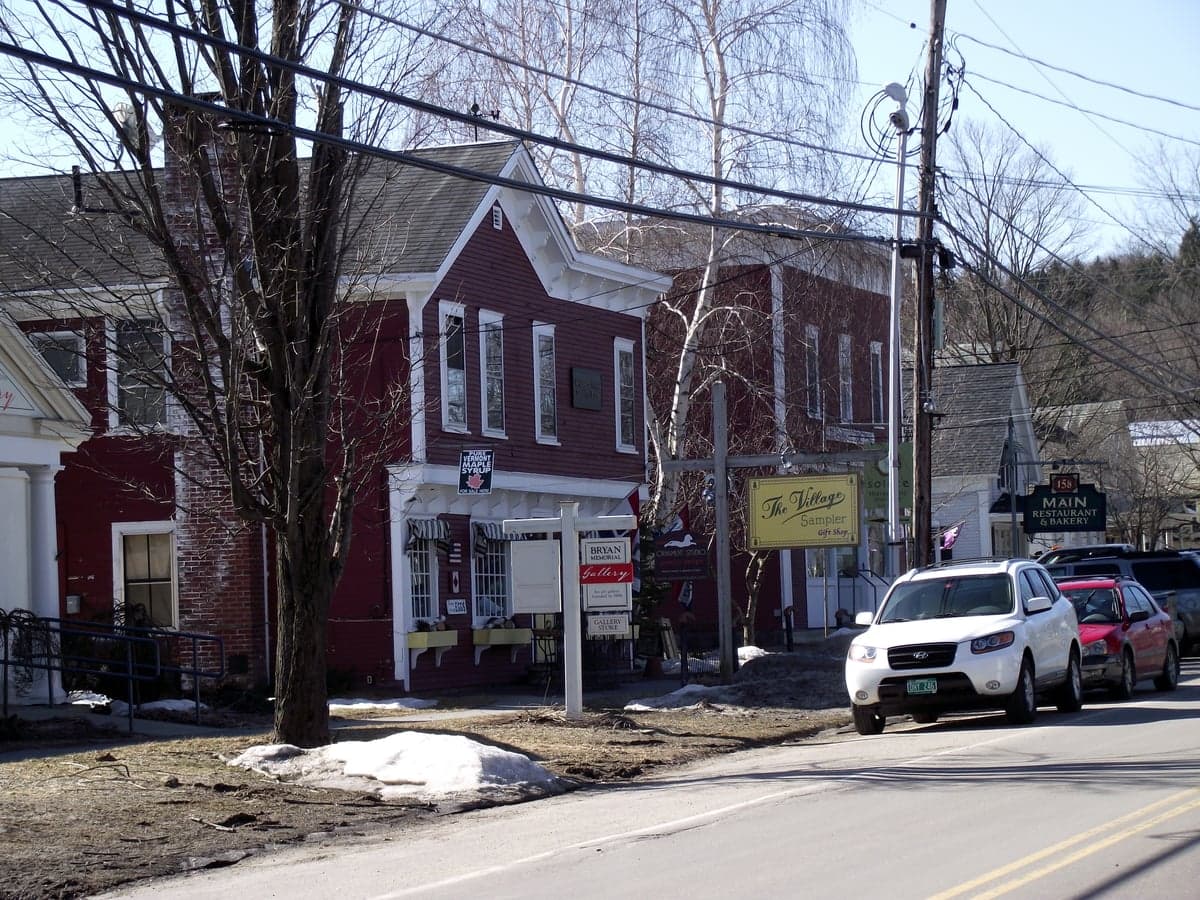
Photo: Wikipedia
Personal Sovereignty in Jeffersonville, VT
Moderate friction. Expect trade-offs in some aspect of personal liberty and independence.
What does Personal Sovereignty tell us?
Personal Sovereignty measures your capacity for self-reliance and independence with minimal government friction. Higher scores mean fewer barriers between you and the way you want to live... but it assumes you have the space you need and good neighbors.
What does this tell us?
Personal Sovereignty measures your capacity for self-reliance and independence with minimal government friction. Higher scores mean fewer barriers between you and the way you want to live... but it assumes you have the space you need and good neighbors.
State Policy
Energy independence: Importer (15% of energy produced in-state)
Personal Liberty
Homesteading

Personal Liberty Analysis
Jeffersonville, Vermont, offers a mixed bag for those prioritizing personal sovereignty. While the town’s rural character and low population density provide a tangible sense of autonomy, the state-level regulatory environment imposes significant constraints on self-reliance and individual decision-making. For a survivalist or prepper mindset, the key question is whether the local advantages—such as land availability and a hands-off community culture—outweigh the burdens of Vermont’s progressive governance, which often prioritizes collective mandates over personal freedoms. This analysis breaks down the specific factors that matter most for those seeking to maximize control over their own lives in this corner of Lamoille County.
Tax burden and regulatory posture: How Vermont’s fiscal and legal climate affects your autonomy
Vermont’s tax burden is among the highest in the nation, and Jeffersonville residents feel it directly. The state’s income tax rates range from 3.35% to 8.75%, with the top bracket kicking in at a relatively low $213,150 for single filers. Property taxes are also steep, averaging about 1.8% of assessed home value—well above the national median. For a prepper focused on financial independence, this means a significant portion of income and assets are redirected to state programs, reducing the capital available for self-funded projects like land improvements, food storage, or off-grid infrastructure. The regulatory posture is similarly heavy: Vermont has strict land-use laws under Act 250, which can delay or block construction of new structures, including sheds, barns, or even major garden expansions, if they trigger environmental review. This creates a tension between the desire for self-sufficiency and the state’s oversight of private property development. While Jeffersonville itself is small and less bureaucratic than Burlington, the state’s reach is long, and any significant alteration to your land may require permits and public hearings.
Self-defense and gun law specifics: What you can and cannot do to protect your home and family
Vermont is a constitutional carry state, meaning no permit is required to carry a concealed firearm. This is a strong point for personal sovereignty, as it removes a bureaucratic hurdle for self-defense. However, the state has tightened restrictions in recent years. In 2023, Vermont passed a ban on "large-capacity" magazines (over 10 rounds for long guns, over 15 for handguns) and raised the minimum age to purchase any firearm to 21. These laws directly impact preppers who rely on standard-capacity magazines for defensive or hunting purposes. Additionally, Vermont has a "red flag" law (Extreme Risk Protection Order) that allows authorities to temporarily seize firearms based on a court order, without a criminal conviction. For those concerned about government overreach, this is a vulnerability—a neighbor or family member could initiate a process that removes your ability to defend yourself. On the positive side, Jeffersonville’s rural setting means local law enforcement is generally supportive of gun rights, and the town has no additional local ordinances beyond state law. Stand-your-ground principles apply, but the legal environment is shifting, and a prepper should monitor future legislative sessions closely.
Self-reliance and homesteading viability: Lot sizes, zoning, and off-grid feasibility in Jeffersonville
Jeffersonville’s zoning allows for genuine homesteading, but with caveats. Minimum lot sizes in the rural residential district are typically 2 to 5 acres, which is enough for a substantial garden, small livestock (chickens, goats, a cow), and even a modest orchard. The town’s zoning code permits accessory dwelling units and farm stands, which supports small-scale income generation. However, off-grid living is complicated by state building codes and Act 250. While you can install solar panels and a rainwater catchment system, connecting to the grid is often required for new construction, and composting toilets may need health department approval. The local climate—long, cold winters with heavy snow—makes true off-grid living challenging without significant investment in insulation, backup heating, and snow removal equipment. For a prepper, the best approach is to buy an existing home with a well and septic system already in place, then gradually add solar and battery backup. The town’s water supply is generally reliable, but private wells are common and give you control over your water source. Overall, Jeffersonville offers a viable path to self-reliance, but it requires navigating state-level regulations that favor grid-tied, code-compliant structures.
Personal liberties: Parental rights, medical autonomy, speech, and property in a progressive state
Vermont’s progressive politics create friction for those valuing traditional parental rights and medical autonomy. The state mandates comprehensive sex education in public schools, and parents cannot opt their children out of specific lessons—only the entire curriculum. Vaccine mandates for school attendance are strict, with no philosophical exemptions, only medical and religious ones (and the religious exemption has been narrowed in practice). During the COVID-19 pandemic, Vermont had some of the most aggressive mandates in the country, including a vaccine requirement for school staff and state employees. For a prepper concerned about future public health emergencies, this precedent is troubling—the state has shown it will use its power to compel compliance. Medical autonomy for adults is also limited: Vermont has a single-payer healthcare system in name only (Green Mountain Care), but the state heavily regulates alternative treatments and supplements. Free speech is protected under the First Amendment, but local social dynamics in a small town like Jeffersonville can be insular, and expressing dissenting views on public health or government policy may lead to social ostracism. Property rights are strong in theory, but Act 250 and local zoning can restrict how you use your land, especially if you want to build a bunker, a large workshop, or a multi-family dwelling for extended family. The balance of power leans toward state authority over individual choice.
In the broader context of New England, Jeffersonville offers a relatively high degree of personal sovereignty compared to Massachusetts or Connecticut, where gun laws are far more restrictive and taxes are even higher. However, it falls short of states like New Hampshire or Maine, which have no income tax and looser land-use regulations. For a survivalist or prepper, Jeffersonville is a compromise: you get the space, the rural culture, and the constitutional carry rights, but you must accept a heavy tax burden, a regulatory state that can override your property decisions, and a political climate that may clash with your values. The town itself is a refuge from urban chaos, but the state government is a persistent counterweight to full autonomy. If you are willing to work within the system—paying taxes, obtaining permits, and keeping a low profile—Jeffersonville can be a functional base for self-reliance. But if your goal is to minimize government involvement in every aspect of your life, you will find the state’s reach frustrating and, at times, intrusive.

* Values derived from national, state, county, city and local statistics and may differ in a specific area. Last updated: 2026-04-19T23:59:48.000Z
Narrative content on this page is AI-generated and may contain mistakes. Verify any details that matter before acting on them.
ReloMaps may earn a commission from affiliate links at no extra cost to you.

