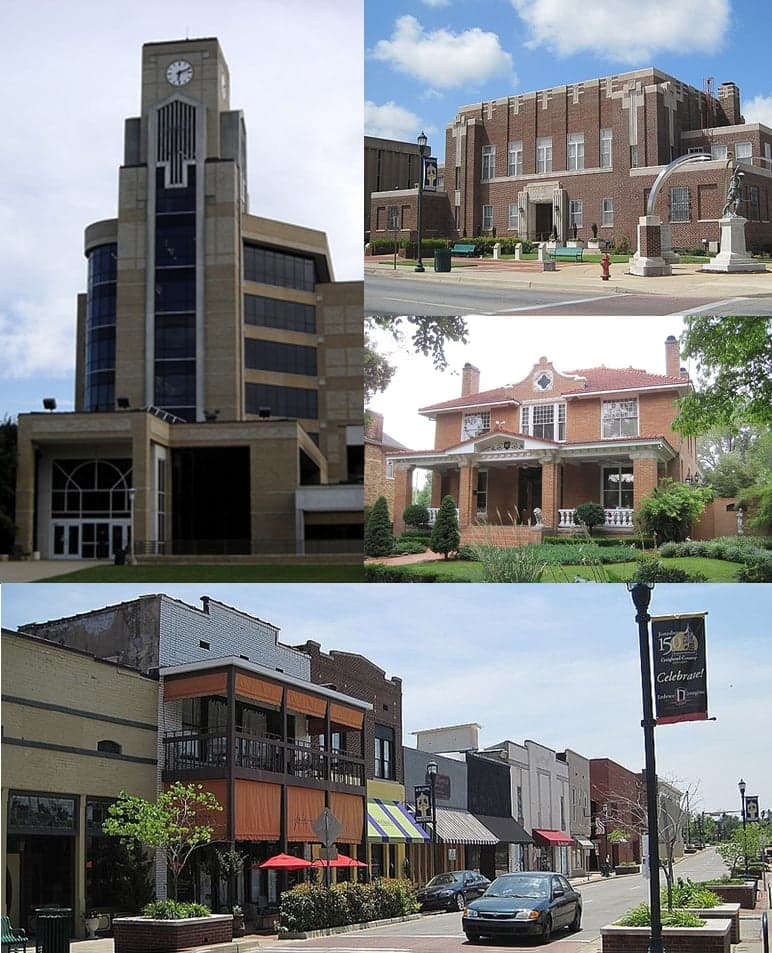
Photo: Wikipedia
Personal Sovereignty in Jonesboro, AR
Viable for self-reliance. Generally workable, though some barriers may limit total independence.
What does Personal Sovereignty tell us?
Personal Sovereignty measures your capacity for self-reliance and independence with minimal government friction. Higher scores mean fewer barriers between you and the way you want to live... but it assumes you have the space you need and good neighbors.
What does this tell us?
Personal Sovereignty measures your capacity for self-reliance and independence with minimal government friction. Higher scores mean fewer barriers between you and the way you want to live... but it assumes you have the space you need and good neighbors.
State Policy
Energy independence: Importer (35% of energy produced in-state)
Personal Liberty
Homesteading

Personal Liberty Analysis
Jonesboro, Arkansas, offers a notably high degree of personal sovereignty compared to much of the country, functioning as a pocket where state-level protections and a local culture of self-reliance push back against the expanding reach of federal and corporate mandates. For the strategic relocator—whether a single individual or a parent—this translates into a legal environment that prioritizes individual decision-making over collective compliance, particularly in areas of taxation, self-defense, and family autonomy. The city sits within a state that has deliberately positioned itself as a bulwark against what many view as government overreach, making it a serious consideration for those who value maximum personal latitude in their daily lives.
Tax burden and regulatory posture: how Jonesboro compares to high-control states
Arkansas’s tax structure is a clear advantage for anyone seeking to minimize the financial footprint of government. The state imposes a flat individual income tax rate of 4.4% as of 2026, down from a progressive system just a few years ago, and there is no state-level estate or inheritance tax. Property taxes in Craighead County, where Jonesboro sits, are among the lowest in the region, with an effective rate typically around 0.6% of assessed home value—meaning a $250,000 home carries an annual tax bill of roughly $1,500. Sales tax in Jonesboro is 9.5% (state plus local), which is noticeable but typical for the South. More important than the raw numbers is the regulatory posture: Arkansas is a right-to-work state with minimal occupational licensing burdens compared to coastal states, and it has no state-level rent control, no mandated paid family leave, and no aggressive environmental regulations that would hamper property use. For a prepper or survivalist, this means less bureaucratic friction when modifying land, building structures, or operating a home-based business. The state government’s general philosophy is one of non-interference, which aligns with a conservative view that the best government is the one that stays out of your wallet and your way.
Self-defense and gun law specifics: what the Second Sanctuary means on the ground
Jonesboro sits in a state that has aggressively fortified the right to keep and bear arms. Arkansas is a constitutional carry state—no permit is required to carry a concealed handgun for anyone 18 or older who can legally possess a firearm. This is not a recent concession; it has been the law since 2021, and the state has resisted federal overreach by passing a Second Amendment Sanctuary Act in 2023, which prohibits state resources from being used to enforce any future federal bans or confiscation orders. In practical terms, this means a resident can carry openly or concealed without a government-issued permission slip, and there are no state-level restrictions on magazine capacity, barrel length, or firearm types (including NFA items like suppressors and short-barreled rifles, provided federal paperwork is followed). Stand-your-ground laws are fully in effect, with no duty to retreat in any place where a person is lawfully present. For parents, this extends to school zones: while federal law technically restricts firearms within 1,000 feet of a school, Arkansas law allows concealed carry by permit holders on public school grounds (with some restrictions), and the state has actively encouraged arming school staff through the Arkansas School Safety Act. The legal climate here is one where the presumption favors the individual’s right to self-defense, not the state’s authority to restrict it.
Self-reliance and homesteading viability: lot sizes, zoning, and off-grid feasibility
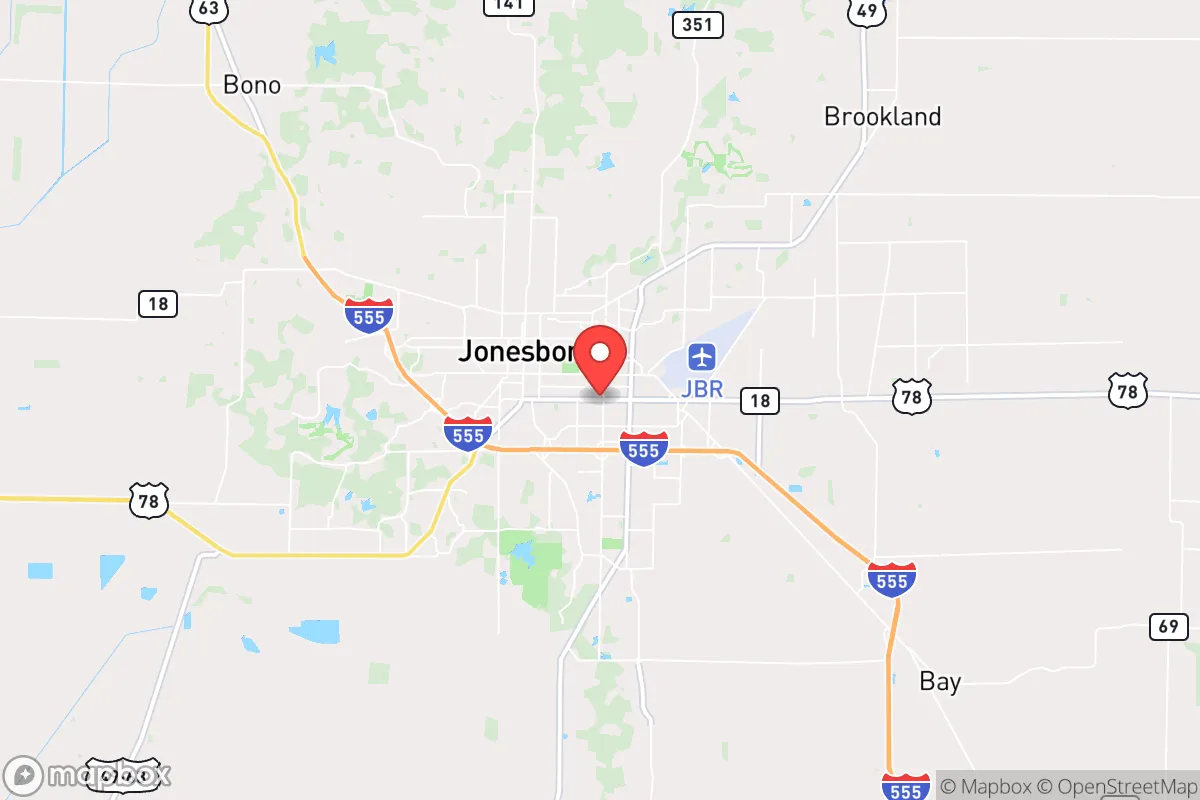
For those looking to reduce dependency on centralized systems, Jonesboro’s surrounding area offers genuine opportunities for self-reliant living. Within the city limits, zoning is relatively permissive: residential lots in the outskirts can be found as small as a quarter-acre, but moving just 10–15 minutes outside of town—towards places like Bay, Brookland, or Bono—unincorporated land parcels of 1 to 10 acres are common and affordable, often priced between $5,000 and $15,000 per acre. There are no county-level building codes in unincorporated Craighead County, meaning you can construct a cabin, a shipping container home, or an earth-bermed structure without a county permit, though a septic system permit from the Arkansas Department of Health is required. Rainwater collection is legal and unregulated, and well water is standard for rural properties. Solar panels face no state-level restrictions, and net metering is available through the local electric cooperative, though many off-grid residents simply disconnect entirely. Livestock—chickens, goats, even a few head of cattle—are allowed on parcels over one acre in most rural zones, with no county noise ordinances that would restrict roosters or guard dogs. The primary limitation is that Jonesboro itself is a growing regional hub, so land within a 20-minute drive of the city center is appreciating; the window for affordable acreage is narrowing but still open for those who act deliberately.
Personal liberties: parental rights, medical autonomy, speech, and property
Arkansas has been at the forefront of protecting parental rights in education and healthcare. The state’s LEARNS Act (2023) expanded school choice and explicitly codified parents’ authority to direct the upbringing and education of their children, including the right to opt out of any curriculum or activity without penalty. Medical autonomy is similarly robust: Arkansas was one of the first states to pass a law prohibiting COVID-19 vaccine mandates by private employers and government entities, and it has a broad religious exemption statute for any medical procedure. The state also passed the Medical Ethics and Diversity Act, which protects healthcare providers and patients from being forced to participate in procedures they object to on moral or religious grounds. On speech, there are no state-level hate speech laws that criminalize political or religious expression, and the state has enacted a law prohibiting social media platforms from deplatforming users based on political viewpoint—a direct challenge to corporate censorship. Property rights are protected by a strong eminent domain statute that limits takings to strictly public uses (not economic development), and there is no state-level red flag law that would allow seizure of firearms without due process. For the survivalist mindset, these protections mean that the state is not a tool for social engineering but a shield against federal and corporate overreach.
In the broader landscape of American personal sovereignty, Jonesboro ranks as a strong contender for those prioritizing autonomy over convenience. It lacks the extreme libertarian legal framework of a place like rural Idaho or New Hampshire, but it compensates with a more temperate climate, lower cost of entry, and proximity to medical and supply infrastructure. The trade-off is that Arkansas is still a relatively poor state with lower average education levels and a healthcare system that ranks near the bottom nationally—but for someone whose primary concern is government overreach, those are acceptable costs. The city offers a legal and cultural environment where a person can live largely unbothered by the state, raise a family with minimal interference, and prepare for systemic disruptions without fear of legal reprisal. That is increasingly rare, and it makes Jonesboro a serious option for the strategic relocator who values freedom over frills.

* Values derived from national, state, county, city and local statistics and may differ in a specific area. Last updated: 2026-04-30T01:04:32.000Z
Narrative content on this page is AI-generated and may contain mistakes. Verify any details that matter before acting on them.
ReloMaps may earn a commission from affiliate links at no extra cost to you.

