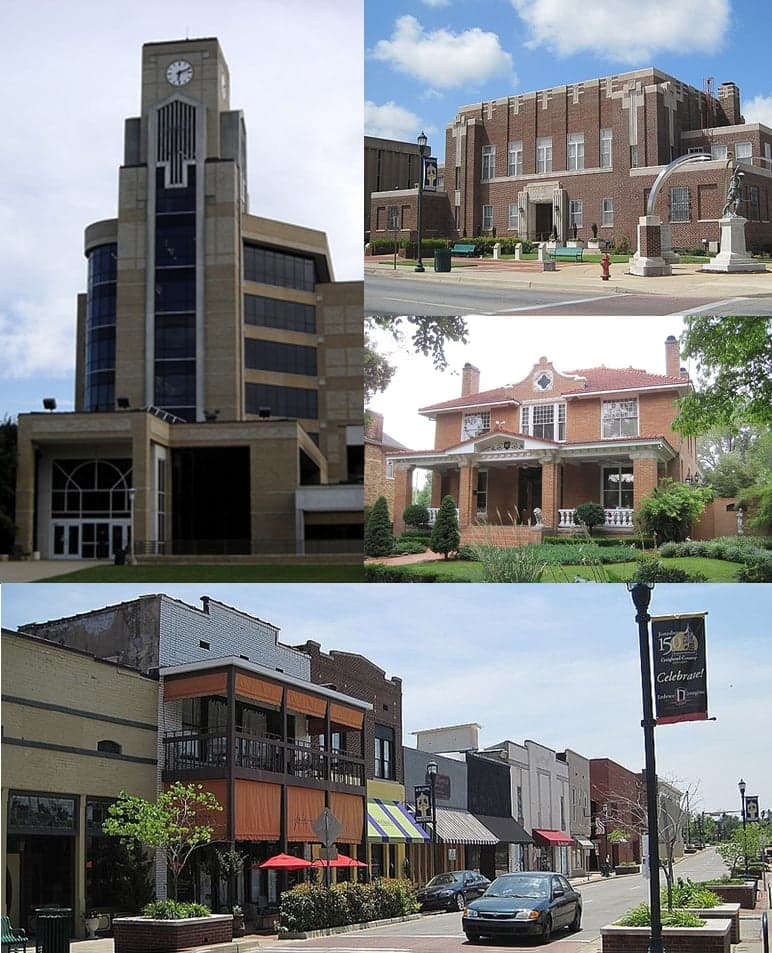
Photo: Wikipedia
Quality of Life in Jonesboro, AR
A high quality of life with strong walkability, manageable living costs, healthy neighborhood signals, and solid amenity access.
What does Quality of Life tell us?
Quality of Life blends cost of living, nearby amenities, socioeconomic signals, and neighborhood character. City-level scores represent the whole municipality; individual neighborhoods can differ.
What does this tell us?
Quality of Life blends cost of living, nearby amenities, socioeconomic signals, and neighborhood character. City-level scores represent the whole municipality; individual neighborhoods can differ.
Cost of Living
22% below national average
The Real Cost of Living in Jonesboro, AR for 2026
| Tier | Individual | Family (4) |
|---|---|---|
| Survival | $15k | $28k |
| Comfortable | $41k | $61k |
| Luxury | $95k+ | $147k+ |
| Elite (Top 5%) | $138k+ | $215k+ |
86%
The Area Signal
A metric tracking the socioeconomic signals of the area.
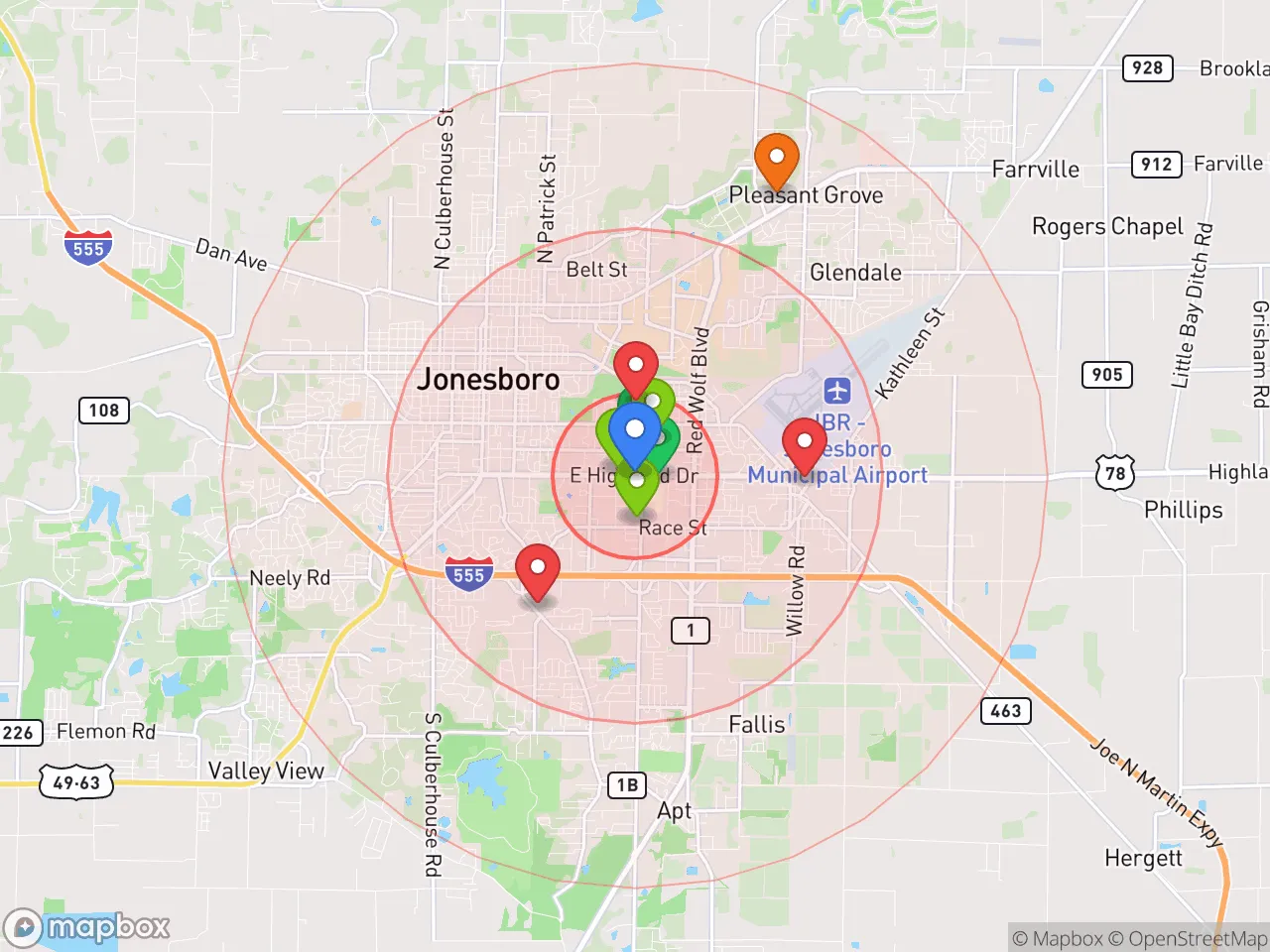
Hobbies
Explore the areaGroceries
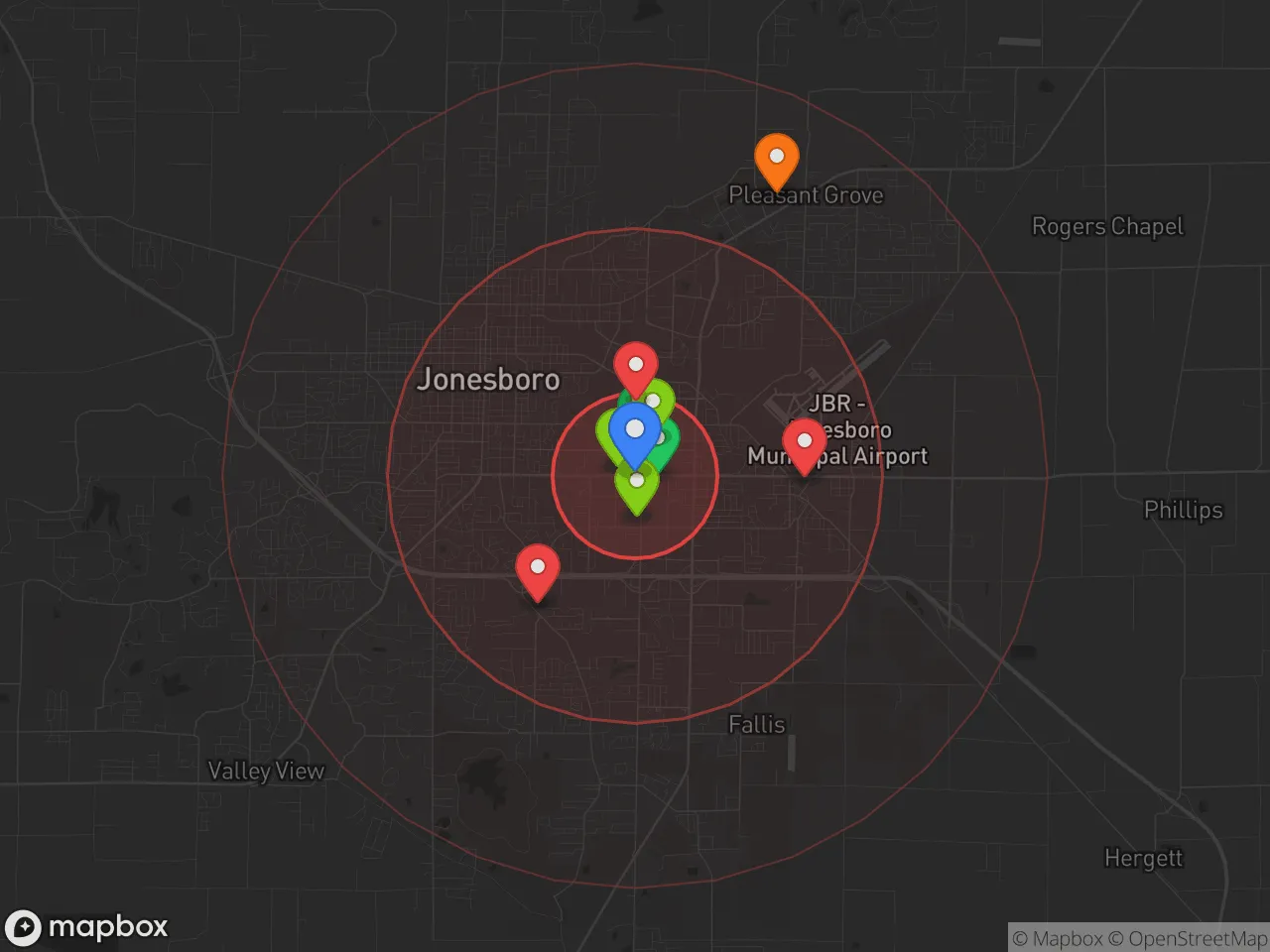
6 within 10 miles
Gas
20 within 10 miles
Hospital
4 within 20 miles
Airport
BNA — Nashville International
Post Office
USPS — Jonesboro, AR
Critical Amenities
Quality-of-Life Analysis
Jonesboro, Arkansas, offers a quality of life defined by genuine affordability and a steady, family-oriented pace, attracting a mix of young families, healthcare professionals, and retirees seeking a lower cost of living without sacrificing urban amenities. With a cost of living index of 78 (22% below the U.S. average), the city provides a financial cushion that allows residents to own homes and save more than in many peer metros. The population skews younger and more educated than the state average, driven largely by Arkansas State University and the region’s expanding medical sector, creating a community that balances academic energy with deep-rooted Southern hospitality.
Cost of living and housing affordability compared to Memphis and Little Rock
Jonesboro’s housing market is the cornerstone of its affordability appeal. The median home value sits at $213,400, significantly lower than the national median of roughly $350,000 and well below nearby regional hubs like Memphis (around $230,000) and Little Rock (around $260,000). Renters also benefit, with a median rent of $926—about $200 less per month than the national average. This pricing allows a household earning the area’s median income to comfortably afford a mortgage or lease without being cost-burdened. The average commute of just 18.5 minutes further reduces transportation costs, a sharp contrast to the 30+ minute drives common in larger metros. While grocery and healthcare costs are also below the national average, residents should note that utility rates in Arkansas can run slightly higher than the U.S. norm, particularly during summer cooling months.
What daily life is like for families: schools, parks, and local amenities
Daily life in Jonesboro revolves around a compact, accessible layout where most errands and activities are within a 15-minute drive. The Jonesboro Public Schools system, particularly Jonesboro High School and the Math & Science Magnet School, are well-regarded, with graduation rates above 90%. For recreation, the city maintains over 20 parks, with Craighead Forest Park offering a 60-acre lake, hiking trails, and a disc golf course that draws weekend crowds. Dining and shopping are concentrated along Caraway Road and the Red Wolf Boulevard corridor, featuring national chains alongside local staples like Skinny J’s and Dixie Pig BBQ. The Arkansas State University campus anchors cultural life, hosting concerts, the Fowler Center for the Performing Arts, and Division I athletics that give the city a small-college-town energy. Healthcare access is robust, anchored by St. Bernards Medical Center, the region’s largest employer and a Level II trauma center, ensuring residents rarely need to travel for specialist care.
Jonesboro is best suited for those who prioritize financial breathing room and a slower, community-focused rhythm over the fast-paced, high-opportunity hustle of a major metro. Young professionals in healthcare or education, families seeking safe neighborhoods with good schools, and retirees on fixed incomes will find the low housing costs and short commutes especially attractive. However, those seeking dense nightlife, extensive public transit, or a highly diverse job market beyond healthcare and manufacturing may find the city limiting. For the right resident, Jonesboro delivers a stable, affordable foundation for building a comfortable life in the Arkansas Delta.

Crime in Jonesboro, AR
Higher crime rates than 58% of comparable U.S. locations.
Violent CrimeViolent Crime Analysis
Property CrimeProperty Crime Analysis
Crime Analysis
Jonesboro, Arkansas, reports a violent crime rate of 561.9 incidents per 100,000 residents and a property crime rate of 2,415.5 per 100,000, placing it above both state and national averages for serious offenses. These figures indicate that while the city is not among the most dangerous in the region, residents face a notably higher risk of victimization compared to the typical U.S. community. The overall safety picture is one of elevated concern, particularly given the local criminal justice system's orientation, which can influence how effectively crime is deterred and prosecuted.
Crime in context
Jonesboro's violent crime rate is roughly 44% higher than the national average of approximately 380 per 100,000, and its property crime rate exceeds the U.S. norm by about 30%. Within Arkansas, the city's figures are elevated relative to smaller rural towns but are comparable to other regional hubs like Conway or Hot Springs. A critical factor in this context is the judicial philosophy prevalent in Craighead County. Like many jurisdictions in the broader metro area, the local bench and district attorney's office have adopted progressive approaches to sentencing and pretrial release. These policies, while intended to reduce incarceration, often result in shorter sentences and more lenient plea deals, which can lead to repeat offenders cycling back onto the streets more quickly. This directly undermines public safety by reducing the deterrent effect of prosecution and increasing the likelihood that victims will encounter their assailants again.
What residents experience
For those living in Jonesboro, the daily reality includes a heightened awareness of property crimes such as burglary, vehicle theft, and larceny, which are the most common offenses. Theft from vehicles in parking lots and residential break-ins are frequently reported, particularly in areas near Arkansas State University and commercial corridors like Caraway Road. Violent crimes, while less frequent, are concentrated in specific neighborhoods and often involve disputes among acquaintances. The presence of a progressive district attorney means that even when arrests are made, many offenders are released on low or no cash bail, and charges are frequently reduced through plea bargaining. This creates a cycle where victims feel the justice system prioritizes the offender's circumstances over their own safety, eroding trust in law enforcement and the courts.
Neighborhood-level variation is significant. Areas west of Interstate 555, including newer subdivisions near the Mall at Turtle Creek, generally report lower crime rates. In contrast, older central neighborhoods east of the interstate, such as those around the downtown core and near the university, experience higher concentrations of both property and violent crime. Prospective residents should research specific block-level data through the Jonesboro Police Department's online crime map and consider that the city's overall statistics are pulled upward by these higher-crime zones. The combination of elevated crime rates and a justice system that is perceived as lenient makes thorough neighborhood vetting essential for anyone considering a move to Jonesboro.
* Values derived from national, state, county, city and local statistics and may differ in a specific area. Last updated: 2026-04-30T01:04:32.000Z
Narrative content on this page is AI-generated and may contain mistakes. Verify any details that matter before acting on them.
ReloMaps may earn a commission from affiliate links at no extra cost to you.

