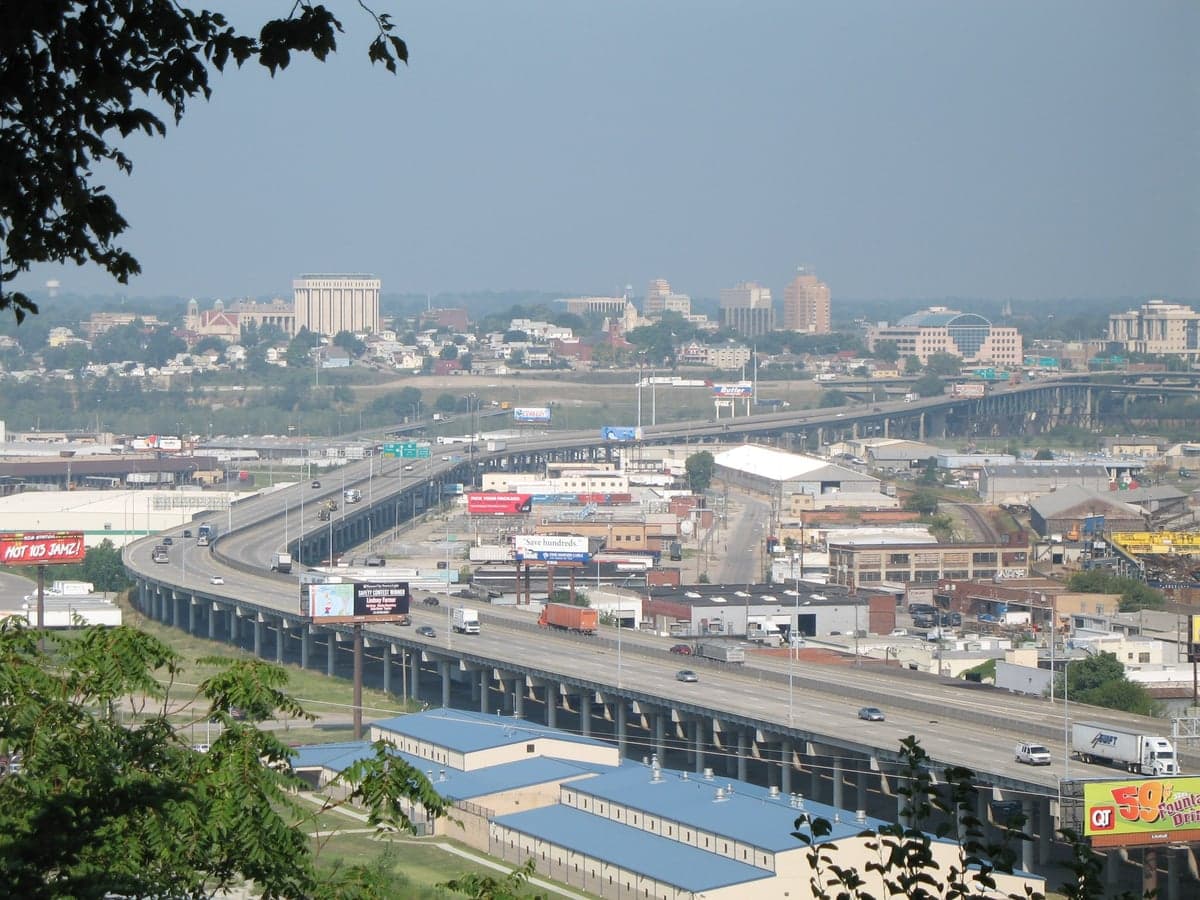
Photo: Wikipedia
Strategic Assessment of Kansas City, KS
Multiple tactical vulnerabilities. Population density, target proximity, or disaster risk are likely compounding. A retreat property and exit planning is required.
What does the Strategic Assessment tell us?
Our Strategic Assessment grades tactical survivability of an area. Major population centers, military targets, fallout zones, natural disasters, and border exposure all drive risk — lower exposure means a more defensible position in a crisis.
This is heavily inspired by Joel Skousen's Strategic Relocation book. Highly recommended you checkout the book ($)What does this tell us?
Our Strategic Assessment grades tactical survivability of an area. Major population centers, military targets, fallout zones, natural disasters, and border exposure all drive risk — lower exposure means a more defensible position in a crisis.
This is heavily inspired by Joel Skousen's Strategic Relocation book. Highly recommended you checkout the book ($)Strategic Pillars

Key Distances
Regional Safe Places
Below is our recommended "safe zones" in Kansas and the surrounding area based on our strategic heuristics. For most people, it's unrealistic to live in a “safe zone” full-time due to work, family or other personal reasons. They tend to be more rural. However, many of these areas are perfect for second homes and retreat properties that double as a vacation home or even a short-term rental.
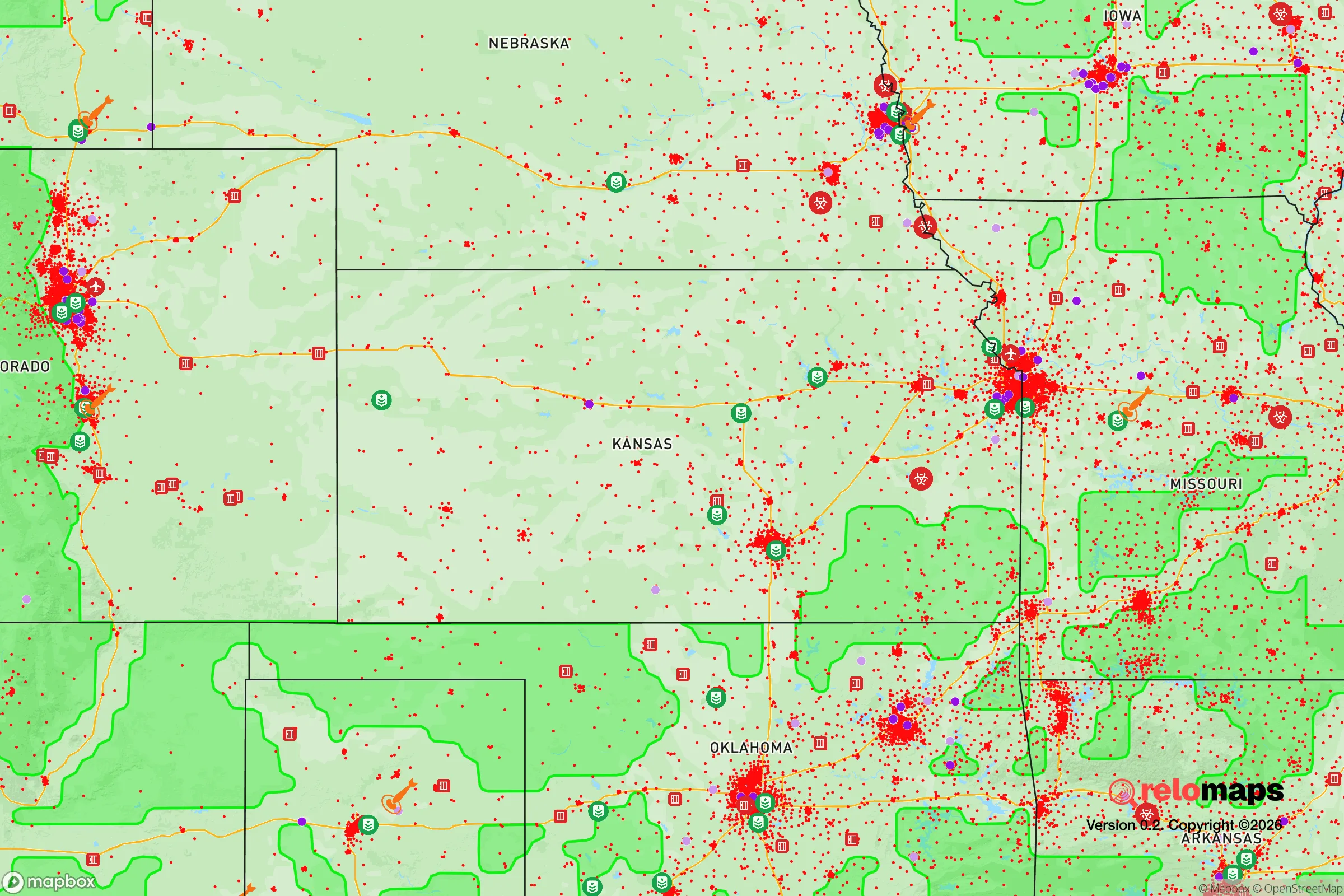
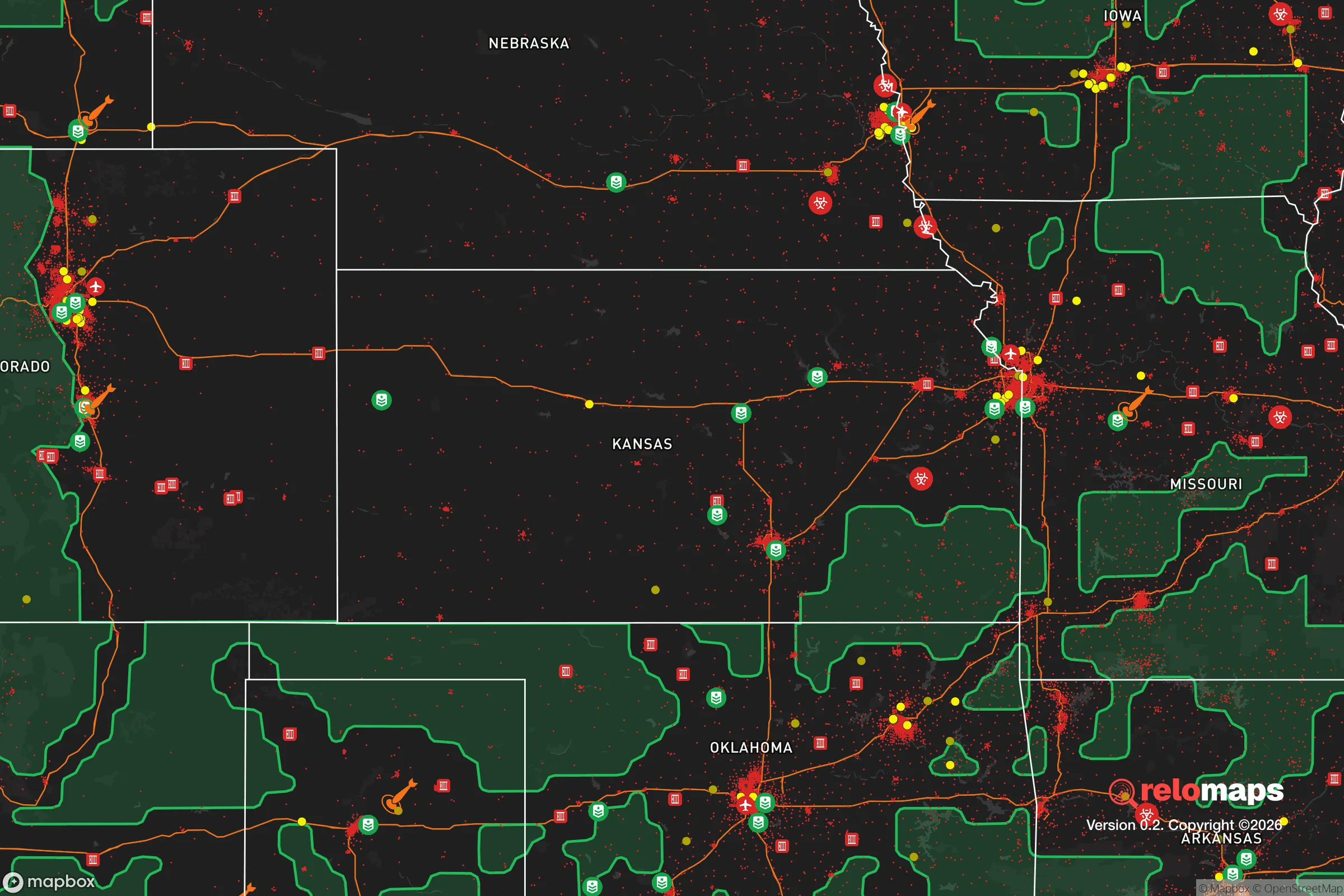


Important Note: For informational purposes only. This does not mean nothing bad ever happens in the green zones. Please use common sense. This is based on public data and modeled with AI. We tried to take a conservative approach but mistakes happen. We update this regularly as new information becomes available.
Solar Generator Recommendations
Backup power matters more here than in safer locations. We've picked three solar generators across budgets and capacity tiers — start with the budget unit if you only need a few essentials, or step up if you want to run a fridge and HVAC for days at a time.

Jackery Portable Power Station Explorer 300
Budget OptionPower on the Go: Weighing only 11 lbs, it's convenient to set up and store with book-sized foldable solar panels

BLUETTI Portable Power Station AC180
Designed for both indoor and outdoor scenarios, AC180 is highly capable as it has a robost capacity and continuous output power.

EF ECOFLOW DELTA Pro Ultra Power Station
Upgraded PickEcoFlow DELTA Pro Ultra is a whole-home energy system designed to grow with your family. Integrated with the Smart Home Panel 2, it scales to meet your evolving energy needs — keeping your home powered, intelligent, and secure through every stage of life.
We earn a commission, at no additional cost to you.
Strategic Assessment Analysis
Kansas City, Kansas, often overlooked in favor of its Missouri twin, presents a surprisingly resilient strategic position for those prioritizing self-reliance and security in an uncertain future. Its location at the confluence of two major rivers, combined with a lower population density than the Missouri side and a robust industrial backbone, offers a unique blend of logistical advantage and defensive depth. For the conservative prepper or survival-minded individual, this is not a flashpoint but a potential staging ground—provided you understand its specific vulnerabilities and leverage its underappreciated strengths.
Geographic anchor: why the Kansas side offers a strategic edge
The most immediate advantage of KCK is its position within the Kansas River Valley, at the junction of the Kansas and Missouri Rivers. This isn't just scenic; it provides a reliable, year-round freshwater source and a natural transportation corridor that predates modern highways. The land on the Kansas side is generally less flood-prone than the Missouri side's bottoms, with higher ground rising west toward the Flint Hills. This topography offers defensible positions and better drainage for long-term water management. Furthermore, KCK sits at the intersection of Interstates 70, 35, and 635, and is a major rail hub for BNSF and Union Pacific. In a crisis, this means access to both east-west and north-south supply lines, but also that the area is a chokepoint. The key is that the Kansas side is the western anchor of the metro—any disruption from the east (e.g., a major event in St. Louis or Chicago) would hit the Missouri side first, giving KCK residents precious hours of warning and a natural buffer zone across the state line. The proximity to the agricultural bounty of the Great Plains is also a major plus; within a 50-mile radius, you have some of the most productive farmland in the world, which is a critical long-term food security asset.
Hard risks: fallout proximity and the urban threat vector
No honest strategic assessment can ignore the elephant in the room: KCK is part of a major metropolitan area, and that carries inherent risk. The most significant exposure is the proximity to the Kansas City Missouri metro core, including the federal reserve, major corporate HQs (Cerner, Garmin), and the Truman Sports Complex. A mass casualty event, civil unrest, or a coordinated attack targeting these symbols would create a cascading effect across the state line. The bridges and highways connecting the two states—the Lewis and Clark Viaduct, the 12th Street Bridge, the I-70 bridge—are obvious chokepoints that would become impassable or contested in a crisis. Additionally, the area is within a few hundred miles of several potential fallout-relevant landmarks: Whiteman Air Force Base (home to B-2 bombers) is roughly 70 miles southeast, and the nuclear research facilities at the University of Missouri are about 120 miles east. While not a direct blast zone, a major event at either could produce a fallout plume that, depending on wind patterns, could affect the eastern Kansas side. The real danger is not a direct hit but the secondary effects: refugees fleeing the Missouri side, supply chain collapse at the rail yards, and the strain on local resources from a population that is not self-sufficient. The presence of large industrial facilities, including chemical plants and oil refineries along the Kansas River, also presents a localized toxic hazard if infrastructure fails.
Practical resilience: food, water, energy, and defensibility on the Kansas side
For the relocator, the practical question is: can you live here and be prepared? The answer is yes, but with specific caveats. Water is abundant—the Missouri and Kansas Rivers provide a massive, if not immediately potable, supply. The Kansas side's water treatment infrastructure is generally reliable, but a prepper should have a high-quality filtration system (e.g., Berkey or a Sawyer filter) and a plan to draw from the river if municipal supply fails. The water table is also relatively high in the river valley, making well drilling a viable option for those on larger lots. Food security is excellent in the broader region. The Kansas side has a strong network of local farmers' markets, and the rural areas west of KCK (Wyandotte County's western edge and into Leavenworth County) have agricultural land. The presence of the Kansas City Board of Trade (now part of CME Group) means the area is a nerve center for grain pricing, but for actual food, you want to establish relationships with growers in the nearby rural counties. Energy is a mixed bag. The area is served by Evergy, which relies on a mix of coal, natural gas, and nuclear (from the Wolf Creek plant in Burlington, KS, about 100 miles southwest). A grid-down scenario would be severe, but the prevalence of natural gas lines in many neighborhoods means a dual-fuel generator is a smart investment. Defensibility is the weakest link for urban KCK proper. The flat terrain and dense housing in parts of Wyandotte County make it hard to secure a perimeter. The strategic move is to look at the western and northern edges of the county, near the Bonner Springs or Edwardsville areas, where lots are larger, terrain is slightly more varied, and you have better egress routes west toward the Flint Hills. A rural property in Leavenworth County, just north, offers a much better defensive posture while still being within a 30-minute drive of KCK's resources.
The overall strategic picture for Kansas City, Kansas is one of a high-potential but high-discipline location. It is not a bug-out destination; it is a stand-your-ground position for someone who wants to be near critical infrastructure and supply lines without being in the dead center of the target. The conservative prepper will find a community that is more blue-collar and self-reliant than the Missouri side, with a lower cost of living and a stronger connection to the agricultural heartland. The risks are real—the urban proximity, the chokepoint bridges, and the industrial hazards—but they are manageable with proper planning, a good filtration system, and a property on the western fringe. If you are looking for a place to build a resilient life that can weather both economic storms and physical disruptions, KCK offers a solid foundation, provided you treat it as a base of operations, not a fortress. The key is to be the prepared minority in a region that, for now, is still largely asleep to the threats on the horizon.

* Values derived from national, state, county, city and local statistics and may differ in a specific area. Last updated: 2026-04-30T00:39:22.000Z
Narrative content on this page is AI-generated and may contain mistakes. Verify any details that matter before acting on them.
ReloMaps may earn a commission from affiliate links at no extra cost to you.

