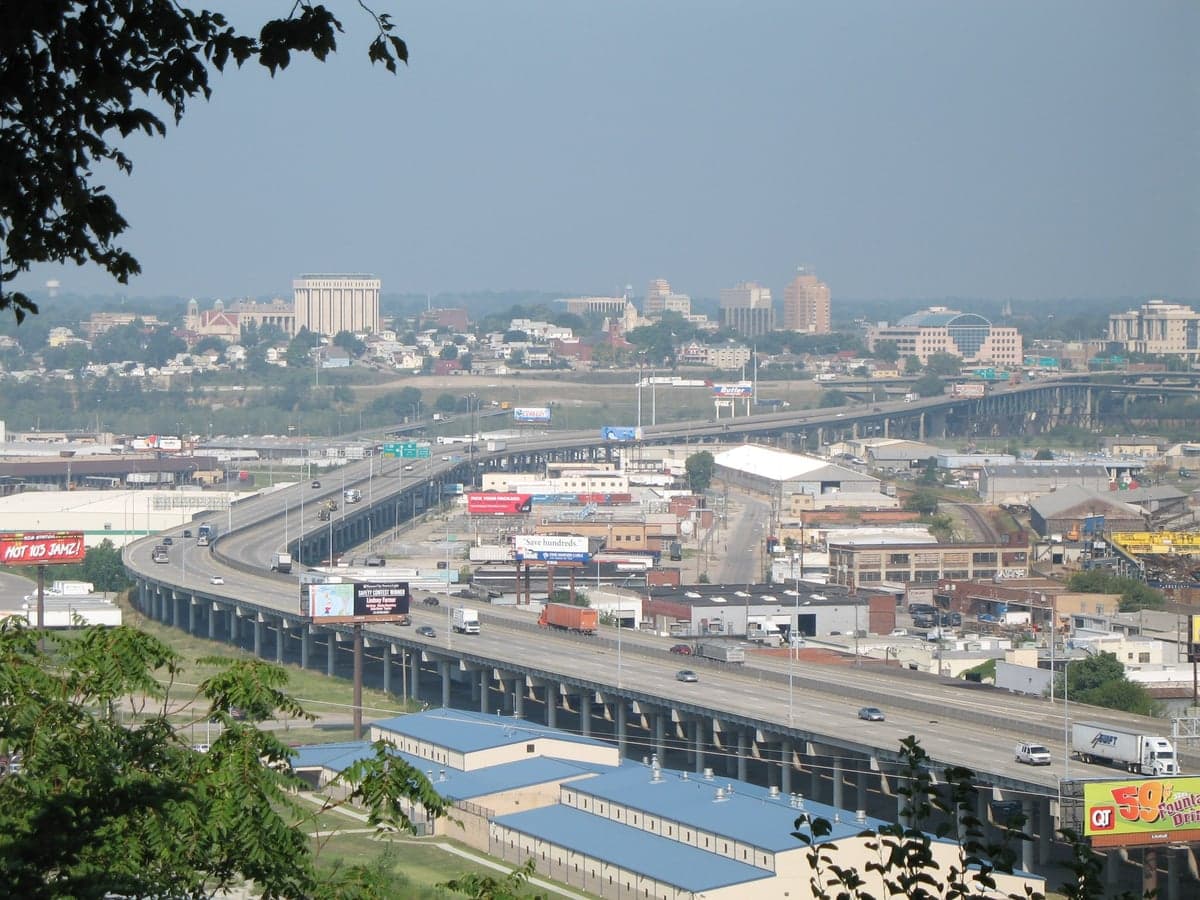
Photo: Wikipedia
Political ClimatePolitical Climate in Kansas City, KS
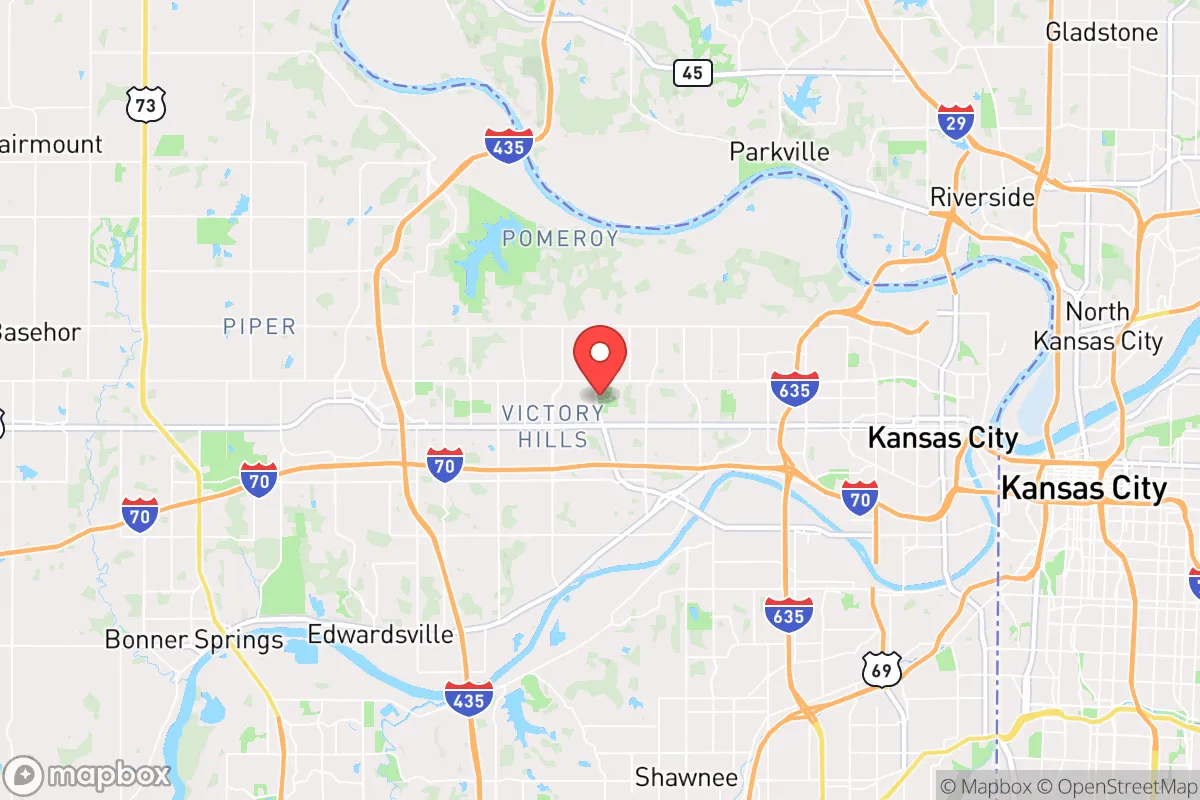
District shown is the primary district for this city’s centroid. Cities may span multiple districts.
Local Political AnalysisPolitical Analysis of Kansas City, KS
Kansas City, Kansas, has long been a conservative stronghold in the region, and that’s still the case today, but you can feel the winds shifting. The Cook PVI rating of R+10 tells you the district leans solidly Republican, but that number masks a real tension brewing beneath the surface. In the past, you could count on this area to be reliably red on every level, but recent years have brought a slow creep of progressive policies from the county level that have a lot of us longtime residents raising an eyebrow. It’s not the same place it was even a decade ago, and if you’re looking for a community that still values personal freedom and limited government, you need to know what’s really going on here.
How it compares
Drive just a few miles east into Wyandotte County’s more urban core, and you’ll hit a different political world entirely—places like downtown KCK and the neighborhoods near the Missouri line have been trending blue for years, with city council races getting more progressive every cycle. But head west or south into the surrounding suburbs and towns like Bonner Springs, Edwardsville, and Basehor, and you’ll find the old-school conservative values still holding strong. The contrast is stark: in those outer communities, you still see low taxes, minimal zoning fights, and a general “leave us alone” attitude from local government. Meanwhile, the county commission has started pushing things like higher property tax levies and more restrictive business regulations, which feels like a direct overreach into how we run our own lives. It’s a tale of two mindsets, and the line between them is getting blurrier every year.
What this means for residents
For folks who value their Second Amendment rights, their ability to run a small business without a mountain of red tape, and their freedom to raise kids without government interference, the trend here is concerning. The school board has seen some heated debates over curriculum transparency, and there’s been a quiet push for more county-level social programs that inevitably come with higher taxes. If you’re a conservative who believes in personal responsibility over government handouts, you’ll want to keep a close eye on the 2026 county commission elections—that’s where the real battle is happening. The good news is that the R+10 lean still gives conservatives a solid majority in most races, but complacency is a real danger. I’ve seen neighbors get comfortable and then wake up to a new ordinance they never voted for.
One thing that still sets KCK apart from places like Johnson County or downtown Kansas City, Missouri, is the strong sense of local independence. People here don’t like being told what to do by either party, but they especially resent progressive mandates that feel like they come from out of touch bureaucrats. The long-term outlook depends on whether the conservative base stays engaged or lets the slow march of progressive ideology take hold. If you’re thinking of moving here, just know that the political climate is still friendly to traditional values, but it’s not a sure thing anymore—you’ll need to be active in local politics if you want to keep it that way.

State Political ClimatePolitical Climate in Kansas
State Political AnalysisPolitical Environment in the State
Kansas has long been a reliably red state in presidential elections, but its political climate is far more nuanced than a simple party label suggests. The state has not voted for a Democratic presidential candidate since Lyndon B. Johnson in 1964, and the 2024 election saw Donald Trump carry the state by roughly 18 points. However, beneath that surface-level Republican dominance lies a deep and growing divide between the conservative, rural western and central regions and the more moderate-to-liberal eastern urban corridors anchored by Kansas City, Lawrence, and Topeka. Over the last 20 years, the state has experienced a pronounced rightward shift in its legislature and statewide offices, driven by suburban realignment and rural consolidation, but punctuated by occasional Democratic victories in gubernatorial races—most notably the 2018 election of Laura Kelly, a moderate Democrat who won on a platform of restoring school funding and stabilizing the budget after the disastrous Brownback tax experiment.
Urban vs. rural divide
The political map of Kansas is a textbook example of the urban-rural chasm. The eastern third of the state, anchored by the Kansas City metro area (Johnson, Wyandotte, and Leavenworth counties), is the state’s population center and its most politically competitive region. Johnson County, the wealthiest and most populous county in Kansas, was once reliably Republican but has been trending purple for a decade. In 2020, Joe Biden won Johnson County by 8 points, and in 2024, Kamala Harris carried it by a similar margin. This shift is driven by an influx of college-educated professionals working in healthcare, tech, and finance, many of whom are fiscally conservative but socially moderate or liberal. Wyandotte County (Kansas City, KS) is a Democratic stronghold, consistently delivering 70%+ margins for Democrats. Lawrence, home to the University of Kansas, is the state’s most liberal enclave, with a vibrant activist scene and a city council that has pushed progressive policies on housing and policing. In contrast, the rest of the state is deeply red. Wichita, the largest city, is a mixed bag—Sedgwick County has been trending redder, with Trump winning it by 12 points in 2024, driven by the city’s growing manufacturing and aviation sectors and a strong evangelical base. The rural counties of western Kansas, like Finney, Grant, and Seward, are overwhelmingly Republican, often voting 80%+ for GOP candidates. The divide is so stark that many rural Kansans feel their values are ignored by the state’s urban power centers, fueling a persistent resentment that has driven the legislature to pass preemption laws limiting local control on issues like firearms, zoning, and minimum wage.
Policy environment
Kansas’s policy environment is a mixed bag for conservatives. On the positive side, the state has a flat income tax rate of 5.7% (as of 2025), no estate tax, and a relatively low property tax burden compared to neighboring Missouri. The state is a right-to-work state, and its regulatory posture is generally business-friendly, with minimal red tape for small businesses and manufacturers. The legislature has also passed significant school choice legislation, including the 2024 expansion of the Kansas Education Savings Account program, which allows parents to use state funds for private school tuition, homeschooling, or tutoring. This is a major win for parental rights advocates. On the downside, the state’s sales tax is high—the average combined state and local rate is over 8.5%—and the tax burden on groceries was only partially reduced in 2023. Healthcare policy is a flashpoint: Kansas has not expanded Medicaid under the Affordable Care Act, a perennial battle between the Republican legislature and Democratic Governor Laura Kelly. The state’s election laws are moderately conservative—voter ID is required, and there are no same-day registration or no-excuse mail-in voting (except for elderly and military voters). However, the state has not gone as far as Texas or Georgia in restricting ballot drop boxes or purging voter rolls. The biggest concern for conservatives is the growing influence of the state’s courts, which have struck down Republican-drawn congressional maps and school funding formulas, leading to accusations of judicial overreach.
Trajectory & freedom
On the freedom front, Kansas has been a mixed bag over the last decade, but the trajectory is cautiously positive for conservatives. The most significant expansion of personal liberty came in 2022 with the passage of the Second Amendment Protection Act, which prohibits state and local law enforcement from enforcing any federal gun control measures that infringe on the right to keep and bear arms. This is a powerful nullification-style law that has made Kansas a haven for gun owners. In 2023, the legislature passed a Parents’ Bill of Rights, requiring schools to notify parents of any changes to a student’s health or well-being and to obtain parental consent before providing any medical or mental health services. This was a direct response to the growing influence of transgender ideology in schools. On the economic freedom side, the state repealed its corporate franchise tax in 2023 and has been slowly phasing out the state’s inheritance tax. However, there are concerning trends. The Kansas Supreme Court has repeatedly ruled that the state must increase school funding, leading to billions in new spending that has driven up property taxes. In 2024, the court also struck down a law that would have banned transgender athletes from girls’ sports, a ruling that outraged conservatives and has fueled calls for judicial reform. The state also saw a controversial expansion of Medicaid in 2024 via a legislative compromise, which many conservatives view as a step toward government-run healthcare. Overall, Kansas is becoming freer on gun rights and parental rights, but the courts and the tax burden remain significant concerns.
Civil unrest & political movements
Kansas has not seen the level of civil unrest seen in coastal states, but there have been notable flashpoints. The most significant was the 2022 protests in Lawrence and Kansas City following the leak of the Dobbs decision, where hundreds of pro-choice activists blocked streets and clashed with police. In Wichita, the 2021 controversy over critical race theory in the public schools led to heated school board meetings and the election of conservative candidates to the board. The state has also been a battleground over immigration. In 2023, the legislature passed a law requiring all law enforcement agencies to cooperate with federal immigration authorities, a direct response to the Biden administration’s border policies. There have been no sanctuary city policies in Kansas, but the city of Topeka has been a flashpoint, with activists pushing for a “welcoming city” ordinance that was ultimately defeated. The most visible political movement on the right is the Kansas Republican Assembly, a grassroots group that has successfully primaried moderate Republicans and pushed the party to the right. On the left, the Kansas People’s Action and the Sunflower Community Action network have been active in organizing for Medicaid expansion and rent control. Election integrity has been a hot topic since 2020, with the state’s Republican Secretary of State, Scott Schwab, implementing a controversial “crosscheck” system to remove non-citizens from voter rolls, which was criticized by civil liberties groups but defended as necessary to ensure election security. Overall, the political climate is tense but not violent, with the most visible conflicts playing out in school board meetings and county commission chambers rather than in the streets.
Projection
Looking ahead 5-10 years, Kansas is likely to become more politically competitive at the state level, but the overall conservative tilt will persist. The key demographic trend is the continued growth of Johnson County, which is becoming more diverse and more Democratic. This will make statewide races for governor and Senate increasingly competitive—Republicans can no longer take the state for granted. However, the rural and exurban areas are growing faster than the urban core, and the state’s legislature is likely to remain firmly in Republican hands due to gerrymandering and the concentration of Democratic voters in a few urban districts. The biggest wild card is the courts. If conservatives succeed in passing a constitutional amendment to change how state supreme court justices are selected (currently by gubernatorial appointment), the judiciary could shift right, unlocking conservative policies on school funding, abortion, and transgender rights. The state’s tax structure is also likely to see further reform, with a push to eliminate the income tax entirely, following the model of neighboring Oklahoma and Texas. For a new resident, the Kansas of 2035 will likely be more conservative on cultural issues (parental rights, gun rights, school choice) but may have a higher tax burden and a more activist state government. The urban-rural divide will only deepen, meaning that where you choose to live within Kansas matters enormously—Johnson County will feel like a purple suburb, while a town like Hays or Garden City will feel like deep-red America.
For a conservative individual or family considering a move to Kansas, the bottom line is this: you will find a state that broadly respects your values on guns, school choice, and parental rights, but you will need to navigate a high sales tax and a state government that is still grappling with the legacy of the Brownback tax cuts. The urban areas, particularly Johnson County and Lawrence, are becoming more liberal, but the rural and suburban areas remain deeply conservative. If you want a low-tax, high-freedom environment with a strong sense of community, look at towns like Andover (a Wichita suburb) or Lenexa (in Johnson County, but still reliably red). If you want a more politically active environment where you can make a difference, consider getting involved in the local Republican Party in a county like Sedgwick or Shawnee. Just be aware that the courts and the state’s education establishment are the main battlegrounds, and the fight for the soul of Kansas is far from over.
* Values derived from national, state, county, city and local statistics and may differ in a specific area. Last updated: 2026-04-30T00:39:22.000Z
Narrative content on this page is AI-generated and may contain mistakes. Verify any details that matter before acting on them.
ReloMaps may earn a commission from affiliate links at no extra cost to you.

