Photo: Wikipedia
Demographics of Crawford County
Affluence Level in Crawford County
A below-average socioeconomic profile. Incomes, home values, and educational attainment trail the U.S., with higher poverty and unemployment.
People of Crawford County
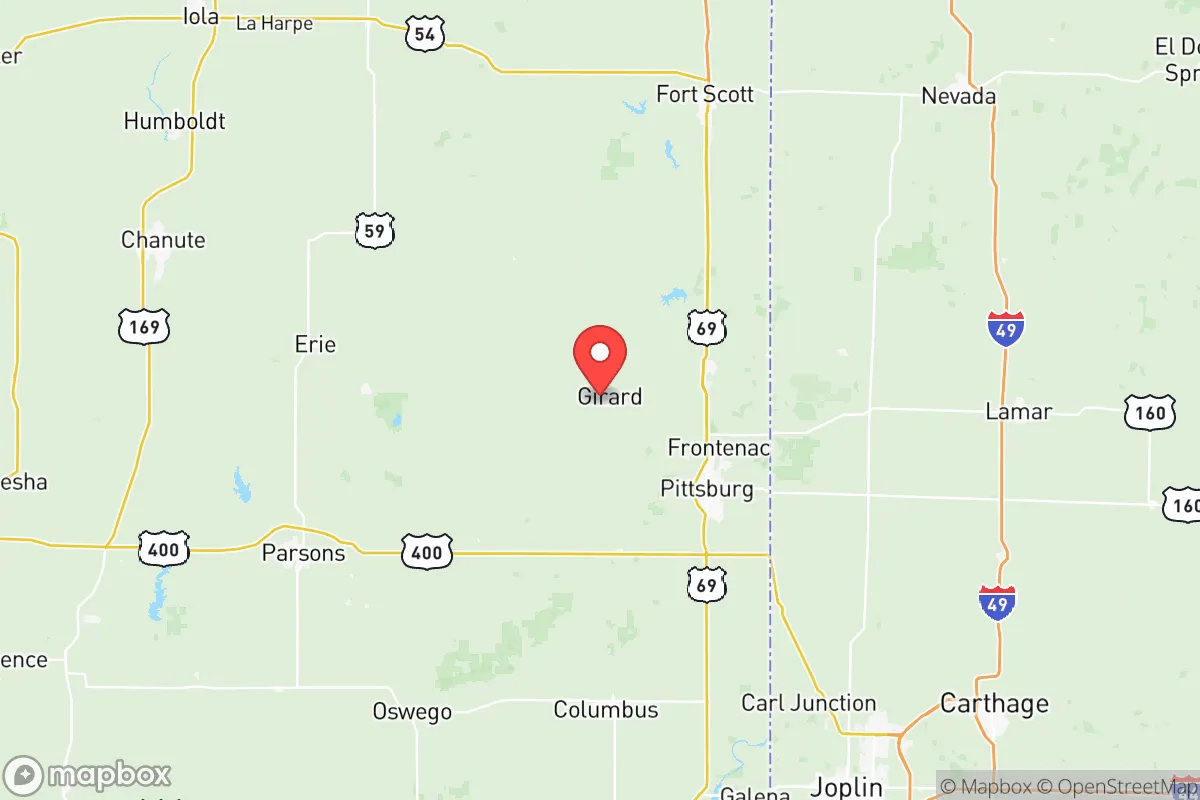
The people of Crawford County, Kansas, today are a predominantly white, native-born population of roughly 39,000, concentrated in the historic mining and rail towns of Pittsburg, Frontenac, and Girard. With a foreign-born share of just 2.1% and a population that is 84.3% white, the county retains a distinctly Midwestern, working-class character shaped by its 19th-century immigrant roots. The largest minority group is the Hispanic community at 7.1%, followed by small Black (1.8%) and East/Southeast Asian (1.7%) populations, creating a modest but growing diversity that is slowly reshaping the region's cultural identity.
Settlement & growth (pre-1960)
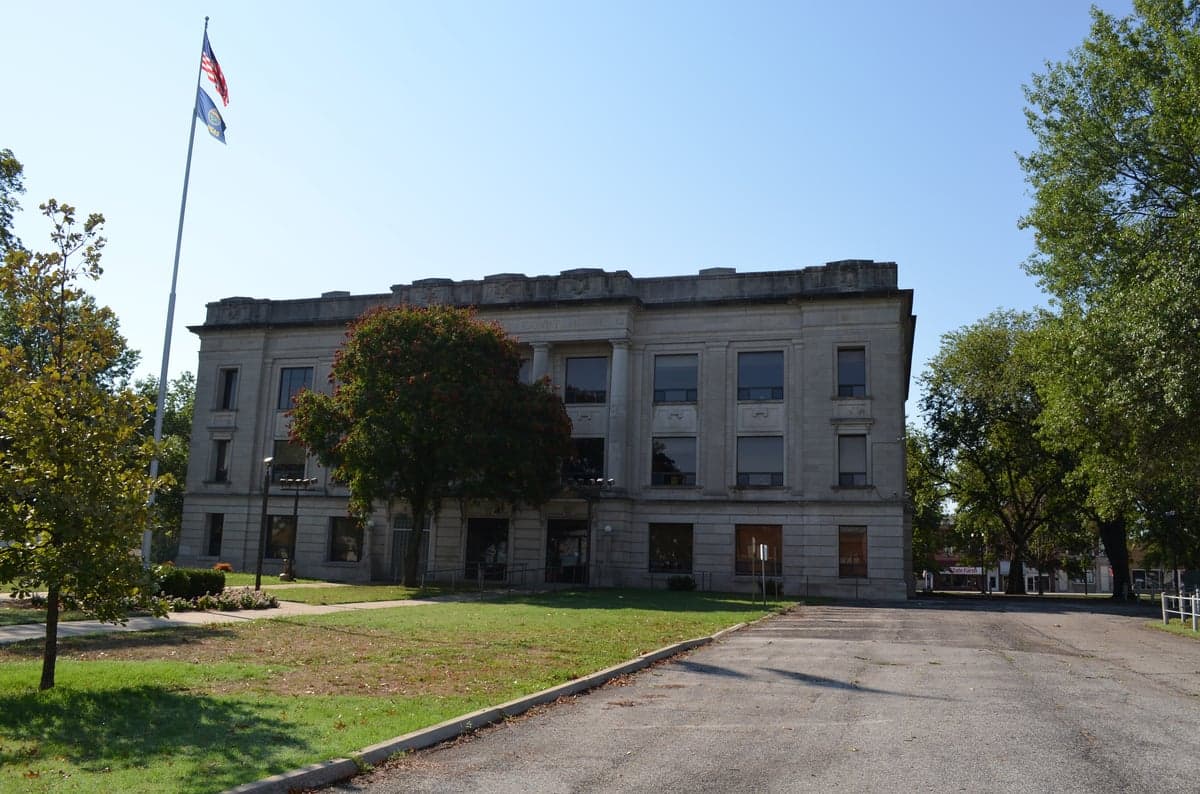
Before American settlement, the area now known as Crawford County was part of the ancestral territory of the Osage Nation, who used the region for hunting and seasonal camps. The Osage were forcibly removed to Indian Territory (present-day Oklahoma) through a series of treaties in the 1820s and 1830s, opening the land to Euro-American settlers. The county was officially organized in 1867, named after Kansas politician Samuel J. Crawford, and its early growth was tied to agriculture and the expansion of the railroad.
The first major wave of settlers were native-born Americans from the Midwest and Upper South—primarily from Ohio, Indiana, Illinois, and Missouri—who arrived in the 1850s and 1860s to farm the prairie. These early pioneers established the county seat of Girard (founded 1868) and the town of Arma (1870s) as agricultural trading centers. The real demographic transformation, however, began in the 1870s with the discovery of vast coal deposits beneath the county. The coal boom drew a massive wave of European immigrants, fundamentally shaping the county's ethnic makeup for the next century.
Between 1870 and 1910, tens of thousands of immigrants arrived to work in the underground coal mines. The largest group were Italian immigrants, primarily from the regions of Lombardy, Piedmont, and Sicily, who settled in the mining camps and towns of Frontenac, Pittsburg, and Franklin. By 1900, Frontenac was one of the most heavily Italian towns in Kansas, with Italian-language newspapers and Catholic parishes. A second major group were Slovenian and Croatian immigrants from the Austro-Hungarian Empire, who concentrated in Cherokee and the northern part of Pittsburg. Smaller but significant groups included German Catholics from the Rhineland and Irish immigrants, who settled in Mulberry and Hepler. These groups built distinct ethnic neighborhoods, churches, and fraternal organizations that persisted for generations.
The coal industry peaked around 1910, employing over 7,000 miners, but declined steadily after World War I due to competition from oil and natural gas. The Great Depression and the Dust Bowl of the 1930s hit the county hard, causing out-migration of both farm families and miners. Many left for California or larger Midwestern cities. The post-World War II period saw a modest recovery, driven by the expansion of Pittsburg State University (founded as a manual training school in 1903) and the growth of manufacturing. The county's population peaked at around 44,000 in 1950, then began a slow decline as the last coal mines closed in the 1960s and 1970s.
Modern era (post-1965)
The 1965 Hart-Cellar Act had a limited direct impact on Crawford County, as the region was not a primary destination for post-1965 immigration. The county's foreign-born population remained below 2% through the 1990s, and the population continued its slow decline, bottoming out at around 38,000 in 2000. The major demographic shift of the modern era has been the growth of the Hispanic population, which rose from less than 2% in 1990 to 7.1% today. This growth is driven primarily by Mexican immigrants and their descendants, who arrived to work in the county's meatpacking plants and agricultural sector. The largest concentration of Hispanic residents is in Pittsburg, where a small but visible Latino commercial corridor has developed along Broadway Street, with Mexican grocery stores, taquerias, and a Spanish-language Catholic Mass at Our Lady of Lourdes Church.
The East/Southeast Asian community, at 1.7%, is a more recent addition, largely tied to Pittsburg State University. The university has actively recruited international students from Vietnam, South Korea, and China since the 2000s, and a small number have remained in the area after graduation, working in engineering, healthcare, and academia. This community is highly dispersed, with no formal ethnic enclave, but a Vietnamese Buddhist temple was established in rural Crawford County in 2015, serving a regional population of about 200 families. The Black population (1.8%) is historically rooted in the Great Migration of the 1910s-1940s, when African American families moved from the Deep South to work in the coal mines and railroads. Today, the Black community is concentrated in Pittsburg's older neighborhoods near the former rail yards, but has declined significantly since the mines closed.
Domestic migration has been a mixed story. The county has lost population to larger Kansas cities like Wichita and Kansas City, as well as to the Sun Belt states of Texas and Arizona. However, it has gained a small but steady influx of retirees and remote workers from the Kansas City and St. Louis metro areas, attracted by low housing costs and the slower pace of life. Suburbanization has been minimal; the county's towns remain compact, with no significant exurban development. The population is aging, with a median age of 38.6, slightly above the national average.
The future
The population of Crawford County is projected to remain stable or decline slightly over the next 10-20 years, with modest growth in the Hispanic and East/Southeast Asian communities offsetting continued out-migration of young adults. The Hispanic share is likely to rise to 10-12% by 2040, driven by natural increase and continued recruitment for meatpacking and agriculture. The East/Southeast Asian population may grow slowly as Pittsburg State University expands its international enrollment, but retention rates are low—most graduates leave for larger cities. The white population will continue to age and shrink, as the county's birth rate is below replacement level and few white domestic migrants are moving in.
Culturally, the county is becoming slightly more diverse, but it remains a predominantly white, conservative-leaning area. The Hispanic community is increasingly integrated into local civic life, with bilingual school programs in Pittsburg and a growing number of Hispanic-owned businesses. The Italian and Slovenian ethnic identities of the coal-mining era are fading, preserved mainly in church festivals and local historical societies. The county's political character is likely to remain conservative, as the growing Hispanic population in Kansas tends to vote more Republican than Hispanic voters nationally, and the white population is solidly Republican.
For someone moving in now, Crawford County offers a low-cost, low-crime environment with a strong sense of local identity, but limited economic opportunity and demographic dynamism. The county is becoming a quieter, older, and slightly more diverse version of its 20th-century self—a place where the legacy of European immigration is still visible in the brick streets of Frontenac and the Italian bakeries of Pittsburg, even as new Latino and Asian families begin to write the next chapter of its human history.

* Values derived from national, state, county, city and local statistics and may differ in a specific area. Last updated: 2026-06-12T06:56:14.000Z
Narrative content on this page is AI-generated and may contain mistakes. Verify any details that matter before acting on them.
ReloMaps may earn a commission from affiliate links at no extra cost to you.

