
Photo: Wikipedia
Personal Sovereignty in Sedgwick County
Viable for self-reliance. Generally workable, though some barriers may limit total independence.
What does Personal Sovereignty tell us?
Personal Sovereignty measures your capacity for self-reliance and independence with minimal government friction. Higher scores mean fewer barriers between you and the way you want to live... but it assumes you have the space you need and good neighbors.
What does this tell us?
Personal Sovereignty measures your capacity for self-reliance and independence with minimal government friction. Higher scores mean fewer barriers between you and the way you want to live... but it assumes you have the space you need and good neighbors.
State Policy
Energy independence: Self-sufficient (80% of energy produced in-state)
Personal Liberty
Homesteading

Personal Liberty Analysis
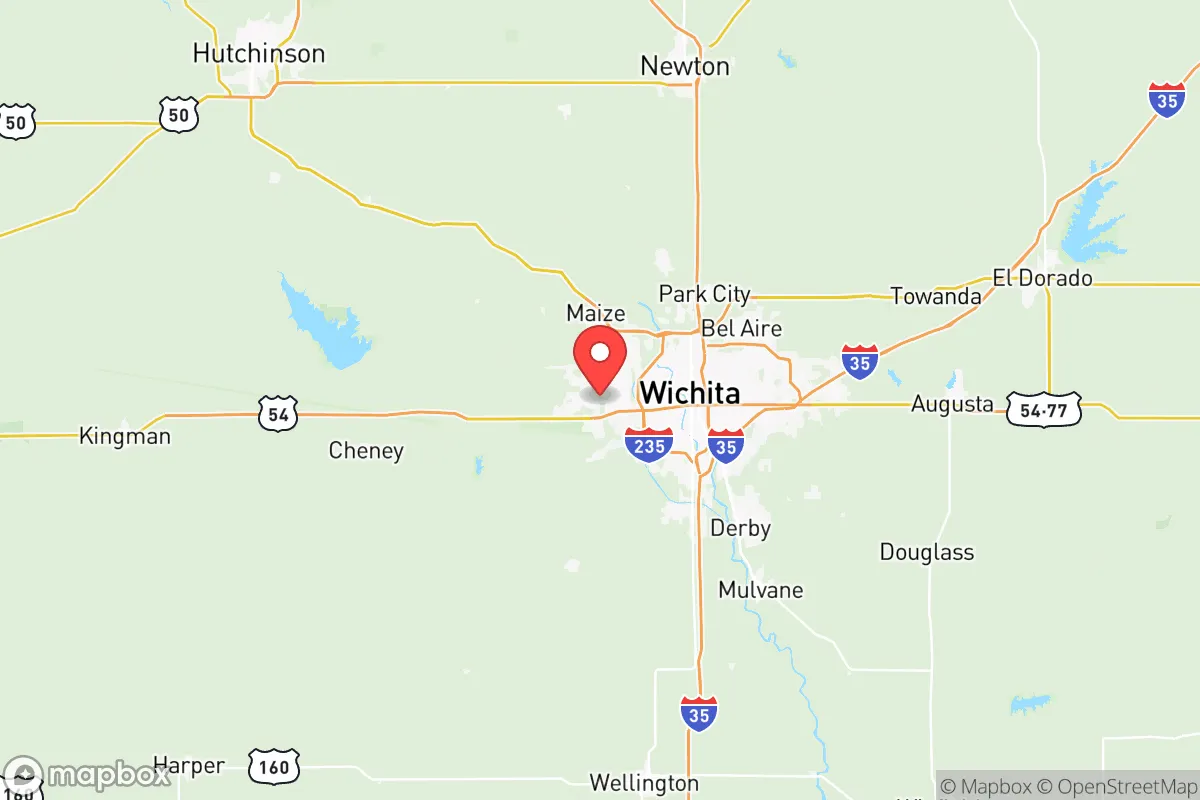
Sedgwick County, anchored by Wichita, offers a notably higher degree of personal sovereignty than much of the eastern or coastal United States, but it is not a libertarian free-for-all. The county sits in a state with a strong tradition of local control and a legal framework that generally respects individual autonomy, yet the reality on the ground varies significantly between the urban core of Wichita and the outlying towns like Goddard, Maize, and Derby. For a conservative-leaning individual or family concerned with government overreach, the key question is not whether Kansas is a freedom-friendly state—it largely is—but how Sedgwick County’s specific municipal codes, zoning ordinances, and law enforcement culture either protect or erode that autonomy. The overall environment leans toward self-reliance, but you must know where the boundaries are drawn, especially if you value the right to live without constant bureaucratic interference.
Tax burden and regulatory posture in Sedgwick County vs. surrounding areas
Kansas’s state-level tax burden is moderate, with a flat income tax rate of 5.7% and a state sales tax of 6.5%, but Sedgwick County adds its own local levies that push the combined sales tax rate to around 8.5% in Wichita proper. This is higher than in smaller towns like Colwich or Benton, where the combined rate can be a full percentage point lower. Property taxes in Sedgwick County are assessed at 11.5% of appraised value for residential property, and the county’s mill levy is competitive with other urban Kansas counties but noticeably higher than in rural areas like Harper or Kingman counties to the south. The regulatory posture is generally business-friendly, with no county-level occupational licensing beyond state mandates, but Wichita’s city government has a reputation for more aggressive code enforcement—especially regarding property maintenance and noise ordinances—than the unincorporated areas or towns like Haysville. For a prepper or homesteader, the key takeaway is that the tax burden is manageable if you live outside Wichita city limits, but the county’s reliance on property taxes means that improving your land (adding a workshop, a greenhouse, or a secondary dwelling) can trigger reassessments that increase your annual costs. The state’s lack of a personal property tax on vehicles or business equipment is a genuine plus, but the county’s regulatory appetite for zoning variances and building permits in the urban core is a persistent friction point for those who value minimal government interference.
Self-defense and gun law specifics in Sedgwick County
Kansas is a constitutional carry state, meaning no permit is required to carry a concealed firearm for anyone legally allowed to possess one, and Sedgwick County fully respects this right. Open carry is legal without a permit, and the county sheriff’s office in Wichita has historically been supportive of Second Amendment rights, though the Wichita Police Department has occasionally faced criticism from gun rights advocates for its handling of defensive gun use incidents. The state preempts local gun ordinances, so cities like Derby or Andover cannot enact their own bans or restrictions—a critical protection against the kind of patchwork regulation seen in states like Colorado or California. Stand-your-ground laws are in effect, with no duty to retreat in any place where you are lawfully present, and the castle doctrine applies to your home, vehicle, and occupied structure. For a survivalist, the practical reality is that you can carry openly or concealed throughout the county without fear of legal harassment, but you should be aware that some private businesses in Wichita—particularly in the Old Town entertainment district—post no-gun signs, which carry the force of trespassing law. The county’s gun culture is robust, with multiple indoor and outdoor ranges, including the Lake Afton Public Shooting Range in Goddard, and a strong network of gun shops and gunsmiths. The legal environment is among the most favorable in the Midwest, but the urban density of Wichita means that defensive encounters are more likely to be scrutinized by prosecutors than in rural areas like Cheney or Garden Plain, where the sheriff’s office is more culturally aligned with armed self-reliance.
Self-reliance and homesteading viability across Sedgwick County
Homesteading viability in Sedgwick County is highly location-dependent, with the most permissive environments found in the unincorporated areas and small towns like Viola, Mount Hope, and Bentley. These areas typically allow livestock—chickens, goats, even cattle—on lots as small as one acre, with minimal permitting requirements beyond basic animal health regulations. In contrast, Wichita city limits restrict livestock to lots of at least two acres for horses and prohibit pigs entirely, while suburban cities like Maize and Andover have homeowners’ association covenants that often ban visible gardening structures, clotheslines, or even front-yard vegetable beds. Off-grid feasibility is limited by state and county building codes that require connection to the electrical grid for new construction, though solar panels are permitted and net metering is available through Westar Energy (Evergy). Rainwater collection is legal without a permit, but well drilling for potable water requires a permit from the Kansas Department of Agriculture and is impractical on lots under five acres due to spacing requirements. The county’s zoning code in unincorporated areas allows for accessory dwelling units (ADUs) without special use permits, making it possible to build a workshop or guest house that could double as a bug-out shelter. For a prepper focused on food security, the growing season is 180 days, and the soil in the Arkansas River valley is fertile, but water rights are a serious consideration—you cannot divert surface water without a permit, and groundwater access is governed by the state’s prior appropriation doctrine. The most homestead-friendly parcels are in the county’s western and southern townships, where lot sizes of five to twenty acres are common and county enforcement is minimal, but you must verify that no deed restrictions or HOA covenants override your plans for self-sufficiency.
Personal liberties in Sedgwick County: parental rights, medical autonomy, speech, and property
Parental rights in Sedgwick County are strongly protected under Kansas law, which includes a parental bill of rights that affirms the fundamental right of parents to direct the upbringing, education, and healthcare of their children. The county’s school districts—particularly the suburban ones like Goddard USD 265 and Maize USD 266—have been responsive to parental concerns about curriculum transparency and library materials, though Wichita USD 259 has faced more controversy over its policies on gender identity and critical race theory. Medical autonomy is a mixed bag: Kansas does not have a state-level vaccine mandate, and the county health department does not enforce any COVID-19 mandates, but the state’s medical freedom is limited by the fact that it has not expanded scope-of-practice for alternative providers, and naturopathic doctors are not licensed. Speech protections are robust under the Kansas Constitution, which provides stronger free speech guarantees than the First Amendment in some contexts, and Sedgwick County has not attempted to regulate political speech or protest activity beyond standard time-place-manner restrictions. Property rights are generally respected, with no county-level rent control or landlord licensing, but the city of Wichita has a rental inspection program that requires landlords to register units and pass periodic inspections—a regulatory overreach that some property owners view as an infringement on their right to use their property as they see fit. The county’s approach to property rights is most favorable in the unincorporated areas, where there are no zoning overlays beyond basic agricultural and residential classifications, and where you can build a fence, store equipment, or operate a home-based business without seeking permission from a planning board.
Overall, Sedgwick County offers a level of personal sovereignty that is significantly higher than in blue-state metropolitan areas, but it is not a sanctuary for those seeking to live entirely outside the system. The county’s tax burden is moderate, its gun laws are among the best in the nation, and its regulatory posture in the rural townships is permissive enough for serious homesteading and self-reliance. The urban core of Wichita introduces friction points—code enforcement, rental inspections, and a more progressive city council—that make it less attractive for the sovereignty-minded individual. For a prepper or survivalist family, the optimal strategy is to locate in the county’s periphery, in towns like Cheney, Garden Plain, or Colwich, where the county’s reach is thinner and the culture of self-reliance is stronger. Compared to neighboring counties like Butler or Sumner, Sedgwick County is more urbanized and regulated, but it still ranks in the top tier of Kansas counties for personal freedom, and far above any county in states like New York, California, or Illinois. The key is to choose your specific location within the county carefully, because the difference between Wichita’s city limits and the unincorporated township of Grant is the difference between living under a municipal bureaucracy and living under a county government that largely leaves you alone.

* Values derived from national, state, county, city and local statistics and may differ in a specific area. Last updated: 2026-05-16T06:11:50.000Z
Narrative content on this page is AI-generated and may contain mistakes. Verify any details that matter before acting on them.
ReloMaps may earn a commission from affiliate links at no extra cost to you.

