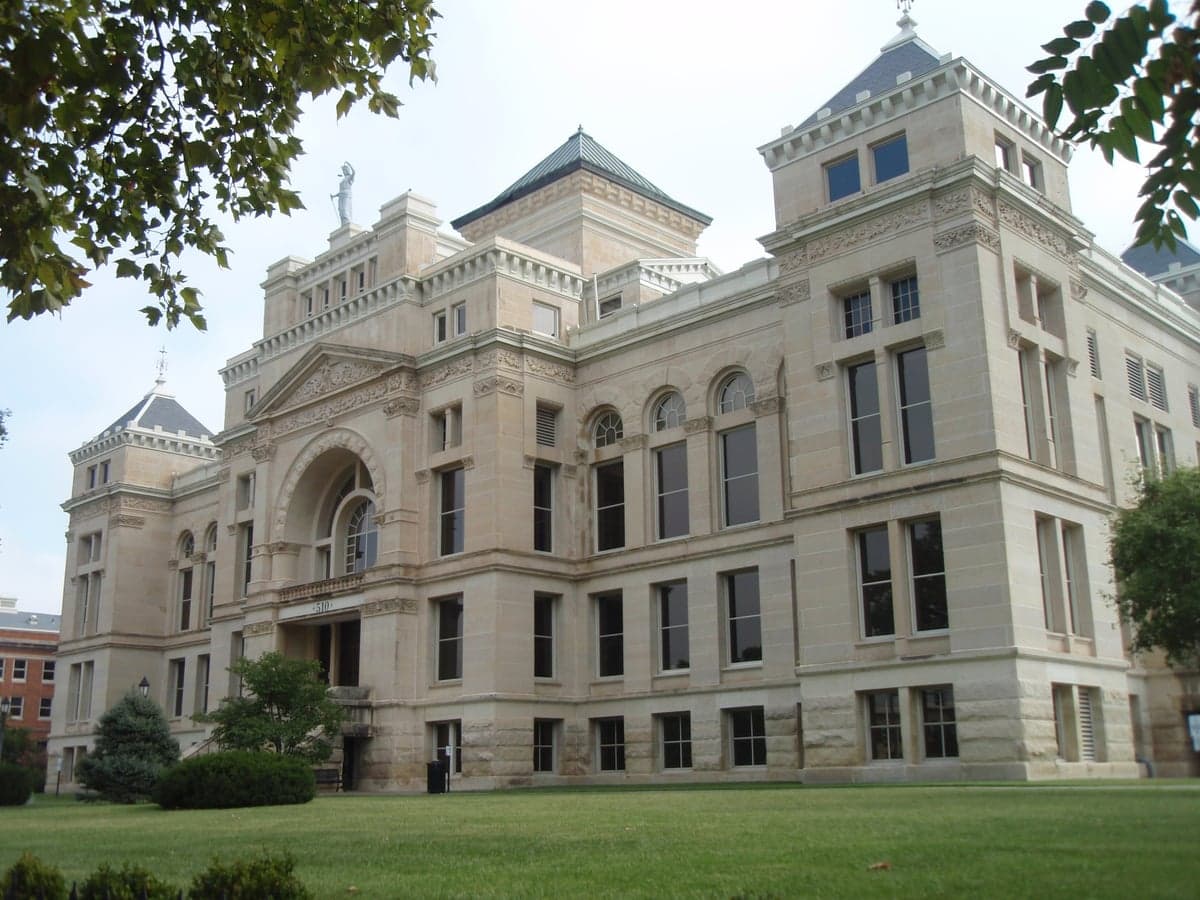
Photo: Wikipedia
Quality of Life in Sedgwick County
A livable area that tracks near national norms for affordability, walkability, and neighborhood health.
What does Quality of Life tell us?
Quality of Life measures an area by evaluating factors like cost of living, nearby amenities, country club access, airport proximity, socioeconomic signals and neighborhood character. For large states, this is a general average — quality of life can vary dramatically between metro areas, suburbs, and rural communities within the same state.
What does this tell us?
Quality of Life measures an area by evaluating factors like cost of living, nearby amenities, country club access, airport proximity, socioeconomic signals and neighborhood character. For large states, this is a general average — quality of life can vary dramatically between metro areas, suburbs, and rural communities within the same state.
Cost of Living
23% below national average
124%
The Real Cost of Living in Sedgwick County for 2026
| Tier | Individual | Family (4) |
|---|---|---|
| Survival | $16k | $29k |
| Comfortable | $37k | $54k |
| Luxury | $122k+ | $189k+ |
| Elite (Top 5%) | $147k+ | $228k+ |
Quality-of-Life Analysis
Sedgwick County, anchored by Wichita but stretching across a broad mix of suburbs, small towns, and open farmland, offers a quality-of-life spectrum that ranges from dense urban convenience to quiet agricultural solitude. The county’s overall cost-of-living index of 77 (well below the U.S. average of 100) and a median home value of $190,700 make it one of the more affordable large-county options in the central U.S., attracting everyone from young professionals seeking city amenities to families and retirees looking for slower-paced communities with lower housing costs.
Largest town(s) & population centers
Wichita, the county seat and Kansas’s largest city, is the dominant population center, home to roughly 390,000 residents. Daily life here revolves around a surprisingly robust cultural scene—the Wichita Art Museum, Old Town’s entertainment district, and Intrust Bank Arena—alongside major employers like Spirit AeroSystems, Textron Aviation, and Via Christi Health. The city offers a median rent of $977 and a commute averaging just under 20 minutes, which is notably short for a metro of its size. Adjacent Derby (pop. ~25,000) and Andover (pop. ~15,000) function as family-oriented suburbs with strong school systems and newer housing developments, drawing professionals who work in Wichita but prefer lower crime rates and larger lots. These towns feel distinctly suburban, with strip malls, chain restaurants, and well-maintained parks, while Wichita itself provides the urban core’s nightlife, museums, and job density.
Smaller towns & rural pockets
Beyond the Wichita metro, Sedgwick County contains a string of smaller communities that offer a markedly different pace. Goddard (pop. ~5,000) and Maize (pop. ~4,500) are growing exurbs where new subdivisions sit alongside working farms; both have their own school districts and a handful of local eateries but rely on Wichita for most shopping and healthcare. Haysville (pop. ~11,000) and Park City (pop. ~8,000) are older, more established bedroom communities with modest ranch homes and a strong blue-collar identity. Further out, Cheney (pop. ~2,200) and Mount Hope (pop. ~800) are true rural towns, where grain elevators dominate the skyline and residents often commute 25–35 minutes into Wichita. Unincorporated areas like Schulte and Greenwich consist of scattered farmsteads and a few dozen homes, offering the lowest property prices in the county—often below $150,000 for a fixer-upper on acreage—but with minimal services and no public transit.
Cost & lifestyle range
The cost spread across Sedgwick County is significant, though the entire county remains affordable by national standards. At the high end, Andover and Derby show median home values around $240,000–$280,000, with newer subdivisions and higher property taxes supporting top-rated schools. In Wichita’s central neighborhoods like College Hill or Riverside, historic homes run $200,000–$350,000, while the city’s southern and northeastern quadrants offer homes under $150,000. At the low end, Haysville and Park City have median values near $160,000, and rural Cheney or Mount Hope see homes frequently priced between $120,000 and $180,000. Rent follows a similar gradient: a one-bedroom in Andover averages $1,050, while the same unit in Haysville or rural Sedgwick County can be found for $750–$850. The lifestyle trade-off is clear: urban and suburban areas provide walkable amenities, dining variety, and shorter commutes, while rural pockets offer space, quiet, and lower housing costs at the expense of longer drives and fewer local services.
The county’s diversity of settings means that no single profile fits all. Young professionals and empty-nesters often gravitate to Wichita’s urban core or the walkable suburbs of Andover and Derby, while families seeking affordable acreage and a slower rhythm find their fit in Goddard, Maize, or the farm towns west of the Arkansas River. Sedgwick County’s low cost of living, short average commute, and genuine range from city lofts to prairie homesteads make it a practical choice for anyone who values choice over uniformity.

Crime in Sedgwick County
Crime rates similar to the national median for U.S. locations.
Violent CrimeViolent Crime Analysis
Property CrimeProperty Crime Analysis
Crime Analysis
Sedgwick County, anchored by Wichita, presents a crime picture that is significantly more challenging than both Kansas state averages and national benchmarks, with a violent crime rate of 447.8 per 100,000 residents and a property crime rate of 1,806.8 per 100,000. These figures place the county among the higher-risk areas in the state, driven largely by concentrated crime in Wichita’s urban core and certain surrounding communities. While suburban enclaves like Andover, Derby, and Goddard report notably lower incident rates, the county’s overall safety profile is heavily weighted by the challenges facing its largest city.
Crime in context
Sedgwick County’s violent crime rate of 447.8 per 100,000 is roughly 25% higher than the national average and nearly double the Kansas state average of approximately 350 per 100,000. Property crime at 1,806.8 per 100,000 similarly exceeds the national rate of about 1,950 per 100,000—but is substantially above the Kansas state average of roughly 1,600 per 100,000. The disparity is most pronounced in Wichita itself, which accounts for the vast majority of countywide incidents. By contrast, the city of Andover reports violent crime rates below 100 per 100,000, and Derby’s property crime rate hovers around 1,200 per 100,000—well under the county average. This urban-suburban divide is a critical factor for anyone evaluating relocation options within the county.
What residents experience
For residents, the day-to-day reality of safety in Sedgwick County varies dramatically by location. In Wichita’s downtown and near-north neighborhoods, property crimes such as vehicle break-ins and residential burglaries are common, while violent incidents—including aggravated assaults and robberies—are concentrated in areas with higher poverty and population density. The progressive policies of the Sedgwick County District Attorney’s office, which have emphasized diversion programs and reduced sentencing for certain non-violent offenses, have drawn criticism from law enforcement and victim advocacy groups. Critics argue that these approaches, while intended to reduce incarceration, have contributed to repeat offending and a perception of leniency that undermines public safety. In contrast, communities like Goddard and Maize, which maintain their own police departments and more conservative judicial approaches, report consistently lower crime rates and higher resident satisfaction with public safety.
Neighborhood-level variation
Neighborhood-level data reveals sharp contrasts. The safest areas within Sedgwick County are generally the suburban cities to the east and south: Andover, Derby, and Goddard each post violent crime rates below 150 per 100,000, with property crime rates roughly half the county average. Wichita’s College Hill and Riverside neighborhoods, while more urban, also show lower-than-average crime due to active neighborhood associations and private security patrols. Conversely, the highest crime rates are concentrated in Wichita’s core zip codes (67203, 67214, 67211), where violent crime can exceed 800 per 100,000. The city of Haysville, a smaller suburb south of Wichita, falls in the middle range with property crime near the county average but violent crime slightly below. For prospective residents, choosing a specific city or neighborhood within Sedgwick County is the single most impactful decision for personal safety, as the countywide averages obscure a wide spectrum of risk.
* Values derived from national, state, county, city and local statistics and may differ in a specific area. Last updated: 2026-05-16T06:11:50.000Z
Narrative content on this page is AI-generated and may contain mistakes. Verify any details that matter before acting on them.
ReloMaps may earn a commission from affiliate links at no extra cost to you.

