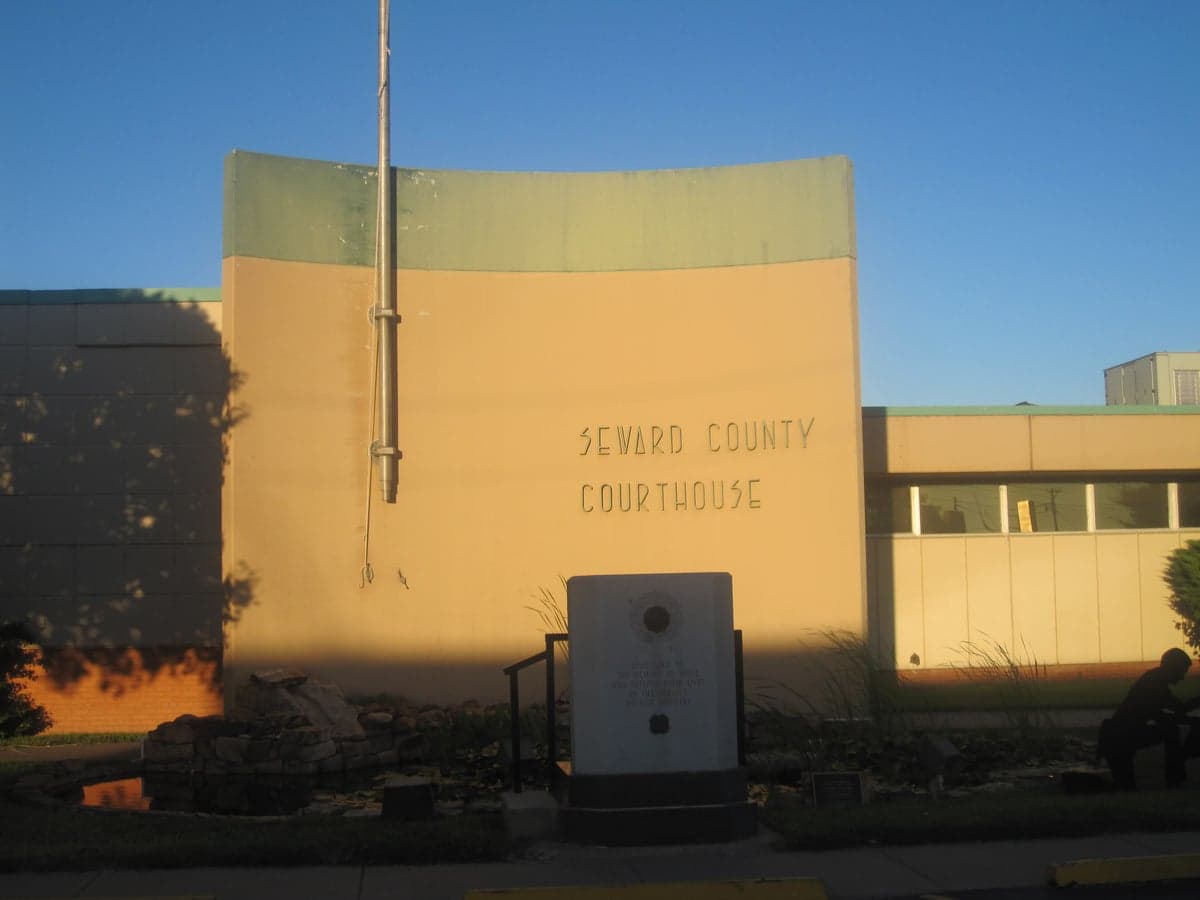
Photo: Wikipedia
Political ClimatePolitical Climate in Seward County
Showing district-level results — no local-only data available.
Local Political AnalysisPolitical Analysis of Seward County
Look, if you're thinking about planting roots in Seward County, you need to understand the political lay of the land. This place is deep red. The Cook PVI sits at R+16, making it one of the most reliably conservative corners of Kansas. And I'm not just talking about voting trends, I'm talking about a way of life that's held steady even as the rest of the country seems to be losing its mind. Locals here still believe in minding your own business, keeping the government out of your wallet, and letting people live by their own values. That hasn't changed much, but I'll tell you, the pressure from outside is real.
How it compares
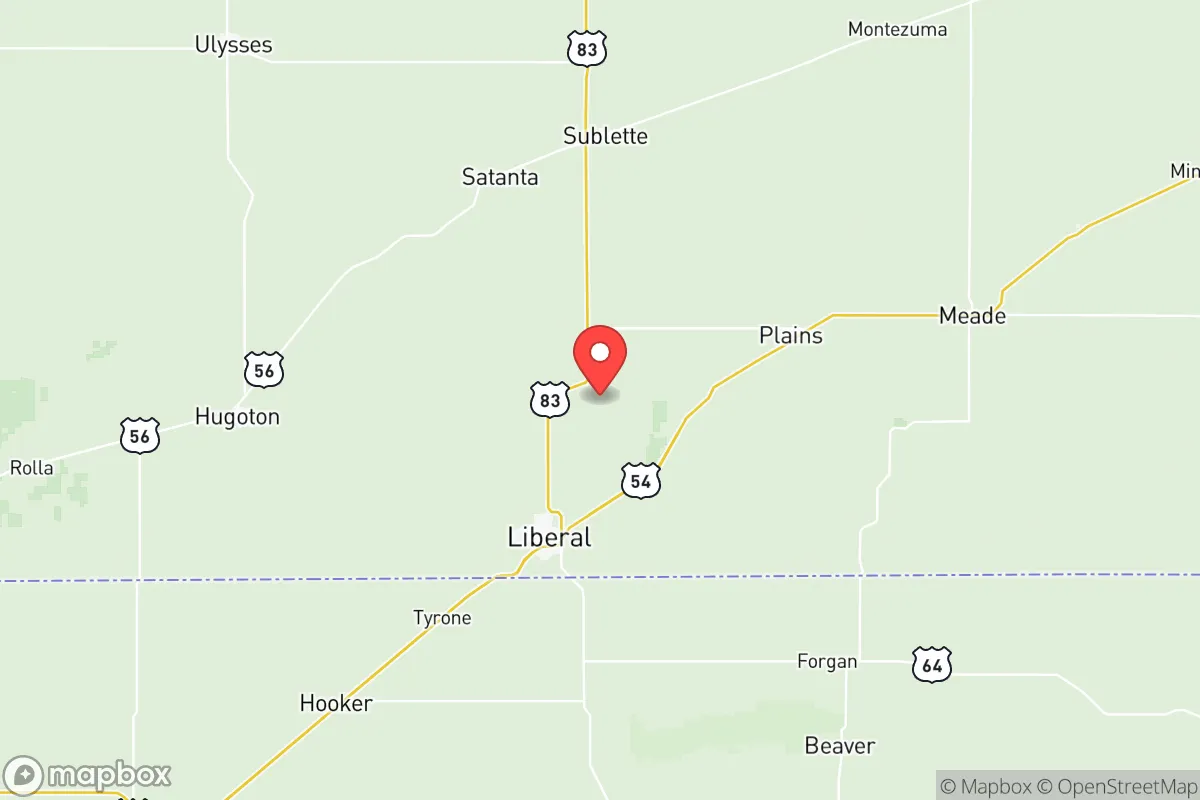
Compared to the rest of Kansas, which sits at R+9, Seward County is practically a fortress of conservative values. That six-point gap isn't an accident. While the state has seen some drift—especially in the suburbs around Johnson County where you've got folks pushing progressive ideas into the school boards—Seward County has held the line. The biggest difference you feel here is the local culture of self-reliance. In places like the city of Liberal, you'll find the county's political engine, but even there, the conservative majority is solid. You might see a few more moderate or even blue-leaning precincts closer to the center of town, especially around the hospital or the community college, where state employees and educators tend to cluster. Head out to Kismet or Plains, though, and it's as red as it gets—those communities run on agriculture and oil, and they've got zero patience for government overreach. The swing precincts? Honestly, there aren't many. The county's political lean is so consistent that even the occasional Democrat who wins a local seat usually has to run on a pretty conservative platform.
What this means for residents
For you, the resident, this translates into a few things you can count on. Your rights aren't constantly under siege here. The local government isn't breathing down your neck with mask mandates, vaccine passports, or telling you what you can and can't do with your property. The county commission and the city councils—especially in Liberal—have fought hard to keep the heavy hand of the state and federal government at bay. That's not to say there's no local government at all; you've got your typical taxes and regulations. But there's a deep skepticism of any proposal that expands a bureaucrat's power. You see it in the way they handle land use, gun rights (unfortunately, it's wise to be concerned about those even here), and even local school policy, where parents still have a real voice. If you're worried about the direction the country is heading, this is the kind of place where that feels more like a distant worry than a daily reality.
The real distinction in Seward County is a cultural one. This community isn't just Republican by party registration; it's conservative by instinct. People wave the flag, they go to church, and they believe in the Second Amendment as a check on government power. The biggest battle I see coming is the push from outside—corporate media, state-level politicians from the eastern part of Kansas, and the constant federal pressure—trying to erode that independence. So far, Seward County has weathered that storm better than most, but you've got to stay alert. The long-term trend is concerning because every election cycle brings new attempts to chip away at our freedoms. If you value your liberty and want to live somewhere that still remembers what that means, you won't find many better places. But don't get complacent; this is a fight that isn't over.

State Political ClimatePolitical Climate in Kansas
State Political AnalysisPolitical Environment in the State
Kansas is a solidly Republican state with a Cook PVI of R+9, but don’t let that number fool you into thinking it’s a monolith. The state has been on a slow, grinding shift rightward over the past 20 years, driven by a deepening urban-rural split and an exodus of moderate Republicans from the party. While the statewide lean is reliably red, the real story is the internal tension between the conservative heartland and the increasingly progressive stronghold of the Kansas City metro, which creates a dynamic that feels more like a tug-of-war than a settled consensus.
Urban vs. rural divide
The political map of Kansas is a textbook case of the American divide. The eastern third of the state, anchored by Johnson County (suburban Kansas City), is the state’s population center and its most politically competitive region. Johnson County used to be a reliable Republican suburb, but it has shifted noticeably leftward over the last decade, driven by an influx of out-of-state professionals and younger families. In 2020, Joe Biden won Johnson County by about 8 points, a stark contrast to the rest of the state. Wyandotte County (Kansas City, KS) and Douglas County (Lawrence, home to the University of Kansas) are deep blue, providing the bulk of Democratic votes. Meanwhile, the rest of the state—the vast, open plains stretching west from Topeka—votes overwhelmingly Republican. Sedgwick County (Wichita) is a bellwether: it leans Republican but is not as deep red as the rural counties, often deciding close statewide races. The rural counties, like Sherman County in the far west or Greenwood County in the Flint Hills, routinely vote 80%+ Republican. This geographic split means that while the state is safe for Republicans in presidential years, it can produce surprises in primaries and down-ballot races, as the moderate wing of the GOP still holds some sway in the suburbs.
Policy environment
Kansas’s policy environment is a mixed bag for conservatives. The state has a flat income tax rate of 5.7% (after the infamous “Brownback experiment” tax cuts were partially rolled back), and the sales tax is relatively high at 6.5% statewide, with local add-ons pushing it higher in some cities. Property taxes are a persistent complaint, especially in Johnson County, where they fund well-regarded public schools. On the regulatory front, Kansas is generally business-friendly, with a right-to-work law and limited zoning in most rural areas. Education policy is a flashpoint: the state has a school choice program (tax-credit scholarships for private school), but it’s limited compared to states like Florida or Arizona. The state board of education has swung between conservative and moderate control, leading to inconsistent curriculum battles. Healthcare is a sore spot—Kansas has not expanded Medicaid under the Affordable Care Act, a decision that has left a coverage gap for low-income adults and strained rural hospitals. Election laws are solid: the state requires a photo ID to vote and has voter registration deadlines, but it also offers early voting and no-excuse absentee mail voting, which some conservatives view as a vulnerability. Overall, the policy environment is conservative-leaning but not aggressively so, with a strong streak of pragmatism in the legislature that frustrates hardliners.
Trajectory & freedom
On the freedom front, Kansas has been a mixed picture over the past decade. The good news for conservatives: the state passed a constitutional amendment in 2022 affirming that there is no right to abortion in the Kansas Constitution, but it was soundly defeated by voters in a referendum, a major setback for the pro-life movement. That vote showed that even in a red state, there is a strong libertarian streak on personal medical choices. On gun rights, Kansas is a shall-issue state for concealed carry, with no permit required for open carry, and it has a “stand your ground” law. The legislature has also passed a Second Amendment Preservation Act, though it’s largely symbolic. Parental rights have been strengthened with a 2023 law requiring schools to notify parents of any changes to a student’s “services or support” related to gender identity—a win for family autonomy. However, the state has also seen creeping government overreach in the form of a statewide mask mandate during COVID (since expired) and a controversial 2021 law that gave the attorney general power to prosecute local officials who “defund” the police. The biggest freedom concern for many conservatives is the state’s tax burden: while income taxes are flat, the overall tax load is moderate, and the state has a history of budget volatility. The trajectory is cautiously positive for liberty, but the abortion referendum and the ongoing battle over school curriculum show that the culture war is far from settled.
Civil unrest & political movements
Kansas has not seen the kind of large-scale civil unrest seen in coastal states, but there have been notable flashpoints. The 2020 Black Lives Matter protests in Kansas City, KS and Lawrence were relatively small and peaceful compared to other cities, but they did lead to calls for police reform that were largely ignored by the Republican legislature. The most visible political movement in recent years has been the rise of the “Moms for Liberty” and other parental rights groups, which have been active in school board races in Johnson County and Olathe. Immigration politics are relatively quiet—Kansas is not a border state, but there have been local controversies over sanctuary city policies, with the legislature passing a law in 2020 banning them. Election integrity has been a hot topic: the 2020 election saw no major fraud in Kansas, but the legislature has tightened rules around ballot drop boxes and mail-in voting. A notable flashpoint was the 2022 governor’s race, where Democrat Laura Kelly won re-election in a red state, partly due to backlash against the abortion amendment. This has energized both sides, with grassroots conservative groups now focused on flipping the statehouse and governor’s mansion in 2026. A new resident would notice the political activism is more subdued than in swing states, but it’s there—especially in the form of yard signs, church bulletin announcements, and local party meetings.
Projection
Looking ahead 5-10 years, Kansas is likely to remain a red state, but the margin will narrow. The key demographic trend is the continued growth of Johnson County, which is becoming more diverse and more Democratic. If that trend accelerates, it could flip the state to a purple status in presidential elections by the early 2030s. However, the rural counties are not shrinking as fast as in some other Plains states, thanks to a stable agricultural economy and some in-migration from the coasts. The state’s biggest wildcard is the ongoing battle over education and parental rights—if conservatives can hold the line on school choice and curriculum, they will keep suburban families in the GOP column. If not, the suburbs could drift further left. The Medicaid expansion debate will also be a defining issue; if the state finally expands it, it could ease rural hospital closures and improve the GOP’s standing in those areas. For someone moving in now, expect a state that is reliably Republican but with a growing progressive urban core, meaning that state-level politics will remain competitive and occasionally produce surprises. The culture war will continue, but the state’s strong libertarian streak means that most personal freedoms—guns, speech, property rights—will remain protected.
Bottom line for a new resident: Kansas offers a solidly conservative policy environment with low crime, good schools in the suburbs, and a strong sense of community in rural areas. You’ll have to deal with a moderate tax burden and a state government that sometimes frustrates hardliners with its pragmatism. The biggest practical takeaway is to choose your county carefully: if you want a deep-red, low-regulation lifestyle, head to the rural west or south. If you want good schools and a suburban feel with a bit more political diversity, Johnson County is your spot. Just know that the political winds are shifting, and the state’s future will be decided in those suburban precincts. It’s a good place to raise a family, but keep an eye on the school board races—that’s where the real action is.
* Values derived from national, state, county, city and local statistics and may differ in a specific area. Last updated: 2026-05-21T05:52:08.000Z
Narrative content on this page is AI-generated and may contain mistakes. Verify any details that matter before acting on them.
ReloMaps may earn a commission from affiliate links at no extra cost to you.

