Photo: Wikipedia
Demographics of Kenner, LA
Affluence Level in Kenner, LA
A middle-class area roughly in line with national averages across income, home values, education, and employment.
People of Kenner, LA
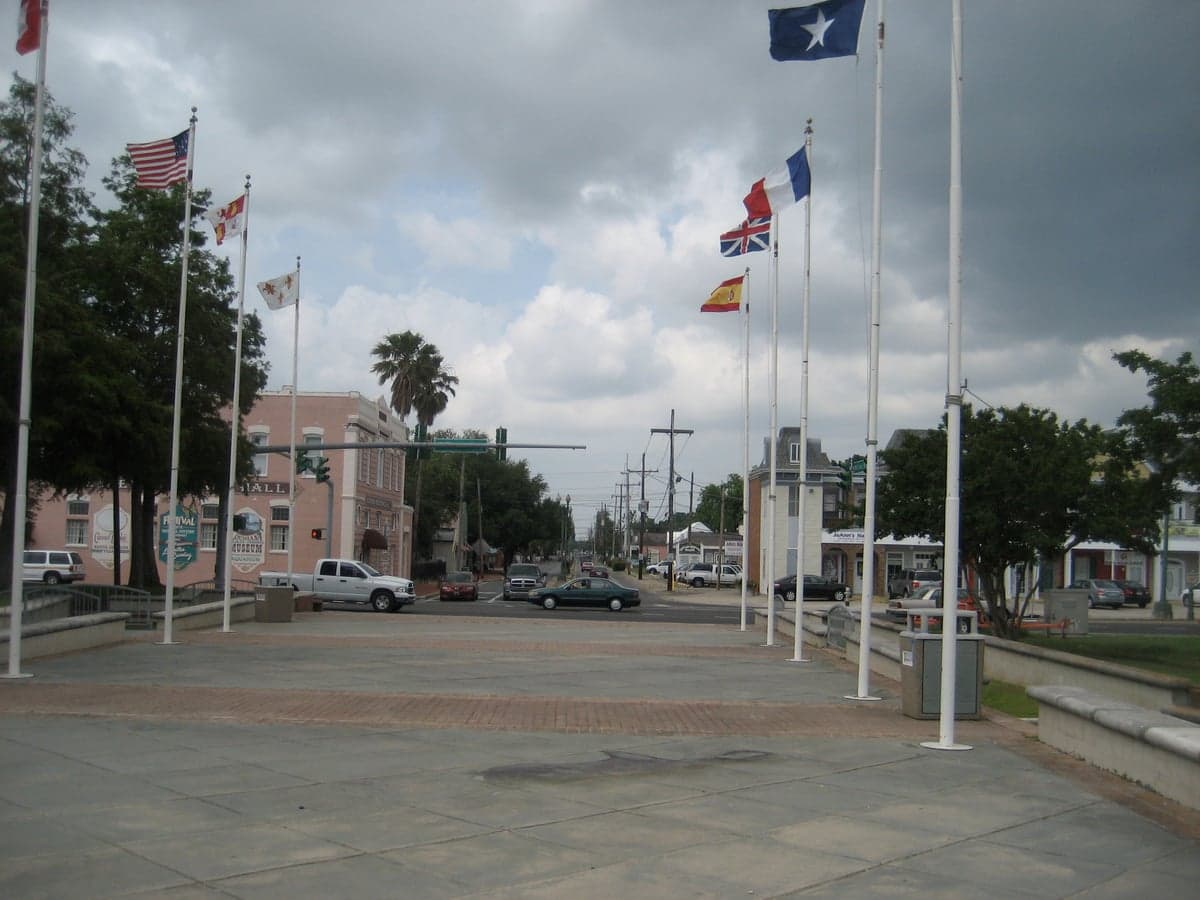
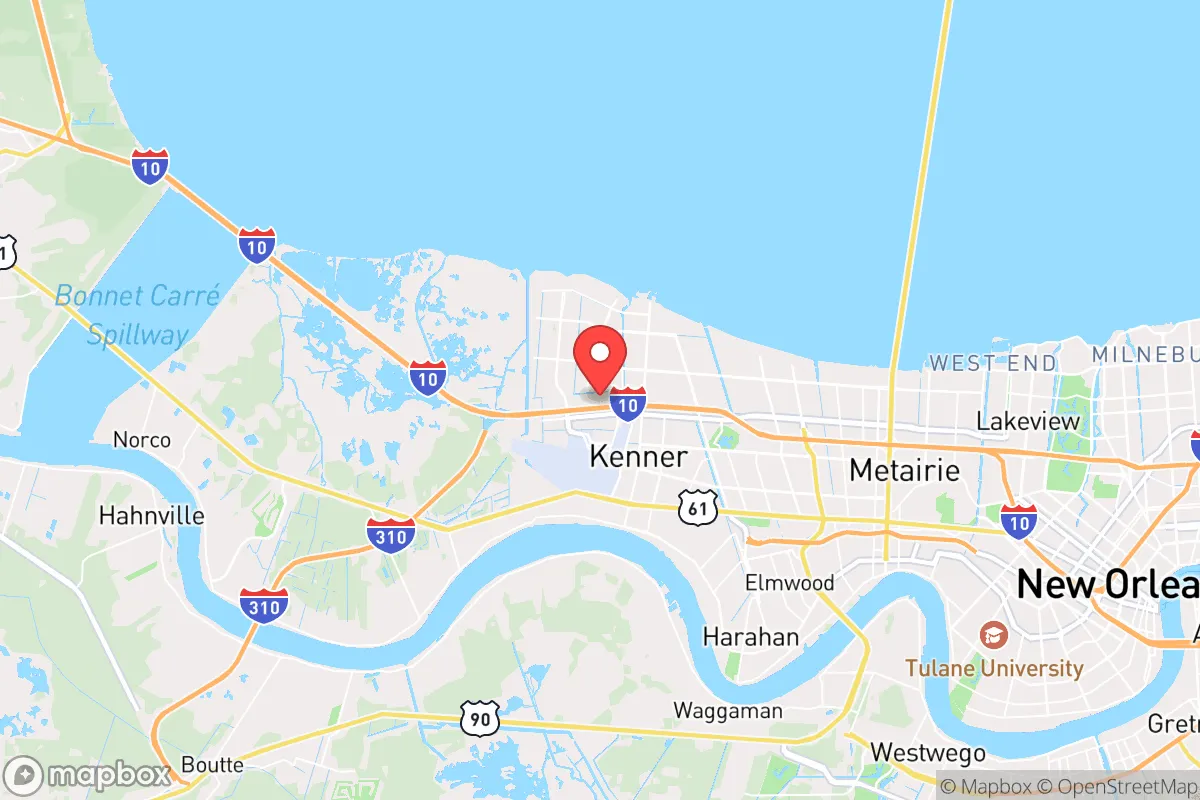
Kenner, Louisiana, is a densely settled suburban city of 65,113 residents that blends a historic white Creole and Italian Catholic core with a rapidly diversifying population driven by Hispanic and Indian-subcontinent immigration. Located between the Mississippi River and Lake Pontchartrain, just west of the New Orleans airport, Kenner has transformed from a small farming and fishing village into one of the most ethnically varied cities in the metro area. Its identity today is shaped by distinct neighborhoods that reflect each wave of settlement, from the old riverfront enclaves to newer subdivisions absorbing immigrant families.
How the city was settled and grew
Kenner’s original population was drawn by the fertile Mississippi River batture land and the promise of the New Orleans–Jacksonville railroad, which arrived in the 1850s. The city was formally incorporated in 1867, but its early growth was slow, centered on the Riverton neighborhood along the river levee, where French Creole and German truck farmers raised produce for New Orleans markets. By the early 1900s, Italian immigrants—mostly Sicilians—began settling in the Riverview area, working as fishermen, oystermen, and small-scale farmers. These families built St. Elizabeth Ann Seton Church and established a tight-knit Catholic community that dominated Kenner’s social and political life through the mid-20th century. The city remained a small, predominantly white, working-class suburb until the post-World War II boom, when the construction of the New Orleans International Airport (now Louis Armstrong Airport) in the 1940s and the expansion of Interstate 10 in the 1960s triggered rapid suburbanization.
Modern era (post-1965)
The 1965 Hart-Celler Act opened immigration from Asia and Latin America, but Kenner’s modern demographic shift accelerated after Hurricane Katrina in 2005, when thousands of displaced New Orleans residents—many of them Black—relocated to the city’s newer subdivisions. Today, the white population stands at 41.7%, down from over 80% in 1980, while the Hispanic share has surged to 29.3%, concentrated in the Chateau Estates and Lake Forest neighborhoods near the airport. These areas feature mid-century ranch homes and apartment complexes that attracted Central American and Mexican immigrants working in construction, hospitality, and airport services. The Black population, at 18.2%, is most visible in the Greenlawn Terrace and Westgate subdivisions, which grew after Katrina as families sought affordable housing with better schools. East and Southeast Asian communities—primarily Vietnamese and Filipino—make up 2.4% of residents, with a small cluster near the Veterans Memorial Boulevard corridor, while the Indian-subcontinent population (Indian, Pakistani, Bangladeshi) has reached 2.2%, many drawn by professional jobs at the airport and nearby medical centers, settling in newer developments like Lakeshore Estates. The foreign-born share is 10.3%, and the college-educated rate is 28.7%, slightly below the national average, reflecting a blue-collar and service-oriented economy.
The future
Kenner’s population is trending toward a tripartite division: a shrinking white Catholic base in the older riverfront neighborhoods, a growing Hispanic and Indian-subcontinent middle class in the central and lake-side subdivisions, and a stable Black population in the post-Katrina enclaves. The Hispanic community is the fastest-growing segment, driven by both immigration and higher birth rates, and is expected to approach 35% of the city by 2035. The Indian-subcontinent population, while smaller, is growing through professional migration and is likely to double its share within a decade as the metro area’s tech and healthcare sectors expand. The white population is aging and declining, but the city is not homogenizing—instead, it is tribalizing into distinct ethnic neighborhoods, with limited intermarriage or residential mixing between the major groups. The East/Southeast Asian population is plateauing, as younger generations move to newer suburbs in St. Tammany Parish.
For someone moving to Kenner now, the city offers a genuinely diverse, middle-class suburban environment with strong Catholic and immigrant institutions, but it is not a melting pot. New arrivals will find that their experience is heavily shaped by which neighborhood they choose: the historic Italian Creole Rivertown, the Hispanic-majority Chateau Estates, or the Indian-subcontinent professional corridor near Lakeshore. The city’s future is one of stable, enclave-based diversity, with each group maintaining its own cultural and religious infrastructure, rather than a fully integrated community.

* Values derived from national, state, county, city and local statistics and may differ in a specific area. Last updated: 2026-04-23T04:59:15.000Z
Narrative content on this page is AI-generated and may contain mistakes. Verify any details that matter before acting on them.
ReloMaps may earn a commission from affiliate links at no extra cost to you.

