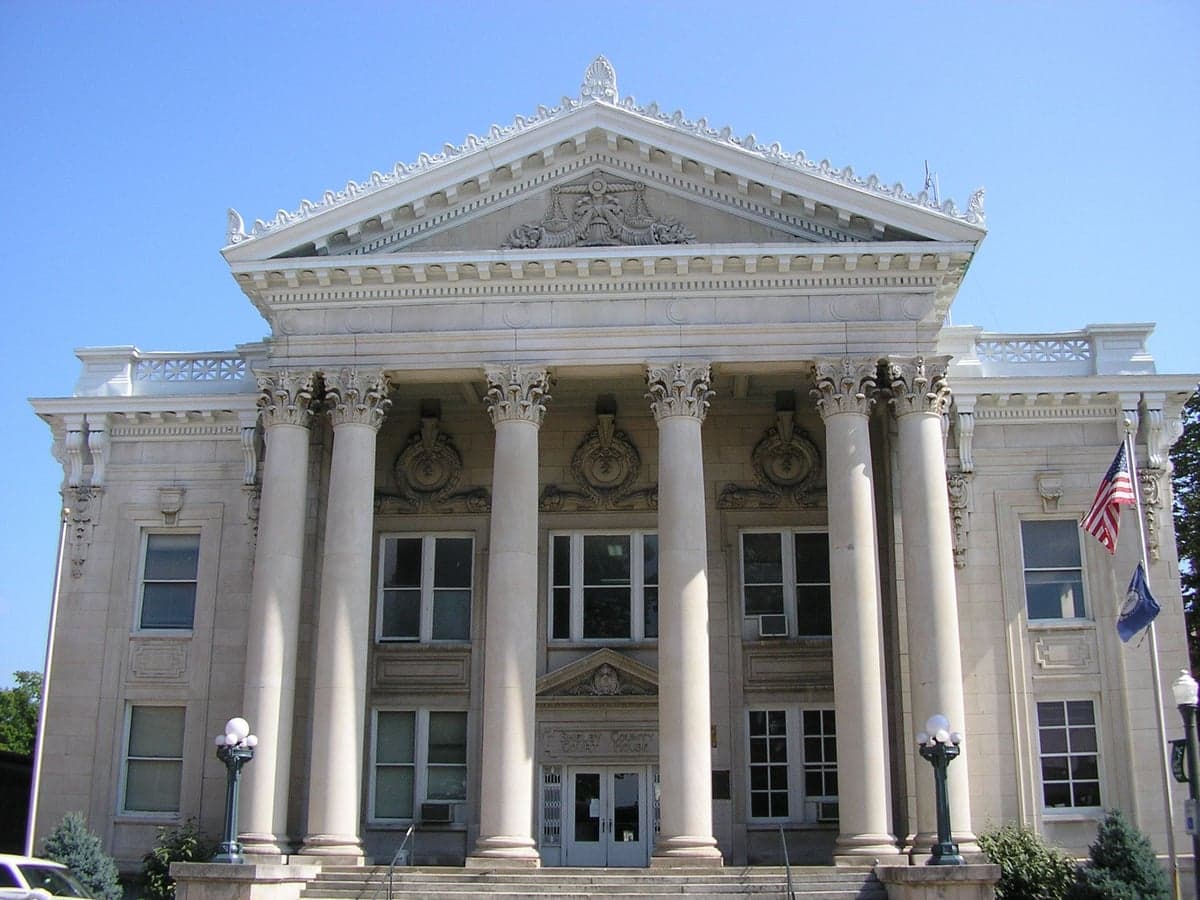
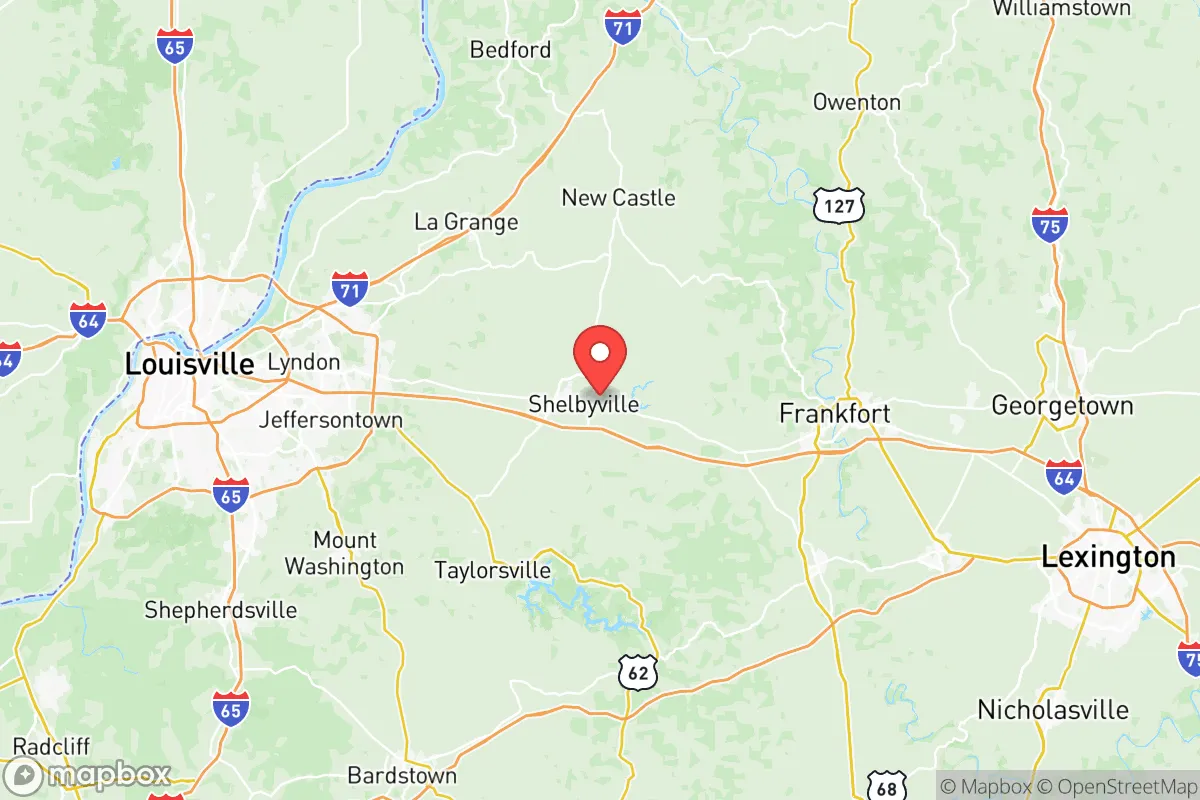
Photo: Wikipedia
Demographics of Shelby County
Affluence Level in Shelby County
A middle-class area roughly in line with national averages across income, home values, education, and employment.
People of Shelby County
Shelby County, Kentucky, today is a predominantly white, family-oriented community of 48,599 residents, characterized by a blend of historic small-town roots and modern suburban growth. The county’s identity is shaped by its agricultural heritage, a strong equine industry, and a growing Hispanic population that now makes up 10.8% of residents, while the foreign-born share sits at 4.0%. With a 31.0% college-educated rate and a median age reflecting a mix of young families and retirees, Shelby County offers a quieter, more affordable alternative to the Louisville metro area, with a distinctly conservative-leaning culture centered on faith, land, and local community.
Settlement & growth (pre-1960)
Before European settlement, the area now known as Shelby County was part of the hunting grounds of the Shawnee and Cherokee nations, who used the fertile Bluegrass region for seasonal buffalo and deer hunting. No permanent Native American villages existed within the county’s current boundaries, as the land was largely a contested buffer zone between tribes. The first European Americans arrived in the late 1770s, following the Wilderness Road through the Cumberland Gap. These early settlers were primarily of Scots-Irish and English descent, drawn by Kentucky’s rich limestone soil and the promise of land grants for Revolutionary War veterans.
Shelby County was formally established in 1792, named after Isaac Shelby, Kentucky’s first governor. The county seat, Shelbyville, was founded the same year and quickly became a hub for tobacco and hemp farming. By the 1820s, a wave of German immigrants began arriving, many settling in the northern part of the county around Simpsonville and Waddy. These families brought skills in distilling and brewing, contributing to the region’s early whiskey industry. A smaller number of Irish immigrants came in the 1840s, working on the Louisville and Frankfort Railroad, which connected Shelbyville to Louisville by 1849.
Enslaved African Americans made up a significant portion of the county’s population before the Civil War—about 30% in 1860—working primarily on tobacco plantations. After emancipation, many freedmen remained in the area, forming small communities such as Christiansburg and the Southville area near Shelbyville. The post-Reconstruction period saw little new immigration; the county’s population remained overwhelmingly native-born white and Black through the early 1900s. The Great Depression and World War II brought a modest influx of rural Kentuckians from eastern coal counties, seeking work in Shelbyville’s growing manufacturing sector, including the Kentucky-Tennessee Clay Company and early auto parts plants.
By 1960, Shelby County’s population stood at roughly 18,000, with a nearly homogenous white and Black demographic. The county was still deeply agricultural, with tobacco, corn, and livestock dominating the economy. The construction of Interstate 64 in the 1960s, however, began to reshape the county’s future, connecting Shelbyville to Louisville and Frankfort and setting the stage for suburban expansion.
Modern era (post-1965)
The 1965 Hart-Cellar Act had a limited immediate impact on Shelby County, as the area was not a primary destination for post-1965 immigrants. However, the broader shift toward suburbanization and the growth of the Louisville metro area began to transform the county’s demographics. From the 1970s onward, domestic migration from the Rust Belt—particularly Ohio, Indiana, and Michigan—brought new residents seeking lower taxes, cheaper housing, and a slower pace of life. This wave concentrated in subdivisions around Shelbyville and along the I-64 corridor near Simpsonville, which saw significant new home construction.
The most notable demographic change since 2000 has been the growth of the Hispanic population. Initially drawn by agricultural labor—particularly in the horse industry and tobacco farming—Hispanic families began settling in Shelbyville and the rural areas around Pleasureville and Bagdad. By 2020, the Hispanic share had risen to 10.8%, with many families originating from Mexico and Central America. This community has established small businesses, churches, and cultural organizations, particularly in Shelbyville’s west side. The Black population, at 4.5%, has remained relatively stable, with most African American residents living in Shelbyville and the historic Christiansburg area.
East and Southeast Asian communities make up 1.0% of the population, a small but growing presence linked to professional jobs in Louisville’s healthcare and logistics sectors. Indian subcontinent residents account for just 0.1%, reflecting the county’s limited draw for high-skilled immigration compared to larger metro areas. The foreign-born share of 4.0% is below the national average but has doubled since 2000, driven almost entirely by Hispanic immigration. Suburbanization has accelerated since 2010, with new subdivisions and apartment complexes rising along the I-64 corridor, particularly in Simpsonville, which has become a bedroom community for Louisville commuters. This growth has brought a younger, more diverse population, though the county remains 78.1% white.
The future
Shelby County’s population is projected to continue growing, likely reaching 55,000–60,000 by 2040, driven by continued suburban spillover from Louisville and the expansion of logistics and manufacturing along I-64. The Hispanic share is expected to rise to 15–18% over the next two decades, as family reunification and labor demand in agriculture and construction sustain immigration. This growth will likely concentrate in Shelbyville and the I-64 corridor, while rural areas like Waddy and Finchville may see slower change. The white population share will decline gradually, but the county will remain majority white and culturally conservative. The Black and Asian shares are expected to grow modestly, driven by professional migration from Louisville and the broader region.
The county’s cultural identity is evolving from a purely agricultural community to a hybrid of rural tradition and suburban convenience. New residents—many from out of state—are bringing different expectations for schools, amenities, and housing, creating some tension with long-established families. However, the county’s strong sense of local identity, anchored by events like the Shelby County Fair and the equine industry, is likely to persist. The next 10–20 years will see Shelby County become more diverse, more connected to Louisville, and more suburban, while retaining its conservative, family-oriented character.
For someone moving in now, Shelby County offers a stable, growing community with affordable housing, good schools, and easy access to Louisville’s jobs and amenities. The population is becoming more diverse, but the county’s core identity—rooted in agriculture, faith, and local tradition—remains intact. New residents will find a place that values neighborliness and self-reliance, with a pace of life that balances rural quiet with suburban convenience.

* Values derived from national, state, county, city and local statistics and may differ in a specific area. Last updated: 2026-06-12T17:54:26.000Z
Narrative content on this page is AI-generated and may contain mistakes. Verify any details that matter before acting on them.
ReloMaps may earn a commission from affiliate links at no extra cost to you.

