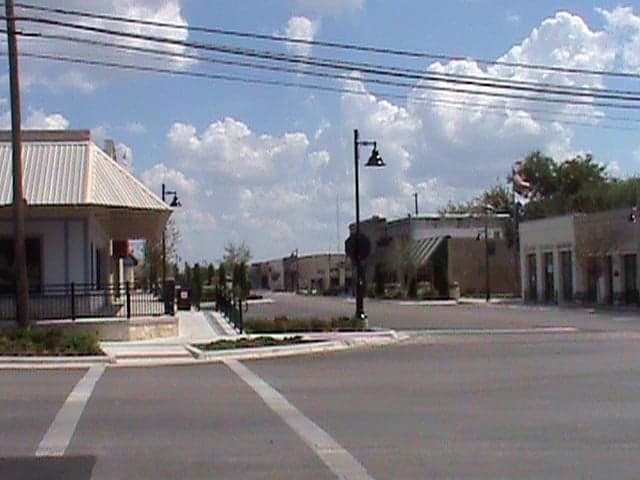
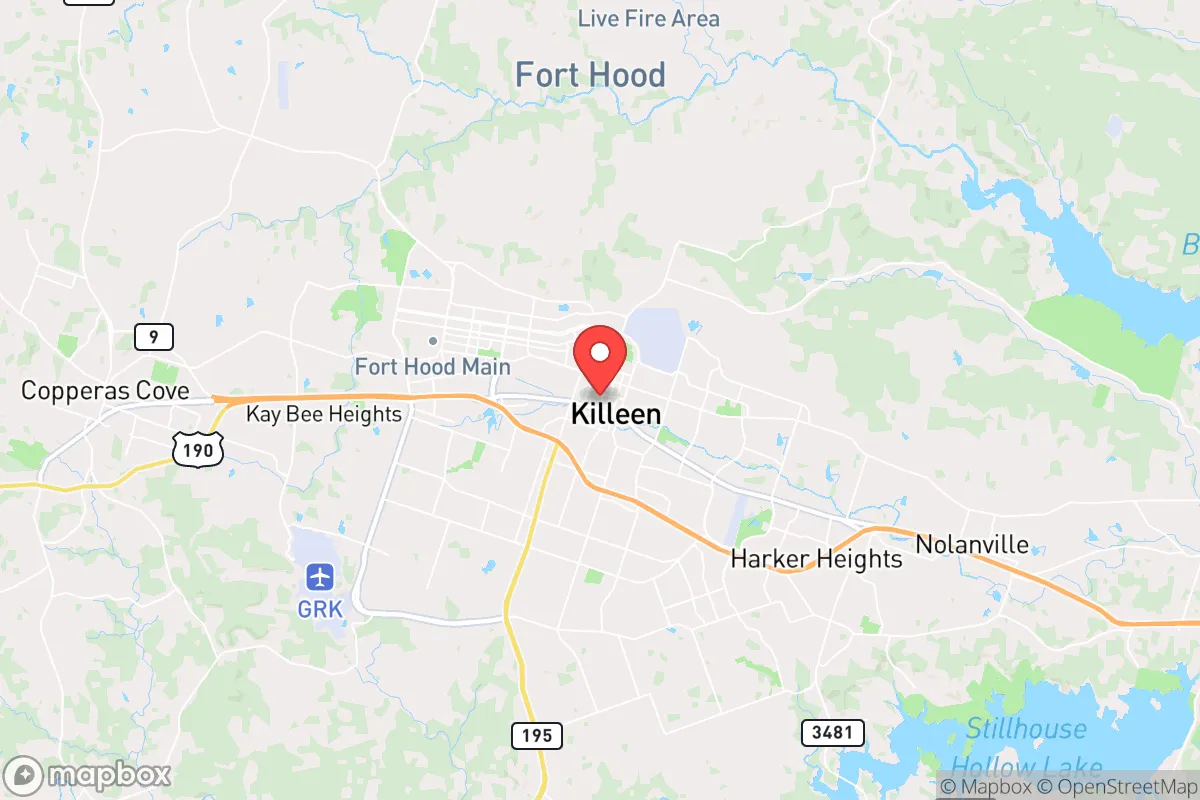
Photo: Wikipedia
Demographics of Killeen, TX
Affluence Level in Killeen, TX
A below-average socioeconomic profile. Incomes, home values, and educational attainment trail the U.S., with higher poverty and unemployment.
People of Killeen, TX
Killeen, Texas is a majority-minority city of 156,144 residents defined by its deep connection to Fort Cavazos (formerly Fort Hood), the massive Army installation that drives its economy and population churn. The city is one of the most racially diverse in Central Texas, with a Black plurality (34.7%), a substantial Hispanic population (27.5%), and a White population that has fallen to 26.0% as military rotations and domestic migration reshape the community. Killeen’s identity is distinctly transient, blue-collar, and family-oriented, with a young median age and a 22.0% college-educated rate that reflects the mix of enlisted personnel, civilian support workers, and service industry employees.
How the city was settled and grew
Killeen was founded in 1882 as a railroad stop on the Gulf, Colorado and Santa Fe Railway, named after a railroad executive. The original settlers were Anglo-American farmers and ranchers drawn by the fertile Blackland Prairie soils, and the town remained a tiny agricultural hamlet for decades. The first major population wave came in 1942 with the establishment of Camp Hood (later Fort Hood, now Fort Cavazos), a sprawling tank destroyer training base built for World War II. The base brought thousands of soldiers, civilian contractors, and support workers, many of whom settled in the downtown Killeen area and the Old Killeen neighborhood near the original rail corridor. A second wave followed during the Korean War, when the base expanded permanently, and the city annexed land to the west and south, creating the West Killeen district as a bedroom community for military families. By 1960, Killeen’s population had surged past 20,000, and the city’s character had shifted from rural crossroads to military boomtown.
Modern era (post-1965)
The 1965 Hart-Cellar Act and the end of racial segregation in the military transformed Killeen’s demographics dramatically. Black soldiers and their families, who had been stationed at Fort Hood in growing numbers since the 1950s, began settling permanently in the city rather than returning to their home states. They concentrated in the Timber Ridge and Clear Creek neighborhoods east of the base, areas that remain predominantly Black today. The 1970s and 1980s saw a surge of Hispanic migration, both from South Texas and from Mexico, drawn by construction and service jobs tied to the base. Hispanic families established roots in South Killeen near the 190 corridor and in the Harker Heights border area, where they now form a majority in several census tracts. The post-9/11 military buildup brought a smaller but notable wave of East and Southeast Asian families (3.3% of the current population), primarily Filipino and Vietnamese, who clustered near the Fort Cavazos main gate in the Mountain View district. The Indian subcontinent population remains tiny at 0.6%, mostly military medical professionals and IT contractors. The White population, once a majority, has declined steadily as older Anglo families aged out and younger White soldiers increasingly chose to settle elsewhere after service.
The future
Killeen’s population is trending toward further diversification, but not toward homogenization. The city is tribalizing into distinct ethnic enclaves: the Black plurality is consolidating in the east, Hispanic growth is pushing south and west, and White residents are increasingly concentrated in the far north and in the adjacent city of Harker Heights. The foreign-born share is low at 3.8%, indicating that most demographic change comes from domestic military transfers and internal migration rather than immigration. The Hispanic share is rising steadily (up from roughly 20% in 2010), while the Black share has plateaued and the White share continues to fall. Over the next 10-20 years, Killeen will likely become a tri-ethnic city with no single group holding a majority, similar to other military towns like Fayetteville, North Carolina. The transient military population will continue to inject new arrivals from across the country, preventing the kind of generational ethnic stability seen in older Texas cities.
For a conservative-leaning newcomer, Killeen offers a pragmatic, family-focused environment where military discipline and community self-reliance are the dominant cultural values. The city is not a place of deep historical roots or ethnic tension, but rather a working-class hub where racial diversity is a fact of daily life and where the economy rises and falls with the Pentagon’s budget. The bottom line: Killeen is a military town first and a Texas town second, and its people reflect that—transient, patriotic, and accustomed to change.

* Values derived from national, state, county, city and local statistics and may differ in a specific area. Last updated: 2026-05-03T04:47:13.000Z
Narrative content on this page is AI-generated and may contain mistakes. Verify any details that matter before acting on them.
ReloMaps may earn a commission from affiliate links at no extra cost to you.

