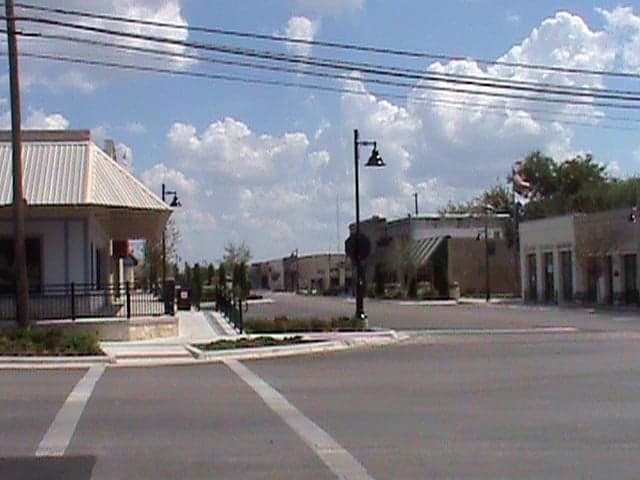
Photo: Wikipedia
Political ClimatePolitical Climate in Killeen, TX
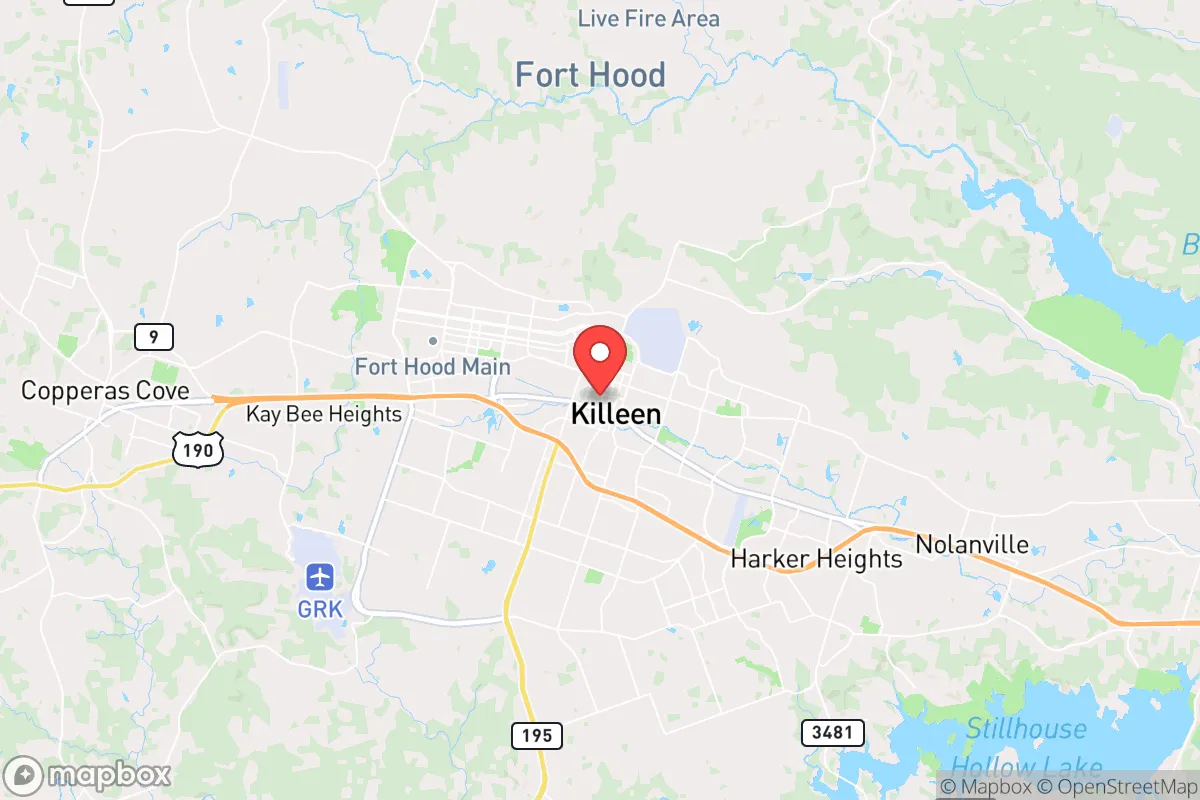
District shown is the primary district for this city’s centroid. Cities may span multiple districts.
Local Political AnalysisPolitical Analysis of Killeen, TX
Killeen sits in a deeply conservative corner of Texas, anchored by a Cook PVI of R+22 that tells you most of what you need to know about the area's political DNA. But if you've lived here as long as I have, you know that number doesn't tell the whole story. The city itself has been drifting leftward over the past decade, pulled by a growing population of younger families and military transplants who don't always share the traditional values that built this community. The surrounding rural counties—Coryell, Lampasas, and Bell County outside the city limits—remain rock-ribbed Republican strongholds, but inside Killeen's city limits, you're starting to see a quiet shift that has a lot of longtime residents watching the local elections a little more closely.
How it compares
Drive 20 minutes west to Copperas Cove or 30 minutes north to Gatesville, and you're in territory where conservative candidates can still win without breaking a sweat. Those towns haven't seen the demographic churn that Killeen has, thanks to Fort Hood (now Fort Cavazos) and the constant rotation of soldiers and civilian contractors from all over the country. A lot of those newcomers bring big-city voting habits with them, and it shows in city council races and school board elections. Meanwhile, Temple and Waco to the east and south lean more moderate but still vote reliably red in statewide contests. The real contrast is with Austin, about 70 miles south—a place where progressive policies on housing, policing, and taxes have become the norm. Killeen isn't Austin, but some of us worry we're starting to see the same playbook: more regulations, higher property taxes, and a creeping tolerance for policies that put government over personal responsibility.
What this means for residents
For the average family here, the political climate directly affects your wallet and your freedoms. Property taxes in Bell County have been climbing, and every new city ordinance—whether it's about short-term rentals, noise complaints, or business licensing—feels like another inch of government reach into your daily life. The conservative majority on the county commissioners' court has held the line on most tax rate increases, but the city council has been more willing to spend. If you value keeping your own money and making your own choices without a bureaucrat's permission, you'll want to pay attention to who's running for local office. The school board is another battleground: debates over curriculum transparency and parental rights have heated up, and the outcome of those fights will shape what your kids learn for years to come.
On the cultural side, Killeen still feels like a place where people look out for each other—church attendance is high, gun ownership is common, and the "live and let live" attitude is real, as long as you're not trying to force your views on everyone else. The military presence keeps things grounded in discipline and respect for authority, but there's a growing tension between that old-school ethos and the progressive activism you see in some neighborhood groups and online forums. The next few election cycles will tell us whether Killeen stays the course or starts mirroring the trends that have turned other Texas cities into high-tax, high-regulation versions of themselves. If you're thinking of moving here, just know that the political winds are shifting—and it's worth keeping an eye on which direction they blow.

State Political ClimatePolitical Climate in Texas
State Political AnalysisPolitical Environment in the State
Texas has been a reliably red state for decades, with Republicans holding every statewide office and both legislative chambers since the mid-1990s. The dominant coalition is a mix of rural conservatives, suburban moderates, and a growing number of fiscally-minded transplants from blue states. Over the last 10-20 years, the state has shifted from a solid +12-point Republican lean in presidential elections to a narrower +5 or +6, driven by explosive growth in the urban corridors of Dallas-Fort Worth, Houston, San Antonio, and Austin. However, the GOP still holds a structural advantage thanks to strong turnout in the vast rural counties and the fact that many new arrivals are fleeing high-tax, high-regulation states and want to keep Texas Texas.
Urban vs. rural divide
The political map of Texas is a study in contrasts. The big metros—Harris County (Houston), Dallas County, Tarrant County (Fort Worth), Bexar County (San Antonio), and Travis County (Austin)—are the Democratic strongholds. Travis County is the bluest of them all, routinely voting 70%+ Democratic, while Harris and Dallas are trending blue but still have competitive pockets. The real story is the suburbs: places like Collin County (north of Dallas) and Denton County were once reliably red but have become purple, with Collin County flipping to Trump by only 4 points in 2020 after a 20-point margin in 2016. Meanwhile, rural West Texas, the Panhandle, and East Texas remain deeply conservative. Lubbock, Midland, and Odessa are GOP strongholds where Democrats rarely break 30%. The Rio Grande Valley, historically Democratic, has been shifting right—Starr County went from 80% Clinton in 2016 to 52% Biden in 2020, a massive 28-point swing that signals a realignment among Hispanic voters.
Policy environment
Texas has no state income tax, which is the single biggest draw for conservatives looking to keep more of their paycheck. Property taxes are high—around 1.6% to 2.5% of home value—but the state caps appraisal growth for homesteads at 10% per year. The regulatory posture is famously business-friendly: no state-level minimum wage above the federal $7.25, no state OSHA plan, and a right-to-work law that bans union security agreements. On education, Texas has a robust school choice movement, with the 2023 legislative session passing a $500 million school safety package and expanding charter schools, though a full voucher bill failed. Healthcare is a mixed bag: Texas has the highest uninsured rate in the nation (around 18%), and the state has refused Medicaid expansion under Obamacare. Election laws tightened after 2020 with Senate Bill 1, which banned 24-hour and drive-through voting, added ID requirements for mail ballots, and empowered poll watchers. For a conservative, this is a state that generally respects local control and individual liberty, though the property tax burden is a real pain point.
Trajectory & freedom
On balance, Texas has been moving toward more freedom in several key areas over the last five years, but there are warning signs. The 2021 legislative session was a landmark for gun rights: permitless carry (HB 1927) became law, allowing any law-abiding adult to carry a handgun without a license. Parental rights got a boost with the 2023 passage of the "Parental Bill of Rights" (HB 900), which requires schools to get parental consent before providing any medical or mental health services and restricts sexually explicit content in school libraries. On medical freedom, Texas banned vaccine mandates for private employers and government entities (SB 7, 2023) and prohibited COVID-19 vaccine passports. Property rights were strengthened with the 2023 "Taking of Private Property" law (HB 2730), which limits eminent domain abuse. However, the state has also expanded government power in ways that concern liberty-minded folks: the 2023 "border security" bill (SB 4) makes illegal entry a state crime and gives local police broad arrest powers, which some see as federal overreach. The biggest threat to freedom is the property tax system—without a state income tax, local governments have a perverse incentive to keep assessments high, and the 2023 tax cut (SB 2) only provided temporary relief through a homestead exemption increase.
Civil unrest & political movements
Texas has seen its share of political flashpoints. The 2020 Black Lives Matter protests in Austin were among the largest and most destructive in the country, with the city council later defunding the police by $150 million—a move that led to a surge in violent crime and a 2021 backlash that saw voters approve a ballot measure to restore police funding. On the right, the "Texas Nationalist Movement" has been pushing for secession since 1995, though it remains fringe. Immigration politics are front and center: Governor Greg Abbott's "Operation Lone Star" has bused over 100,000 migrants to sanctuary cities like New York and Chicago, and the state has sued the Biden administration over border policies. The 2022 "election integrity" controversy centered on Harris County, where a judge ordered 24-hour polling places and the state sued to stop them. A new resident will notice the political tension most in the suburbs: yard signs for both parties are common, and local school board meetings have become battlegrounds over curriculum and library books. The "Save Texas Schools" movement, a coalition of conservative parents, has been particularly active in Katy, Frisco, and Southlake.
Projection
Over the next 5-10 years, Texas is likely to become more competitive but not flip blue. The in-migration from California, New York, and Illinois is overwhelmingly conservative-leaning—these are people leaving progressive policies, not importing them. The Hispanic shift toward the GOP, especially in the Rio Grande Valley and El Paso suburbs, will continue to offset Democratic gains in the urban core. The biggest wildcard is the suburbs: if Republicans can hold places like Collin and Denton counties, they'll keep the state. If those suburbs go blue, Texas becomes a swing state. For a new resident, expect the political environment to remain broadly conservative, with continued fights over property taxes, school choice, and border security. The state will likely pass a school voucher program in the next session, and permitless carry is here to stay. The biggest risk is that the property tax burden continues to rise, which could eventually push the state toward a consumption tax or a flat income tax—both of which would be a betrayal of the Texas model.
For someone moving to Texas, the bottom line is this: you're getting a state that respects your right to live your life without a lot of government interference, but you need to be ready for high property taxes and a political landscape that's still red but getting purple in the suburbs. If you're a conservative, you'll find a welcoming environment in most of the state, especially outside the urban cores. The key is to pick your county carefully—Montgomery County (north of Houston) is still deep red, while Williamson County (north of Austin) is trending purple. Do your homework on local school boards and city councils, because that's where the real fights are happening. Texas is still the best bet for freedom in the lower 48, but it's not a guarantee—you have to stay engaged.
* Values derived from national, state, county, city and local statistics and may differ in a specific area. Last updated: 2026-05-03T04:47:13.000Z
Narrative content on this page is AI-generated and may contain mistakes. Verify any details that matter before acting on them.
ReloMaps may earn a commission from affiliate links at no extra cost to you.

