Photo: Wikipedia
Strategic Assessment of Kingsville, TX
Meaningful friction. Expect exposure to either population pressure, blast zones, or natural disaster risk. Consider buying a retreat property.
What does the Strategic Assessment tell us?
Our Strategic Assessment grades tactical survivability of an area. Major population centers, military targets, fallout zones, natural disasters, and border exposure all drive risk — lower exposure means a more defensible position in a crisis.
This is heavily inspired by Joel Skousen's Strategic Relocation book. Highly recommended you checkout the book ($)What does this tell us?
Our Strategic Assessment grades tactical survivability of an area. Major population centers, military targets, fallout zones, natural disasters, and border exposure all drive risk — lower exposure means a more defensible position in a crisis.
This is heavily inspired by Joel Skousen's Strategic Relocation book. Highly recommended you checkout the book ($)Strategic Pillars

Key Distances
Regional Safe Places
Below is our recommended "safe zones" in Texas and the surrounding area based on our strategic heuristics. For most people, it's unrealistic to live in a “safe zone” full-time due to work, family or other personal reasons. They tend to be more rural. However, many of these areas are perfect for second homes and retreat properties that double as a vacation home or even a short-term rental.

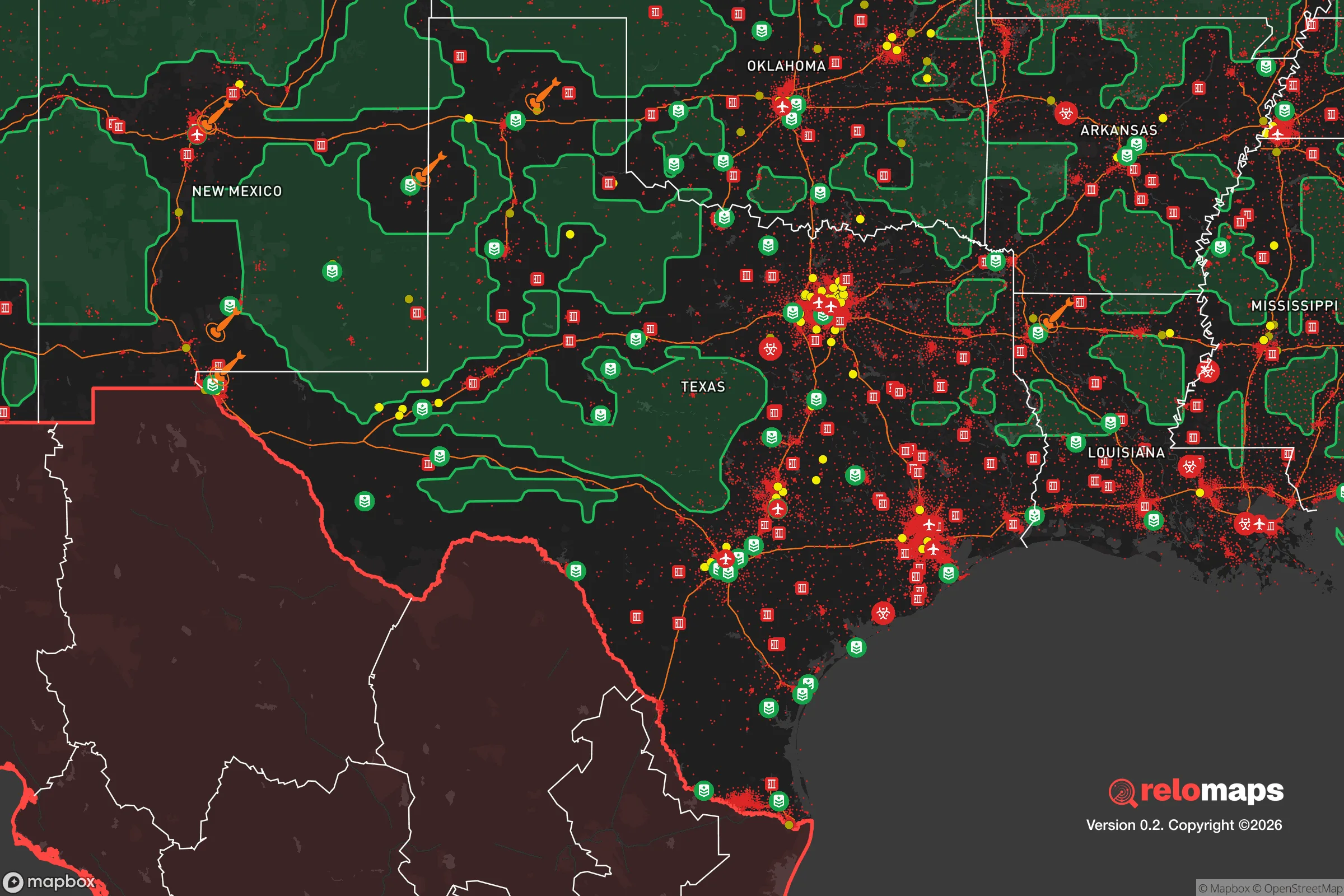


Important Note: For informational purposes only. This does not mean nothing bad ever happens in the green zones. Please use common sense. This is based on public data and modeled with AI. We tried to take a conservative approach but mistakes happen. We update this regularly as new information becomes available.
Solar Generator Recommendations
Backup power matters more here than in safer locations. We've picked three solar generators across budgets and capacity tiers — start with the budget unit if you only need a few essentials, or step up if you want to run a fridge and HVAC for days at a time.

Jackery Portable Power Station Explorer 300
Budget OptionPower on the Go: Weighing only 11 lbs, it's convenient to set up and store with book-sized foldable solar panels

BLUETTI Portable Power Station AC180
Designed for both indoor and outdoor scenarios, AC180 is highly capable as it has a robost capacity and continuous output power.

EF ECOFLOW DELTA Pro Ultra Power Station
Upgraded PickEcoFlow DELTA Pro Ultra is a whole-home energy system designed to grow with your family. Integrated with the Smart Home Panel 2, it scales to meet your evolving energy needs — keeping your home powered, intelligent, and secure through every stage of life.
We earn a commission, at no additional cost to you.
Strategic Assessment Analysis
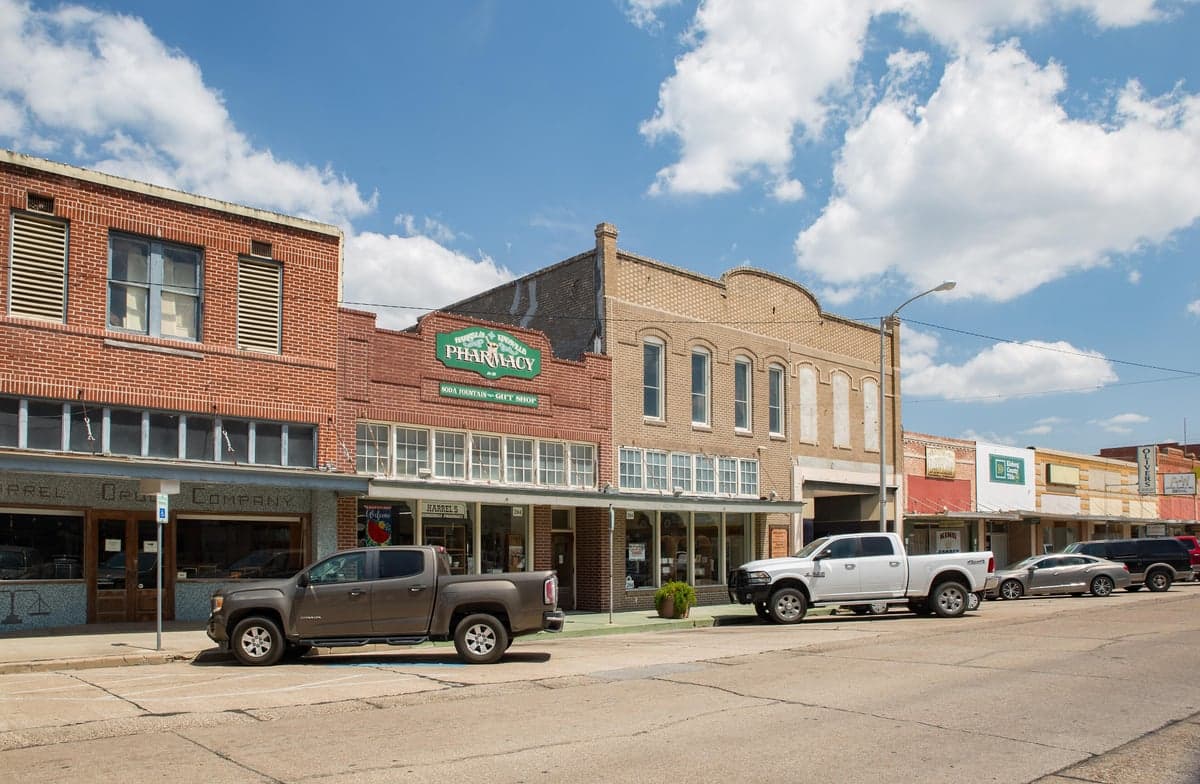
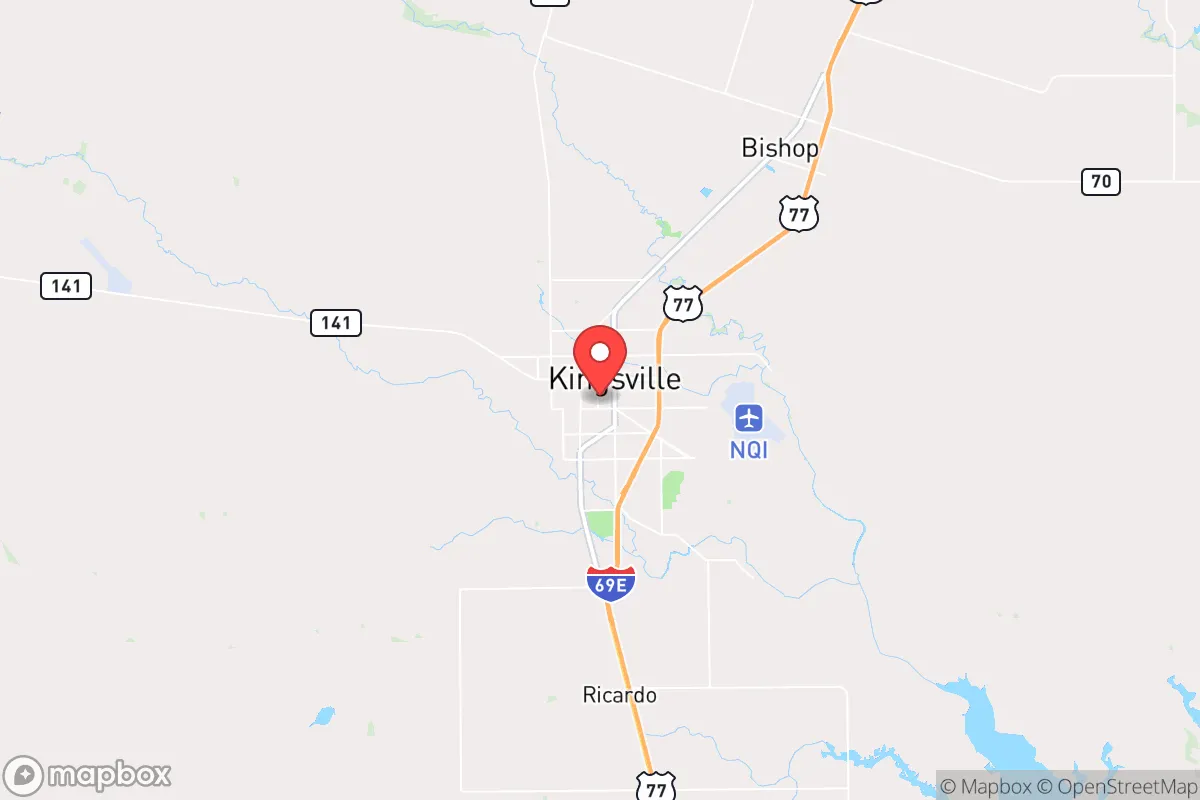
Kingsville, Texas, offers a strategic resilience profile that is often overlooked by preppers focused on the Hill Country or far West Texas. Its location in the South Texas coastal plain, roughly 40 miles from the Gulf of Mexico and 30 miles southwest of Corpus Christi, provides a unique blend of agricultural self-sufficiency, industrial utility, and relative isolation from the most likely fallout zones of major metropolitan areas. While not immune to risks, Kingsville’s combination of a stable water supply, a robust local food economy, and a low population density makes it a defensible and sustainable relocation option for those prioritizing long-term preparedness over immediate convenience.
Geographic position and natural advantages for long-term survival
Kingsville sits on the edge of the Texas Coastal Bend, a region defined by flat, fertile plains and the Nueces River watershed. The area’s primary natural advantage is its access to the Gulf Coast Aquifer, a massive underground water source that provides reliable, potable water even during drought conditions. Unlike many parts of Texas that rely on surface reservoirs vulnerable to evaporation and contamination, Kingsville’s municipal water supply is drawn from deep wells, giving residents a more resilient water baseline. The local climate is semi-arid with hot summers and mild winters, which reduces heating fuel dependency and allows for year-round gardening with proper shade management. The flat terrain, while not offering the defensible high ground of the Hill Country, provides excellent line-of-sight for security and makes the area less prone to flash flooding than communities directly on the coast. The proximity to the King Ranch—one of the largest ranches in the world—means that the surrounding land is largely undeveloped, creating a natural buffer zone against urban sprawl and the associated risks of civil unrest spreading from larger cities.
Risks, exposures, and proximity to fallout-relevant landmarks
No location is without vulnerabilities, and Kingsville has several that a serious prepper must account for. The most significant risk is hurricane and tropical storm exposure. The area lies within the typical strike zone for Gulf hurricanes, with the most recent major impacts being Hurricane Harvey (2017) and Hurricane Hanna (2020). While Kingsville is far enough inland to avoid storm surge, it is susceptible to high winds, prolonged power outages, and flooding from heavy rainfall. The flat, poorly draining clay soils can turn roads into impassable mud after just a few inches of rain. Additionally, the region is home to the Naval Air Station Kingsville, a major military training facility for fighter pilots. While this base provides a local economic anchor and a potential source of security during a breakdown of civil order, it also makes Kingsville a secondary target in any large-scale conflict. The base’s proximity to the city center (roughly 5 miles) means that any attack on the base would have direct fallout consequences for the civilian population. Corpus Christi, with its petrochemical refineries and port, is only 30 miles northeast—close enough that a major industrial accident or terrorist event there could produce toxic plumes or refugee flows that would impact Kingsville. The nearby San Patricio County also hosts a nuclear power plant (the South Texas Nuclear Generating Station), located about 60 miles northeast, which is a non-trivial risk for long-term radiation exposure in the event of a catastrophic failure.
Practical resilience for a relocator: food, water, energy, and defensibility
For the individual or family looking to establish a resilient homestead, Kingsville offers several concrete advantages. Food security is strong due to the local agricultural economy. The King Ranch and surrounding farms produce beef, cotton, sorghum, and citrus. The area has a thriving farmers’ market and multiple local meat processors, meaning you can source protein and produce without relying on fragile national supply chains. Home gardening is viable, though the alkaline soil and heat require raised beds or native-adapted crops like okra, peppers, and black-eyed peas. Water security is the region’s strongest suit. The aquifer is deep and reliable, and many rural properties have existing wells. Rainwater harvesting is also practical given the 28 inches of annual rainfall, though storage is essential during dry spells. Energy resilience is a mixed bag. The grid in South Texas is notoriously unreliable during storms, but the flat terrain and consistent wind make small-scale wind turbines a viable supplement to solar panels. Natural gas is widely available in the region, and many rural homes already use propane for cooking and heating, which is a plus for off-grid capability. Defensibility is moderate. The flat, open landscape means that a prepared property with good perimeter fencing and clear sightlines can be effectively monitored. The local population is small (about 25,000 in the city proper) and predominantly rural-minded, which reduces the likelihood of the kind of urban chaos seen in larger metros. However, the lack of natural chokepoints means that a determined group could approach from any direction, so a layered security plan—including early warning systems and a neighborhood watch network—is advisable.
The overall strategic picture for Kingsville is one of calculated trade-offs. It is not a fortress, nor is it a remote bunker. It is a working-class, agricultural community with a strong military presence and a deep-water aquifer that few other Texas towns can match. The risks from hurricanes, the nearby naval base, and the industrial corridor to Corpus Christi are real but manageable with proper preparation—elevated storage, a well-stocked emergency kit, and a plan for temporary evacuation during the worst storm events. For the conservative-minded relocator who values self-sufficiency, community cohesion, and a lower cost of living, Kingsville offers a solid foundation. It is not a place to hide from the world, but a place to build a life that can weather the shocks that are coming. The key is to arrive with eyes open, a plan for water and power independence, and a willingness to integrate into a community that already understands the value of hard work and mutual aid. In a country facing increasing instability, Kingsville is a sleeper pick—not flashy, but fundamentally sound.

* Values derived from national, state, county, city and local statistics and may differ in a specific area. Last updated: 2026-05-16T21:53:52.000Z
Narrative content on this page is AI-generated and may contain mistakes. Verify any details that matter before acting on them.
ReloMaps may earn a commission from affiliate links at no extra cost to you.

