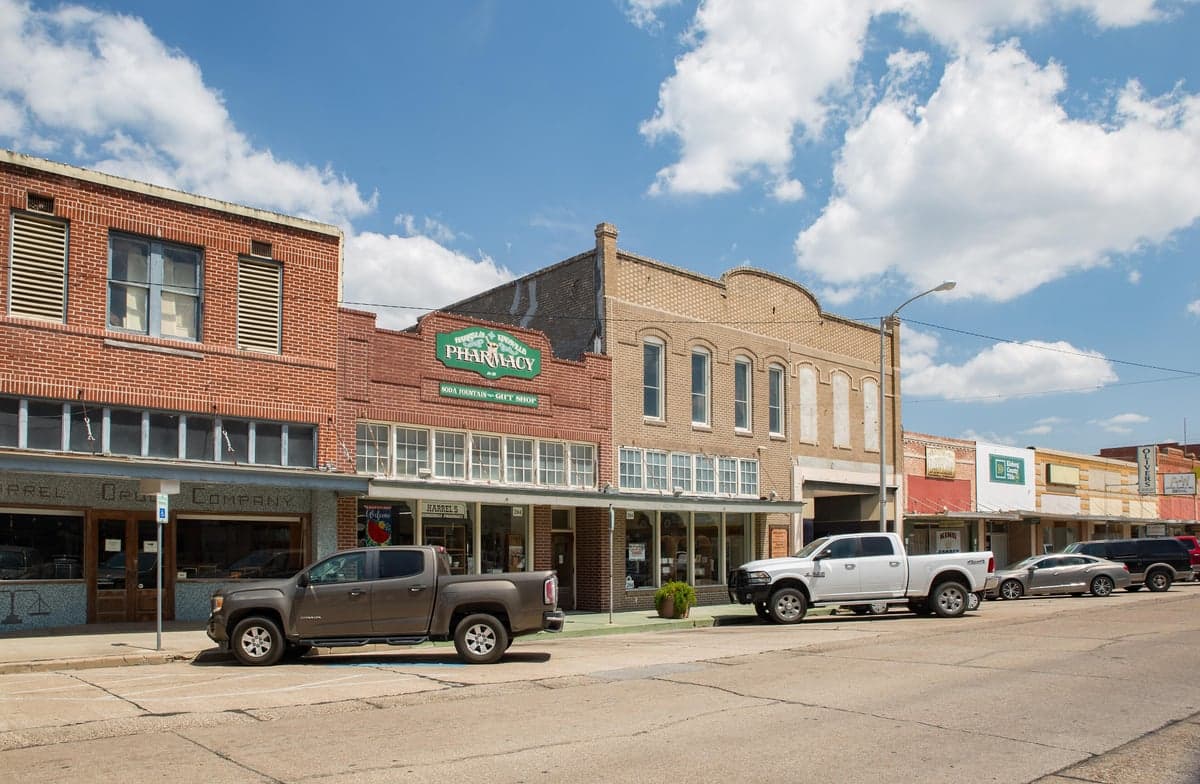
Photo: Wikipedia
Political ClimatePolitical Climate in Kingsville, TX
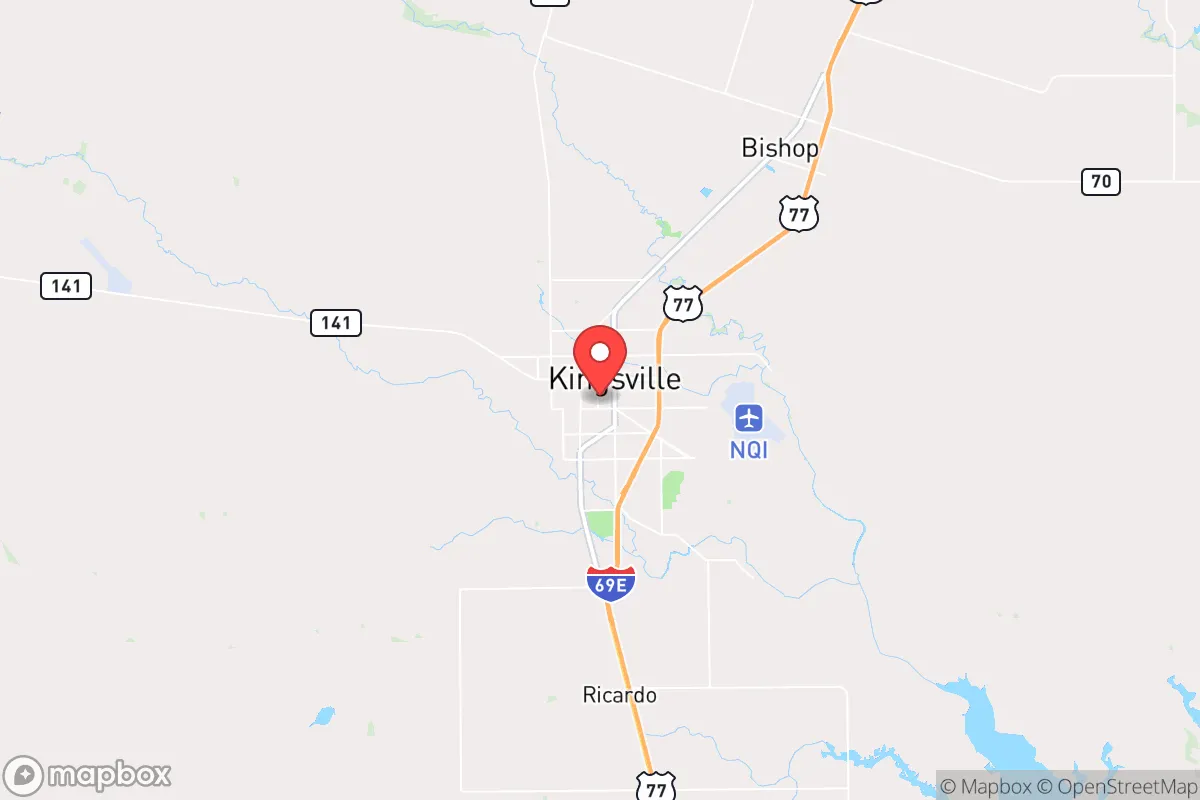
District shown is the primary district for this city’s centroid. Cities may span multiple districts.
Local Political AnalysisPolitical Analysis of Kingsville, TX
Kingsville sits in a bit of a political no-man’s-land, and if you’ve lived here as long as I have, you’ve felt it shift. The Cook PVI rating of EVEN means the town is a true toss-up, but that’s a recent development. For decades, this was a reliably conservative area, rooted in ranching, agriculture, and the military presence at Naval Air Station Kingsville. Now, you’ll see a growing progressive influence, especially from the university crowd at Texas A&M-Kingsville and younger transplants. It’s not a full-blown blue wave, but the trajectory is concerning for anyone who values limited government and personal freedoms. The surrounding state of Texas leans R+4, so Kingsville is actually more moderate than the state average—and that moderation is drifting leftward.
How it compares
Drive 30 minutes north to Alice, and you’ll find a place that still votes solidly Republican, with a strong ranching culture and little patience for government overreach. Head south to the Rio Grande Valley, and places like McAllen or Brownsville are reliably Democratic, driven by different demographics and priorities. Kingsville sits right in the middle, but the comparison that stings is to nearby Corpus Christi, about 40 miles north. Corpus has a Cook PVI of D+5, and its progressive city council has pushed policies on housing and zoning that feel like a slow creep of control. Kingsville isn’t there yet, but the same activist groups are starting to show up at city council meetings, pushing for things like “equity” ordinances and stricter environmental rules that sound good on paper but often mean more red tape for small businesses and landowners. The contrast is real: Alice feels like the old Texas, while Kingsville is becoming a battleground.
What this means for residents
For a longtime resident, the biggest red flag is how local government is starting to nibble at your rights. The city council has debated rental registration schemes and noise ordinances that sound like they’re meant to “improve quality of life,” but really just give bureaucrats more power over your property. Property taxes are already high in Kleberg County, and any new regulations just add cost without adding freedom. The school board has also seen tension, with some members pushing for curriculum changes that emphasize social justice over basics like civics and economics. If you’re a gun owner, Kingsville is still friendly—most folks carry—but you can feel the pressure from state-level debates on permitless carry and local enforcement. The long-term worry is that if the progressive faction gains a majority on the city council, you’ll see the same kind of overreach that’s plagued Austin and San Antonio: higher fees, more permits, and less say in how you run your own life.
One thing that still sets Kingsville apart is its deep connection to the King Ranch and the military base. Those institutions lean conservative and push back against the trend. The annual King Ranch Festival and the base’s community events are still strongholds of traditional values—family, hard work, and self-reliance. But the cultural shift is real. You’ll see more “In This House We Believe” signs in yards near the university, and fewer American flags than you did ten years ago. The policy distinction that matters most right now is zoning: Kingsville has resisted the kind of high-density, government-planned housing that’s taken over parts of Corpus. That’s a win for property rights, but it’s under constant attack. If you’re thinking of moving here, just know you’re moving into a place that’s still fighting to stay free—and the fight is getting harder every election cycle.

State Political ClimatePolitical Climate in Texas
State Political AnalysisPolitical Environment in the State
Texas has been a reliably Republican state for decades, with a Cook PVI of R+4, but the political reality is far more complex than a single number suggests. The dominant coalition has long been a mix of socially conservative voters in rural areas and suburbs, combined with a business-friendly, low-tax ethos that appeals to fiscal conservatives. Over the last 10-20 years, however, the state has seen a slow but steady shift leftward in its major metropolitan areas, driven by massive in-migration from blue states and a growing Hispanic electorate that is not monolithic but is trending more Democratic. While the GOP still holds every statewide office and both legislative chambers, the margins have been tightening — Trump won Texas by 9 points in 2016, but only by 5.5 points in 2020, and the 2022 gubernatorial race was closer than many expected. This is a state where the old guard is still in charge, but the ground is shifting under their feet.
Urban vs. rural divide
The political map of Texas is a stark checkerboard of deep blue islands surrounded by a sea of red. The major Democratic strongholds are the big cities — Houston, Dallas, San Antonio, Austin, and El Paso — along with the inner-ring suburbs that have been rapidly diversifying. Harris County (Houston) alone delivered over 1 million votes for Biden in 2020, and Travis County (Austin) is one of the most liberal jurisdictions in the South. Meanwhile, the rural expanse — places like the Panhandle around Amarillo and Lubbock, East Texas piney woods, and the vast West Texas ranching counties — votes Republican by 70-80% margins. The real battleground is the exurbs and growing mid-sized cities. Collin County (north of Dallas) was once a GOP fortress but has been trending purple as tech workers and Californians move in; Biden got 46% there in 2020, up from 38% in 2012. Similarly, Bexar County (San Antonio) and Tarrant County (Fort Worth) have flipped or are on the edge. The divide isn't just urban vs. rural — it's also about growth: fast-growing suburbs are becoming more diverse and more Democratic, while shrinking rural counties are doubling down on conservative identity.
Policy environment
Texas remains a low-tax, low-regulation state by design. There is no state income tax — a huge draw for relocators — and property taxes are high to compensate, but the overall tax burden is still below the national average. The regulatory posture is aggressively business-friendly: no state-level OSHA, minimal environmental permitting delays, and a right-to-work law that keeps unions weak. On education, the state has pushed school choice and charter expansion, with the 2023 legislative session passing a universal education savings account program (though it was later tied up in court). Parents have strong rights, including the ability to opt out of curriculum they find objectionable. Healthcare policy is a mixed bag: Texas refused Medicaid expansion, leaving many low-income adults uninsured, but the state has also protected direct primary care and cash-pay arrangements. Election laws have tightened since 2020 — Senate Bill 1 (2021) restricted mail-in voting, added ID requirements, and banned drive-through voting. The state also enacted a near-total abortion ban (trigger law after Dobbs) and has some of the strictest voter ID laws in the country. For a conservative, the policy environment is largely favorable, though the property tax burden and lack of Medicaid expansion can be a practical headache for lower-income families.
Trajectory & freedom
On the freedom front, Texas is a mixed bag trending in two directions at once. On the positive side for conservatives, the state has expanded gun rights significantly: permitless carry (HB 1927, 2021) allows most adults to carry a handgun without a license, and the state preempts local gun ordinances. Parental rights were strengthened with the 2023 law requiring school districts to notify parents of any changes in a child's mental or physical health (the so-called "Parental Bill of Rights"). Medical freedom saw a win with the 2023 ban on COVID-19 vaccine mandates by private employers, though this was later partially blocked in court. Property rights are generally strong, with no state-level rent control and limited eminent domain abuse. On the concerning side, the state has become more aggressive in policing certain speech and behavior. The 2021 law targeting "critical race theory" in schools (HB 3979) and the 2023 ban on diversity, equity, and inclusion programs at public universities (SB 17) represent a government overreach into academic freedom — even if the intent aligns with conservative values, it sets a precedent for state control over ideas. The state also criminalized "illegal entry" at the border (SB 4, 2023), which is currently tied up in court but signals a willingness to use state police power in ways that could be applied elsewhere. Overall, Texas is becoming more free on guns and taxes, but less free on speech and personal medical choices — a trade-off that long-time residents are starting to notice.
Civil unrest & political movements
Texas has seen its share of political flashpoints. The 2020 Black Lives Matter protests in Austin were among the largest in the country, with the city council later defunding the police by $150 million (a decision partially reversed after backlash). On the right, the "Texas Nationalist Movement" has gained some traction, pushing for a referendum on secession — though it remains a fringe idea with no real legislative path. Immigration politics dominate the border region: El Paso and the Rio Grande Valley have been epicenters of the migrant surge, with Governor Abbott's Operation Lone Star deploying state troopers and National Guard to the border, busing migrants to sanctuary cities, and installing razor wire. This has created a visible, ongoing tension between state and federal authority. Election integrity remains a hot-button issue: after the 2020 election, there were widespread calls for a forensic audit in several counties, and the 2021 voting law was passed in response to those concerns. A new resident will notice the political polarization in everyday life — yard signs, bumper stickers, and local news coverage are heavily partisan. The "flashpoint" to watch is the border: it's not just a policy debate but a daily reality for anyone living in or traveling through South Texas.
Projection
Over the next 5-10 years, Texas is likely to become more competitive at the statewide level, but not necessarily blue. The key demographic driver is the continued influx of domestic migrants — roughly 1,000 people move to Texas every day — and these newcomers are split: many are conservatives fleeing California and Illinois, but a significant share are young, diverse, and left-leaning. The Hispanic vote is the wildcard: while older Hispanic voters in the Rio Grande Valley still lean Republican on social issues, younger Hispanic voters in Houston and Dallas are trending Democratic. The suburbs of Fort Worth and San Antonio will likely decide the next few elections. If the GOP can hold the line in places like Tarrant County and keep the rural turnout high, Texas will remain red — but the margin will shrink. If the Democratic Party can turn out the growing urban and suburban base, Texas could become a swing state by 2032. For a conservative moving in now, the expectation should be that the political environment will remain favorable for at least the next decade, but the cultural and electoral landscape will continue to shift. The state is not becoming California — but it is becoming more like Colorado: a red-leaning state with deep blue cities and a purple middle.
Bottom line for a new resident: Texas is still a solid bet for someone seeking low taxes, gun rights, and a business-friendly environment. But don't expect a static conservative paradise. The political fights are real and visible — from the border to the school board — and the state is in the middle of a demographic transformation that will keep things interesting. If you're moving here for freedom, you'll find plenty of it, but you'll also find a government that is increasingly willing to use its power to enforce a particular vision of that freedom. Know what you're signing up for, and vote accordingly.
* Values derived from national, state, county, city and local statistics and may differ in a specific area. Last updated: 2026-05-16T21:53:52.000Z
Narrative content on this page is AI-generated and may contain mistakes. Verify any details that matter before acting on them.
ReloMaps may earn a commission from affiliate links at no extra cost to you.

