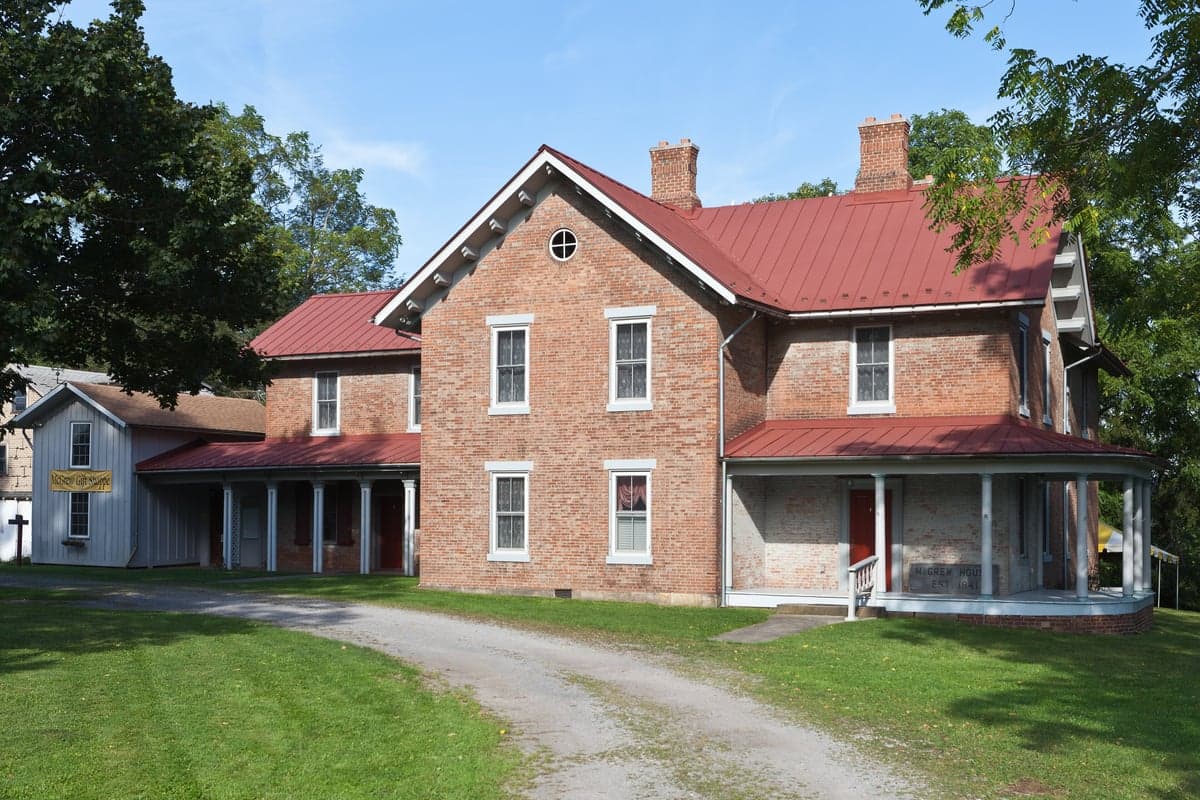
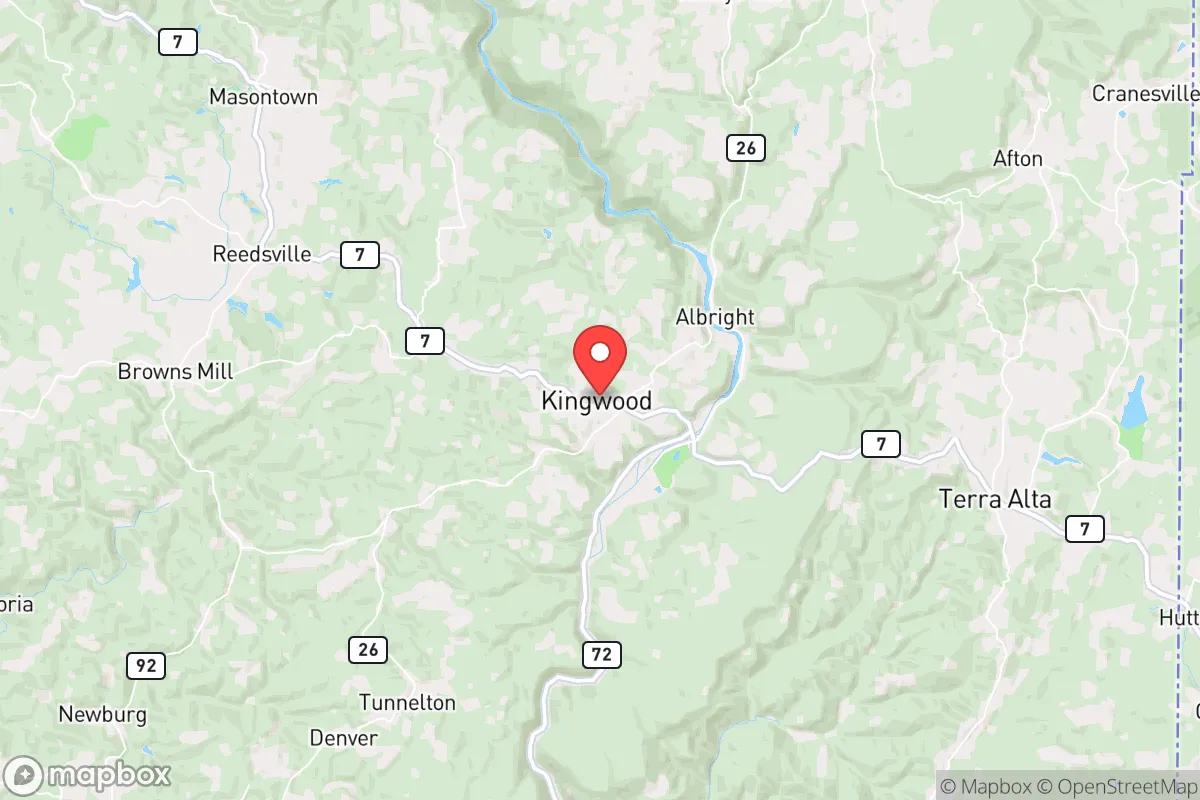
Photo: Wikipedia
Strategic Assessment of Kingwood, WV
Meaningful friction. Expect exposure to either population pressure, blast zones, or natural disaster risk. Consider buying a retreat property.
What does the Strategic Assessment tell us?
Our Strategic Assessment grades tactical survivability of an area. Major population centers, military targets, fallout zones, natural disasters, and border exposure all drive risk — lower exposure means a more defensible position in a crisis.
This is heavily inspired by Joel Skousen's Strategic Relocation book. Highly recommended you checkout the book ($)What does this tell us?
Our Strategic Assessment grades tactical survivability of an area. Major population centers, military targets, fallout zones, natural disasters, and border exposure all drive risk — lower exposure means a more defensible position in a crisis.
This is heavily inspired by Joel Skousen's Strategic Relocation book. Highly recommended you checkout the book ($)Strategic Pillars

Key Distances
Regional Safe Places
Below is our recommended "safe zones" in West Virginia and the surrounding area based on our strategic heuristics. For most people, it's unrealistic to live in a “safe zone” full-time due to work, family or other personal reasons. They tend to be more rural. However, many of these areas are perfect for second homes and retreat properties that double as a vacation home or even a short-term rental.
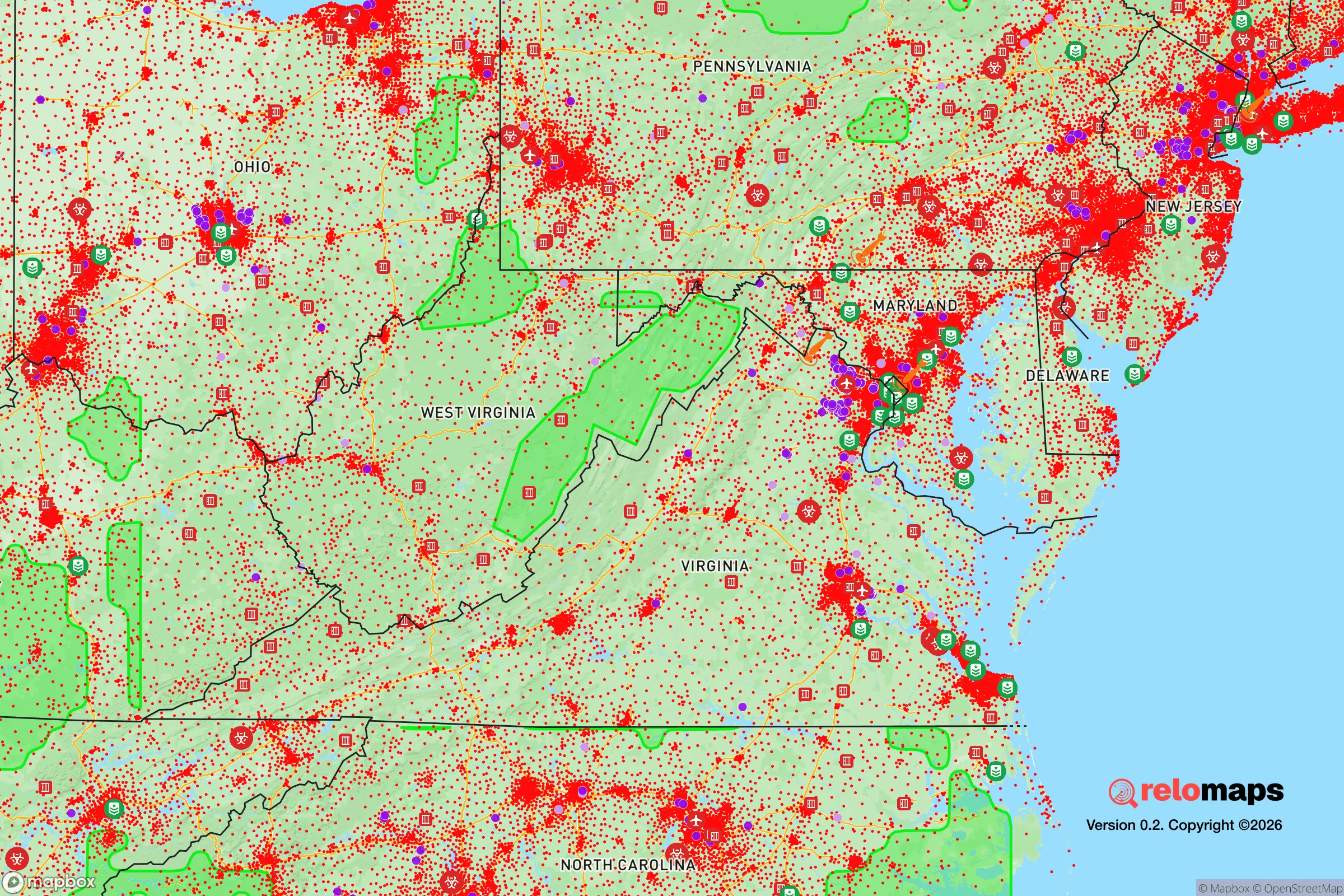
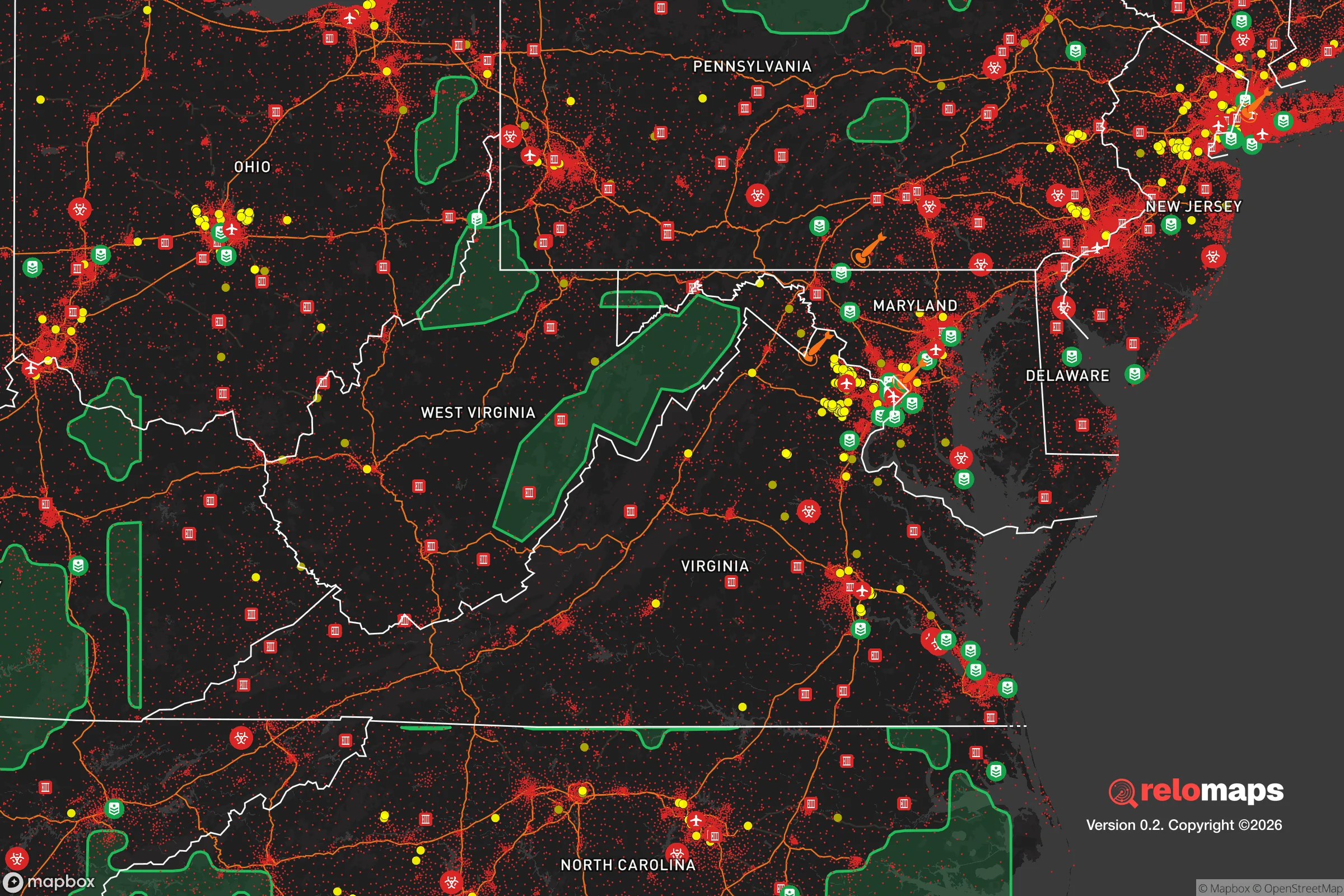


Important Note: For informational purposes only. This does not mean nothing bad ever happens in the green zones. Please use common sense. This is based on public data and modeled with AI. We tried to take a conservative approach but mistakes happen. We update this regularly as new information becomes available.
Solar Generator Recommendations
Backup power matters more here than in safer locations. We've picked three solar generators across budgets and capacity tiers — start with the budget unit if you only need a few essentials, or step up if you want to run a fridge and HVAC for days at a time.

Jackery Portable Power Station Explorer 300
Budget OptionPower on the Go: Weighing only 11 lbs, it's convenient to set up and store with book-sized foldable solar panels

BLUETTI Portable Power Station AC180
Designed for both indoor and outdoor scenarios, AC180 is highly capable as it has a robost capacity and continuous output power.

EF ECOFLOW DELTA Pro Ultra Power Station
Upgraded PickEcoFlow DELTA Pro Ultra is a whole-home energy system designed to grow with your family. Integrated with the Smart Home Panel 2, it scales to meet your evolving energy needs — keeping your home powered, intelligent, and secure through every stage of life.
We earn a commission, at no additional cost to you.
Strategic Assessment Analysis
Kingwood, West Virginia, offers a compelling strategic position for those prioritizing resilience, sitting in the Appalachian foothills with a population under 3,000 that provides a low-profile, low-density buffer against the cascading failures of urban centers. Its location in Preston County, roughly 30 miles south of Morgantown and 90 miles south of Pittsburgh, places it within a day's drive of major infrastructure without being close enough to suffer the immediate fallout of a major metropolitan collapse. For a relocator assessing long-term survivability, Kingwood presents a balance of isolation and access that is rare in the eastern United States, though it demands a clear-eyed understanding of its specific vulnerabilities.
Geographic position and natural advantages for long-term security
Kingwood sits at an elevation of roughly 1,800 feet, which provides a natural defensive advantage against flooding and offers cooler summer temperatures that reduce reliance on energy-intensive cooling. The surrounding terrain is rugged, with steep ridges and narrow valleys that create natural chokepoints—any approach to the town is funneled through a limited number of roads, primarily US-7 and WV-26. This makes the area inherently more defensible than flat, open country, as a small group could monitor or control access points with relative ease. The nearby Cheat River and numerous small creeks provide surface water sources, though these require treatment for consumption. The region's history of coal and timber extraction means there are established networks of secondary roads and logging trails that offer alternative routes if main highways become impassable or contested. For a prepper, the key advantage here is that Kingwood is not a transit hub—it's a destination you have to deliberately seek out, which filters out casual foot traffic during a crisis.
Risks, exposures, and proximity to fallout-relevant landmarks
The most significant strategic liability is Kingwood's proximity to the Morgantown metropolitan area and its associated infrastructure, including the Morgantown Industrial Park and the West Virginia University research facilities, which could become targets or sources of civil unrest during a national emergency. While 30 miles is a reasonable buffer, it is not a safe distance from a major detonation or a large-scale chemical release—prevailing winds from the west could carry fallout or airborne contaminants into Preston County within hours. Additionally, the nearby Mount Storm Power Station (a coal-fired plant) and the Fort Martin Power Station along the Monongahela River are potential industrial hazards, though neither is a nuclear reactor. The region's heavy reliance on a single major highway, I-68, for supply chains means that any disruption to that corridor would severely limit resupply options. On the positive side, Preston County has no major military bases, no large-scale ammunition depots, and no high-profile government facilities within 50 miles, which reduces the likelihood of direct targeting. The risk profile is moderate: you are not in a blast zone, but you are within the secondary effects radius of a regional collapse.
Practical resilience for a relocator: food, water, energy, and defensibility
Water availability is the strongest natural asset here. The Cheat River watershed is substantial, and many properties in the area have private wells or access to springs. However, municipal water in Kingwood itself comes from a treatment plant that could fail during a prolonged grid outage, so any serious prepper should prioritize a well with a hand pump or a rainwater catchment system. Food production is viable but not effortless—the growing season is short (roughly 140 frost-free days), and the soil is rocky and acidic, requiring raised beds or significant amendment. Local agriculture is limited to small farms and hobby operations, so you cannot rely on local surplus in a crisis; you must bring your own seed stock and preservation skills. Energy is a mixed picture: the region has decent wind potential on ridgetops and good solar exposure on south-facing slopes, but tree cover is dense, requiring clearing for effective panels. Wood heat is the most practical backup, as the area is heavily forested with mixed hardwoods, and a wood stove is standard in most older homes. Defensibility is good for a small group—the terrain limits lines of sight, but it also limits your own visibility of approaching threats. A single-family homestead on a ridge with a long driveway would be hard to approach unnoticed, but a house in town is vulnerable to opportunistic looting if law enforcement is overwhelmed. The Preston County Sheriff's Office has limited personnel, and state police response times can be long in rural areas, so self-reliance on security is non-negotiable.
The overall strategic picture for Kingwood is that of a solid B-tier relocation option for the conservative prepper who values low visibility and natural barriers over immediate access to supplies or community networks. It is not a hardened redoubt—there are too many roads in and too few like-minded neighbors to form a mutual defense group without significant outreach. But for a single individual or a family willing to invest in off-grid water, wood heat, and food storage, it offers a defensible position that is far enough from major targets to avoid the worst of a collapse, yet close enough to Morgantown and Pittsburgh to allow for periodic supply runs or medical access in stable times. The key is to arrive before the crisis, not during it, and to treat Kingwood as a base for long-term self-sufficiency rather than a bug-out location. If you are looking for a place where you can hunker down, grow your own food, and keep your head down while the cities burn, this valley will serve you well—provided you bring your own plan and your own tools.

* Values derived from national, state, county, city and local statistics and may differ in a specific area. Last updated: 2026-10-10T16:27:55.000Z
Narrative content on this page is AI-generated and may contain mistakes. Verify any details that matter before acting on them.
ReloMaps may earn a commission from affiliate links at no extra cost to you.

