Photo: Wikipedia
Demographics of Kuna, ID
Affluence Level in Kuna, ID
An upper-middle-class area. Household wealth, education levels, and homeownership run ahead of national benchmarks.
People of Kuna, ID
The people of Kuna, Idaho, today form a predominantly white, family-oriented community of 25,960 residents, characterized by a strong sense of local identity and a notably low foreign-born population of just 1.9%. With 84.6% of residents identifying as white and 10.6% as Hispanic, the city presents a demographic profile that is less diverse than the national average, yet it is experiencing steady growth driven by domestic in-migration from the broader Boise metro area. The city’s distinctive identity is rooted in its agricultural past and a conservative, self-reliant culture, where many residents value space, affordability, and a slower pace of life while commuting to Boise for work.
How the city was settled and grew
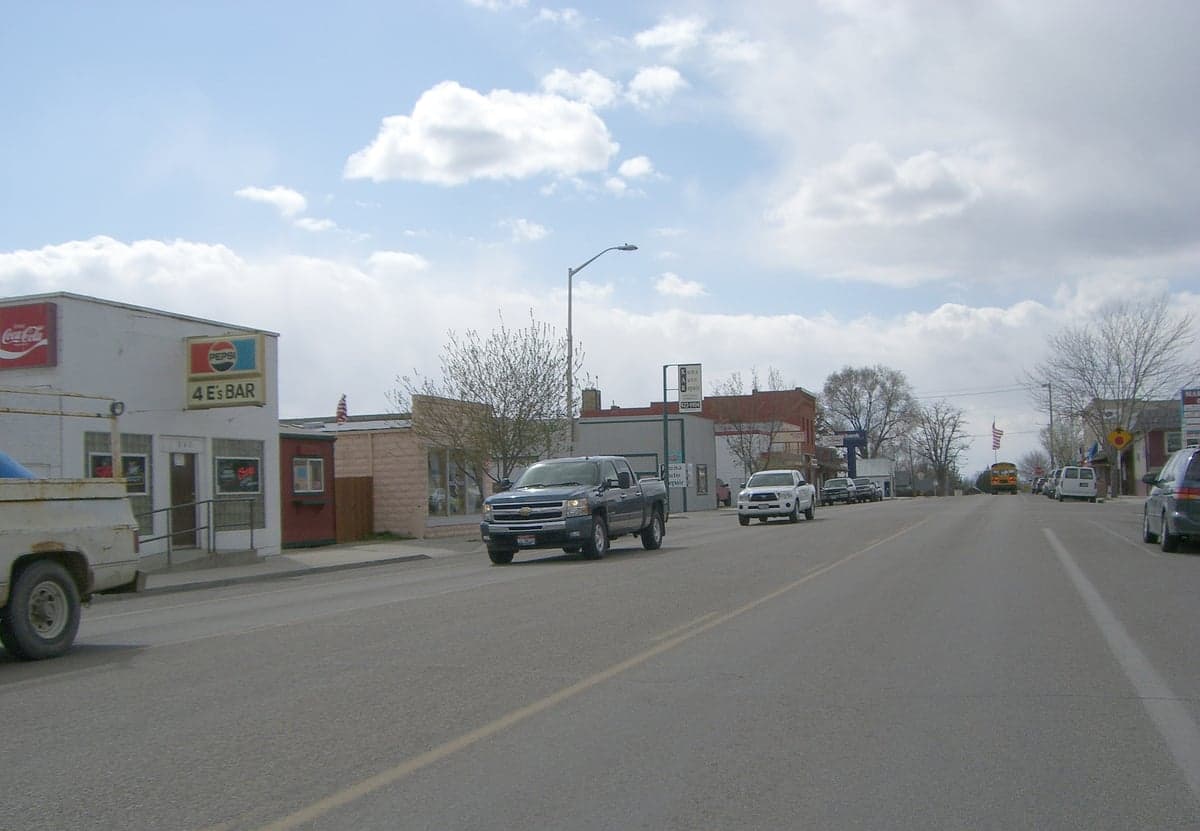
Kuna’s human history begins with the Shoshone-Bannock tribes, who used the area for seasonal hunting and fishing along the Snake River plain, but permanent settlement by Euro-Americans did not begin until the late 19th century. The city was officially founded in 1900 as a railroad stop on the Oregon Short Line, with the first wave of settlers being predominantly Anglo-American homesteaders drawn by the promise of irrigated farmland. The construction of the New York Canal (completed 1904) and the later Boise Project transformed the arid sagebrush steppe into productive agricultural land, attracting farmers from the Midwest and Great Plains. These early families—many of German, English, and Scandinavian descent—established the original town site around what is now Main Street and the historic Kuna Depot. The Old Town Kuna neighborhood, centered on Avenue A and Main Street, retains the original grid of small lots and modest homes built by these first settlers. A second, smaller wave arrived during the 1930s Dust Bowl, with displaced farmers from Oklahoma and Texas settling on the outskirts, particularly in the Kuna Bench area south of the railroad tracks, where they established dryland farms and ranches. By 1950, Kuna’s population remained under 1,000, and the community was almost entirely white, with a handful of Hispanic farmworkers living in seasonal labor camps near the Indian Creek corridor.
Modern era (post-1965)
The post-1965 era brought no major wave of foreign immigration to Kuna; instead, the city’s growth has been almost entirely driven by domestic in-migration from other parts of Idaho and the Western United States. The 1970s and 1980s saw the first trickle of suburban spillover from Boise, as families seeking larger lots and lower taxes moved into new subdivisions on the city’s northern edge. The Linder Estates neighborhood, developed in the 1980s, attracted middle-class white families from Ada County, while the Kuna Meadows subdivision (1990s) drew a mix of white and Hispanic residents, many of whom worked in construction or service industries in Meridian. The Hispanic population grew from roughly 3% in 1990 to 10.6% today, driven primarily by natural increase and internal migration from other parts of the U.S., rather than by direct immigration from Mexico or Central America. This community is concentrated in the South Kuna area, particularly around the intersection of Deer Flat Road and Ten Mile Road, where older mobile home parks and modest single-family homes house a mix of Hispanic and white working-class families. The Asian population remains very small at 0.5% (East/Southeast Asian) and 0.4% Indian, with these residents scattered across newer subdivisions like Pleasant Valley (built 2005–2015), where they are employed in tech and healthcare in Boise. The Black population is negligible at 0.4%, and there is no significant Arab community. The city’s foreign-born share of 1.9% is among the lowest in the Boise metro, reflecting Kuna’s limited appeal to international migrants and its reliance on domestic growth.
The future
Kuna’s population is projected to continue growing at a moderate pace, reaching an estimated 35,000–40,000 by 2040, driven by ongoing suburban expansion from Boise and Meridian. The city is likely to remain predominantly white, with the Hispanic share slowly rising to perhaps 15–18% through natural increase and continued domestic migration, but the foreign-born population is expected to stay below 3%. The Ten Mile Creek area, currently under development with master-planned communities, will absorb most new residents, who are likely to be white families from the Boise area seeking affordable housing. The city is not tribalizing into distinct ethnic enclaves; rather, it is homogenizing into a largely white, middle-class suburb with a modest Hispanic minority that is increasingly integrated into the broader community. The Indian and East/Southeast Asian populations will likely remain very small, as Kuna lacks the job base and cultural infrastructure to attract significant numbers of these groups. The next 10–20 years will see Kuna become more suburban and less agricultural, but its demographic character will remain stable—a conservative, family-oriented community with little ethnic or cultural diversity.
For someone moving in now, Kuna offers a safe, affordable, and culturally homogeneous environment where the population is overwhelmingly white, native-born, and politically conservative. The city is becoming a bedroom suburb of Boise, not a diverse melting pot, and new residents should expect a community where traditional family values, low crime, and a strong sense of local identity are the norm. The low foreign-born share and minimal ethnic diversity mean that newcomers from outside the region may find the social landscape less varied than in larger cities, but for those seeking a stable, predictable community, Kuna delivers exactly that.

* Values derived from national, state, county, city and local statistics and may differ in a specific area. Last updated: 2026-04-22T14:59:18.000Z
Narrative content on this page is AI-generated and may contain mistakes. Verify any details that matter before acting on them.
ReloMaps may earn a commission from affiliate links at no extra cost to you.

