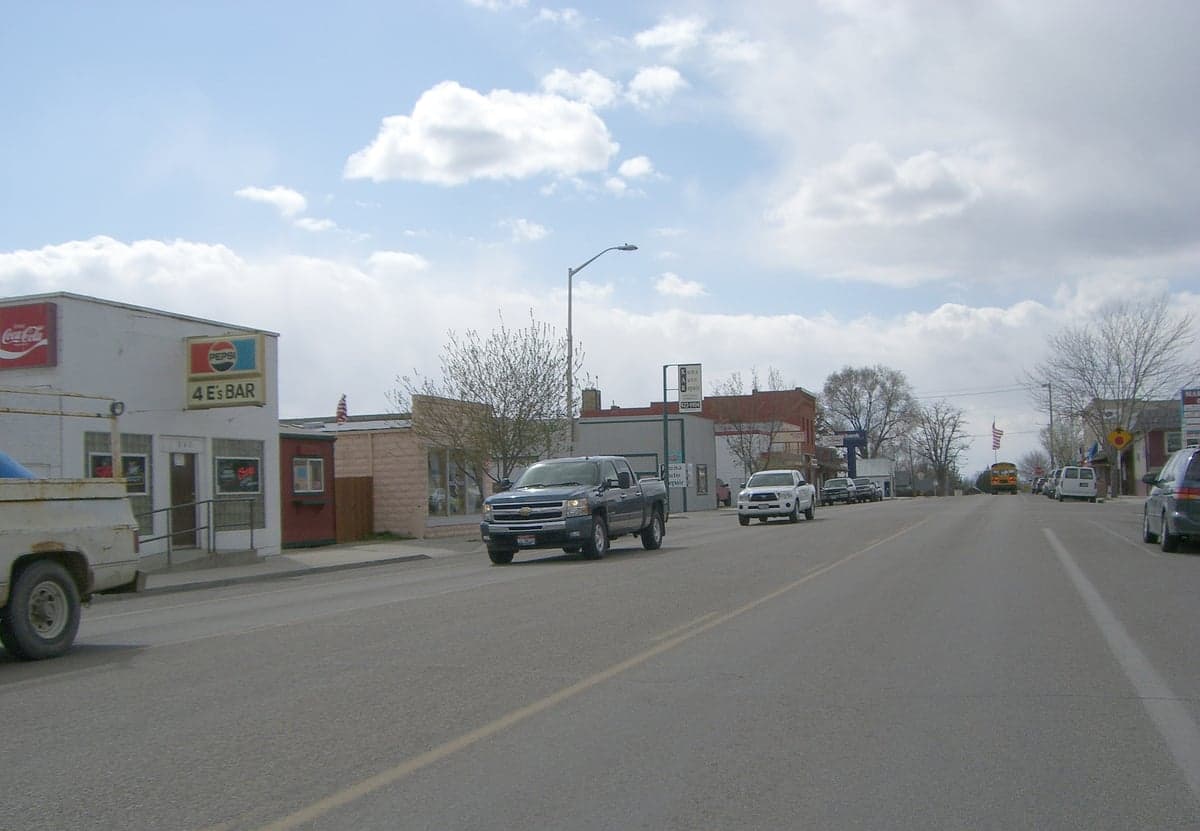
Photo: Wikipedia
Political ClimatePolitical Climate in Kuna, ID
District shown is the primary district for this city’s centroid. Cities may span multiple districts.
Local Political AnalysisPolitical Analysis of Kuna, ID
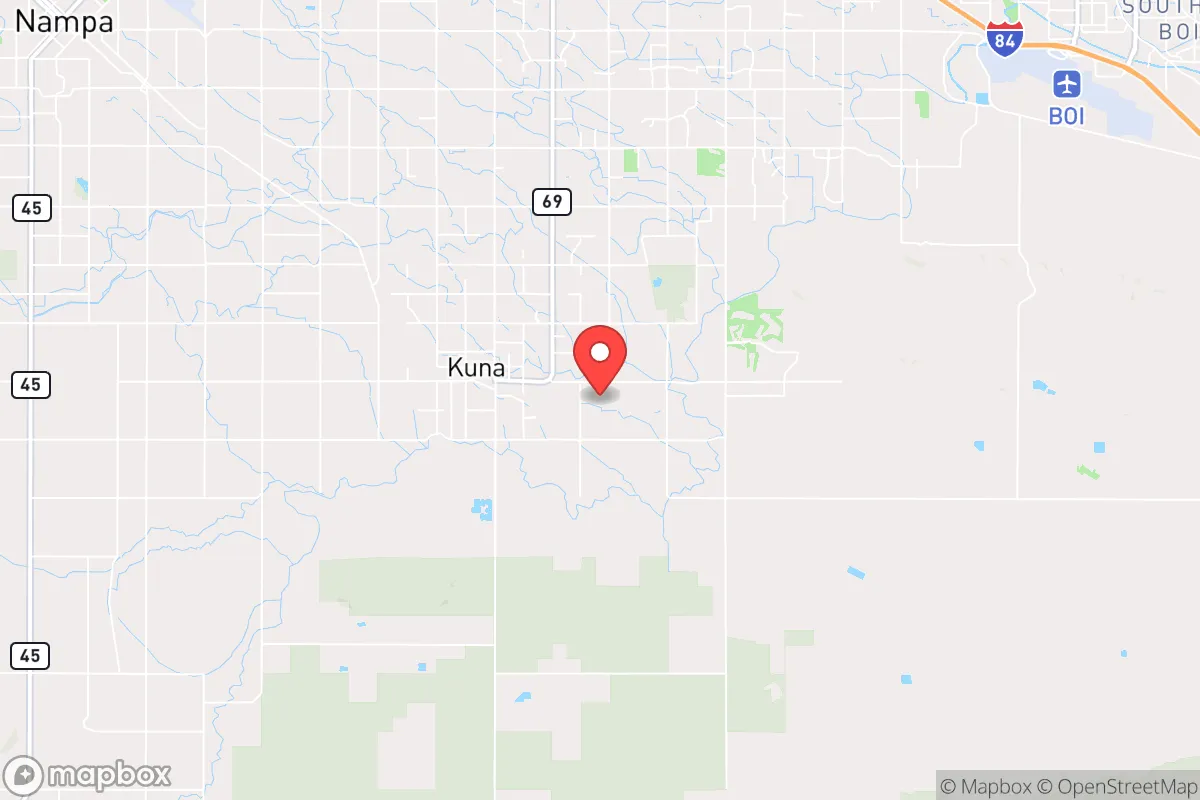
Kuna, Idaho, is about as solidly conservative as it gets, and that’s not changing anytime soon. With a Cook PVI of R+22, this Ada County town leans Republican by a wider margin than almost any other place in the Treasure Valley. If you’re looking at a map, Kuna sits southwest of Boise, and it’s a different world from the more purple-leaning city of Meridian or the increasingly progressive pockets of downtown Boise. The political trajectory here has been steady for decades—folks vote for lower taxes, fewer regulations, and a government that stays out of their business. If anything, the recent influx of families from California and Oregon has actually reinforced the conservative base, because many of them moved here specifically to escape the overreach they saw back home.
How it compares
Drive ten miles north to Meridian, and you’ll find a more moderate, suburban Republican vibe—still red, but with a noticeable chunk of independent and even some Democratic voters, especially in the newer subdivisions. Head east into Boise proper, and the contrast is stark: the city council there has pushed zoning changes, bike lane expansions, and mask mandates that would never fly in Kuna. To the south and west, the rural towns like Melba and Homedale are even more conservative than Kuna, but they lack the population growth and new development. Kuna sits in a sweet spot: it’s conservative enough that you don’t hear talk of defunding the police or rent control, but close enough to the metro area that you can still find a job without driving an hour. The county commission in Ada County has stayed reliably Republican, but there’s been a quiet push from Boise-based activists to shift the balance—something Kuna residents watch closely and generally oppose.
What this means for residents
For the people living here, the political climate translates into a few concrete realities. First, property taxes are kept in check by a county board that’s skeptical of new spending—no big bond measures for light rail or public art projects. Second, the local school board has resisted critical race theory and gender ideology curriculum, sticking to a traditional, skills-based approach. Third, during the pandemic, Kuna was one of the few places in Ada County where businesses stayed open without capacity limits or vaccine mandates; the city council simply refused to enforce state-level health orders they saw as overreach. That’s the kind of thing that makes a long-time resident breathe easier. You don’t have to worry about a city inspector showing up because your backyard shed is six inches too tall, or a county health officer shutting down your church’s potluck. The trade-off is that public services are lean—don’t expect a robust bus system or a fancy rec center—but most folks here prefer that trade.
One cultural distinction worth noting: Kuna has a strong agricultural heritage, with the Snake River Plain’s potato and sugar beet farms still operating on the outskirts. That farming mindset—self-reliance, distrust of distant bureaucrats, and a preference for local decision-making—permeates the town’s politics. There’s also a growing libertarian streak, especially among younger residents who work in Boise’s tech sector but commute home to Kuna for the lower cost of living and the freedom to own guns, modify their trucks, and keep livestock on their property. Looking ahead, the biggest concern among locals is that Boise’s progressive influence will creep south as more housing developments fill in the gaps. If the county commission flips or the state legislature passes preemption laws that override local control, you could see Kuna’s character change. But for now, it remains a place where the government’s main job is to stay out of the way.

State Political ClimatePolitical Climate in Idaho
State Political AnalysisPolitical Environment in the State
Idaho has long been one of the most reliably Republican states in the nation, with a partisan lean that has only deepened over the past two decades. The state voted for Donald Trump by a 30-point margin in 2020 and by roughly 37 points in 2024, making it the second-most Republican state after Wyoming. The dominant coalition is a mix of rural conservatives, Mormon cultural conservatives in the southeast, and a growing wave of freedom-minded transplants fleeing blue states. Over the last 10-20 years, Idaho has shifted from a moderate-red state to a deep-red one, driven by explosive growth in the conservative Treasure Valley and a simultaneous exodus of left-leaning residents from Boise’s urban core.
Urban vs. rural divide
The political map of Idaho is starkly divided between its few urban islands and the vast rural sea. Ada County, home to Boise and its suburbs, is the state’s most populous county and has been trending purple for years. Boise itself is a blue dot in a red state, with precincts in the North End and downtown voting heavily Democratic. But the surrounding suburbs—Meridian, Eagle, and Kuna—are overwhelmingly conservative and growing fast. Meridian alone added over 50,000 residents in the last decade, most of them families fleeing high taxes and crime in California and Washington. Canyon County, just west of Ada, is a Republican stronghold; Nampa and Caldwell vote red by 20-30 points. The rural counties—Lemhi, Custer, Boundary, and Owyhee—routinely vote 80% Republican or higher. The only other notable blue pocket is Blaine County, home to Sun Valley and its wealthy, ski-resort liberal population. The divide is simple: the more rural and agricultural the county, the more conservative; the more urban and amenity-driven, the more purple or blue.
Policy environment
Idaho’s policy environment is aggressively pro-liberty in most respects. The state has no income tax on individuals (a flat 5.8% corporate rate remains), and property taxes are among the lowest in the West. The legislature has passed a series of tax cuts in recent years, including a 2023 bill that reduced the top individual income tax rate from 6% to 5.8% and accelerated future cuts. Education policy is a battleground: the state has a robust school choice movement, with a new Education Savings Account (ESA) program passed in 2023 that allows parents to use public funds for private school tuition, homeschooling, or tutoring. However, the program is currently tied up in court challenges from teachers’ unions. Healthcare is largely free-market, with no state-run insurance exchange and minimal Medicaid expansion (voters approved it in 2018, but the legislature has resisted full implementation). Election laws are strict: voter ID is required, same-day registration is not allowed, and mail-in ballots are limited to those with a valid excuse. The state also passed a 2021 law banning private funding of election administration, a direct response to Zuckerberg-funded efforts in 2020.
Trajectory & freedom
Idaho is becoming more free, not less, and the trend is accelerating. The 2023 legislative session was a landmark for personal liberty: the state passed a constitutional carry law (no permit needed to carry a concealed firearm), a ban on COVID-19 vaccine mandates by private employers, and a parental rights bill that requires schools to notify parents before teaching about sexuality or gender identity. The 2024 session added a law prohibiting the use of state funds for diversity, equity, and inclusion (DEI) programs at public universities. On medical autonomy, Idaho passed one of the nation’s strictest abortion bans in 2020 (trigger law) and a 2023 law making it a felony to help a minor cross state lines for an abortion without parental consent. Property rights are strong: the state has no statewide zoning, and most counties allow rural landowners to build without onerous permits. The only area where freedom has contracted is in the realm of land use—some fast-growing counties like Ada and Kootenai have imposed growth boundaries and impact fees, a trend that worries libertarian-leaning residents.
Civil unrest & political movements
Idaho has seen relatively little civil unrest compared to coastal states, but there are flashpoints. The most visible is the ongoing battle over library books and school curriculum, with conservative groups like the Idaho Freedom Foundation and the Idaho Family Policy Center leading efforts to remove sexually explicit materials from public libraries. In 2023, a bill was introduced (but failed) to criminalize librarians for distributing “harmful materials” to minors. Immigration politics are heated in the agricultural Magic Valley, where dairy and potato farms rely heavily on migrant labor. The state has no sanctuary policies, and the legislature passed a 2023 law requiring local law enforcement to cooperate with federal immigration authorities. There have been small but vocal protests from left-wing groups in Boise over abortion and LGBTQ+ rights, but they rarely draw more than a few hundred people. The most significant political movement is the “Greater Idaho” secession effort, which proposes moving the eastern counties of Oregon into Idaho. It has gained traction in Oregon’s rural counties but remains a symbolic gesture. Election integrity controversies are minimal; Idaho’s voting system is widely trusted, and there have been no major fraud allegations.
Projection
Over the next 5-10 years, Idaho will likely become even more conservative, but with a new flavor. The in-migration from California, Washington, and Oregon is overwhelmingly conservative-leaning—these are people who left because of high taxes, crime, and progressive policies. They are settling in places like Meridian, Post Falls, and Hayden, and they are voting in Republican primaries. This will push the state further right on fiscal issues (more tax cuts, less spending) but may create tension with native Idahoans on land use and growth management. The urban-rural divide will widen: Boise will continue to blue, while the suburbs and exurbs will deepen red. The state’s population is projected to grow by 20-25% by 2035, and most of that growth will be in the conservative Treasure Valley and North Idaho. The legislature will likely pass further school choice expansion, a flat income tax (already in the works), and additional gun rights protections. The only wildcard is the courts: the ESA program and the abortion ban are both under legal challenge, and a future liberal Idaho Supreme Court could slow the conservative agenda. But the political will is clear: Idaho is on a trajectory to become the most free state in the union, at least by conservative metrics.
For a new resident, the bottom line is this: Idaho offers a political environment that respects personal responsibility, low taxes, and limited government. You will find a state that values your right to live as you see fit, as long as you don’t expect the government to solve your problems. The culture is welcoming to those who share these values, but it is not a place for those who want progressive urban amenities or a heavy-handed state. If you’re moving here, expect to pay low taxes, carry a gun without a permit, send your kids to a school of your choice, and live in a community that largely minds its own business. The trade-off is that you’ll have to drive a bit to get to a Costco, and the winters are long. But for freedom-minded individuals and families, Idaho is about as good as it gets in 2026.
* Values derived from national, state, county, city and local statistics and may differ in a specific area. Last updated: 2026-04-22T14:59:18.000Z
Narrative content on this page is AI-generated and may contain mistakes. Verify any details that matter before acting on them.
ReloMaps may earn a commission from affiliate links at no extra cost to you.

