Photo: Wikipedia
Strategic Assessment of La Crosse, WI
Meaningful friction. Expect exposure to either population pressure, blast zones, or natural disaster risk. Consider buying a retreat property.
What does the Strategic Assessment tell us?
Our Strategic Assessment grades tactical survivability of an area. Major population centers, military targets, fallout zones, natural disasters, and border exposure all drive risk — lower exposure means a more defensible position in a crisis.
This is heavily inspired by Joel Skousen's Strategic Relocation book. Highly recommended you checkout the book ($)What does this tell us?
Our Strategic Assessment grades tactical survivability of an area. Major population centers, military targets, fallout zones, natural disasters, and border exposure all drive risk — lower exposure means a more defensible position in a crisis.
This is heavily inspired by Joel Skousen's Strategic Relocation book. Highly recommended you checkout the book ($)Strategic Pillars

Key Distances
Regional Safe Places
Below is our recommended "safe zones" in Wisconsin and the surrounding area based on our strategic heuristics. For most people, it's unrealistic to live in a “safe zone” full-time due to work, family or other personal reasons. They tend to be more rural. However, many of these areas are perfect for second homes and retreat properties that double as a vacation home or even a short-term rental.
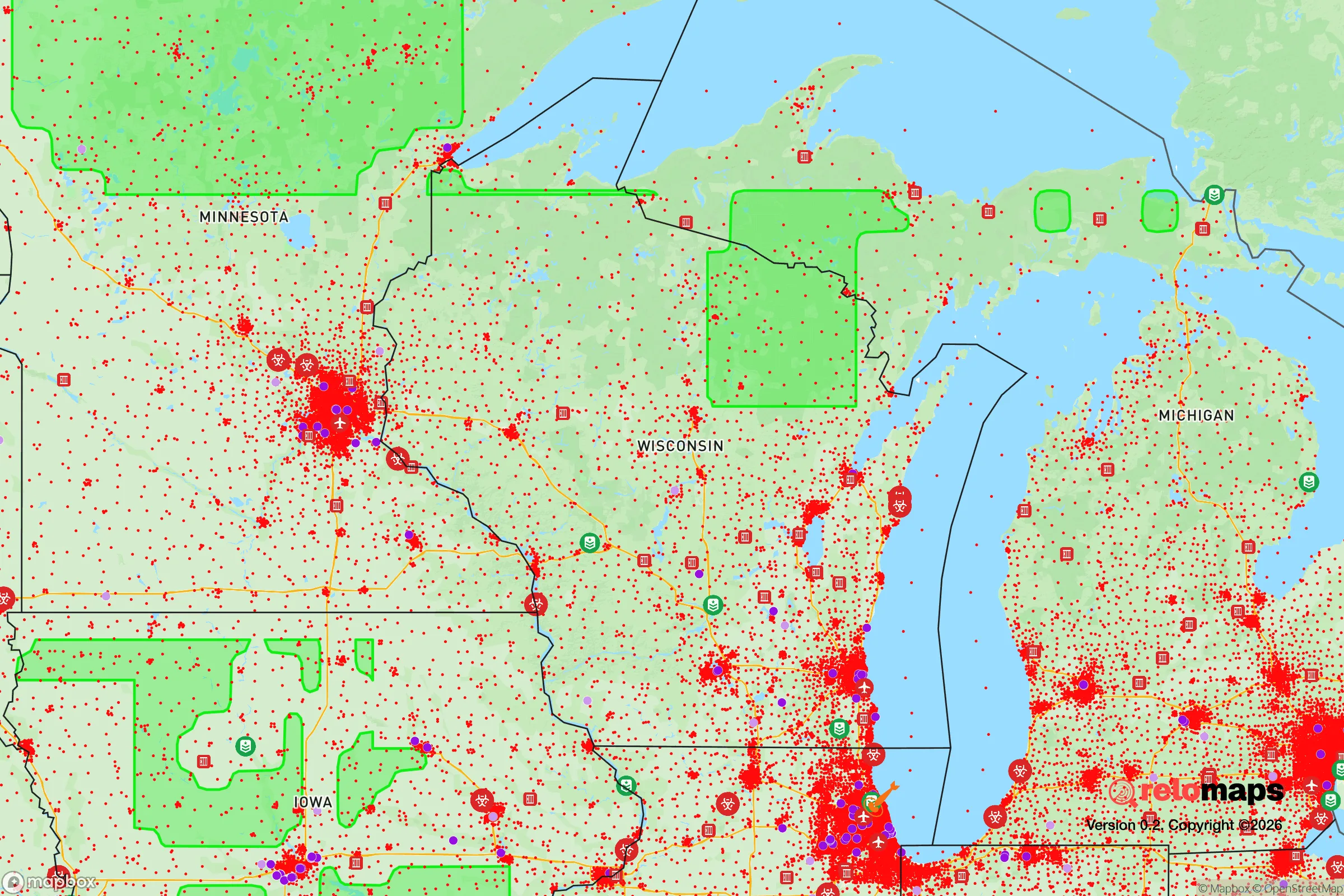
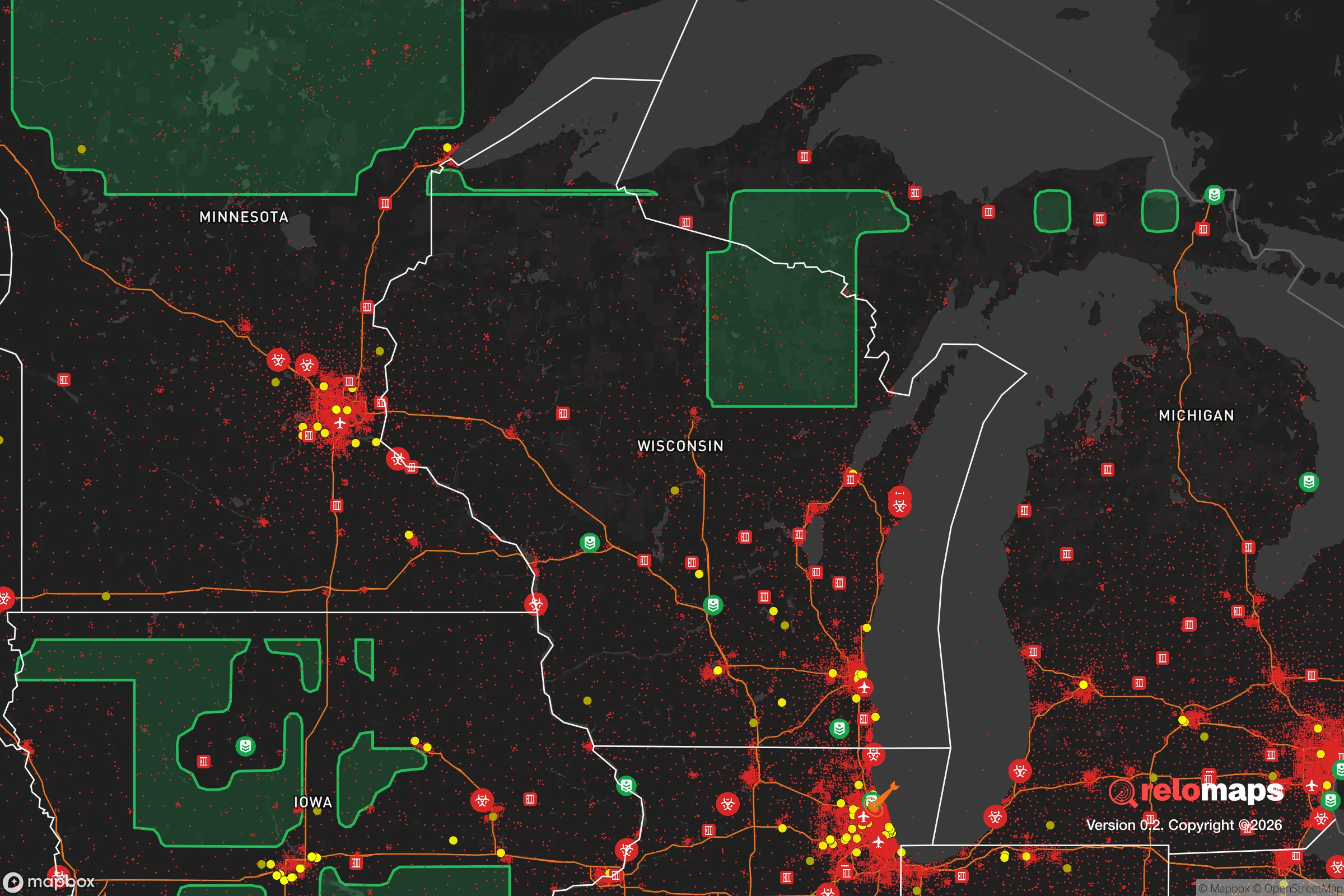


Important Note: For informational purposes only. This does not mean nothing bad ever happens in the green zones. Please use common sense. This is based on public data and modeled with AI. We tried to take a conservative approach but mistakes happen. We update this regularly as new information becomes available.
Solar Generator Recommendations
Backup power matters more here than in safer locations. We've picked three solar generators across budgets and capacity tiers — start with the budget unit if you only need a few essentials, or step up if you want to run a fridge and HVAC for days at a time.

Jackery Portable Power Station Explorer 300
Budget OptionPower on the Go: Weighing only 11 lbs, it's convenient to set up and store with book-sized foldable solar panels

BLUETTI Portable Power Station AC180
Designed for both indoor and outdoor scenarios, AC180 is highly capable as it has a robost capacity and continuous output power.

EF ECOFLOW DELTA Pro Ultra Power Station
Upgraded PickEcoFlow DELTA Pro Ultra is a whole-home energy system designed to grow with your family. Integrated with the Smart Home Panel 2, it scales to meet your evolving energy needs — keeping your home powered, intelligent, and secure through every stage of life.
We earn a commission, at no additional cost to you.
Strategic Assessment Analysis
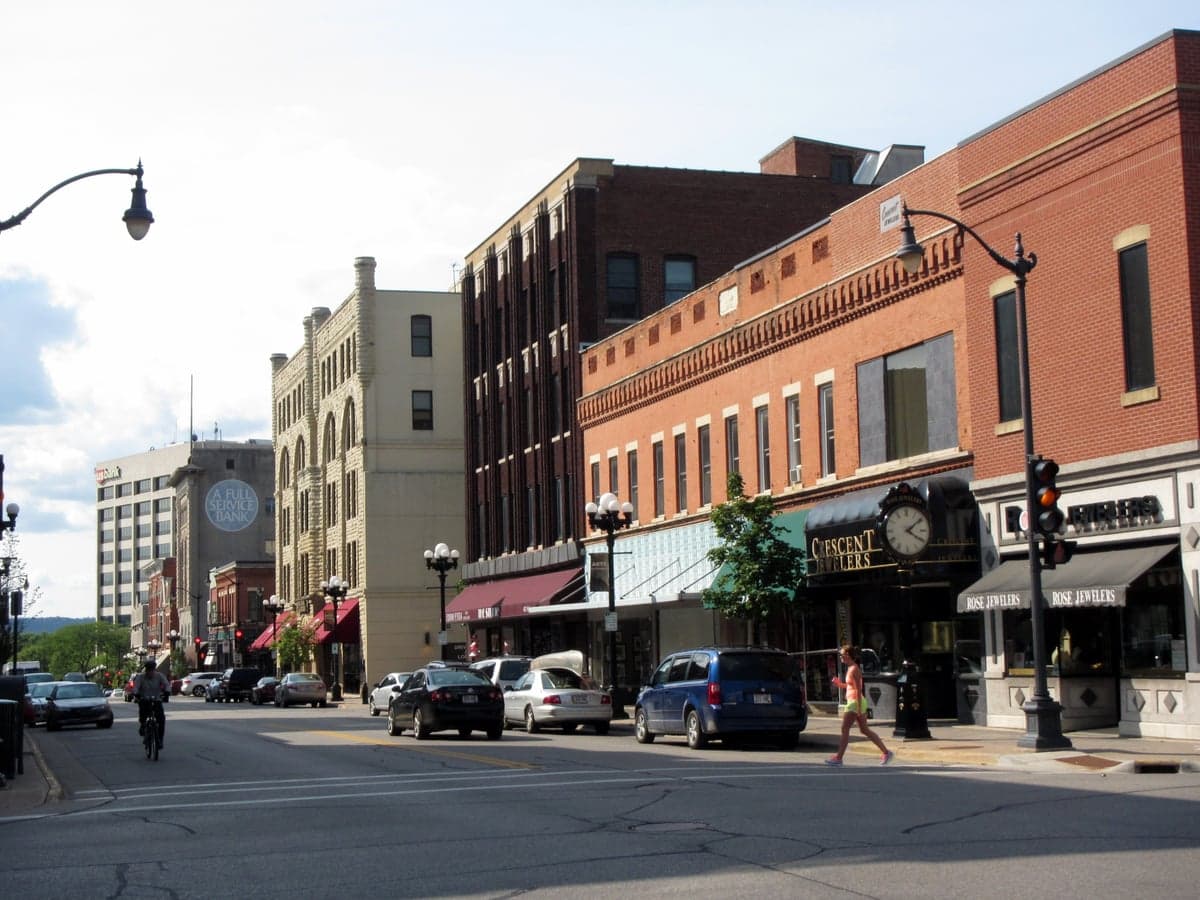
La Crosse, Wisconsin, offers a surprisingly resilient strategic position for those prioritizing long-term stability and self-sufficiency, balancing access to essential resources with a meaningful buffer from major metropolitan fallout zones. Nestled in the Driftless Region—a rugged, unglaciated area that escaped the flattening of the last ice age—this city of roughly 52,000 sits at the confluence of the Mississippi, Black, and La Crosse Rivers, providing both natural defensibility and critical water access. While not immune to the pressures of a destabilizing world, La Crosse’s geography, modest population density, and regional economic anchors make it a viable candidate for relocation-minded conservatives seeking a prepared, grounded lifestyle away from the chaos of coastal and urban centers.
Geographic position and natural advantages for long-term stability
La Crosse’s location in the Driftless Region is its single greatest strategic asset. The area’s steep bluffs, deep valleys, and winding river corridors create natural chokepoints and defensible terrain that would complicate large-scale movement or unrest. Unlike the flat, exposed landscapes of much of the Midwest, the Driftless offers hundreds of square miles of forested hills, limestone caves, and hidden hollows—ideal for dispersed living, caching supplies, or establishing remote retreats. The Mississippi River itself is a double-edged sword: it provides a reliable water source and a transportation corridor, but also a potential vector for refugees or disruptions from downstream. However, the river’s width and the bluffs’ elevation give residents ample warning and observation points. The city’s elevation—around 650 feet above the river—keeps most neighborhoods above floodplains, a practical advantage as climate volatility increases. For a relocator, the ability to hunt, forage, and access clean water within a short drive of town is a tangible benefit that few similarly sized cities can match.
Risks, exposures, and proximity to fallout-relevant landmarks
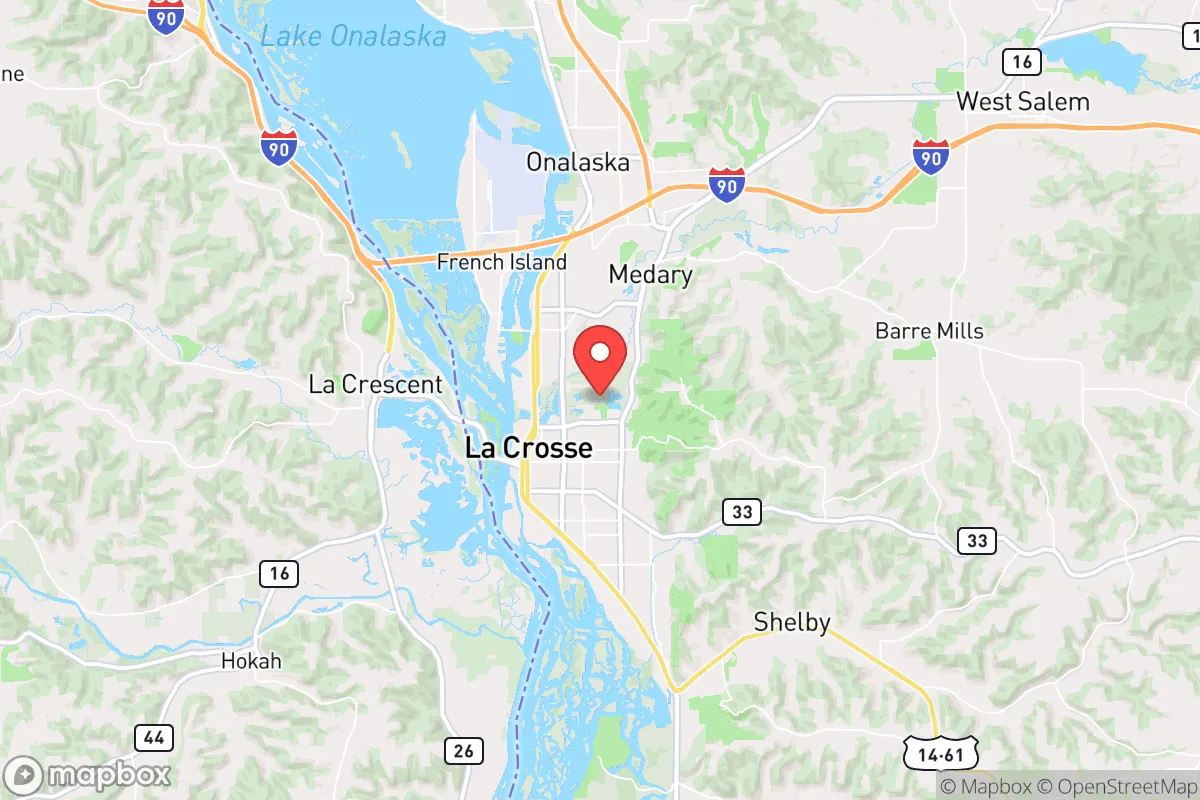
No strategic assessment is honest without acknowledging vulnerabilities. La Crosse’s primary risk stems from its position along the Mississippi River, a major north-south artery that could channel displaced populations or supply chain disruptions from the south. The city is roughly 140 miles from the Minneapolis-St. Paul metro area (3.6 million people), a potential epicenter of civil unrest or resource scarcity that could send waves of evacuees northward. Similarly, it sits about 70 miles from Rochester, Minnesota (home to the Mayo Clinic, a critical infrastructure node), and 100 miles from Madison, Wisconsin’s capital. While these distances provide a buffer, they are not insurmountable for determined groups. The nearby La Crosse Municipal Airport and the regional rail lines are potential targets for disruption or seizure during a crisis. Additionally, the city’s reliance on the I-90 corridor for resupply means any blockage at the Mississippi River bridges—there are only two major crossings in the immediate area—could isolate the city. For the prepper, these chokepoints are both a weakness and a strength: they limit outside access but also make escape routes predictable and defensible. The area has no nuclear power plants within 50 miles, though the Prairie Island plant near Red Wing, Minnesota (about 90 miles north) is a distant concern. Overall, La Crosse’s exposure is moderate—better than most cities in the eastern half of the country, but not as isolated as the Mountain West.
Practical resilience for a relocator: food, water, energy, and defensibility
For the individual or family serious about self-reliance, La Crosse delivers on the basics. The Driftless Region is one of the few places in the Upper Midwest with abundant spring-fed streams and artesian wells, meaning clean water is accessible even if municipal systems fail. The surrounding counties—La Crosse, Vernon, and Monroe—are agricultural powerhouses, producing dairy, corn, soybeans, and livestock. Local farmers’ markets and CSAs are robust, and the area’s Amish and Mennonite communities (concentrated in nearby Cashton and Viroqua) offer a network of traditional skills, handcrafted goods, and barter opportunities that align with a prepper ethos. Energy resilience is a mixed bag: the city’s grid is tied to Xcel Energy’s regional system, which includes natural gas and coal plants, but the Driftless’s steep terrain is excellent for micro-hydro or small-scale wind generation. Solar potential is decent but not exceptional due to winter cloud cover. Defensibility is where La Crosse shines. The bluffs create natural observation posts, and many rural properties offer 360-degree visibility. The city itself is compact—walkable in parts—but the surrounding towns (Onalaska, Holmen, West Salem) provide a layered buffer. For those willing to live 15–30 minutes outside the city, land is still affordable (averaging $4,000–$8,000 per acre in 2025), and zoning is generally lenient for outbuildings, livestock, and alternative energy. The local gun culture is strong but not extreme; Wisconsin is a shall-issue state for concealed carry, and the area has a long hunting tradition. For a relocator, the key takeaway is that La Crosse offers a realistic path to semi-self-sufficiency without requiring a complete off-grid lifestyle—a practical middle ground for those who want to be prepared but not isolated.
In the final strategic picture, La Crosse represents a calculated compromise: it is not a remote bunker location, but it is far enough from major population centers to avoid the worst of urban collapse scenarios while retaining access to critical resources and community networks. The city’s conservative leanings (La Crosse County voted +5 for Trump in 2024, with surrounding rural counties going +30–40) mean that local governance and cultural norms are generally aligned with self-reliance, property rights, and traditional values—important intangibles when assessing long-term stability. The presence of a major university (UW-La Crosse) and a robust healthcare system (Gundersen Health System, Mayo Clinic’s regional presence) adds a layer of institutional resilience that many smaller towns lack. For the strategic relocator, the calculus is straightforward: La Crosse offers a defensible, resource-rich base in a region that is politically and culturally compatible, with manageable risks from external shocks. It is not a perfect fortress, but in a world of increasing uncertainty, it is a solid, sober choice for those who want to be prepared without disappearing into the wilderness.

* Values derived from national, state, county, city and local statistics and may differ in a specific area. Last updated: 2026-04-21T10:34:26.000Z
Narrative content on this page is AI-generated and may contain mistakes. Verify any details that matter before acting on them.
ReloMaps may earn a commission from affiliate links at no extra cost to you.

