 Popular
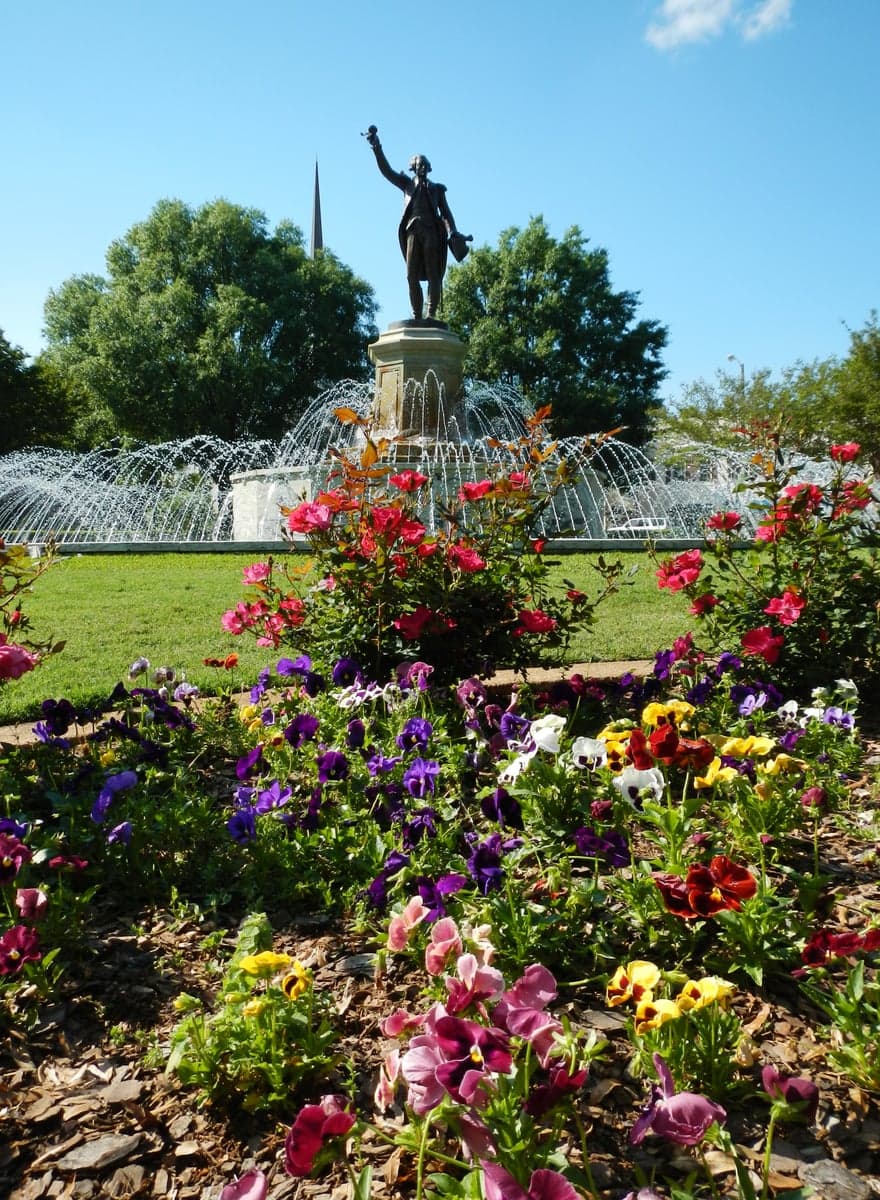
Photo: Wikipedia
Demographics of Lagrange, GA
Affluence Level in Lagrange, GA
A low-income area with significant economic hardship. Household wealth and educational attainment are well below national averages.
People of Lagrange, GA
The people of LaGrange, Georgia today form a majority-Black city of 31,479 residents, where a 52.4% Black population coexists with a 35.8% white population and small but growing Hispanic (5.5%), East/Southeast Asian (2.1%), and Indian-subcontinent (1.5%) communities. The city’s identity is rooted in its textile-mill history and its role as a regional manufacturing and healthcare hub, giving it a stable, working-to-middle-class character with a 25.2% college-educated rate. LaGrange is denser and more diverse than surrounding Troup County, yet retains a distinctly Southern, church-centered social fabric.
How the city was settled and grew
LaGrange was founded in 1828 as a resort town for wealthy planters escaping coastal heat, but its population exploded after the Civil War with the arrival of the cotton textile industry. The first major wave of residents were white mill workers from rural Georgia and the Carolinas who built the Chattahoochee Valley mill villages—neighborhoods like East LaGrange and North LaGrange—where company-owned housing and churches defined daily life. By the early 1900s, Black families began moving into the city from surrounding farms to work in the mills and domestic service, settling in historically Black neighborhoods such as Jones Street and South LaGrange, which developed their own schools, businesses, and fraternal organizations. The Great Migration brought additional Black residents from rural Georgia and Alabama into these same areas through the 1940s and 1950s, doubling the Black population share by 1960.
Modern era (post-1965)
After the 1965 Immigration and Nationality Act, LaGrange saw only modest foreign-born growth—today just 4.3% of residents are foreign-born—but domestic migration reshaped the city. White flight to suburban areas like West Point and unincorporated Troup County accelerated after school desegregation in the 1970s, while Black families moved into previously white neighborhoods such as Hillcrest and Briarwood. The Hispanic population began growing in the 1990s, drawn by poultry-processing and construction jobs, and now clusters around Whitesville Road and the Hogansville Highway corridor. East/Southeast Asian residents, primarily Vietnamese and Filipino, arrived in small numbers through professional and military connections to nearby Fort Moore (formerly Fort Benning), settling in newer subdivisions near Interstate 85. The Indian-subcontinent community, though small at 1.5%, is largely composed of doctors and engineers working at WellStar West Georgia Medical Center and Kia Motors Manufacturing Georgia in West Point, and tends to live in the Greenville Street corridor’s newer developments.
The future
LaGrange’s population is slowly diversifying but remains deeply segregated by neighborhood. The Black majority is stable, with younger Black families moving into formerly white subdivisions as older white residents age in place. The Hispanic share is growing steadily—up from 3.1% in 2010 to 5.5% today—driven by births and continued labor demand, but the community remains concentrated in a few blocks rather than dispersing citywide. East/Southeast Asian and Indian-subcontinent populations are plateauing, as most arrivals are tied to specific employers rather than chain migration. The city is not homogenizing; instead, it is tribalizing into distinct enclaves: East LaGrange remains predominantly white and older, South LaGrange and Jones Street are solidly Black and working-class, and the Whitesville Road area is becoming a Hispanic-majority corridor. Over the next 10-20 years, LaGrange will likely see a slow increase in Hispanic share to 8-10%, a stable Black majority, and a shrinking white population as older residents pass away without replacement.
For someone moving in now, LaGrange offers a racially defined, economically stable Southern city where neighborhood choice largely determines social experience. The city is not becoming a melting pot but a collection of distinct communities, each with its own institutions and identity. New residents should expect to integrate into one of these existing enclaves rather than find a fully blended environment.

* Values derived from national, state, county, city and local statistics and may differ in a specific area. Last updated: 2026-04-19T08:52:42.000Z
Narrative content on this page is AI-generated and may contain mistakes. Verify any details that matter before acting on them.
ReloMaps may earn a commission from affiliate links at no extra cost to you.

