 Popular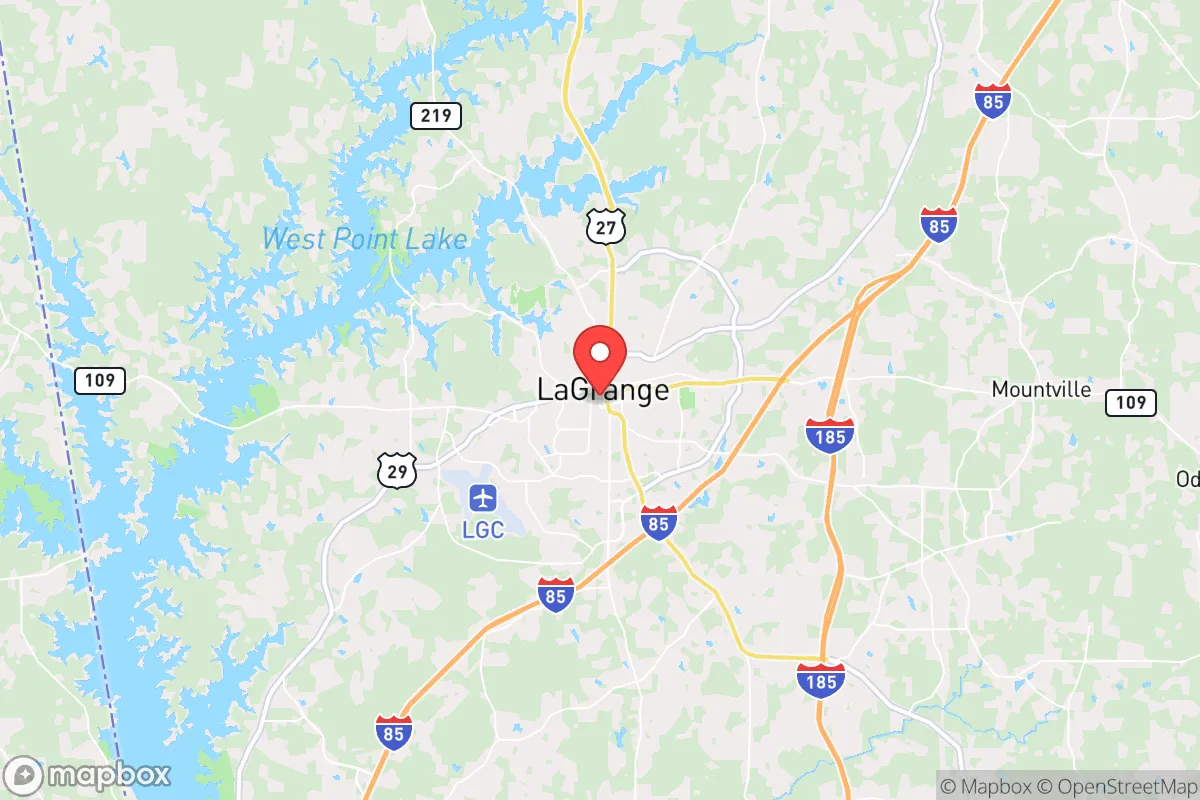
Photo: Wikipedia
Political ClimatePolitical Climate in Lagrange, GA
District shown is the primary district for this city’s centroid. Cities may span multiple districts.
Local Political AnalysisPolitical Analysis of Lagrange, GA
LaGrange, Georgia, sits firmly in conservative territory, with a Cook PVI of R+15 that reflects the deep-rooted Republican lean of Troup County and the surrounding region. This isn’t a place that’s flipped overnight; it’s been a reliably red area for decades, with local elections often decided in the GOP primary. The political climate here is one of stability, but like many small Southern cities, there’s a quiet undercurrent of concern as national progressive trends start to ripple into local conversations—especially around school boards and zoning policies. Most folks I know still vote on the same core principles: limited government, personal responsibility, and keeping taxes low, but you can feel the pressure building from outside influences.
How it compares
Drive 30 minutes east to Newnan, and you’ll hit a similar conservative vibe, though Coweta County has seen more suburban growth that’s brought a slightly more moderate tilt in recent years. Head west to Auburn, Alabama, and the politics are nearly identical—deep red, with a strong military and university influence. The real contrast is south toward Columbus, which leans more purple due to its larger urban core and military base population. Within Troup County itself, the city of LaGrange is a bit more moderate than the rural outlying areas like Hogansville or West Point, where the R+15 rating feels almost too soft. Those smaller towns vote even more heavily Republican, and you’ll hear folks there grumble about any hint of government overreach, whether it’s mask mandates or property tax hikes.
What this means for residents
For the average person living here, the political climate means you can generally expect local government to stay out of your way. Property taxes are reasonable, business regulations are light, and there’s a strong cultural expectation that the county commission and city council will respect Second Amendment rights and parental control over education. That said, the last few years have brought some worrying signs. The school board has faced pressure to adopt diversity, equity, and inclusion initiatives, and there’s been talk of updating the city’s zoning code in ways that could limit private property use. These aren’t full-blown battles yet, but they’re the kind of creeping government overreach that makes long-time residents uneasy. The general attitude is: we moved here or stayed here because we wanted freedom from that kind of micromanagement.
On the cultural front, LaGrange still holds onto its traditional Southern identity—church on Sunday, family cookouts, and a strong sense of community self-reliance. The biggest policy distinction you’ll notice is the lack of any city-level income tax and a general reluctance to take on new debt for public projects. There’s a healthy skepticism of federal funding tied to strings, like the recent infrastructure money that came with climate and equity mandates. Looking ahead, the concern is that as Atlanta’s sprawl pushes further south, the progressive politics of the metro area will follow. For now, though, LaGrange remains a place where you can still live your life without the government breathing down your neck, and most residents aim to keep it that way.

State Political ClimatePolitical Climate in Georgia
State Political AnalysisPolitical Environment in the State
Georgia has shifted from a reliably Republican stronghold to a genuine battleground state over the past two decades, but it’s far from a liberal lock. The state’s overall partisan lean is now a razor-thin R+3 at the presidential level, with Democrats winning the state in 2020 and 2024 by margins under 1%. The dominant coalition remains a mix of suburban conservatives, rural traditionalists, and a growing number of fiscally-minded transplants from the Northeast and West Coast. The trajectory since 2004 has been a slow but steady leftward drift driven by explosive growth in the Atlanta metro, but the rest of the state—especially the southern and central regions—has held firm or even hardened its conservative stance.
Urban vs. rural divide
The political map of Georgia is a tale of two Georgias. The Atlanta metro—specifically Fulton, DeKalb, Cobb, and Gwinnett counties—now accounts for nearly 60% of the state’s vote, and these areas have flipped from red to blue over the past decade. Gwinnett County, once a Republican stronghold, went for Biden by 18 points in 2020 and Harris by 15 in 2024, driven by an influx of diverse, college-educated professionals. Meanwhile, rural south Georgia—places like Lowndes County (Valdosta) and Colquitt County (Moultrie)—votes 70-80% Republican, with turnout often lagging behind the metro. The Augusta area (Richmond County) is a Democratic island in a sea of red, while Savannah (Chatham County) has trended blue but remains competitive locally. The real battleground is the exurban ring: Forsyth County north of Atlanta is still deep red (+35 R), but Henry County south of the city flipped blue in 2020 and stayed there. If you’re moving to Georgia, your vote’s impact depends entirely on which of these zones you land in.
Policy environment
Georgia’s state-level policy is still broadly conservative, but with some notable exceptions that should give freedom-minded folks pause. The state has a flat income tax rate of 5.39%, down from 5.75% in 2024, with a scheduled drop to 4.99% by 2029—a solid win for taxpayers. Property taxes are relatively low, with a median effective rate of 0.87%, though Fulton County assessments have been climbing fast. On education, Georgia has a robust school choice program (the Georgia Promise Scholarship Act, 2024) that gives $6,500 per student for private school or homeschooling expenses, a big plus for parents. Healthcare policy is mixed: the state refused Medicaid expansion under Obamacare, keeping the uninsured rate around 13%, but also has a Certificate of Need (CON) law that restricts new hospital construction, limiting competition and keeping costs higher than they should be. Election laws tightened after 2020 with SB 202 (2021), which added voter ID requirements for absentee ballots and limited drop boxes—a move that drew national fire but has held up in court. The regulatory environment is generally business-friendly, with no state-level minimum wage (federal $7.25 applies) and a right-to-work law that keeps unions weak.
Trajectory & freedom
On the freedom front, Georgia is a mixed bag trending in the right direction on some fronts but backsliding on others. Gun rights are strong: Georgia is a constitutional carry state (HB 218, 2022), meaning no permit needed to carry a concealed firearm. Parental rights got a boost with SB 88 (2022), which allows parents to challenge school library materials they deem obscene, and HB 1105 (2024) banning gender transition procedures for minors. These are clear wins for personal liberty. But there are red flags. Medical autonomy took a hit with the state’s strict abortion law (HB 481, 2019), which bans most abortions after six weeks—a restriction that many conservatives support but which also creates a surveillance-like environment where doctors fear prosecution. Property rights are generally respected, but Atlanta’s city government has pushed zoning changes that allow higher density in single-family neighborhoods, a trend that could spread. The biggest concern is taxation creep: while the income tax is dropping, local sales taxes in metro counties can push the combined rate above 9%, and property assessments in Cobb and Gwinnett have risen 30-40% since 2020. If you value low taxes and minimal government interference, the rural and exurban counties are still your best bet, but the Atlanta metro is increasingly adopting the regulatory habits of its blue-state transplants.
Civil unrest & political movements
Georgia has seen its share of political flashpoints. The 2020 election controversy was centered here, with the infamous phone call between President Trump and Secretary of State Brad Raffensperger, followed by a wave of election integrity activism that led to SB 202. Protest activity spiked in Atlanta during the 2020 BLM demonstrations, with the Wendy’s on University Avenue being burned down and the city seeing over $100 million in property damage. Since then, organized activism has cooled but not disappeared. On the right, the Georgia Republican Assembly and local Tea Party groups remain active, particularly in Cherokee County and Hall County (Gainesville), pushing for school board transparency and election audits. Immigration politics are a live wire: Georgia passed HB 1105 (2024) requiring local law enforcement to cooperate with ICE, but DeKalb County has declared itself a “welcoming county” and resists full compliance. There’s no serious secessionist movement, but nullification rhetoric around federal gun laws and vaccine mandates has popped up in rural county commission meetings. The most visible flashpoint for a new resident would be the “Stop Cop City” movement in Atlanta, which turned violent in 2023 with anarchist groups firebombing construction equipment at the proposed police training center—a stark reminder that the metro’s politics can get ugly fast.
Projection
Over the next 5-10 years, Georgia is likely to become a permanent battleground with a slight Democratic lean at the presidential level, but Republican dominance in state government will persist due to gerrymandered legislative maps and rural overrepresentation. The Atlanta metro will continue to grow, adding 1-2 million people by 2035, with most new arrivals coming from blue states like California, New York, and Illinois. This will push Cobb, Gwinnett, and Henry counties further left, while Forsyth and Paulding counties will remain red but may soften. The I-16 corridor from Macon to Savannah is the next frontier, with growth in Bryan and Effingham counties attracting conservative-leaning families priced out of Atlanta. Expect continued fights over school curriculum, property taxes, and election laws, with the state legislature likely to pass a school voucher expansion and a property tax freeze for seniors. The biggest wild card is water rights: the ongoing “tri-state water war” with Alabama and Florida could force federal intervention, impacting development in fast-growing counties like Forsyth and Gwinnett. If you’re moving in now, expect to live in a state that’s politically divided but still functionally conservative at the state level—for now.
Bottom line for a new resident: If you’re a conservative looking for a state that respects gun rights, parental control, and low taxes, Georgia still delivers—especially if you settle in the exurbs or rural areas. But don’t expect the political culture to stay static. The Atlanta metro’s influence will only grow, and with it, the pressure for higher taxes, more regulation, and progressive social policies. Choose your county carefully, get involved in local school board and commission races, and keep an eye on the state legislature’s next session. Georgia is still a good bet for freedom-minded folks, but it’s no longer a sure thing.
* Values derived from national, state, county, city and local statistics and may differ in a specific area. Last updated: 2026-04-19T08:52:42.000Z
Narrative content on this page is AI-generated and may contain mistakes. Verify any details that matter before acting on them.
ReloMaps may earn a commission from affiliate links at no extra cost to you.

