 Popular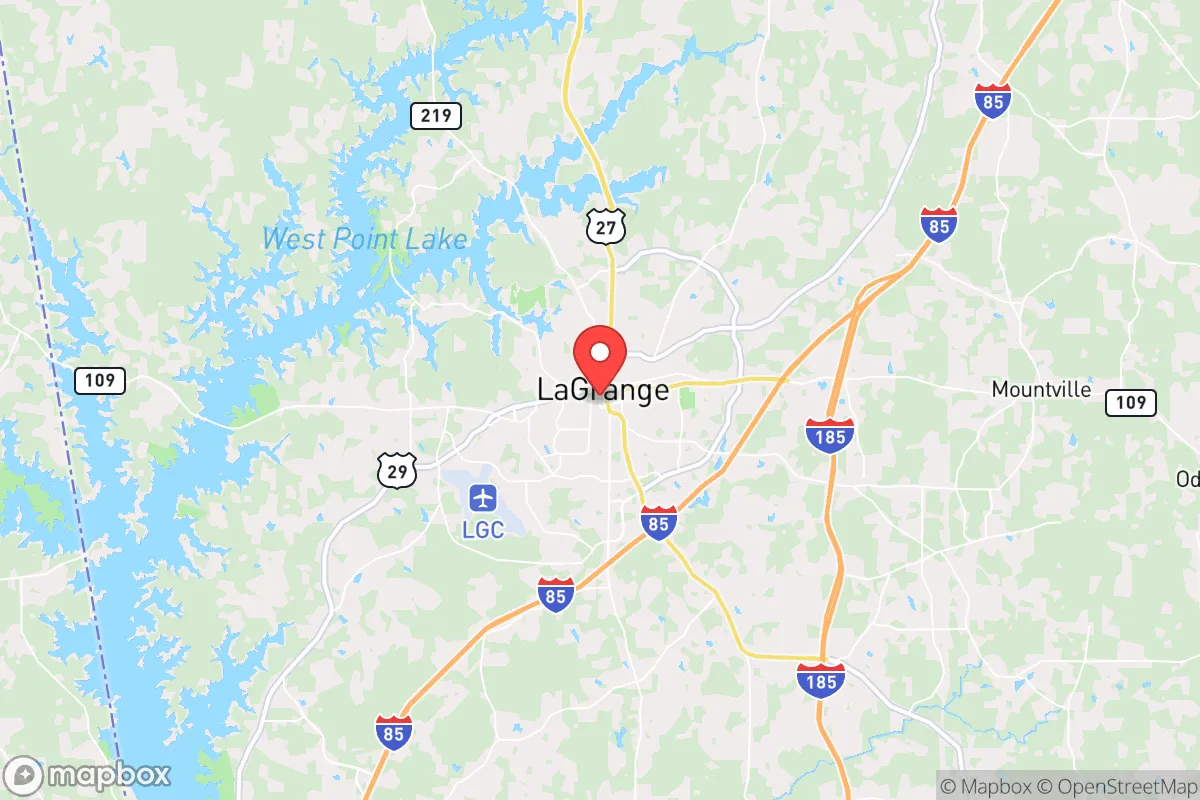
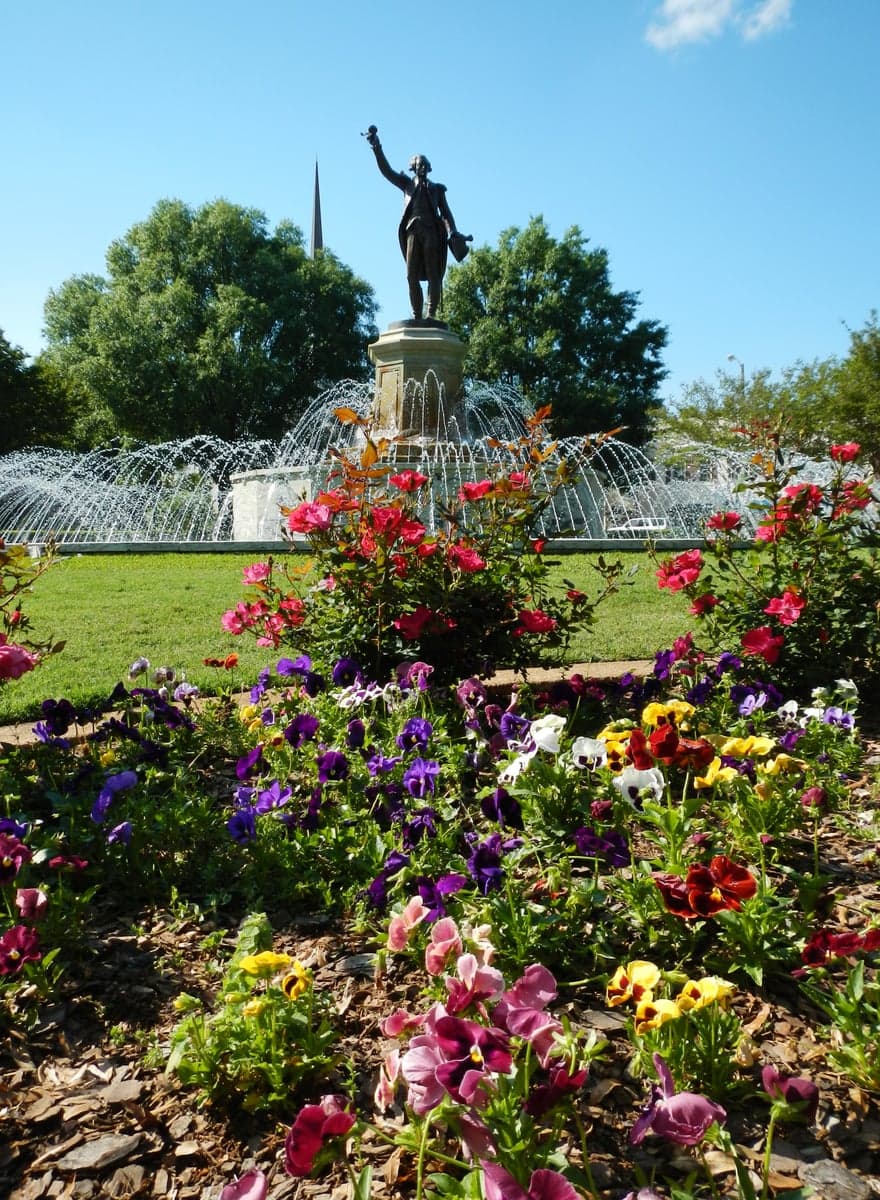
Photo: Wikipedia
Strategic Assessment of Lagrange, GA
Workable tactical position. Some exposure to population density or targets, but generally defensible in a crisis.
What does the Strategic Assessment tell us?
Our Strategic Assessment grades tactical survivability of an area. Major population centers, military targets, fallout zones, natural disasters, and border exposure all drive risk — lower exposure means a more defensible position in a crisis.
This is heavily inspired by Joel Skousen's Strategic Relocation book. Highly recommended you checkout the book ($)What does this tell us?
Our Strategic Assessment grades tactical survivability of an area. Major population centers, military targets, fallout zones, natural disasters, and border exposure all drive risk — lower exposure means a more defensible position in a crisis.
This is heavily inspired by Joel Skousen's Strategic Relocation book. Highly recommended you checkout the book ($)Strategic Pillars

Key Distances
Regional Safe Places
Below is our recommended "safe zones" in Georgia and the surrounding area based on our strategic heuristics. For most people, it's unrealistic to live in a “safe zone” full-time due to work, family or other personal reasons. They tend to be more rural. However, many of these areas are perfect for second homes and retreat properties that double as a vacation home or even a short-term rental.
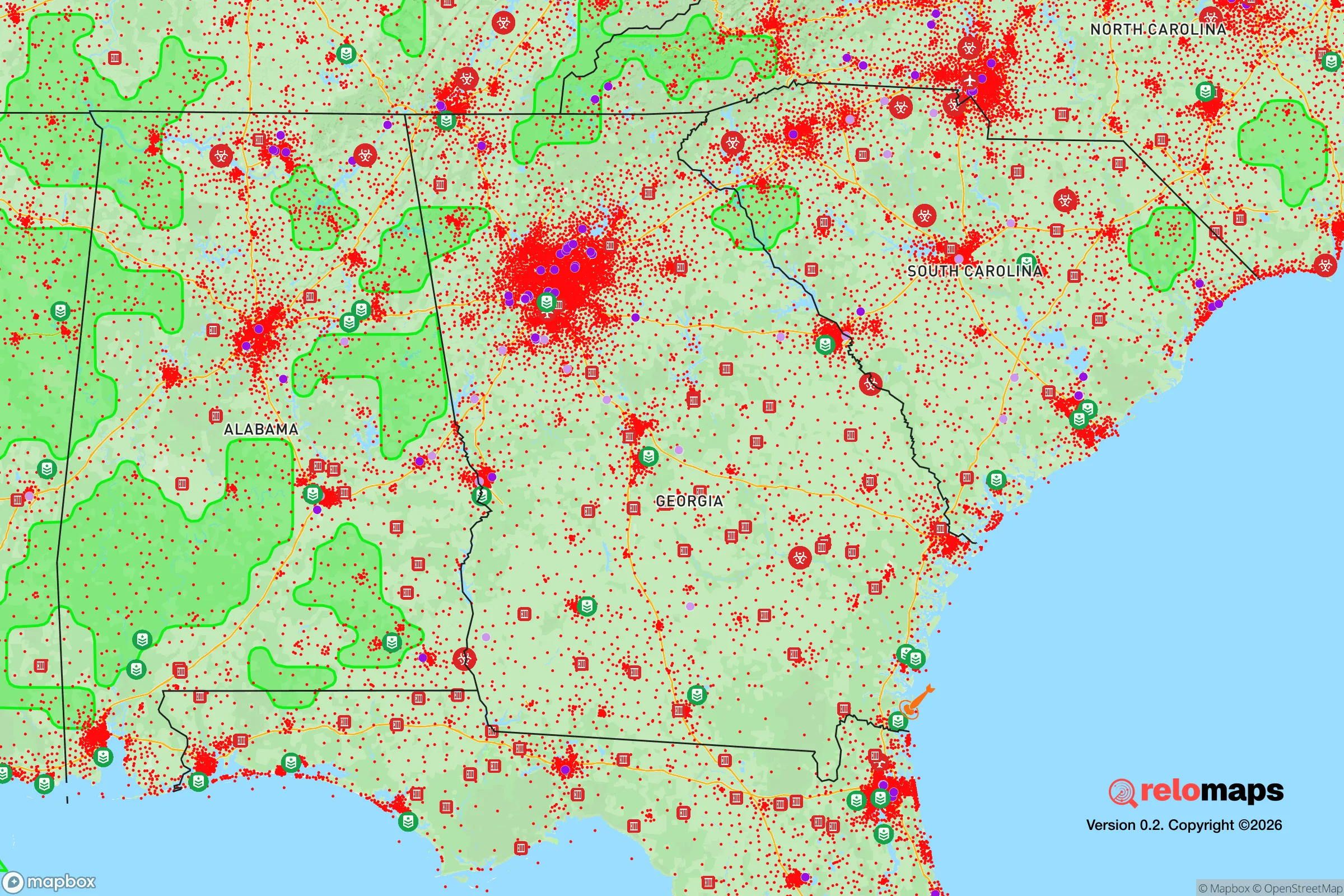
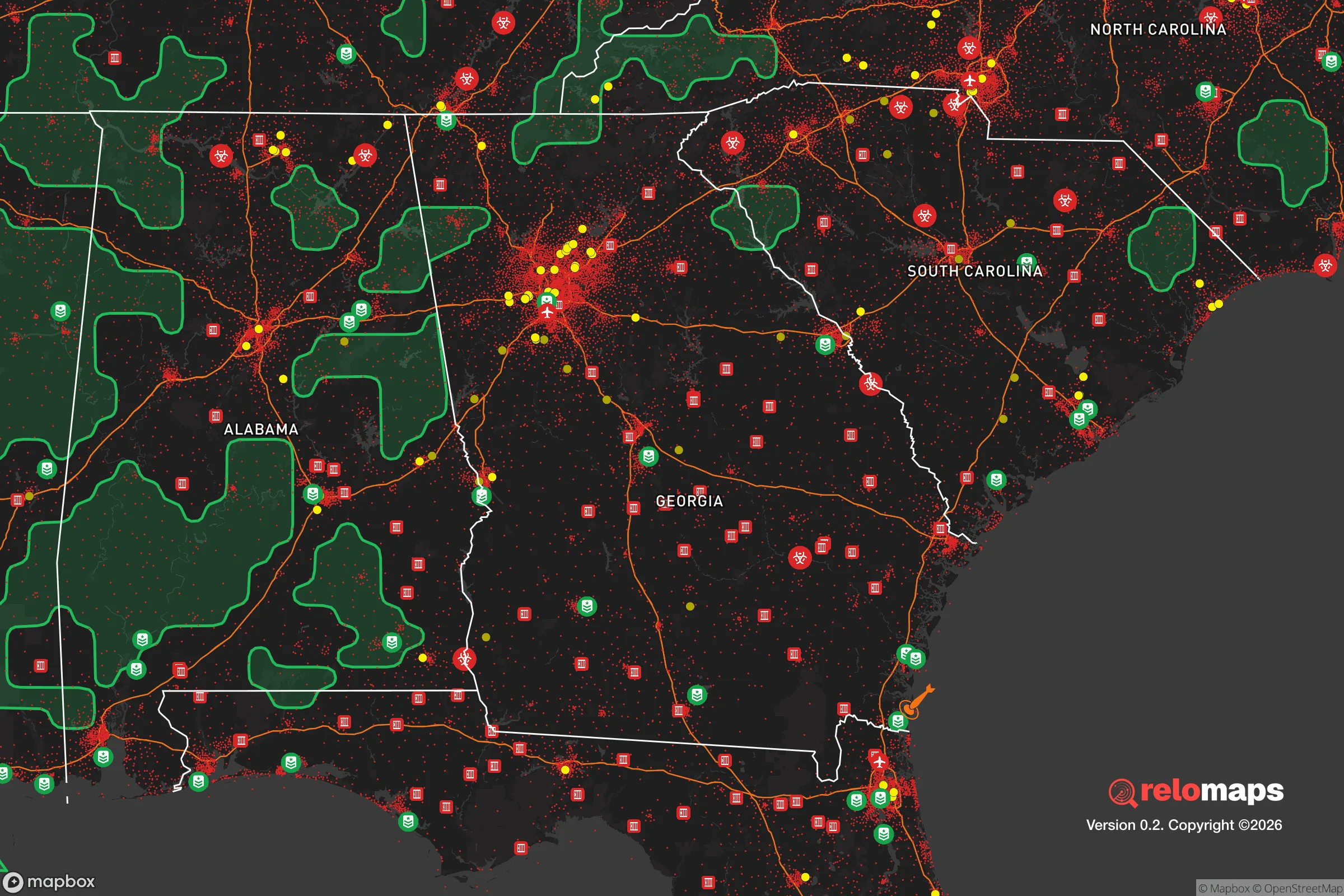


Important Note: For informational purposes only. This does not mean nothing bad ever happens in the green zones. Please use common sense. This is based on public data and modeled with AI. We tried to take a conservative approach but mistakes happen. We update this regularly as new information becomes available.
Solar Generator Recommendations
Backup power matters more here than in safer locations. We've picked three solar generators across budgets and capacity tiers — start with the budget unit if you only need a few essentials, or step up if you want to run a fridge and HVAC for days at a time.

Jackery Portable Power Station Explorer 300
Budget OptionPower on the Go: Weighing only 11 lbs, it's convenient to set up and store with book-sized foldable solar panels

BLUETTI Portable Power Station AC180
Designed for both indoor and outdoor scenarios, AC180 is highly capable as it has a robost capacity and continuous output power.

EF ECOFLOW DELTA Pro Ultra Power Station
Upgraded PickEcoFlow DELTA Pro Ultra is a whole-home energy system designed to grow with your family. Integrated with the Smart Home Panel 2, it scales to meet your evolving energy needs — keeping your home powered, intelligent, and secure through every stage of life.
We earn a commission, at no additional cost to you.
Strategic Assessment Analysis
LaGrange, Georgia, offers a compelling mix of strategic depth and practical resilience for those looking to weather potential civic unrest or large-scale disruptions, sitting roughly 70 miles southwest of Atlanta and 40 miles north of Columbus. Its position along the I-85 corridor provides a critical escape route away from the major population centers of the Southeast, while the Chattahoochee River and the surrounding Piedmont terrain create natural buffers that slow down any chaotic spillover from the metro areas. For a relocator with a prepper mindset, LaGrange is not a fortress—but it is a well-positioned outpost that balances access to resources with a manageable distance from the most likely flashpoints of instability.
Geographic position and natural advantages for long-term security
LaGrange’s geography is its first line of defense. The city sits on the eastern edge of the Chattahoochee River, which forms a natural barrier to the west and south, while the rolling hills of the Piedmont region provide elevation advantages and limited choke points for any potential ground movement. The area is roughly 70 miles from Atlanta—close enough to monitor events and access supplies, but far enough that a major urban collapse would not immediately overwhelm the local infrastructure. The city is also 40 miles from Columbus, a military hub (Fort Moore) that could become a target or a staging ground during unrest, but that distance gives LaGrange residents time to react. The I-85 corridor runs directly through LaGrange, offering a high-speed route to the Gulf Coast or the Carolinas if a full evacuation becomes necessary, but the highway also means the city is a transit point—something to consider for security planning. The surrounding county (Troup) is largely rural, with over 60% of the land in timber and agriculture, providing ample space for off-grid living, gardening, and water catchment. The climate is humid subtropical, with a growing season of about 230 days, which is a major plus for food production.
Risks, exposures, and proximity to fallout-relevant landmarks
No location is without vulnerabilities, and LaGrange has several that a strategic relocator must weigh. The most obvious risk is the proximity to Atlanta—a major population center, transportation hub, and likely target for civil unrest, cyberattacks, or even a coordinated disruption. If Atlanta experiences a mass casualty event or a breakdown of order, the I-85 corridor will become a funnel for refugees and looters heading south and west. LaGrange is also within 50 miles of Fort Moore, a major Army base that could be a focal point for military activity, martial law, or even a target for adversaries. The city itself has industrial assets, including a Kia Motors manufacturing plant and several logistics centers, which could become targets for sabotage or looting during a breakdown. On the natural disaster front, the area is low-risk for hurricanes (the Gulf Coast is 200+ miles away) and moderate-risk for tornadoes—the Piedmont region sees occasional severe storms, but not the kind of catastrophic damage that plagues the Plains. Flooding is a concern along the Chattahoochee and its tributaries, but most of LaGrange sits on higher ground. The biggest exposure is water supply: the city draws from the Chattahoochee, which is shared with Atlanta and downstream users, making it vulnerable to contamination or political disputes during a crisis. A determined prepper should have a backup well or rainwater catchment system.
Practical resilience for a relocator: food, water, energy, and defensibility
For a single individual or a family looking to establish a resilient base, LaGrange offers a mix of advantages and gaps that require active planning. Food security is strong: the surrounding county has working farms, and the city has multiple grocery stores (Walmart, Publix, Aldi) that would be first-line supply points, but a prepper should not rely on them during a breakdown. The long growing season and abundant rainfall (about 50 inches annually) make it feasible to produce a significant portion of your own food, and the local farmers' market (the LaGrange Farmers Market, seasonal) provides a network for barter and local sourcing. Water security is the weak link: the municipal supply is dependent on the Chattahoochee and the city's treatment plant, which could be compromised during a cyberattack or infrastructure failure. A well is the best option, but not all properties in the city limits have access to groundwater—rural parcels outside the city are better. Energy resilience is moderate: Georgia Power serves the area, and the grid is relatively stable, but a determined prepper should invest in solar panels and battery storage, as the region gets plenty of sun (about 215 sunny days per year). Natural gas is available in most of the city, which is useful for cooking and heating during a grid-down scenario. Defensibility is the biggest challenge for a city dweller: LaGrange is a town of about 30,000 people, with a typical suburban layout that offers limited natural chokepoints. The best strategy is to secure a property on the outskirts—preferably with a long driveway, tree cover, and a water source—or to join a rural community in the county. The local law enforcement (LaGrange Police Department and Troup County Sheriff’s Office) is professional but small, so during a widespread breakdown, you will largely be on your own. The crime rate in LaGrange is slightly above the national average (property crime is the main issue), so a prepper should prioritize hardening their home against burglary and looting, not just external threats.
The overall strategic picture for LaGrange is one of cautious optimism for a relocator with a survivalist mindset. It is not a remote bunker—it is a working-class Southern town with real infrastructure and real vulnerabilities. The key advantage is the balance of distance from Atlanta and access to the I-85 corridor, which gives you options without trapping you in a urban death spiral. The main risk is the same corridor becoming a refugee highway during a crisis. For a single individual or a family willing to invest in a well, solar power, and a defensible property on the county line, LaGrange offers a solid foundation for long-term resilience. The local culture is conservative and self-reliant, which means you will find neighbors who understand the value of preparedness rather than hostility to it. If you are looking for a place that is not a target, not a choke point, and not a disaster zone, LaGrange deserves a serious look—but only if you are ready to do the work of making it your own stronghold.

* Values derived from national, state, county, city and local statistics and may differ in a specific area. Last updated: 2026-04-19T08:52:42.000Z
Narrative content on this page is AI-generated and may contain mistakes. Verify any details that matter before acting on them.
ReloMaps may earn a commission from affiliate links at no extra cost to you.

