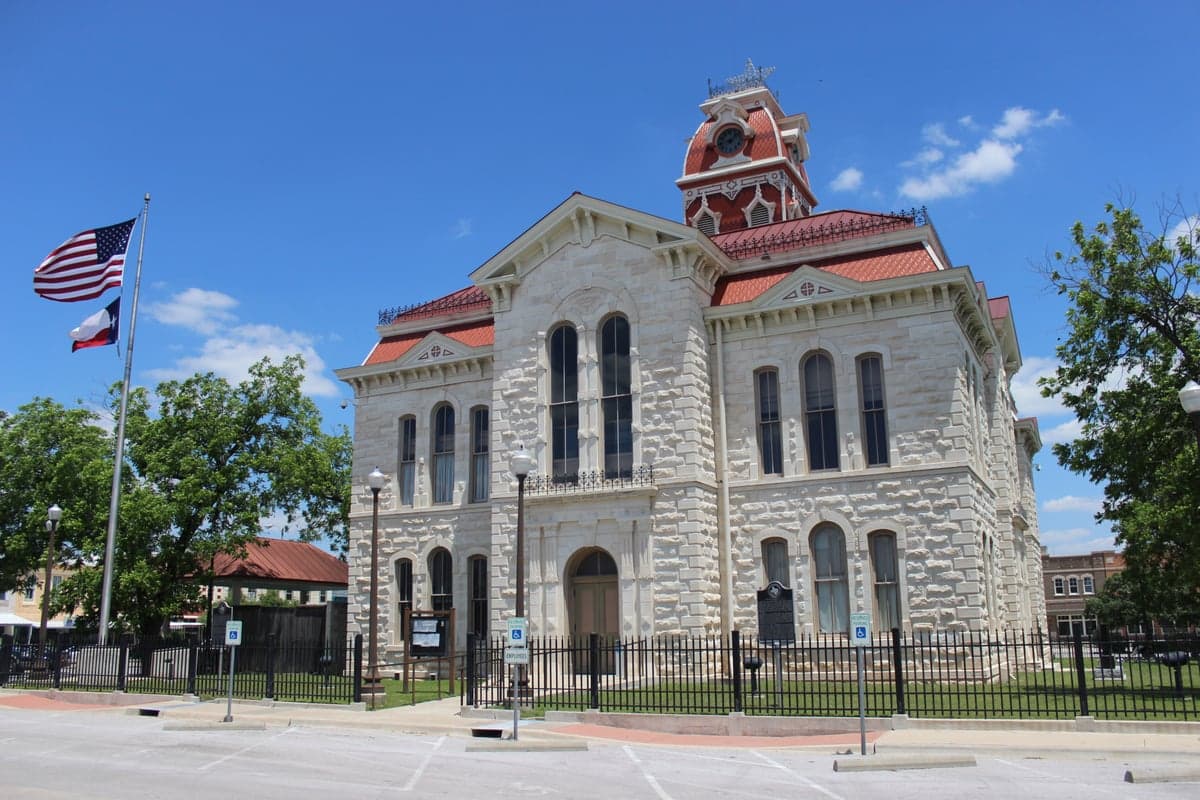
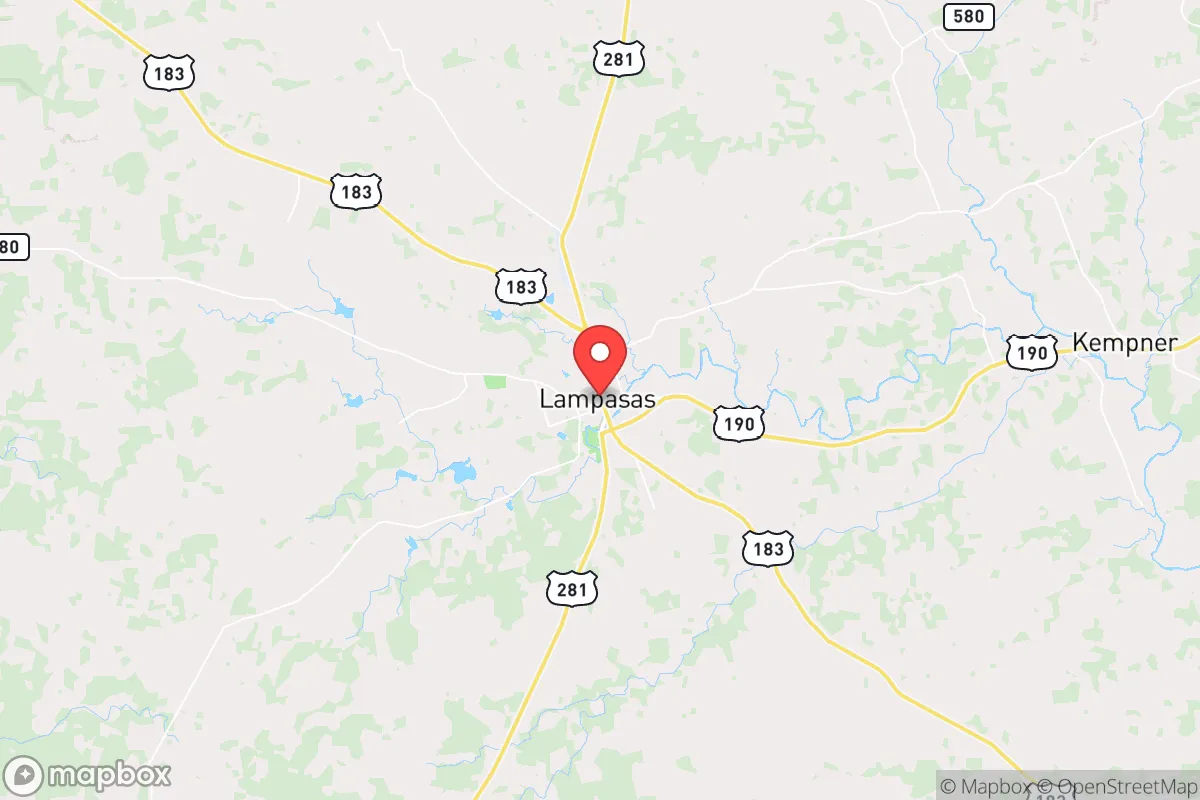

Photo: Wikipedia
Demographics of Lampasas, TX
Affluence Level in Lampasas, TX
A middle-class area roughly in line with national averages across income, home values, education, and employment.
People of Lampasas, TX
Lampasas, Texas, is a small, predominantly White and Hispanic community of 7,506 residents, characterized by a strong sense of local heritage and a slower pace of life. With a low foreign-born population of 2.4% and a college attainment rate of 17.3%, the city remains a working-class hub where family ties and rural traditions run deep. The population is notably less diverse than the state average, with White residents making up 66.6% and Hispanic residents 24.4%, while Black, Asian, and Indian communities each represent less than 2% of the total. This demographic profile reflects a history of steady, modest growth rather than rapid transformation, making Lampasas a place where change comes gradually.
How the city was settled and grew
Lampasas was founded in the 1850s as a trading post and county seat, drawing its earliest settlers from the American South and Midwest. The discovery of mineral springs in the late 19th century briefly turned the town into a health resort, attracting visitors and new residents, though the boom faded by the early 1900s. The original Anglo-American settlers established homes in what is now the Historic Downtown District, centered around the courthouse square, where many of their descendants still live in restored Victorian homes. A second wave arrived in the early 20th century, driven by the expansion of the cattle and cotton industries, and settled in the North Lampasas area, a working-class neighborhood of modest frame houses and small farms. By 1950, the population had reached roughly 4,000, with the community remaining overwhelmingly White and native-born, as the town’s economy—anchored by agriculture and local government—offered limited opportunities for large-scale immigration.
Modern era (post-1965)
After the 1965 Hart-Cellar Act, Lampasas saw little direct impact from new immigration, as its remote location and lack of industrial jobs did not attract foreign-born populations. Instead, the city’s modern demographic shift came from domestic in-migration, particularly Hispanic families moving from South Texas and Mexico for agricultural and construction work. These families concentrated in the Southside neighborhood, south of U.S. Highway 281, where a cluster of Hispanic-owned businesses and a Catholic church now anchor the community. The White population, while still the majority, has gradually aged and declined in relative share, from over 80% in 1990 to 66.6% today, as younger residents often leave for larger cities. The Hispanic share rose from roughly 12% in 1990 to 24.4% by 2020, driven by higher birth rates and continued migration. The East Lampasas area, near the Lampasas River, has seen modest new housing development, attracting a mix of White and Hispanic families seeking affordable homes, while the Westside remains predominantly White and more established, with larger lots and older homes. Black, Asian, and Indian populations remain negligible, each under 2%, reflecting the city’s limited draw for diverse immigrant groups.
The future
Lampasas is likely to continue its gradual demographic homogenization, with the Hispanic share slowly increasing through natural growth and continued domestic migration, while the White share declines. The foreign-born population is expected to remain low, below 5%, as the city lacks the economic magnets—such as tech jobs or major universities—that attract international immigrants. The Southside neighborhood will likely become more distinctly Hispanic, while North Lampasas and the Historic Downtown District will retain their older, predominantly White character. The city’s population is projected to grow modestly, perhaps reaching 8,500 by 2040, driven by spillover from the Austin metro area, as commuters seek cheaper housing. However, without significant economic diversification, Lampasas will remain a small, culturally conservative community where family and local ties dominate, and where the pace of change is slow enough that newcomers can easily integrate into existing social networks.
For someone moving in now, Lampasas offers a stable, low-cost environment where the population is slowly becoming more Hispanic but remains overwhelmingly native-born and traditional in outlook. The city is not becoming a melting pot of diverse groups, but rather a place where two main communities—White and Hispanic—coexist with minimal friction, each anchored in distinct neighborhoods. New residents, especially those from larger cities, should expect a quiet, family-oriented life with limited cultural diversity but strong community bonds.

* Values derived from national, state, county, city and local statistics and may differ in a specific area. Last updated: 2026-05-14T18:26:10.000Z
Narrative content on this page is AI-generated and may contain mistakes. Verify any details that matter before acting on them.
ReloMaps may earn a commission from affiliate links at no extra cost to you.

