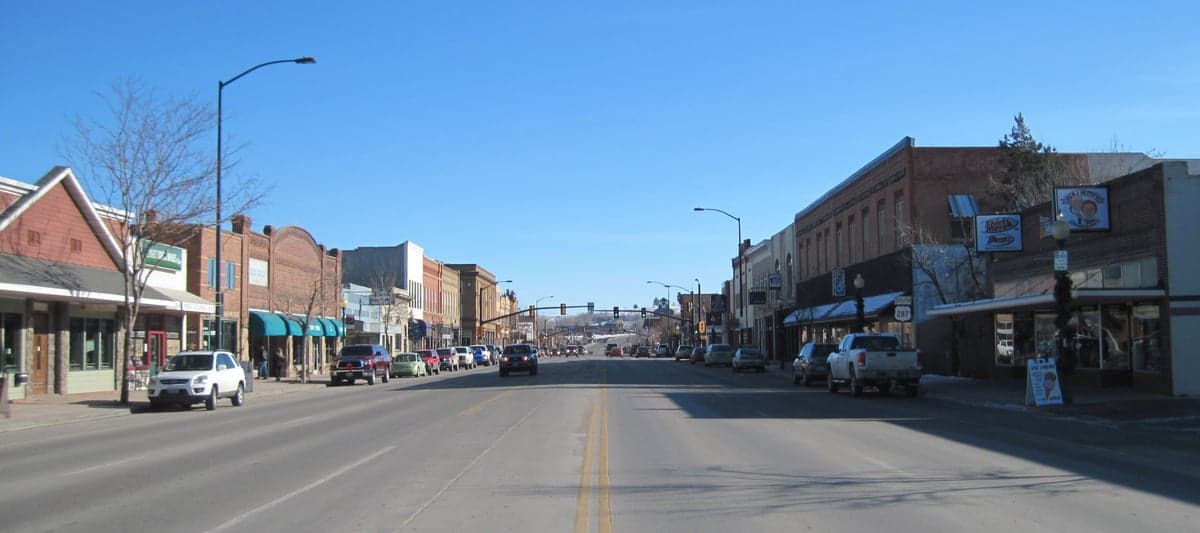
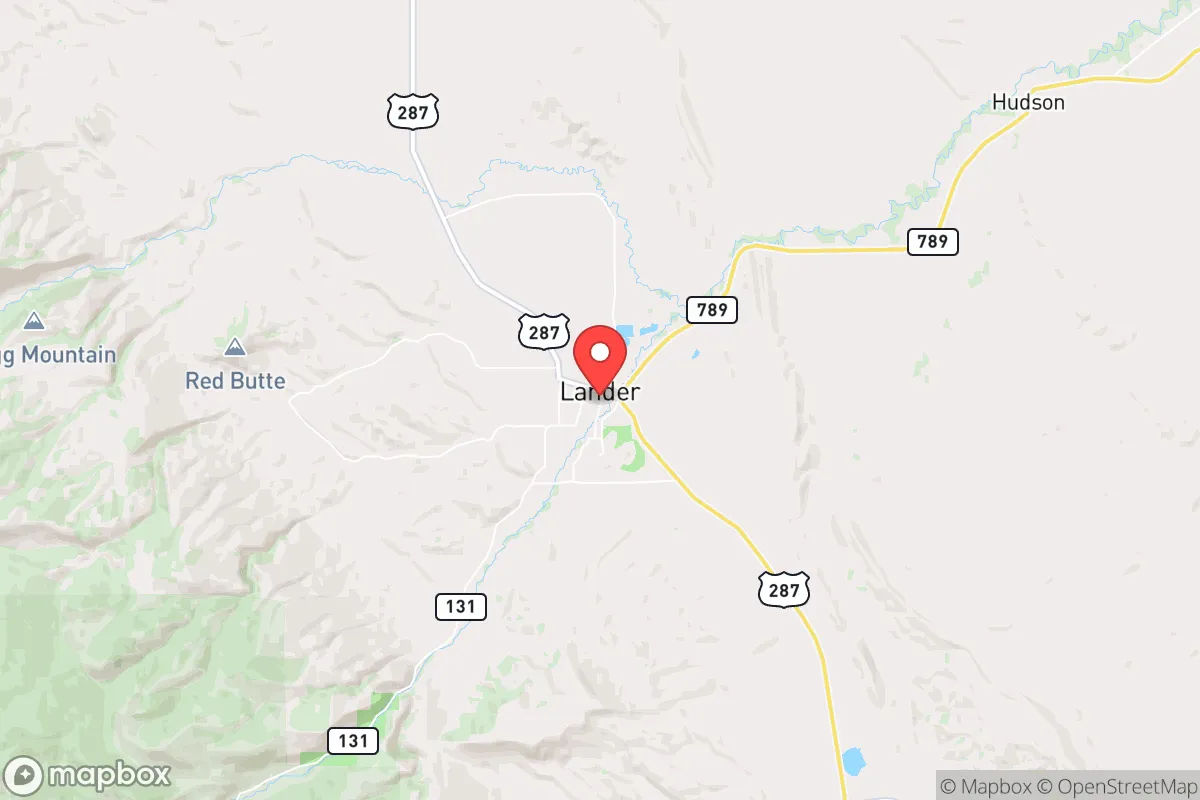
Photo: Wikipedia
Political ClimatePolitical Climate in Lander, WY
District shown is the primary district for this city’s centroid. Cities may span multiple districts.
Inherited from parent state — no local data available.
Local Political AnalysisPolitical Analysis of Lander, WY
Lander, Wyoming, is about as solidly conservative as they come, with a Cook PVI of R+23 that tells you the political leanings here aren't just a trend—they're a way of life. For decades, this town has been a stronghold for traditional values, with folks who believe in limited government, personal responsibility, and keeping the federal government out of our local affairs. But I've been around long enough to see the winds shifting, and while the core remains red, there's a growing unease about outside influences creeping in, especially from the progressive pockets in places like Jackson Hole or even Laramie. The trajectory here is still conservative, but it's a fight to keep it that way, and the younger crowd moving in from out of state is starting to test the waters.
How it compares
Compared to the rest of Fremont County, Lander is actually a bit of a moderate island—not in the blue sense, but in that it's less hardline than some of the rural outposts like Dubois or Riverton. Dubois leans even further right, with a libertarian streak that makes Lander look almost mainstream, while Riverton has a more working-class, blue-collar conservatism. The real contrast, though, is with Jackson Hole, which is a two-hour drive west but feels like a different planet politically—all high-end tourism, environmental activism, and progressive tax policies. Lander's R+23 rating puts it in the same league as places like Cody or Wheatland, but the difference is that Lander has a strong outdoor recreation culture that sometimes attracts folks who don't fully grasp the local values. I've seen a few new businesses open up that push a more "woke" agenda, and it's a red flag for anyone who values their Second Amendment rights or wants to keep property taxes low.
What this means for residents
For those of us living here, the political climate means we can generally count on local government to stay out of our lives—no mask mandates, no heavy-handed zoning, and a sheriff's office that respects the Constitution. But it's not a free-for-all. The county commission has been fighting off attempts to bring in more progressive land-use regulations, and there's a constant battle over federal land management, since so much of the surrounding area is national forest or BLM land. If you're a hunter, rancher, or just someone who doesn't want the government telling you what you can do on your own property, Lander is still a safe bet. But I'd keep an eye on the school board—there's been some chatter about bringing in diversity initiatives that sound a lot like the stuff they tried in Cheyenne, and that's a slippery slope toward indoctrination.
One thing that sets Lander apart is its cultural stubbornness. We've got a strong rodeo tradition, a thriving arts scene that's still rooted in Western heritage, and a general distrust of anything that smells like federal overreach. The local paper, the Lander Journal, still runs editorials defending gun rights and criticizing the EPA's land grabs. But I've noticed more "Live Laugh Love" signs popping up next to the "Don't Tread on Me" flags, and that's a subtle shift that worries me. The long-term outlook? If the state keeps growing and more people from Colorado or California move in, we could see Lander start to drift toward a purple shade. But for now, it's still a place where you can leave your front door unlocked and know your neighbor's got your back—politically and otherwise.

State Political ClimatePolitical Climate in Wyoming
State Political AnalysisPolitical Environment in the State
Wyoming is one of the most reliably Republican states in the nation, with a partisan lean that has only deepened over the past two decades. The state has not voted for a Democratic presidential candidate since 1964, and in 2024, Donald Trump carried it by roughly 40 points. The dominant coalition is a mix of rural ranchers, energy-sector workers, and conservative transplants fleeing blue states, all united by a fierce commitment to limited government, gun rights, and energy independence. Over the last 10-20 years, the trajectory has been a steady march rightward, with the legislature passing some of the most aggressive pro-liberty laws in the country, though recent in-migration from Colorado and California is beginning to stir subtle shifts in a few corners.
Urban vs. rural divide
The political map of Wyoming is starkly divided between a handful of small urban centers and the vast, deeply conservative rural expanse. Cheyenne, the state capital and largest city, is the most politically moderate area, with Laramie County occasionally electing a few pragmatic Republicans and even a rare Democrat to local office, though it still votes solidly red in statewide races. Jackson in Teton County is the notable outlier—it’s the only county that regularly votes Democratic, driven by wealthy second-home owners, ski resort workers, and a growing progressive activist class. Teton County went for Biden by 30 points in 2020, a stark contrast to the rest of the state. Meanwhile, Casper (Natrona County) and Gillette (Campbell County) are the heart of the energy economy—oil, gas, and coal—and vote overwhelmingly Republican, often by 60-70 point margins. The rural counties like Sublette, Carbon, and Niobrara are among the reddest in the nation, with GOP margins exceeding 80 points in many precincts. The divide isn’t just about population density; it’s about economic dependence on extractive industries versus tourism and government services.
Policy environment
Wyoming’s policy environment is a dream for those who want government out of their lives. There is no state income tax, and the sales tax is a low 4% (with local options adding up to 2%). Property taxes are among the lowest in the nation, though they’ve crept up slightly in Teton County due to skyrocketing home values. The regulatory posture is aggressively pro-business and pro-energy: the state has fought federal land-use restrictions tooth and nail, and the legislature passed laws in 2023 and 2024 to preempt local zoning that could hinder oil and gas development. On education, Wyoming funds its schools generously through mineral royalties, but the legislature has recently pushed for school choice, including a 2025 bill that expanded charter school access and created education savings accounts for special-needs students. Healthcare policy is mixed—the state expanded Medicaid under the Affordable Care Act in 2014, but has resisted further federal mandates, and there’s a growing push for direct primary care and medical freedom laws. Election laws are among the most secure in the nation: voter ID is required, same-day registration is not allowed, and the state uses paper ballots with mandatory post-election audits. Wyoming was one of the first states to ban ranked-choice voting in 2022, a move that drew national attention.
Trajectory & freedom
Wyoming is becoming more free in nearly every measurable category, especially when compared to neighboring states like Colorado or Montana. The 2024 legislative session was a landmark for personal liberty: the Wyoming Freedom Act (HB 0109) expanded the state’s preemption of local gun ordinances, ensuring that no city or county can ban firearms in public spaces. The Parental Rights in Education Act (SF 0133) passed in 2023, requiring schools to notify parents of any curriculum involving gender identity or sexual orientation and to obtain consent before counseling minors on such topics. On medical autonomy, the Wyoming Medical Freedom Act (HB 0084) was signed in 2024, prohibiting employers and government entities from mandating vaccines or medical procedures as a condition of employment or service. Property rights were strengthened with the Private Property Protection Act (SF 0021), which limits eminent domain for economic development and requires just compensation for any regulatory taking. The only area where freedom has arguably contracted is in the realm of abortion: the state passed a near-total ban in 2023, with exceptions only for rape, incest, and life of the mother, which has drawn both praise and legal challenges. Overall, the trajectory is toward even less government interference, with bills pending in 2025 to abolish property taxes entirely and to nullify federal gun laws.
Civil unrest & political movements
Wyoming is not known for civil unrest, but there have been notable flashpoints. The Bureau of Land Management (BLM) protests in 2020 were small and largely peaceful, with a few hundred people gathering in Cheyenne and Jackson; counter-protests by armed Second Amendment supporters were more numerous and visible. The state has a strong constitutional sheriff movement, with sheriffs in counties like Park and Fremont publicly refusing to enforce federal gun or land-use laws they deem unconstitutional. Immigration politics are relatively quiet, as Wyoming has a tiny foreign-born population (under 4%), but the legislature passed a law in 2024 requiring all employers to use E-Verify and prohibiting sanctuary city policies. There is a persistent undercurrent of nullification rhetoric, with several legislators introducing bills to declare federal laws on firearms, marijuana, and public lands unenforceable within state borders. The most visible flashpoint for a new resident would be the annual Wyoming Liberty Conference in Casper, which draws speakers from the John Birch Society and the Tenth Amendment Center, and the Jackson Hole Economic Symposium, which brings a more establishment-conservative crowd. Election integrity controversies are minimal—the state’s system is widely trusted, though a 2022 audit of the 2020 election found no significant irregularities, which was used to justify further tightening of voter laws.
Projection
Over the next 5-10 years, Wyoming is likely to remain one of the most conservative states in the union, but with some subtle shifts. In-migration from blue states—especially Colorado, California, and Washington—is accelerating, particularly to Laramie (home of the University of Wyoming) and Sheridan, which has become a haven for remote workers and retirees. These newcomers tend to be fiscally conservative but socially moderate, and they are already pushing for more local control over land use and school curriculum. The energy transition away from coal will continue to reshape the economy, potentially weakening the political power of the energy counties like Campbell and Sweetwater. However, the state’s political infrastructure—the legislature, the governor’s office, and the GOP party apparatus—is deeply entrenched and resistant to change. Expect more battles over federal land control, with Wyoming likely to sue the Biden administration over new oil and gas leasing restrictions. The biggest wildcard is the property tax revolt: if the legislature succeeds in eliminating property taxes, it would dramatically shift the tax burden onto sales and mineral revenue, which could either cement the state’s low-tax reputation or create budget shortfalls that force cuts to services. For someone moving in now, expect to find a state that is fiercely independent, increasingly libertarian-leaning, and wary of any federal overreach, but with a growing tension between the old energy economy and the new remote-work economy.
For a new resident, the bottom line is this: Wyoming offers an unmatched level of personal freedom—no income tax, strong gun rights, parental control over education, and a government that largely stays out of your life. You will find a community that values self-reliance and distrusts centralized authority, whether in Cheyenne or Washington. The trade-offs are real: limited job diversity outside of energy and government, harsh winters, and a social scene that can feel insular if you’re not from a ranching or energy background. But if your priority is raising a family in a place where your rights are respected and your taxes are low, Wyoming is one of the last best places in America. Just be prepared for the cold—and for the fact that your new neighbors will probably own more guns than you do.
* Values derived from national, state, county, city and local statistics and may differ in a specific area. Last updated: 2026-04-21T11:30:41.000Z
Narrative content on this page is AI-generated and may contain mistakes. Verify any details that matter before acting on them.
ReloMaps may earn a commission from affiliate links at no extra cost to you.

