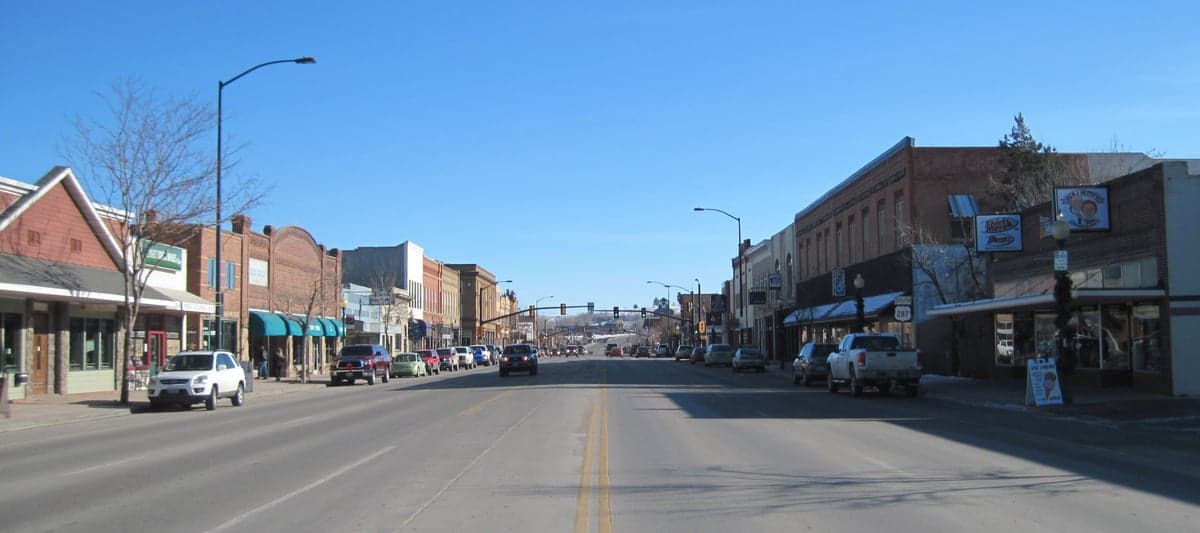
Photo: Wikipedia
Strategic Assessment of Lander, WY
Workable tactical position. Some exposure to population density or targets, but generally defensible in a crisis.
What does the Strategic Assessment tell us?
Our Strategic Assessment grades tactical survivability of an area. Major population centers, military targets, fallout zones, natural disasters, and border exposure all drive risk — lower exposure means a more defensible position in a crisis.
This is heavily inspired by Joel Skousen's Strategic Relocation book. Highly recommended you checkout the book ($)What does this tell us?
Our Strategic Assessment grades tactical survivability of an area. Major population centers, military targets, fallout zones, natural disasters, and border exposure all drive risk — lower exposure means a more defensible position in a crisis.
This is heavily inspired by Joel Skousen's Strategic Relocation book. Highly recommended you checkout the book ($)Strategic Pillars

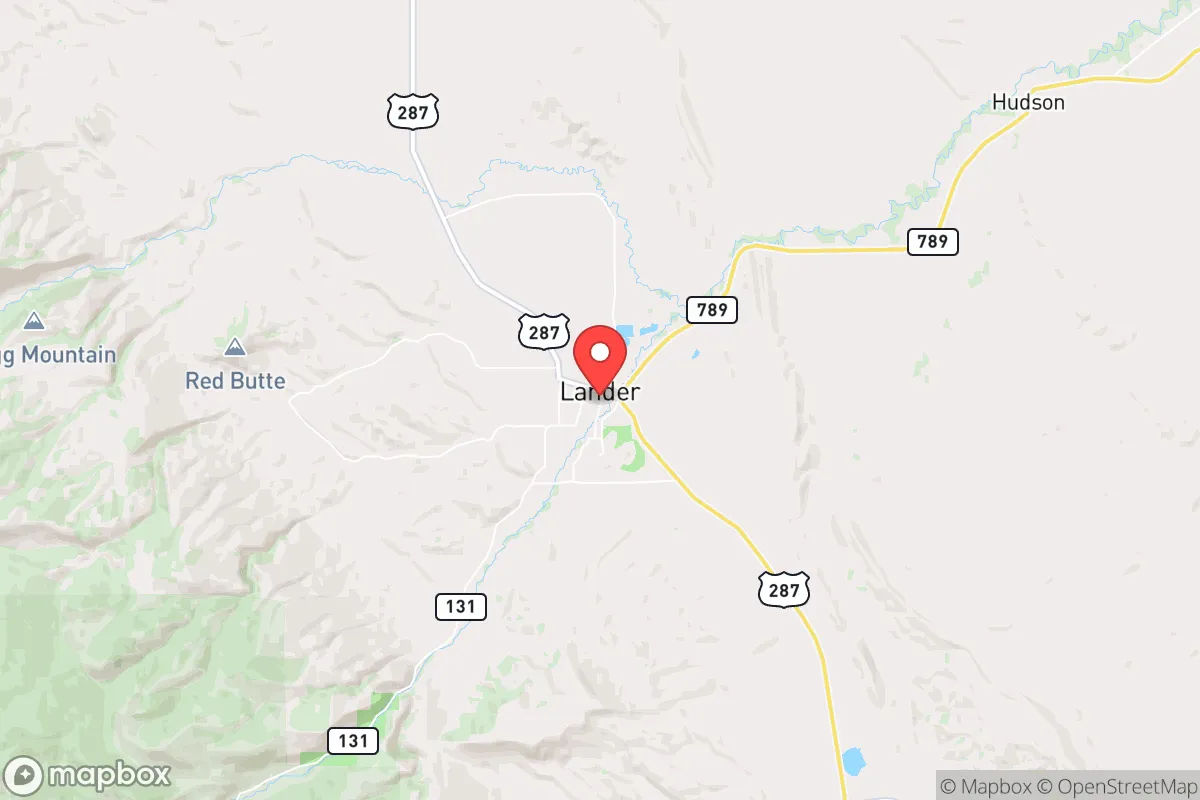
Key Distances
Regional Safe Places
Below is our recommended "safe zones" in Wyoming and the surrounding area based on our strategic heuristics. For most people, it's unrealistic to live in a “safe zone” full-time due to work, family or other personal reasons. They tend to be more rural. However, many of these areas are perfect for second homes and retreat properties that double as a vacation home or even a short-term rental.
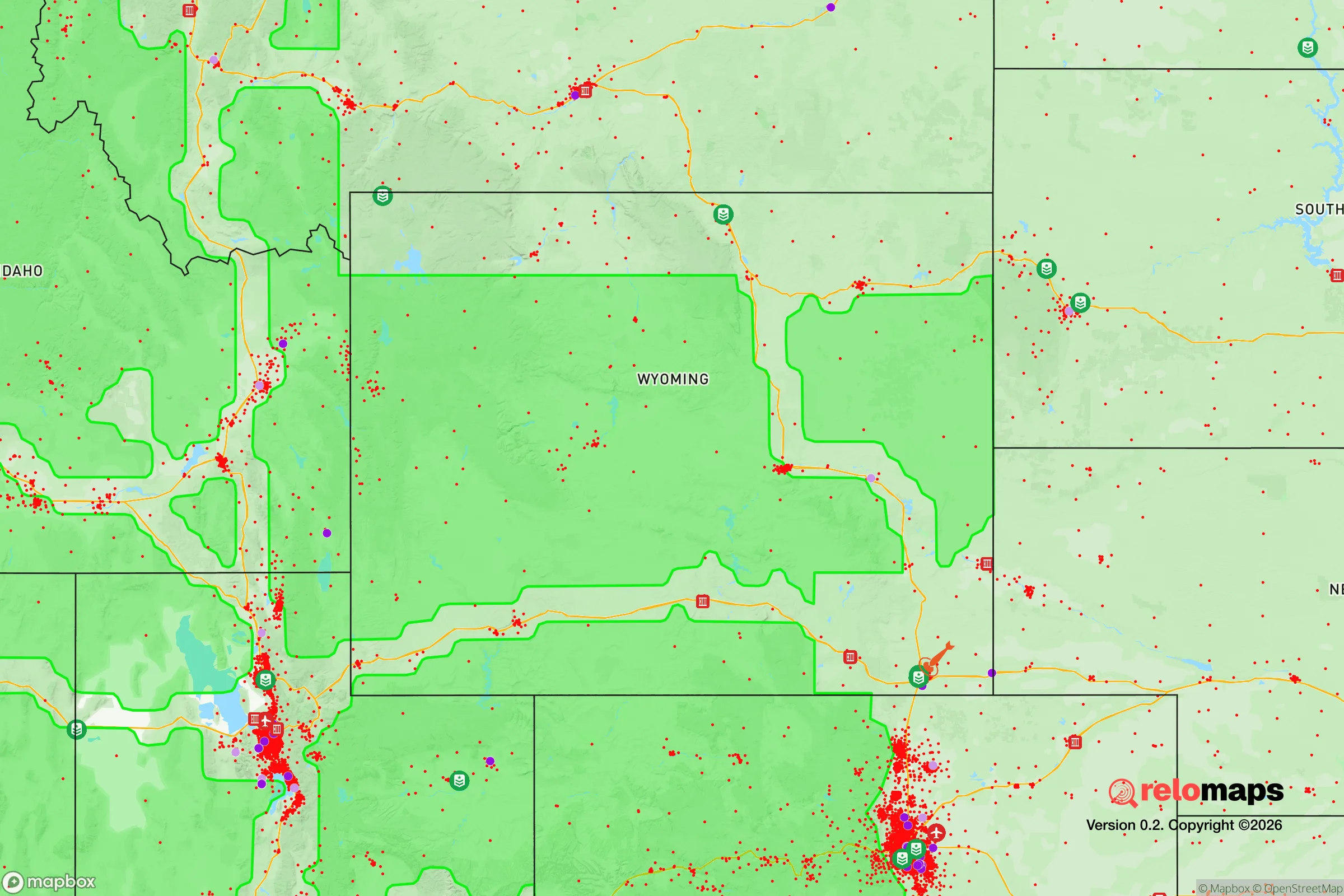
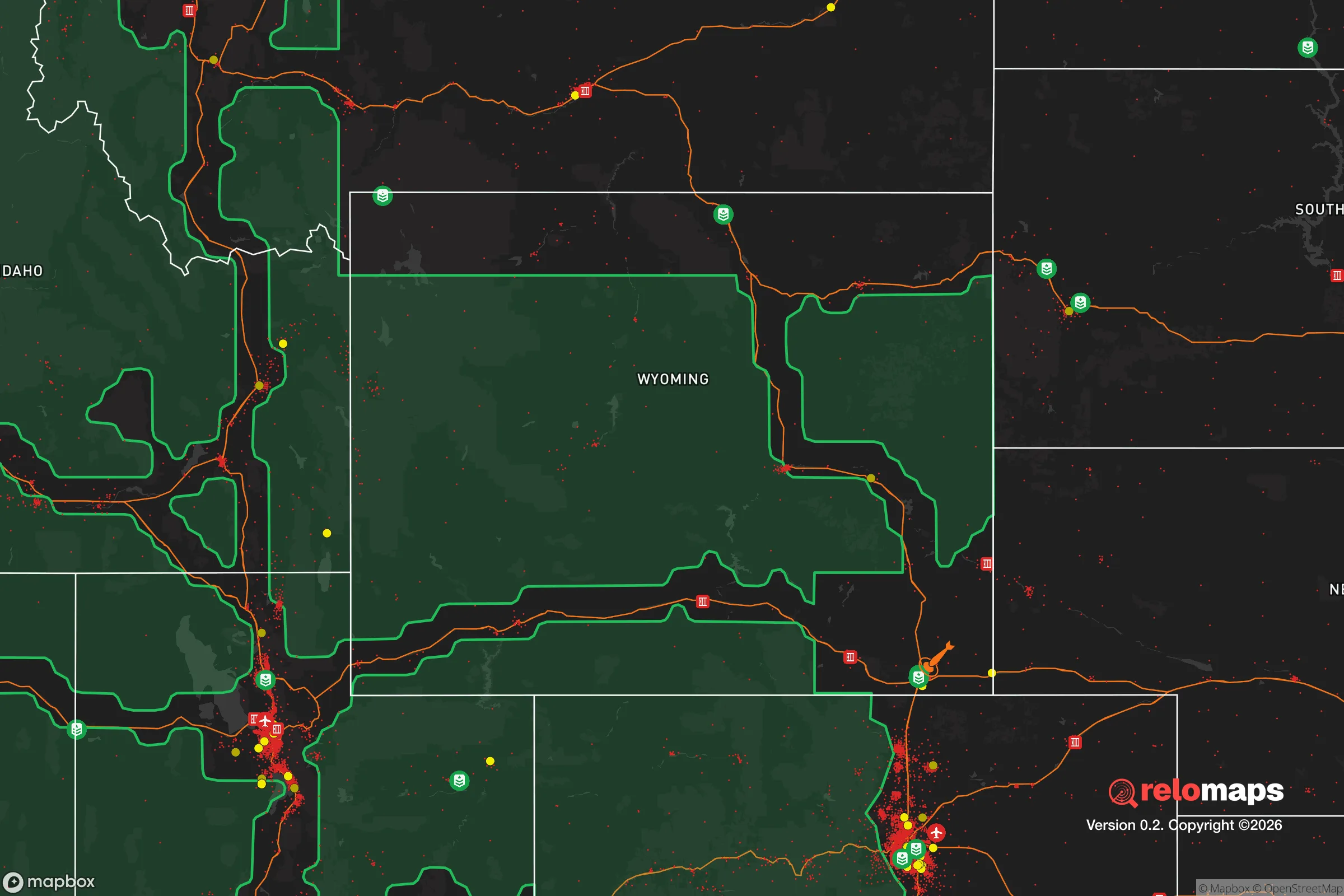


Important Note: For informational purposes only. This does not mean nothing bad ever happens in the green zones. Please use common sense. This is based on public data and modeled with AI. We tried to take a conservative approach but mistakes happen. We update this regularly as new information becomes available.
Solar Generator Recommendations
Backup power matters more here than in safer locations. We've picked three solar generators across budgets and capacity tiers — start with the budget unit if you only need a few essentials, or step up if you want to run a fridge and HVAC for days at a time.

Jackery Portable Power Station Explorer 300
Budget OptionPower on the Go: Weighing only 11 lbs, it's convenient to set up and store with book-sized foldable solar panels

BLUETTI Portable Power Station AC180
Designed for both indoor and outdoor scenarios, AC180 is highly capable as it has a robost capacity and continuous output power.

EF ECOFLOW DELTA Pro Ultra Power Station
Upgraded PickEcoFlow DELTA Pro Ultra is a whole-home energy system designed to grow with your family. Integrated with the Smart Home Panel 2, it scales to meet your evolving energy needs — keeping your home powered, intelligent, and secure through every stage of life.
We earn a commission, at no additional cost to you.
Strategic Assessment Analysis
Lander, Wyoming sits in a strategic sweet spot that few relocation analysts fully appreciate: it offers genuine distance from the primary corridors of American vulnerability while retaining enough infrastructure to make long-term self-sufficiency plausible. Nestled at the southern end of the Wind River Range, this town of roughly 7,600 people is far enough from the Front Range urban corridor to avoid its chaos, yet close enough to access its resources if needed. For someone thinking in terms of decades rather than election cycles, Lander represents one of the more defensible positions in the lower 48 — not because it’s perfect, but because its combination of geography, water access, and low population density creates a buffer that most places simply cannot match.
Geographic position and natural advantages for long-term security
Lander’s location is its primary strategic asset. The town sits at the base of the Wind River Range, which functions as a natural barrier against east-west movement and provides a massive, sparsely populated backyard. To the west, the Continental Divide runs through the Winds, creating a physical and logistical obstacle that would slow any large-scale movement or disruption. To the east, the Wind River Indian Reservation and the Red Desert create a buffer of low population density that stretches for over a hundred miles. This isn’t just scenic — it’s a practical advantage. In a scenario where urban areas become untenable, Lander’s position means you’re not on anyone’s natural path of travel. The nearest city of any real size is Riverton, 20 miles east, with about 10,000 people. Casper, the largest city in central Wyoming, is 150 miles away. Denver is over 300 miles south. That distance matters when you’re thinking about fallout from a major event — whether that’s a nuclear incident, a pandemic wave, or civil unrest that starts in population centers. Lander is far enough from the Intermountain West’s critical infrastructure nodes — the oil fields of the Powder River Basin, the rail lines through Rawlins, the I-80 corridor — that it wouldn’t be a primary target or a natural destination for refugees fleeing those areas.
Risks, exposures, and proximity to fallout-relevant landmarks
No place is risk-free, and Lander has its own exposures. The most obvious is the Wind River Indian Reservation, which surrounds the town on three sides. This isn’t a risk in itself, but it does create jurisdictional complexity. The reservation has its own law enforcement, its own court system, and its own set of federal relationships. In a crisis, the lines between county, state, tribal, and federal authority could blur quickly. Lander sits in Fremont County, which has a history of tension between tribal and non-tribal populations, and that dynamic could become a flashpoint if resources get tight. The other major exposure is energy infrastructure. The Bridger Coal Mine and the Jim Bridger Power Plant are about 90 miles southwest, near Rock Springs. That’s a significant piece of the regional grid, and it’s within plausible range for fallout from a targeted attack or a major industrial accident. The same goes for the oil and gas fields in the Green River Basin — they’re not next door, but they’re close enough that a major event there could affect air quality, water, or supply chains. On the nuclear side, Lander is roughly 200 miles from the Idaho National Laboratory, which handles nuclear research and spent fuel storage. That’s far enough to avoid direct blast effects, but close enough that a major release could drift into the region depending on wind patterns. The good news is that the prevailing winds in this part of Wyoming come from the west and southwest, which means most fallout from a Pacific Coast or Intermountain West event would move east, away from Lander. Still, anyone serious about preparedness should have a plan for sheltering in place for at least two weeks, and should understand the local weather patterns well enough to know when to bug in versus bug out.
Practical resilience for a relocator: food, water, energy, and defensibility
Lander’s practical resilience is where it really shines, but only if you come prepared. The town sits on the Popo Agie River, which flows year-round from the Wind River Range. That’s a reliable water source, and the surrounding mountains hold snowpack that typically lasts well into summer. For someone setting up a homestead or a retreat property, water access is the single most important factor, and Lander has it in spades. The local aquifer is also decent, though well depths can vary significantly depending on where you’re drilling. On the food front, the growing season is short — roughly 90 to 100 frost-free days — but the soil in the Lander Valley is workable for cold-hardy crops like potatoes, root vegetables, and certain grains. The Fremont County Fairgrounds and local agricultural extension office offer resources for small-scale farming, and there’s a strong community of hobby farmers and ranchers who can provide mentorship. The bigger challenge is energy. Lander is served by Rocky Mountain Power, which relies heavily on coal and natural gas. The grid is generally reliable, but in a prolonged outage — whether from a cyberattack, a solar flare, or a physical attack on substations — you’ll need your own generation. Solar works here, but the valley gets significant winter cloud cover, so you’ll want battery storage and a backup generator. Wind is also viable, especially on the ridges above town. Defensibility is where Lander’s layout matters. The town is compact, with a single main road (US-287) running through it. The surrounding terrain is open sagebrush steppe, which means you can see someone coming from a long way off. There are limited choke points — the bridges over the Popo Agie, the highway junctions — that could be controlled with minimal manpower. For a small group or family, this is a place where you could realistically secure a perimeter and maintain situational awareness. The local sheriff’s office is small but competent, and the community has a strong tradition of self-reliance. Gun ownership is high, hunting is a normal part of life, and the local culture is one of mutual aid rather than dependency on distant government.
The overall strategic picture for Lander is cautiously optimistic. It’s not a fortress, and it’s not immune to the problems that will affect the rest of the country. But it offers something increasingly rare: a location where you can live a normal life while being genuinely prepared for abnormal times. The distance from major targets, the reliable water, the low population density, and the cultural alignment with self-sufficiency make it one of the better options in the Mountain West for someone who wants to be ready without living in a bunker. The trade-offs are real — the short growing season, the jurisdictional complexity of the reservation, the distance from specialized medical care — but for a single individual or a family willing to put in the work, Lander provides a foundation that’s hard to beat. If you’re looking for a place that balances everyday livability with genuine strategic depth, this is one of the few towns in the lower 48 that actually delivers on both.

* Values derived from national, state, county, city and local statistics and may differ in a specific area. Last updated: 2026-04-21T11:30:41.000Z
Narrative content on this page is AI-generated and may contain mistakes. Verify any details that matter before acting on them.
ReloMaps may earn a commission from affiliate links at no extra cost to you.

