Photo: Wikipedia
Quality of Life in Langdon, ND
Significant lifestyle challenges — high costs relative to incomes, limited walkability, and weak neighborhood economic health.
What does Quality of Life tell us?
Quality of Life blends cost of living, nearby amenities, socioeconomic signals, and neighborhood character. City-level scores represent the whole municipality; individual neighborhoods can differ.
What does this tell us?
Quality of Life blends cost of living, nearby amenities, socioeconomic signals, and neighborhood character. City-level scores represent the whole municipality; individual neighborhoods can differ.
Cost of Living
43% below national average
The Real Cost of Living in Langdon, ND for 2026
| Tier | Individual | Family (4) |
|---|---|---|
| Survival | $12k | $22k |
| Comfortable | $25k | $37k |
| Luxury | $115k+ | $178k+ |
| Elite (Top 5%) | $172k+ | $266k+ |
171%
The Area Signal
A metric tracking the socioeconomic signals of the area.


Limited data for this area
Limited data for this area
Hobbies
Explore the areaGroceries
2 within 10 miles
Gas
0 within 10 miles
Hospital
2 within 20 miles
Airport
JFK — John F. Kennedy Memorial
Post Office
USPS — Langdon, ND
Critical Amenities
Quality-of-Life Analysis
Langdon, North Dakota, presents a quality of life defined by deep affordability and a quiet, self-reliant rural character. With a cost of living index of 57—43% below the national average—the town attracts a mix of agricultural families, long-time residents, and workers in the local healthcare and education sectors who prioritize financial stability and a slower pace over urban amenities. The median home value of $130,400 and median rent of $741 place homeownership and comfortable renting within reach for most households, a stark contrast to the housing pressures seen in larger regional centers like Grand Forks or Fargo.
Cost of living, housing, and how Langdon compares to nearby towns
Langdon’s housing market is among the most accessible in northeastern North Dakota. The median home value of $130,400 is roughly half the national median, and the median rent of $741 is well below the state average of around $900. For context, a comparable home in Grand Forks (about 90 miles south) would cost roughly 40% more, while rental rates in Cavalier or Walhalla are similarly higher. The overall cost of living index of 57 means everyday expenses—groceries, utilities, transportation—are significantly lower than in most of the U.S. The average commute of just 12.2 minutes further reduces transportation costs and frees up time for family, hobbies, or side work. Property taxes in Cavalier County are moderate, and no state income tax in North Dakota adds another layer of financial appeal for residents.
Local amenities, schools, and what daily life feels like
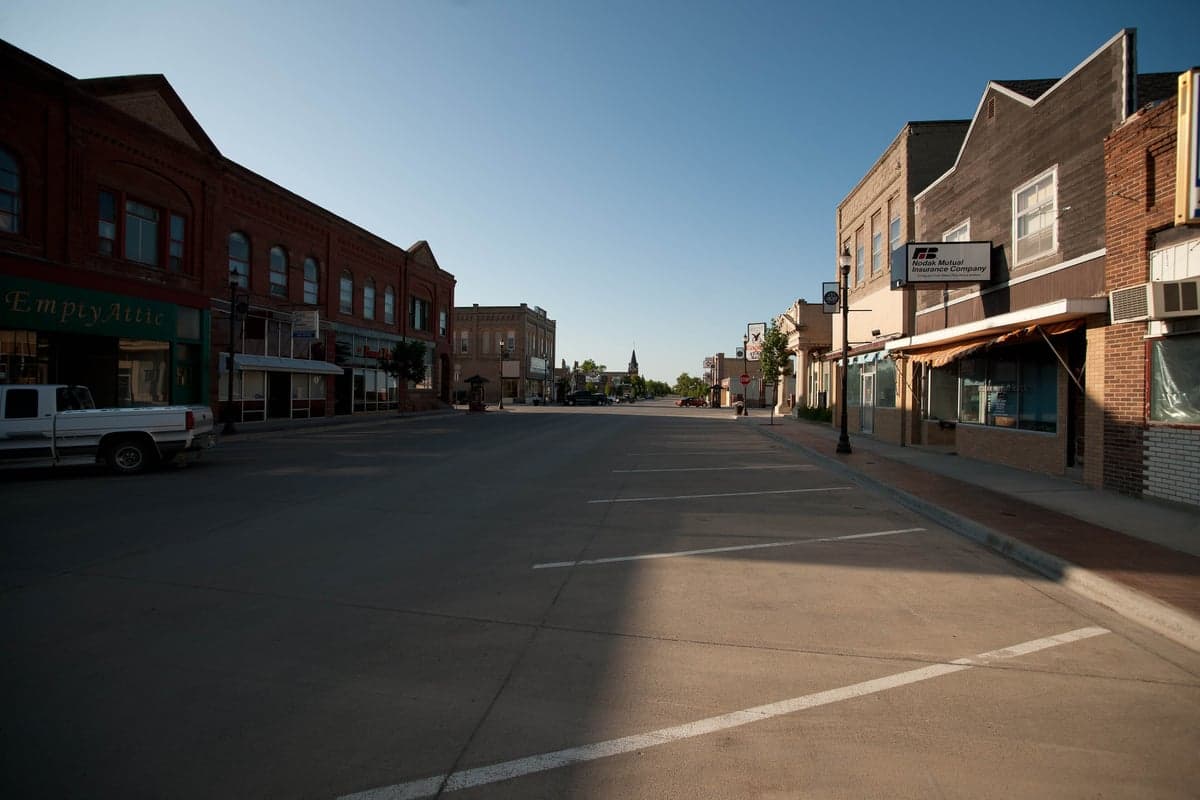
Daily life in Langdon centers on a compact, walkable downtown and a strong sense of community. The Langdon Area School District serves roughly 500 students across one elementary, one middle, and one high school, with a student-to-teacher ratio near 12:1—well below the national average. The high school offers dual-credit courses through Lake Region State College, giving students a head start on post-secondary education. For recreation, residents use the Langdon City Park, the indoor swimming pool, and the nearby Icelandic State Park for hiking and fishing. The town’s hospital, CHI St. Alexius Health Langdon, provides primary and emergency care, while specialty services require a drive to Grand Forks. Grocery shopping is handled by Hugo’s Family Marketplace, and dining options include a handful of local cafes and the popular Langdon Supper Club. The rhythm of life is slow and predictable: most businesses close by early evening, and community events—like the Cavalier County Fair and the annual Icelandic Festival—anchor the social calendar. There is no major nightlife or chain retail, which suits residents who value quiet and self-sufficiency.
Langdon is best suited for people who prioritize financial breathing room, short commutes, and a close-knit community over urban convenience. Families with young children benefit from the small schools and low crime rates, while retirees and remote workers find the low cost of living and lack of congestion appealing. Those who thrive here are comfortable with a limited range of services, harsh winters, and a social life built around neighbors, church, and local events—not a bustling downtown. For anyone seeking an affordable, low-stress base in the northern Plains, Langdon offers a rare combination of economic ease and genuine small-town character.

Crime in Langdon, ND
Generally safer than 68% of comparable U.S. locations.
Violent CrimeViolent Crime Analysis
Property CrimeProperty Crime Analysis
Crime Analysis
Langdon, North Dakota, presents a mixed safety profile for prospective residents. The city’s violent crime rate of 223.3 incidents per 100,000 people is slightly below the national average, but its property crime rate of 1,417.3 per 100,000 is significantly higher than both state and national benchmarks. While Langdon is not a high-danger area overall, the elevated property crime numbers warrant careful consideration, especially for those moving from safer rural communities.
Crime in context
When compared to North Dakota’s statewide violent crime rate of roughly 340 per 100,000, Langdon’s rate of 223.3 is notably lower. However, the property crime rate tells a different story. The state average for property crime hovers around 1,900 per 100,000, meaning Langdon’s 1,417.3 is actually below the state figure. Yet this number is still roughly 40% higher than the national property crime rate of about 1,000 per 100,000. This places Langdon in a middle tier: safer than many larger cities in the region but riskier than the typical small town. The data suggests that theft, burglary, and vehicle-related crimes are the primary concerns, not violent confrontations.
What residents experience
In practical terms, Langdon residents are far more likely to deal with a stolen package, a broken car window, or a shed burglary than a violent assault. The violent crime that does occur is often tied to domestic disputes or alcohol-related incidents, which are common in many small Plains communities. Property crimes tend to spike during summer months and around holidays. Residents report that unlocked vehicles and outbuildings are the most frequent targets, a pattern consistent with opportunistic theft. The local police department is small but responsive, and community watch efforts are active. However, the presence of progressive judicial philosophies in North Dakota’s district courts—where some judges emphasize rehabilitation over incarceration—can lead to repeat offenders cycling back into the community. This is a legitimate concern for those who prioritize strict law enforcement and victim-centered justice. In Langdon, this means that a person caught stealing from a garage may receive probation rather than jail time, potentially emboldening further property crime.
Neighborhood-level variation in Langdon is modest but noticeable. The older, established residential blocks near the downtown core tend to have slightly lower crime rates, likely due to higher foot traffic and neighbor familiarity. The newer subdivisions on the town’s outskirts and areas near the highway see a disproportionate share of property crimes, as they offer easier escape routes and less natural surveillance. Apartment complexes and rental-heavy streets also report more incidents than owner-occupied single-family home areas. For the most current block-level data, prospective residents should consult the Langdon Police Department’s annual report or speak directly with a local real estate agent familiar with specific streets. Overall, Langdon is a generally safe community where common-sense precautions—locking doors, securing valuables, and joining a neighborhood watch—can dramatically reduce one’s risk.
* Values derived from national, state, county, city and local statistics and may differ in a specific area. Last updated: 2026-04-19T05:42:57.000Z
Narrative content on this page is AI-generated and may contain mistakes. Verify any details that matter before acting on them.
ReloMaps may earn a commission from affiliate links at no extra cost to you.

