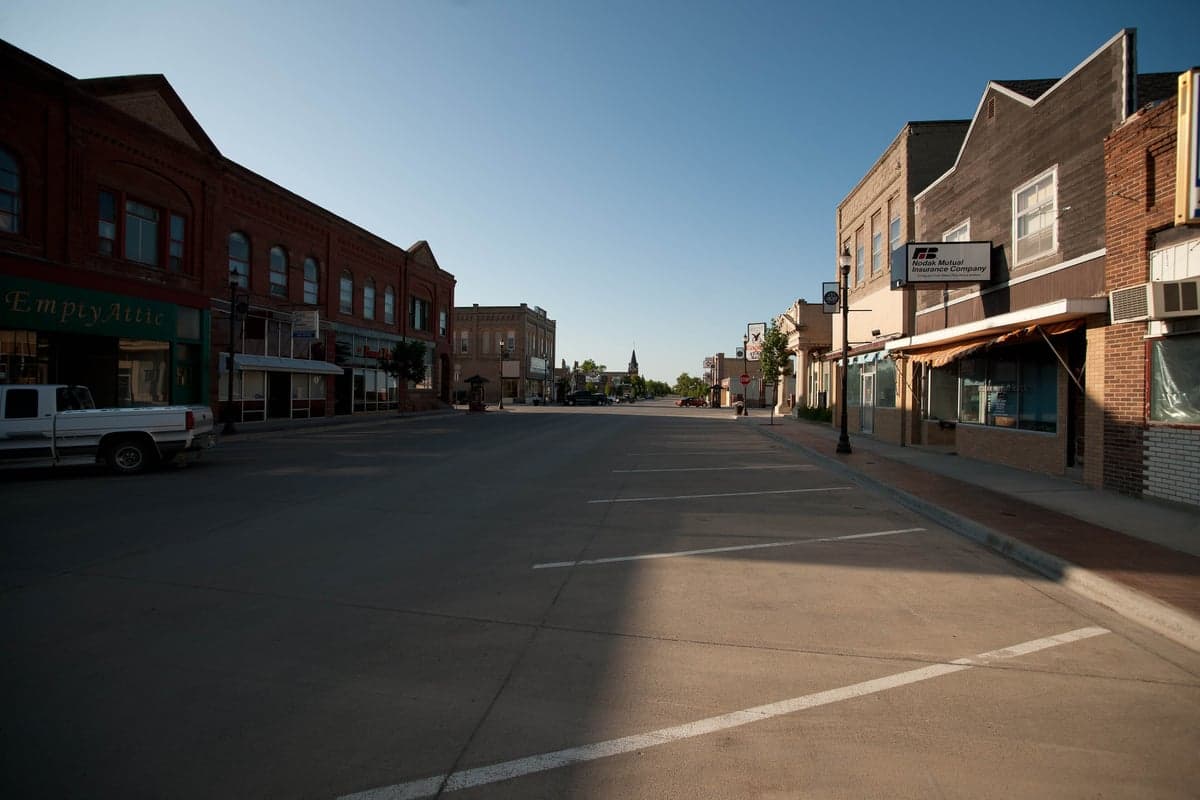
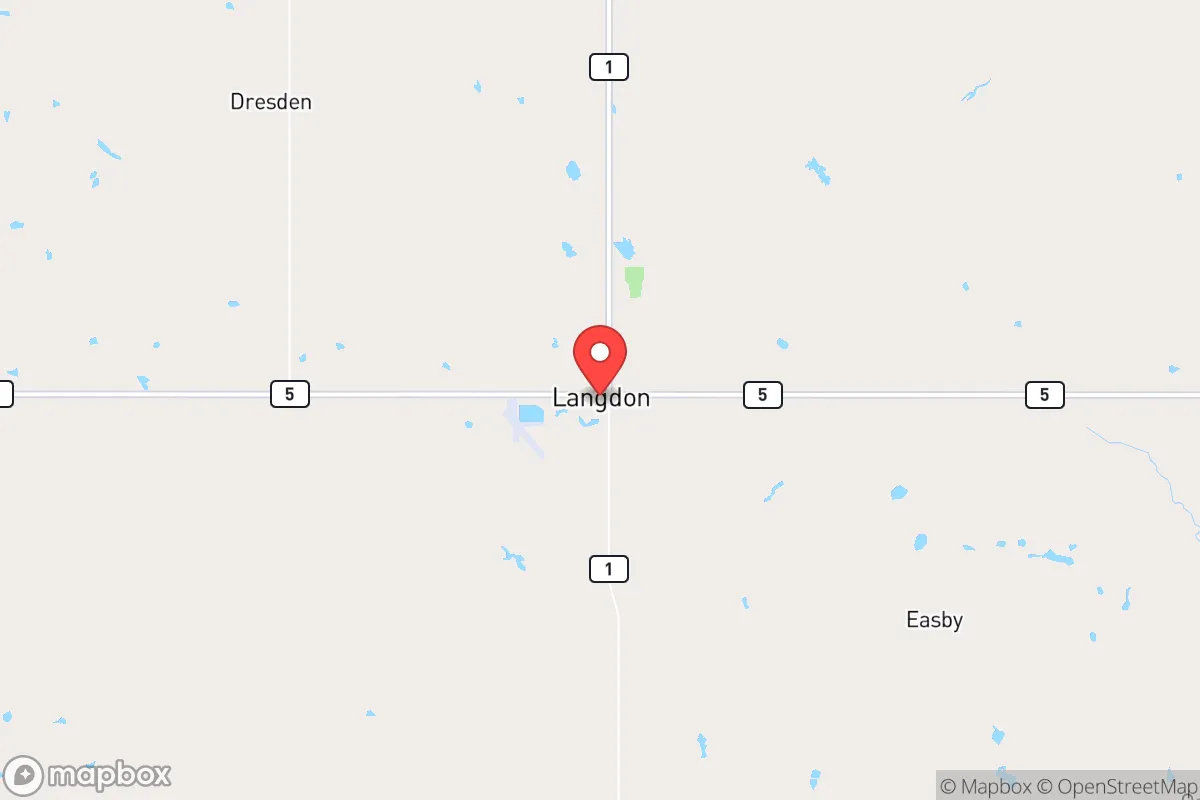
Photo: Wikipedia
Strategic Assessment of Langdon, ND
Workable tactical position. Some exposure to population density or targets, but generally defensible in a crisis.
What does the Strategic Assessment tell us?
Our Strategic Assessment grades tactical survivability of an area. Major population centers, military targets, fallout zones, natural disasters, and border exposure all drive risk — lower exposure means a more defensible position in a crisis.
This is heavily inspired by Joel Skousen's Strategic Relocation book. Highly recommended you checkout the book ($)What does this tell us?
Our Strategic Assessment grades tactical survivability of an area. Major population centers, military targets, fallout zones, natural disasters, and border exposure all drive risk — lower exposure means a more defensible position in a crisis.
This is heavily inspired by Joel Skousen's Strategic Relocation book. Highly recommended you checkout the book ($)Strategic Pillars

Key Distances
Regional Safe Places
Below is our recommended "safe zones" in North Dakota and the surrounding area based on our strategic heuristics. For most people, it's unrealistic to live in a “safe zone” full-time due to work, family or other personal reasons. They tend to be more rural. However, many of these areas are perfect for second homes and retreat properties that double as a vacation home or even a short-term rental.
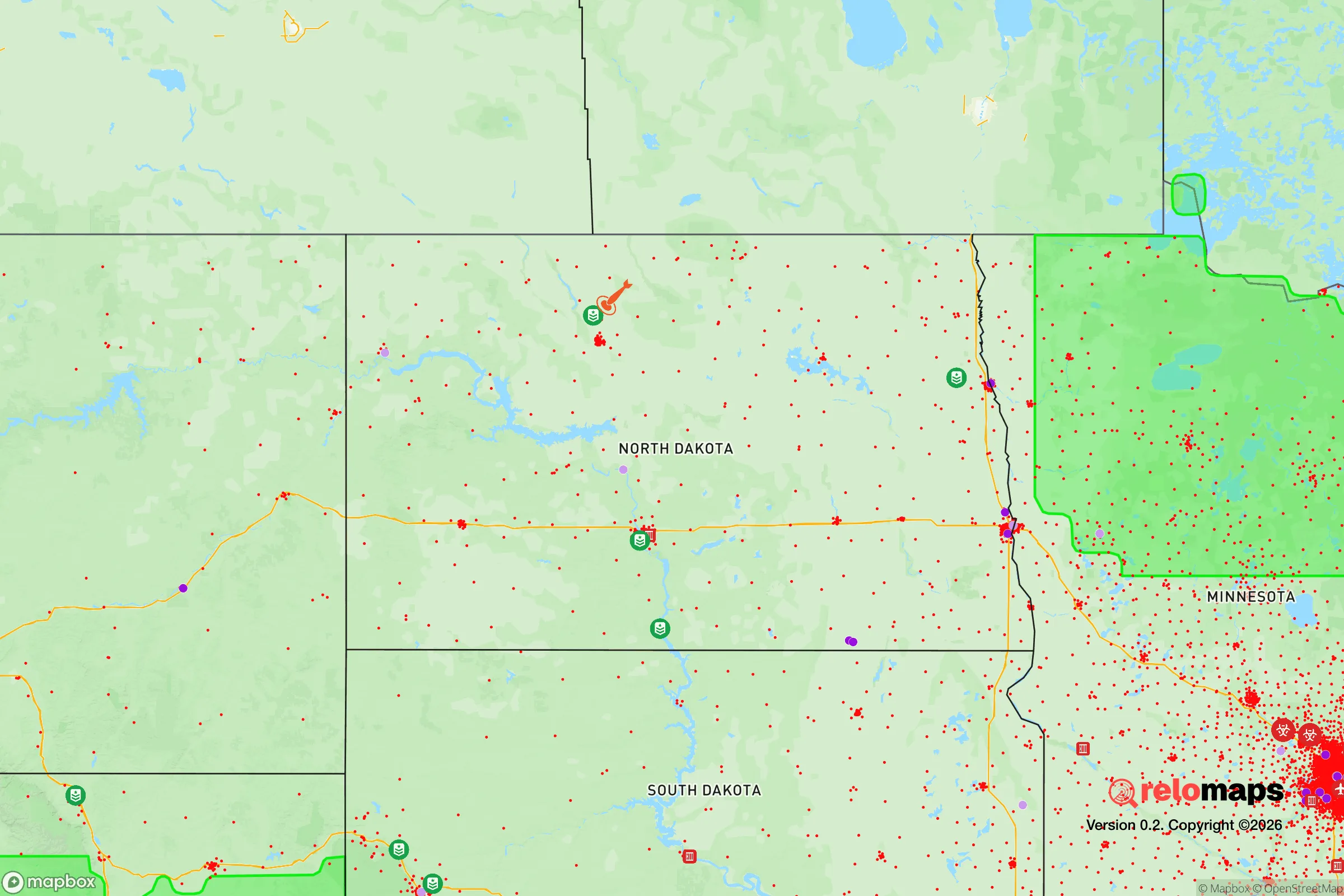
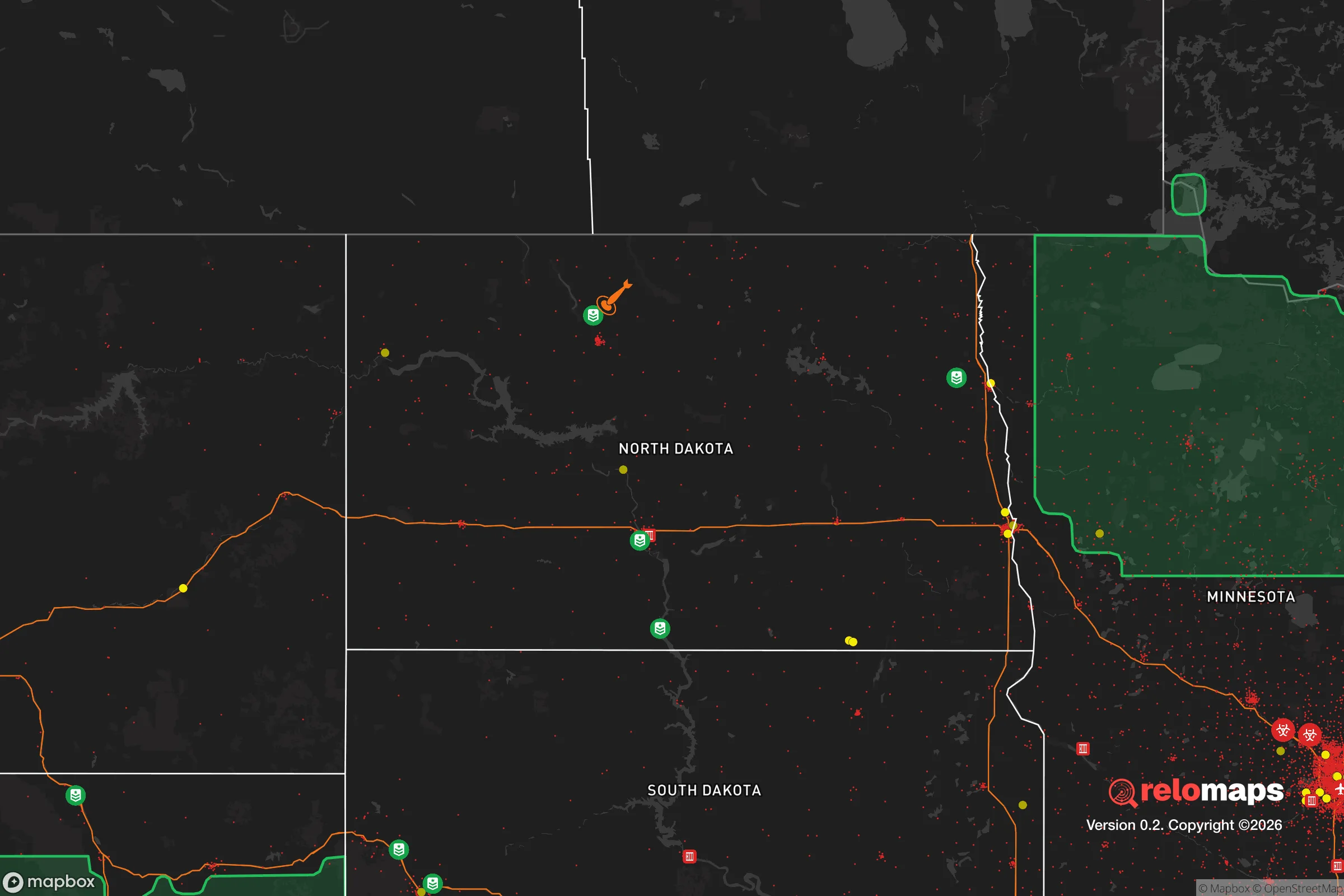


Important Note: For informational purposes only. This does not mean nothing bad ever happens in the green zones. Please use common sense. This is based on public data and modeled with AI. We tried to take a conservative approach but mistakes happen. We update this regularly as new information becomes available.
Solar Generator Recommendations
Backup power matters more here than in safer locations. We've picked three solar generators across budgets and capacity tiers — start with the budget unit if you only need a few essentials, or step up if you want to run a fridge and HVAC for days at a time.

Jackery Portable Power Station Explorer 300
Budget OptionPower on the Go: Weighing only 11 lbs, it's convenient to set up and store with book-sized foldable solar panels

BLUETTI Portable Power Station AC180
Designed for both indoor and outdoor scenarios, AC180 is highly capable as it has a robost capacity and continuous output power.

EF ECOFLOW DELTA Pro Ultra Power Station
Upgraded PickEcoFlow DELTA Pro Ultra is a whole-home energy system designed to grow with your family. Integrated with the Smart Home Panel 2, it scales to meet your evolving energy needs — keeping your home powered, intelligent, and secure through every stage of life.
We earn a commission, at no additional cost to you.
Strategic Assessment Analysis
Langdon, North Dakota, sits in a remote corner of the state that offers a distinct strategic advantage for those prioritizing resilience and self-sufficiency. Located just 12 miles south of the Canadian border in Cavalier County, this town of roughly 1,800 people is far from the major population centers that are likely to be flashpoints during civil unrest or mass casualty events. The area’s low population density, flat agricultural landscape, and harsh winter climate naturally filter out those unprepared for a serious off-grid lifestyle, making it a viable option for relocators seeking a buffer from the chaos of urban collapse.
Geographic isolation and natural defensive advantages
Langdon’s primary strength is its sheer remoteness. The nearest city of significant size is Grand Forks, about 100 miles southeast, while Winnipeg, Manitoba, lies roughly 100 miles north across the border. This distance from major metropolitan areas—each a potential target for civil unrest or infrastructure failure—provides a critical time buffer. The surrounding Cavalier County is sparsely populated, with fewer than 3,500 residents spread across 1,510 square miles. This means a relocator can secure a property with significant acreage without neighbors within sight or earshot, a key factor for operational security and defensibility. The flat, open terrain offers long sightlines, which is a double-edged sword: it makes approaching threats visible from a distance but also offers little natural cover. The area’s harsh winters, with average January lows around -5°F and frequent blizzards, act as a natural barrier against unprepared intruders or transient populations. The Red River Valley’s fertile soil also supports substantial agriculture, which is a long-term food security asset.
Risks, exposures, and proximity to fallout-relevant landmarks
While Langdon’s isolation is a boon, it is not without strategic vulnerabilities. The town lies roughly 130 miles southwest of the Canadian province of Manitoba, which hosts the Canadian Forces Base Shilo and the city of Winnipeg—a regional transportation and logistics hub. In a scenario involving cross-border instability or mass migration, Langdon could see pressure from the north. More critically, the area is within 200 miles of the Grand Forks Air Force Base, a major U.S. strategic asset that houses unmanned aerial vehicles and is a potential target in a conflict. The nearby Minot Air Force Base, home to nuclear-capable B-52 bombers and missile silos, is about 180 miles to the west. While Langdon is not in the immediate blast zone of these installations, the fallout risk from a nuclear strike on Minot or Grand Forks would depend heavily on prevailing winds. The region’s flat terrain offers no natural shielding from radioactive plumes, so a relocator would need a robust sheltering plan and a reliable weather monitoring system. Additionally, the town’s single main highway—North Dakota Highway 1—is a chokepoint. A single accident or road closure could cut off access to supplies or evacuation routes, especially during winter storms.
Practical resilience for a relocator: food, water, energy, and defensibility
For a prepper or survivalist, Langdon offers a mixed bag of practical resilience factors. Water is abundant but requires work. The area sits atop the Dakota Aquifer, and many rural properties have private wells with good yields. However, surface water is limited to the Tongue River and a few small lakes, so a well is essential. Food production is viable due to the region’s agricultural heritage. The growing season is short (roughly 120 frost-free days), but cool-weather crops like potatoes, carrots, and cabbage thrive. Local farmers produce wheat, barley, and canola, and there is a strong tradition of hunting for deer, waterfowl, and upland birds. The town has a small grocery store, but a relocator should plan for a year’s worth of stored food to cover supply chain disruptions. Energy is a challenge. The grid is reliable in normal times, but winter storms can knock out power for days. Solar panels are less effective in the cloudy, short days of winter, so a backup generator with a large fuel cache (diesel or propane) is a must. Wood heating is common, and the surrounding farmland offers ample biomass for fuel. Defensibility is moderate. The flat terrain means a property with a clear perimeter and a good fence line is easier to secure than a wooded lot. However, the lack of natural cover means a determined group could approach from any direction. A rural property with a basement or storm shelter doubles as a safe room. The local law enforcement presence is minimal—Cavalier County has a sheriff’s office with a handful of deputies—so self-reliance is the default. The community itself is tight-knit and conservative, with a strong “mind your own business” ethos, which reduces the risk of unwanted attention from outsiders.
The overall strategic picture for Langdon is one of trade-offs. It offers genuine isolation, abundant agricultural potential, and a low profile that makes it unlikely to be a target or a destination for displaced populations. The harsh winters and remote location are powerful filters that keep out the unprepared. However, the proximity to major military installations introduces a non-trivial fallout risk, and the flat, open terrain limits natural defensive options. For a relocator willing to invest in a well, a generator, a wood stove, and a solid shelter plan, Langdon provides a viable long-term base for riding out national-level disruptions. It is not a fortress, but it is a place where a prepared individual can live quietly, produce their own food, and stay off the radar—which, in the current climate, is a strategic asset in itself.

* Values derived from national, state, county, city and local statistics and may differ in a specific area. Last updated: 2026-04-19T05:42:57.000Z
Narrative content on this page is AI-generated and may contain mistakes. Verify any details that matter before acting on them.
ReloMaps may earn a commission from affiliate links at no extra cost to you.

