
Photo: Wikipedia
Personal Sovereignty in Las Cruces, NM
Viable for self-reliance. Generally workable, though some barriers may limit total independence.
What does Personal Sovereignty tell us?
Personal Sovereignty measures your capacity for self-reliance and independence with minimal government friction. Higher scores mean fewer barriers between you and the way you want to live... but it assumes you have the space you need and good neighbors.
What does this tell us?
Personal Sovereignty measures your capacity for self-reliance and independence with minimal government friction. Higher scores mean fewer barriers between you and the way you want to live... but it assumes you have the space you need and good neighbors.
State Policy
Energy independence: Net exporter (250% of energy produced in-state)
Personal Liberty
Homesteading

Personal Liberty Analysis
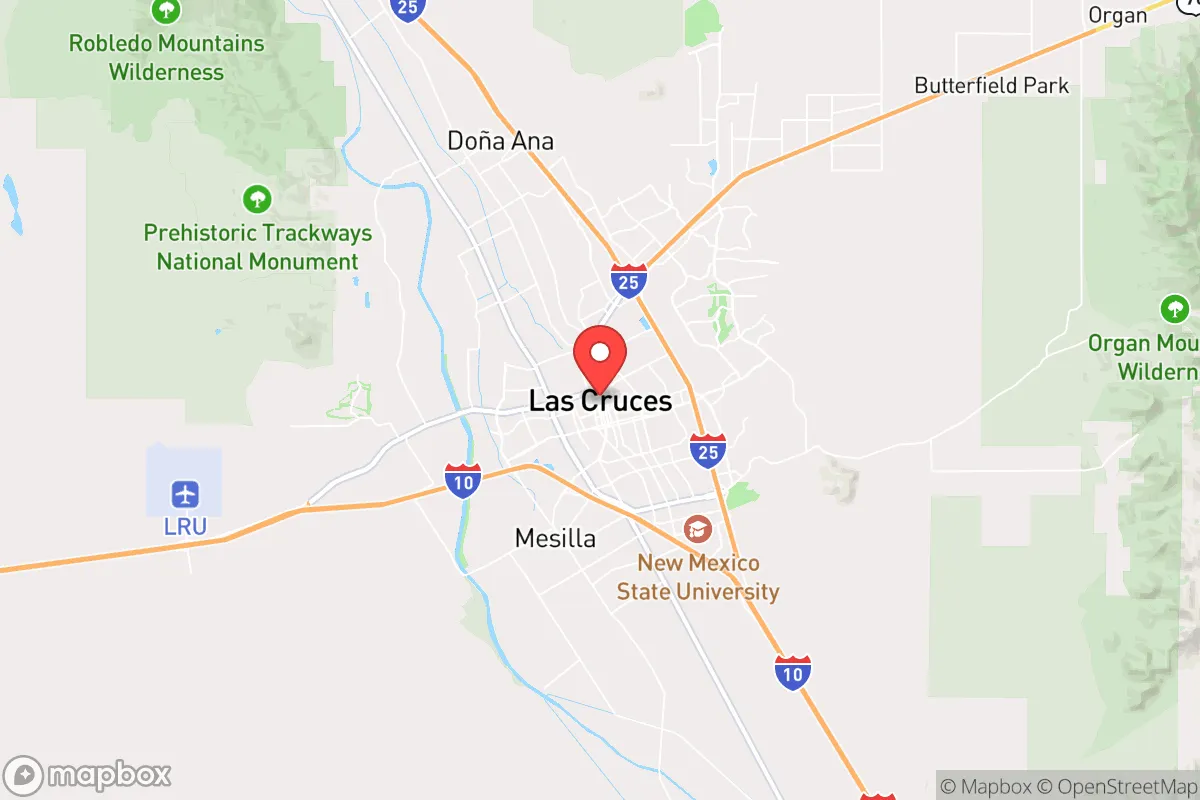
For the liberty-minded individual or family evaluating Las Cruces, New Mexico, as a potential relocation destination, the personal sovereignty picture is a mixed bag defined by a low-tax, low-regulation state environment that is increasingly at odds with federal overreach and a local political climate tilting left. While New Mexico’s constitution and statutes offer some of the strongest protections for self-defense, property rights, and medical autonomy in the Southwest, the practical reality in Las Cruces—a city of roughly 115,000 in Doña Ana County—is shaped by a growing municipal bureaucracy, a heavy federal land presence, and proximity to a border that invites federal intervention. For the survivalist or prepper, the key question is whether the state’s libertarian-leaning legal framework can withstand the pressure of national trends and local governance. The answer, as of 2026, is that Las Cruces offers a viable but imperfect sanctuary for those seeking to maximize personal autonomy, provided you are willing to navigate the contradictions.
Tax burden and regulatory posture: what keeps more money in your pocket
New Mexico’s tax structure is a clear draw for the sovereignty-minded. There is no state income tax on Social Security benefits, and the state’s personal income tax is a progressive system with a top marginal rate of 5.9%—moderate but not punitive. More importantly, New Mexico has no state-level estate or inheritance tax, meaning your property passes to heirs without a state-level death tax. The state’s gross receipts tax (GRT), which functions like a sales tax, averages around 8.5% in Las Cruces, but this is a consumption tax you can partially control through purchasing choices. Property taxes are among the lowest in the nation, with an effective rate of roughly 0.7% of assessed value in Doña Ana County—a fraction of what you’d pay in Texas or California. For a prepper, this means lower carrying costs on land and improvements, freeing capital for supplies, training, and infrastructure. On the regulatory side, New Mexico is a right-to-work state, which limits union power, and it has no state-level occupational licensing requirements for many trades—meaning you can repair your own vehicle, build a shed, or start a small business without a government permission slip. However, the city of Las Cruces has adopted a more interventionist stance on short-term rentals and zoning, so check local ordinances before assuming full freedom.
Self-defense and gun law specifics: what the Second Amendment looks like here
New Mexico is a shall-issue state for concealed carry permits, and as of 2026, it remains a constitutional carry state—meaning you can carry a concealed firearm without a permit if you are legally allowed to possess a firearm. This is a non-negotiable for the sovereignty-minded. There is no state-level assault weapons ban, no magazine capacity limit, and no red flag law on the books, though such legislation has been proposed repeatedly. The state preempts local governments from enacting their own gun control ordinances, so Las Cruces cannot ban carry in city parks or impose waiting periods beyond state law. Stand-your-ground laws are in effect, with no duty to retreat in any place you have a legal right to be. Castle doctrine protections extend to your vehicle and workplace. For the prepper, this means you can legally defend your home, your family, and your property with lethal force if necessary, without fear of prosecution in a state that respects self-defense. The practical downside: Doña Ana County is a border region, and federal agents (CBP, ICE, DEA) are a constant presence. While state law protects you, federal firearms regulations still apply, and a traffic stop near the border can escalate quickly if you are transporting firearms across state lines. Know your federal transport laws.
Self-reliance and homesteading viability: lot sizes, zoning, and off-grid feasibility
For those seeking to reduce dependence on centralized systems, Las Cruces offers genuine potential. The city itself is compact, but the surrounding Doña Ana County and nearby areas like Mesilla, Organ, and the rural tracts east of the Organ Mountains provide affordable land with minimal zoning restrictions. Lot sizes in unincorporated areas can be as small as one acre for a standard rural parcel, but five- to twenty-acre parcels are common and reasonably priced—often under $5,000 per acre for raw desert land. Zoning in the county is permissive: there are no county-wide building codes for owner-built structures on rural land, meaning you can erect a shipping container home, a yurt, or a traditional stick-frame house without a permit, provided you meet basic septic and well requirements. Off-grid living is legally feasible: New Mexico has a strong solar access law that prohibits HOAs and local governments from banning solar panels, and rainwater harvesting is explicitly legal and encouraged. The state also has a "right to dry" law, preventing HOAs from banning clotheslines. However, drilling a well requires a permit and a licensed driller, and the water table in the Mesilla Valley is deep (200-400 feet), so budget $10,000-$15,000 for a well. Septic systems require county approval, but the process is straightforward for standard gravity systems. For the prepper, the biggest constraint is water—the region averages only 9 inches of rain annually, so rainwater catchment and storage are essential, not optional.
Personal liberties: parental rights, medical autonomy, speech, and property
New Mexico’s legal framework is generally protective of individual liberties, but with notable exceptions. Parental rights are strong: the state has no universal vaccine mandate for schoolchildren, and parents can opt out of any immunization for medical, religious, or personal belief reasons. Homeschooling is legal with minimal regulation—you simply file a notice of intent and are not required to follow a state-approved curriculum or submit to testing. Medical autonomy is a mixed bag: New Mexico has no state-level prescription drug monitoring program that mandates reporting, and it is one of the few states that explicitly protects the right to refuse any medical treatment, including life-saving care. However, the state has legalized recreational cannabis and has a robust medical marijuana program, which may be a positive or negative depending on your values. Free speech is protected under the state constitution, which has its own free speech clause that has been interpreted more broadly than the First Amendment in some cases. Property rights are generally respected, but the state has a history of aggressive eminent domain for infrastructure projects, and the federal government controls roughly 34% of New Mexico’s land, including the vast White Sands Missile Range and Organ Mountains-Desert Peaks National Monument, which limits private land availability near Las Cruces. For the prepper, the biggest threat to property rights is the potential for federal land grabs or environmental regulations that restrict use of private land near protected areas.
In the broader context of the American Southwest, Las Cruces offers a sovereignty profile that is stronger than blue states like California or Colorado, but weaker than true libertarian havens like Arizona or Texas. The low taxes, permissive gun laws, and off-grid feasibility are genuine advantages for the survivalist or prepper. The downsides—federal land dominance, a left-leaning city council, and proximity to a border that invites federal law enforcement—are manageable if you choose your location carefully (rural Doña Ana County, not the city proper) and maintain a low profile. For the single individual or family willing to invest in water infrastructure and navigate the contradictions, Las Cruces can be a functional base for a self-reliant life, provided you keep one eye on the horizon for legislative changes that could erode the freedoms you moved here to enjoy.

* Values derived from national, state, county, city and local statistics and may differ in a specific area. Last updated: 2026-04-19T11:34:06.000Z
Narrative content on this page is AI-generated and may contain mistakes. Verify any details that matter before acting on them.
ReloMaps may earn a commission from affiliate links at no extra cost to you.

