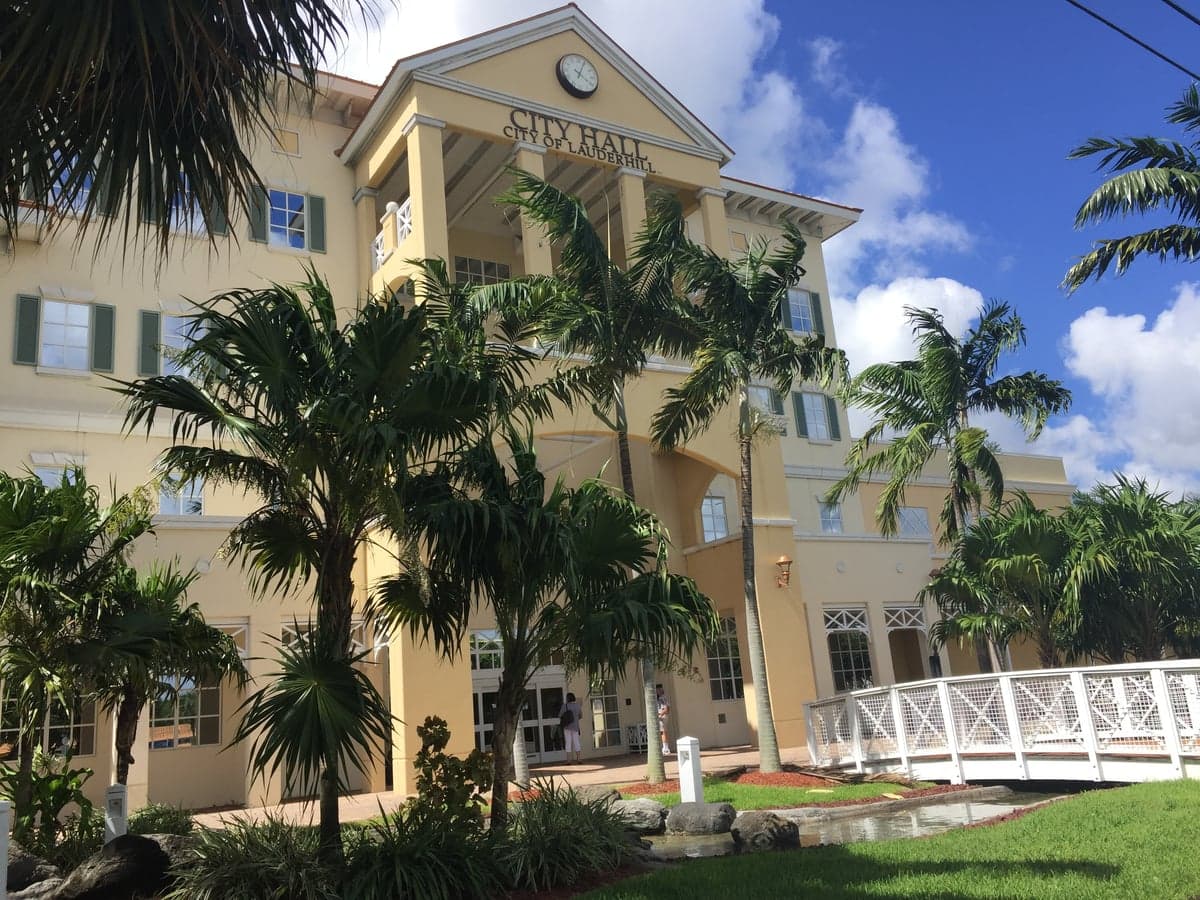
Photo: Wikipedia
Demographics of Lauderhill, FL
Affluence Level in Lauderhill, FL
A below-average socioeconomic profile. Incomes, home values, and educational attainment trail the U.S., with higher poverty and unemployment.
People of Lauderhill, FL
Today, Lauderhill, Florida is a densely populated, predominantly Black city of 73,961 residents, distinguished by its high homeownership rate among Black families and a strong Caribbean cultural influence. The city is 77.5% Black, with a notable 12.8% foreign-born population, many from Jamaica, Haiti, and other Caribbean nations, giving it a distinct West Indian character. It is a working-to-middle-class suburb with a relatively young median age, where 19.0% of adults hold a college degree, and the Hispanic share sits at 9.4%. Lauderhill’s identity is shaped by its role as a stable, affordable enclave for Black professionals and families within the larger Fort Lauderdale metro area.
How the city was settled and grew
Lauderhill is a post-1950s planned suburb, not an older settlement. The land was originally part of the Florida Everglades drainage area, developed by the Lauder family, who began selling homes in the 1950s as part of the post-World War II suburban boom. The first residents were predominantly white, middle-class families drawn by affordable ranch-style homes and proximity to Fort Lauderdale’s growing job market. The earliest neighborhoods, such as Lauderhill Estates and Lauderhill Lakes, were built in the late 1950s and early 1960s, attracting young families from the Northeast and Midwest. The city was incorporated in 1959, and its early population was nearly all white, with a small number of Black domestic workers living in less visible pockets.
Modern era (post-1965)
The demographic transformation of Lauderhill began in the 1970s and accelerated through the 1990s, driven by two forces: white flight to newer suburbs farther west, and Black in-migration from both northern cities and the Caribbean. The 1965 Hart-Cellar Act opened immigration from the Caribbean, and Lauderhill became a destination for Jamaican, Haitian, and Trinidadian families seeking affordable housing and established Black communities. By the 2000 census, the city had shifted from majority white to majority Black, a change that occurred faster than in many neighboring cities. The neighborhoods of Inverrary and West Lauderhill absorbed much of this growth, with Inverrary becoming a hub for middle-class Black families and Caribbean immigrants. The Lauderhill Mall area became a commercial and social center for the West Indian community. Today, the city’s Black population is 77.5%, while the white population has fallen to just 8.0%. The Hispanic share, at 9.4%, is smaller than in surrounding cities like Lauderdale Lakes, and the East/Southeast Asian population is minimal at 0.4%, with a separate Indian-subcontinent share of 0.9%.
The future
Lauderhill’s population is likely to remain predominantly Black and Caribbean for the foreseeable future, though the city is showing signs of modest diversification. The Hispanic share has grown slowly from about 6% in 2010 to 9.4% today, driven by Puerto Rican and Central American families moving into older housing stock in neighborhoods like Broward Estates. The East/Southeast Asian and Indian populations are negligible and not expected to grow significantly, as the city lacks the job base or school reputation to attract those groups. The Black population is stable but aging slightly, with younger Black families sometimes moving to newer suburbs like Weston or Parkland. The foreign-born share (12.8%) is plateauing, as second-generation Caribbean Americans are largely U.S.-born. The city is not homogenizing into a single enclave; rather, it is tribalizing along income lines, with Inverrary remaining more affluent and West Lauderhill seeing more rental turnover and lower median incomes.
For a conservative-leaning individual or parent considering a move, Lauderhill offers a stable, family-oriented environment with a strong sense of community among its Black and Caribbean residents. It is not a gentrifying hotspot or a rapidly diversifying hub; it is a mature, predominantly Black suburb where property values are moderate and crime rates are manageable compared to nearby inner-city areas. The city’s future is one of slow, organic change rather than dramatic demographic upheaval, making it a predictable choice for those seeking an established, culturally cohesive neighborhood in South Florida.

* Values derived from national, state, county, city and local statistics and may differ in a specific area. Last updated: 2026-05-03T20:22:10.000Z
Narrative content on this page is AI-generated and may contain mistakes. Verify any details that matter before acting on them.
ReloMaps may earn a commission from affiliate links at no extra cost to you.

