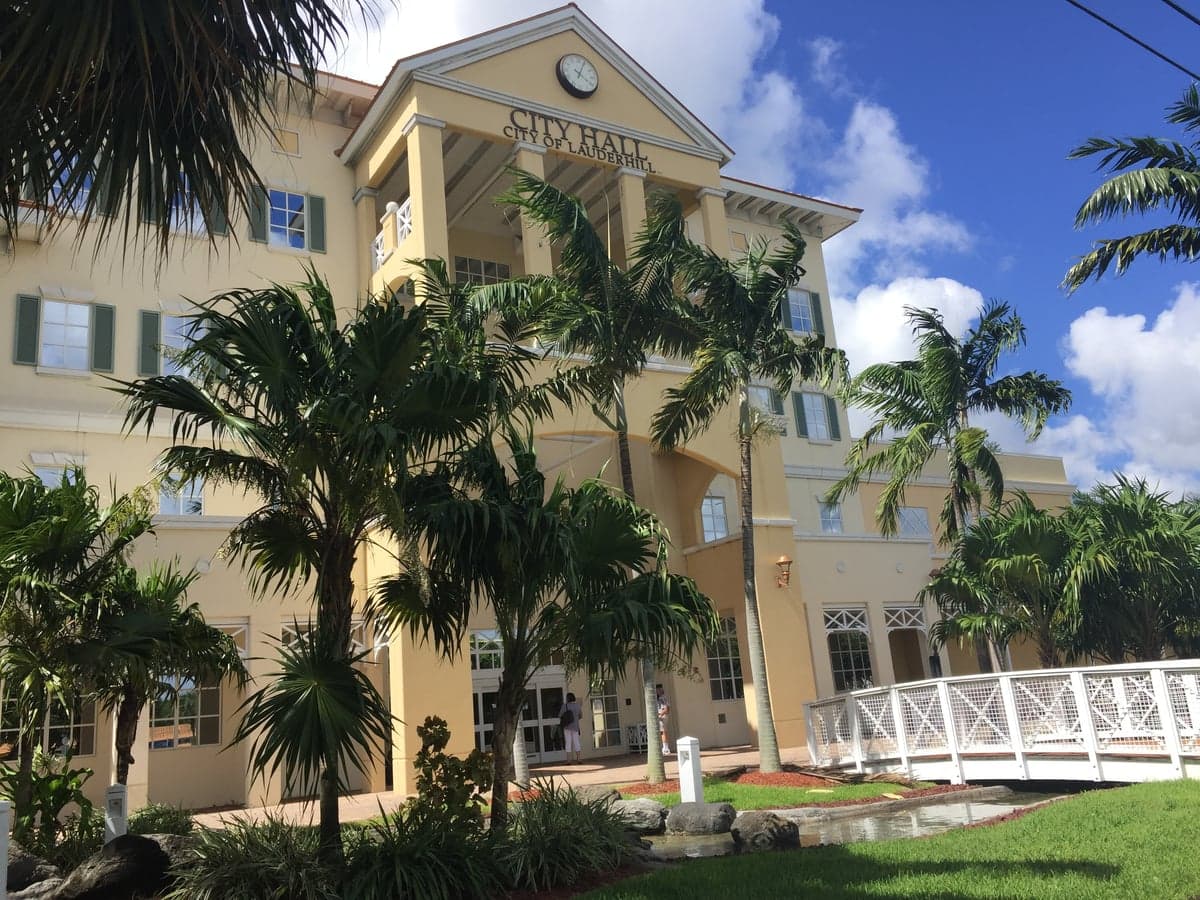
Photo: Wikipedia
Strategic Assessment of Lauderhill, FL
Multiple tactical vulnerabilities. Population density, target proximity, or disaster risk are likely compounding. A retreat property and exit planning is required.
What does the Strategic Assessment tell us?
Our Strategic Assessment grades tactical survivability of an area. Major population centers, military targets, fallout zones, natural disasters, and border exposure all drive risk — lower exposure means a more defensible position in a crisis.
This is heavily inspired by Joel Skousen's Strategic Relocation book. Highly recommended you checkout the book ($)What does this tell us?
Our Strategic Assessment grades tactical survivability of an area. Major population centers, military targets, fallout zones, natural disasters, and border exposure all drive risk — lower exposure means a more defensible position in a crisis.
This is heavily inspired by Joel Skousen's Strategic Relocation book. Highly recommended you checkout the book ($)Strategic Pillars

Key Distances
Regional Safe Places
Below is our recommended "safe zones" in Florida and the surrounding area based on our strategic heuristics. For most people, it's unrealistic to live in a “safe zone” full-time due to work, family or other personal reasons. They tend to be more rural. However, many of these areas are perfect for second homes and retreat properties that double as a vacation home or even a short-term rental.

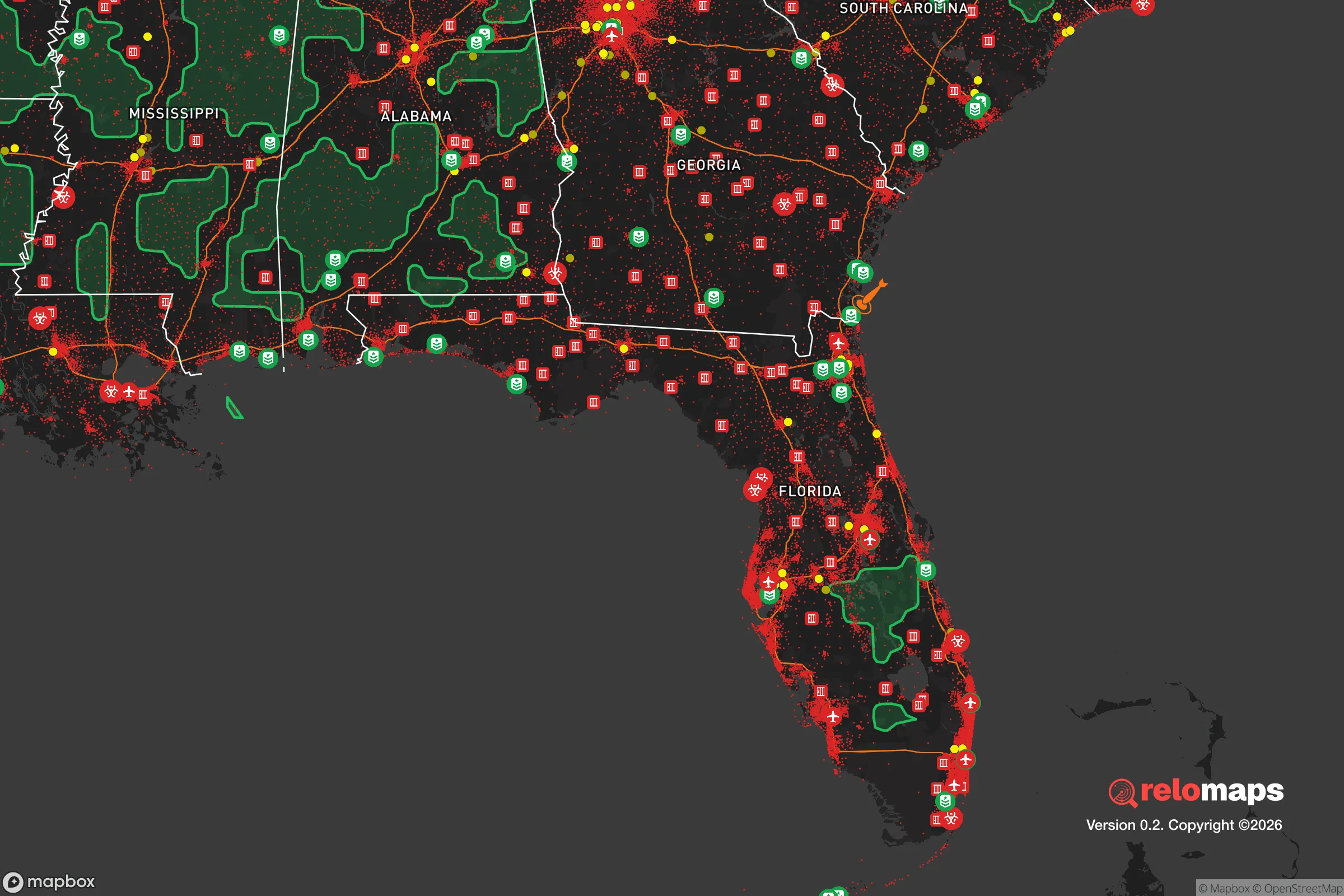


Important Note: For informational purposes only. This does not mean nothing bad ever happens in the green zones. Please use common sense. This is based on public data and modeled with AI. We tried to take a conservative approach but mistakes happen. We update this regularly as new information becomes available.
Solar Generator Recommendations
Backup power matters more here than in safer locations. We've picked three solar generators across budgets and capacity tiers — start with the budget unit if you only need a few essentials, or step up if you want to run a fridge and HVAC for days at a time.

Jackery Portable Power Station Explorer 300
Budget OptionPower on the Go: Weighing only 11 lbs, it's convenient to set up and store with book-sized foldable solar panels

BLUETTI Portable Power Station AC180
Designed for both indoor and outdoor scenarios, AC180 is highly capable as it has a robost capacity and continuous output power.

EF ECOFLOW DELTA Pro Ultra Power Station
Upgraded PickEcoFlow DELTA Pro Ultra is a whole-home energy system designed to grow with your family. Integrated with the Smart Home Panel 2, it scales to meet your evolving energy needs — keeping your home powered, intelligent, and secure through every stage of life.
We earn a commission, at no additional cost to you.
Strategic Assessment Analysis
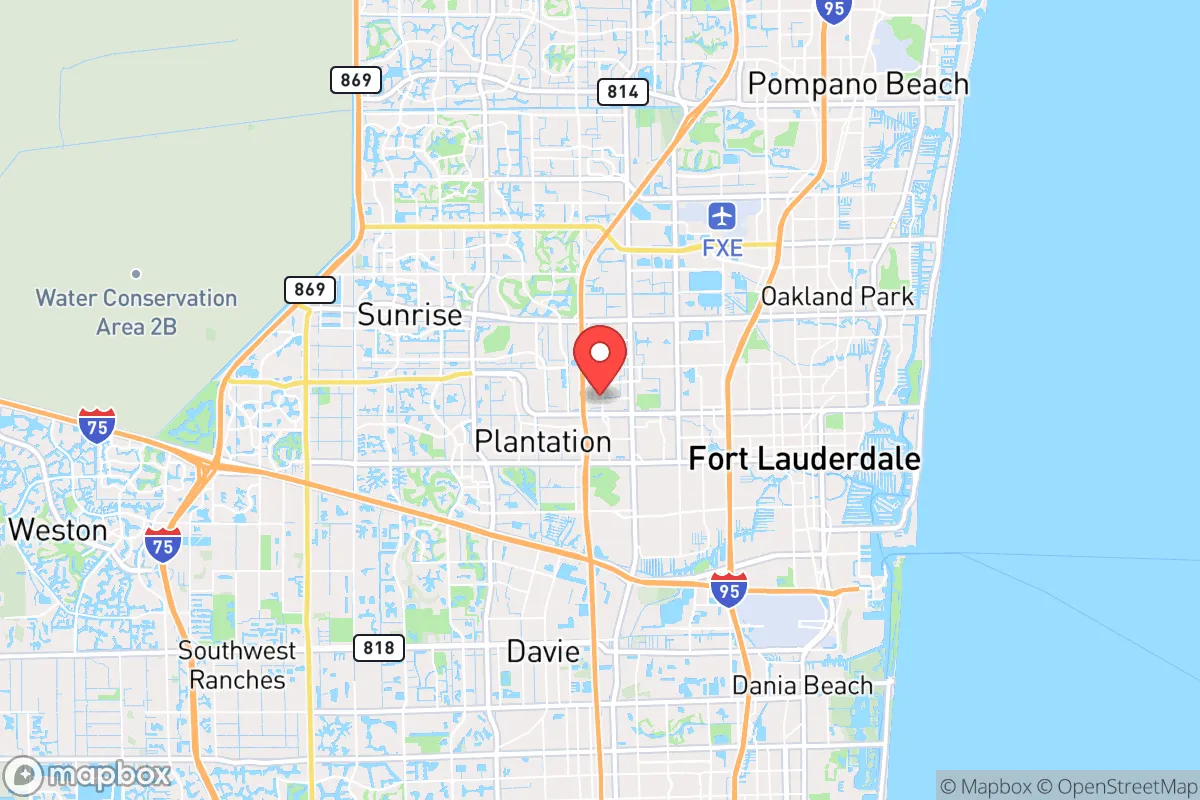
Lauderhill, Florida, sits in a precarious strategic position that demands a hard-eyed assessment for anyone serious about resilience. Located in the heart of Broward County, roughly 10 miles inland from Fort Lauderdale, this city of roughly 75,000 residents offers a mix of suburban density and proximity to major infrastructure that cuts both ways for a prepper. Its location along major evacuation routes like I-95 and the Florida Turnpike provides quick access to both the coast and the interior, but that same connectivity makes it a potential chokepoint during a crisis. For a conservative-leaning relocator concerned with civic unrest, mass casualty events, and systemic collapse, Lauderhill’s strategic value is heavily dependent on your willingness to navigate its urban-suburban reality rather than escape it entirely.
Geographic position and natural advantages for a survivalist
Lauderhill’s inland location is its primary natural advantage, placing it outside the immediate storm surge zones that plague coastal Broward County. During a hurricane—the most likely large-scale disaster in South Florida—this buffer means you’re less likely to face catastrophic flooding from the Atlantic or the Intracoastal Waterway. The city sits on a relatively flat, sandy ridge that drains reasonably well, reducing the risk of prolonged standing water compared to neighborhoods closer to the Everglades. However, this is not high ground; the entire region is barely above sea level, and the water table is only a few feet down, making septic systems and deep well drilling problematic. For a prepper, the proximity to the Everglades to the west offers a theoretical retreat corridor, but the reality is that the swamp is dense, mosquito-ridden, and largely impassable without specialized gear. The city’s grid layout and canal system—part of the South Florida Water Management District—provide some natural barriers to movement, but they also create predictable funnel points that could be exploited by bad actors during unrest.
Risks, exposures, and proximity to fallout-relevant landmarks
The biggest strategic liability for Lauderhill is its proximity to high-value targets and population centers. Fort Lauderdale-Hollywood International Airport is less than 15 miles east, and Port Everglades—a major cargo and cruise hub—is even closer. In a mass casualty event or a coordinated attack, these are prime targets. The city itself is surrounded by major highways, including I-95, the Turnpike, and State Road 7, which means any evacuation or movement of military assets will clog these arteries within hours. Lauderhill is also within 30 miles of the U.S. Southern Command headquarters in Doral, a strategic military installation that could become a focal point during a national emergency. For a prepper, this means the area is a potential secondary fallout zone—not from radiation, but from the chaos of displaced populations, looters, and government checkpoints. The city’s demographic density (over 5,000 people per square mile) and its mix of residential and commercial zones create a complex environment for defensibility. During the 2020 civil unrest, Lauderhill saw protests and some property damage, but it was not a flashpoint like Miami or Portland. Still, the underlying tensions are present, and a collapse of public order would likely see this area become a contested zone for resources.
Practical resilience for a relocator: food, water, energy, and defensibility
For a relocator serious about self-sufficiency, Lauderhill presents significant challenges. Municipal water comes from the Biscayne Aquifer, which is vulnerable to saltwater intrusion and contamination during major storms. A prepper should plan for at least two weeks of stored water per person, plus a high-quality filtration system like a Berkey or a Sawyer. The city’s building codes are modern, but most homes are concrete block construction with tile roofs—good for hurricane resistance but not for off-grid living. Solar panels are viable, but HOA restrictions in many neighborhoods can be a hurdle; check local covenants before buying. Food storage is a challenge due to the humidity and heat; a climate-controlled pantry or a deep freezer with a backup generator is essential. Defensibility is the weakest link. Lauderhill is a suburban grid with multiple points of entry, and most lots are small and close together. There is no natural chokepoint or high ground to control. A prepper would need to harden a single-family home with reinforced doors, window bars, and a security system, and then rely on a tight-knit neighborhood watch—which is possible but requires active community building. The city’s proximity to major hospitals (like Broward Health Medical Center) is a plus for medical emergencies, but those same facilities will be overwhelmed during a mass casualty event. For energy, natural gas is available in parts of the city, but a propane backup or a portable generator is a must. The local climate allows for year-round gardening, but soil quality is poor; raised beds with imported soil are the norm.
The overall strategic picture for Lauderhill is one of calculated risk. It is not a bug-out location or a remote homestead—it is a suburban node within a sprawling metroplex that offers some resilience advantages if you are willing to invest in preparation and community ties. For a conservative-leaning relocator, the city’s political leanings are mixed; Broward County is heavily Democratic, but Lauderhill itself has a diverse population with a significant Caribbean and African-American community that tends toward moderate-to-conservative views on crime and family values. The cost of living is moderate for South Florida, but property taxes and insurance rates are high due to hurricane risk. If your strategy is to be near major infrastructure while maintaining a low profile, Lauderhill can work—but only if you accept that you are not escaping the system, you are fortifying within it. For those seeking true independence, look further north or west. For those who need to stay connected to employment or family in the region, Lauderhill is a defensible compromise, provided you treat it as a base of operations rather than a final redoubt.

* Values derived from national, state, county, city and local statistics and may differ in a specific area. Last updated: 2026-05-03T20:22:10.000Z
Narrative content on this page is AI-generated and may contain mistakes. Verify any details that matter before acting on them.
ReloMaps may earn a commission from affiliate links at no extra cost to you.

