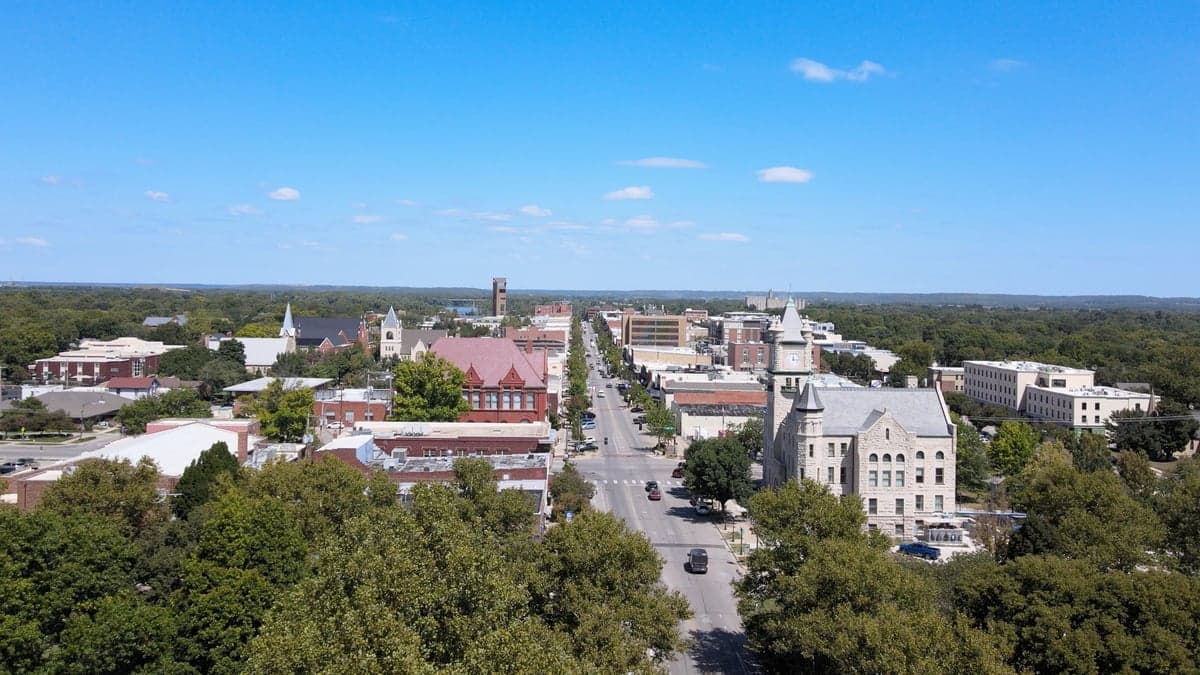
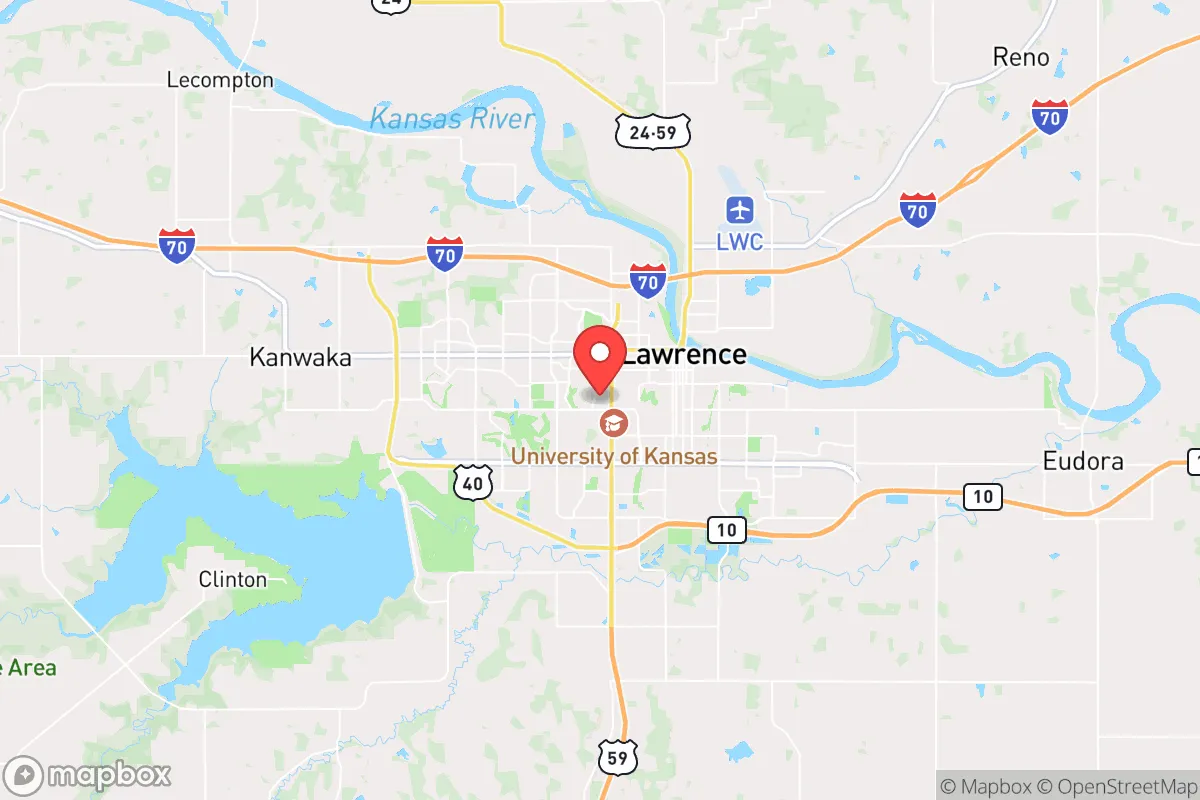
Photo: Wikipedia
Personal Sovereignty in Lawrence, KS
Viable for self-reliance. Generally workable, though some barriers may limit total independence.
What does Personal Sovereignty tell us?
Personal Sovereignty measures your capacity for self-reliance and independence with minimal government friction. Higher scores mean fewer barriers between you and the way you want to live... but it assumes you have the space you need and good neighbors.
What does this tell us?
Personal Sovereignty measures your capacity for self-reliance and independence with minimal government friction. Higher scores mean fewer barriers between you and the way you want to live... but it assumes you have the space you need and good neighbors.
State Policy
Energy independence: Self-sufficient (80% of energy produced in-state)
Personal Liberty
Homesteading

Personal Liberty Analysis
Lawrence, Kansas, presents a mixed picture for those prioritizing personal sovereignty. While the city’s progressive local governance often clashes with traditional conservative values, the broader state environment provides a more favorable baseline for autonomy than many coastal alternatives. For a survivalist or prepper mindset, Lawrence offers some structural advantages—particularly in state-level gun laws and property rights—but local zoning, tax policies, and cultural pressures can erode the self-reliance many seek. Understanding where the city stands on key sovereignty metrics is critical before committing to relocation.
Tax burden and regulatory posture: how much government reaches into your wallet
Kansas maintains a relatively light state-level tax footprint compared to high-tax states like California or New York. The state income tax is a flat rate of 5.7% as of 2026, with no inheritance or estate tax—meaning your property passes to heirs without a state-level death tax. Property taxes in Lawrence, however, are notably higher than the state average, driven by Douglas County levies and local school bond measures. The effective property tax rate hovers around 1.4% of assessed value, which can sting on a $300,000 home. Sales tax in Lawrence is 8.75% (state + county + city), slightly above the Kansas median. For a prepper watching every dollar, this means the state won’t bleed you dry, but the city’s appetite for revenue is real. Regulatory posture is mixed: Kansas is a right-to-work state, which limits union power, and occupational licensing is less burdensome than in many states. However, Lawrence’s city council has adopted stricter building codes and energy efficiency mandates that can increase costs for off-grid or self-sufficient construction. If you’re looking to minimize government intrusion into your finances, Lawrence is better than most blue-leaning college towns, but not as lean as rural Kansas counties.
Self-defense and gun law specifics: what you can carry and where
Kansas is a constitutional carry state, meaning no permit is required to carry a concealed firearm for anyone legally allowed to possess one. This is a major win for personal sovereignty. Lawrence, despite its liberal reputation, cannot override state preemption on firearms—local ordinances banning carry in city parks or public buildings have been struck down by state law. You can carry openly or concealed without a license, and the state does not require registration of firearms or ammunition. Stand-your-ground laws are in effect, with no duty to retreat in any place you are lawfully present. Magazine capacity is unrestricted, and there are no state-level bans on specific firearms like AR-15s. However, federal law still applies, and Lawrence’s police department has been known to enforce federal restrictions more aggressively than rural departments. For a prepper, the key takeaway is that your right to keep and bear arms is strongly protected at the state level, and local attempts to erode that are legally limited. The biggest practical concern is storage: if you live within city limits, a break-in could result in theft of firearms, so secure storage is non-negotiable.
Self-reliance and homesteading viability: lot sizes, zoning, and off-grid feasibility
Lawrence’s zoning code is not friendly to full-scale homesteading within city limits. Minimum lot sizes in residential zones are typically 6,000 to 8,000 square feet, which limits space for gardens, livestock, or rainwater catchment systems. Chickens are allowed in most residential areas (hens only, no roosters), but goats, pigs, or larger livestock are prohibited unless you’re on agricultural-zoned land outside the city core. Off-grid living is effectively illegal within city limits—the city requires connection to municipal water and sewer, and building codes mandate grid-tied electrical systems for new construction. Solar panels are allowed, but net metering policies are subject to utility company terms, and battery storage for full independence is expensive and regulated. For those serious about self-reliance, the viable option is to buy land in unincorporated Douglas County or adjacent counties like Leavenworth or Jefferson, where zoning is minimal and you can drill a well, install septic, and build without city oversight. Land prices in the county are reasonable—$5,000 to $10,000 per acre for raw land—but you’ll be 15–30 minutes from Lawrence’s amenities. If you’re a prepper who wants to be near a town with hospitals and supply chains but still have a homestead, the rural fringe is your best bet.
Personal liberties: parental rights, medical autonomy, speech, and property
Parental rights in Kansas are generally strong. The state has a parental bill of rights that affirms parents’ authority over their children’s education, healthcare, and upbringing. Lawrence’s school district, USD 497, has faced controversy over curriculum transparency and gender policies, but state law now requires schools to notify parents of any changes to a student’s health or well-being. Medical autonomy is a mixed bag: Kansas does not have a state-level vaccine mandate for adults, and COVID-era restrictions were lifted early compared to many states. However, the state has expanded Medicaid under the Affordable Care Act, which some conservatives view as government overreach. For alternative medicine or supplement use, Kansas is relatively permissive—no state ban on raw milk sales (though it must be labeled “not for human consumption”), and homeopathic remedies are unregulated. Speech is protected under the First Amendment, and Lawrence’s reputation as a “free speech” town is genuine—public protests and political expression are common, though conservative voices may face social backlash in this heavily Democratic city. Property rights are solid: Kansas has strong eminent domain protections, and the state does not have a statewide rent control law. However, Lawrence has a landlord-tenant ordinance that favors tenants in disputes, which can be a concern if you plan to rent out property. Overall, personal liberties in Lawrence are a patchwork—strong on guns and parental rights, but weaker on medical freedom and property control compared to more rural or conservative states.
In the broader context of personal sovereignty, Lawrence ranks as a moderate option for conservative-leaning preppers. It offers state-level protections on firearms, no income tax on retirement income, and a legal framework that respects property rights. But the local culture and zoning laws push against self-reliance, and the tax burden is higher than in surrounding counties. If you value community resilience and want to be near a university town with resources, Lawrence can work—but only if you’re willing to navigate its regulatory hurdles. For those who prioritize maximum autonomy, the rural areas outside Lawrence or neighboring states like Missouri or Oklahoma offer fewer restrictions and lower costs. The bottom line: Lawrence is a compromise, not a sanctuary, for the sovereignty-minded.

* Values derived from national, state, county, city and local statistics and may differ in a specific area. Last updated: 2026-04-30T04:46:20.000Z
Narrative content on this page is AI-generated and may contain mistakes. Verify any details that matter before acting on them.
ReloMaps may earn a commission from affiliate links at no extra cost to you.

