Photo: Wikipedia
Political ClimatePolitical Climate in Lawrence, KS
District shown is the primary district for this city’s centroid. Cities may span multiple districts.
Local Political AnalysisPolitical Analysis of Lawrence, KS
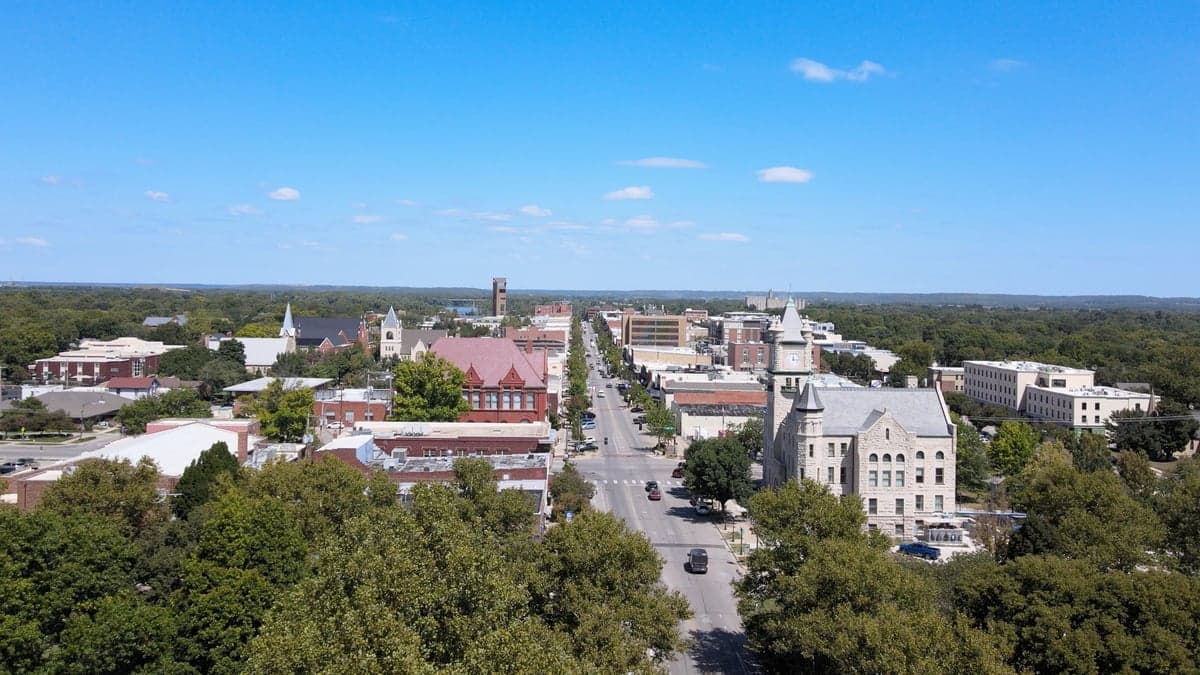
Look, I’ve lived in Lawrence my whole life, and I’ll tell you straight: this town used to be a place where you could mind your own business, keep your guns, and raise your kids without the government breathing down your neck. But over the last decade, the political climate has shifted hard left. The Cook PVI rating for this area is R+16, which tells you the surrounding county is solidly conservative, but Lawrence itself? It’s become a progressive stronghold where personal freedoms are getting squeezed from all sides. The city council and county commission are increasingly dominated by activists who see government as the solution to every problem, not a necessary evil to be kept in check.
How it compares
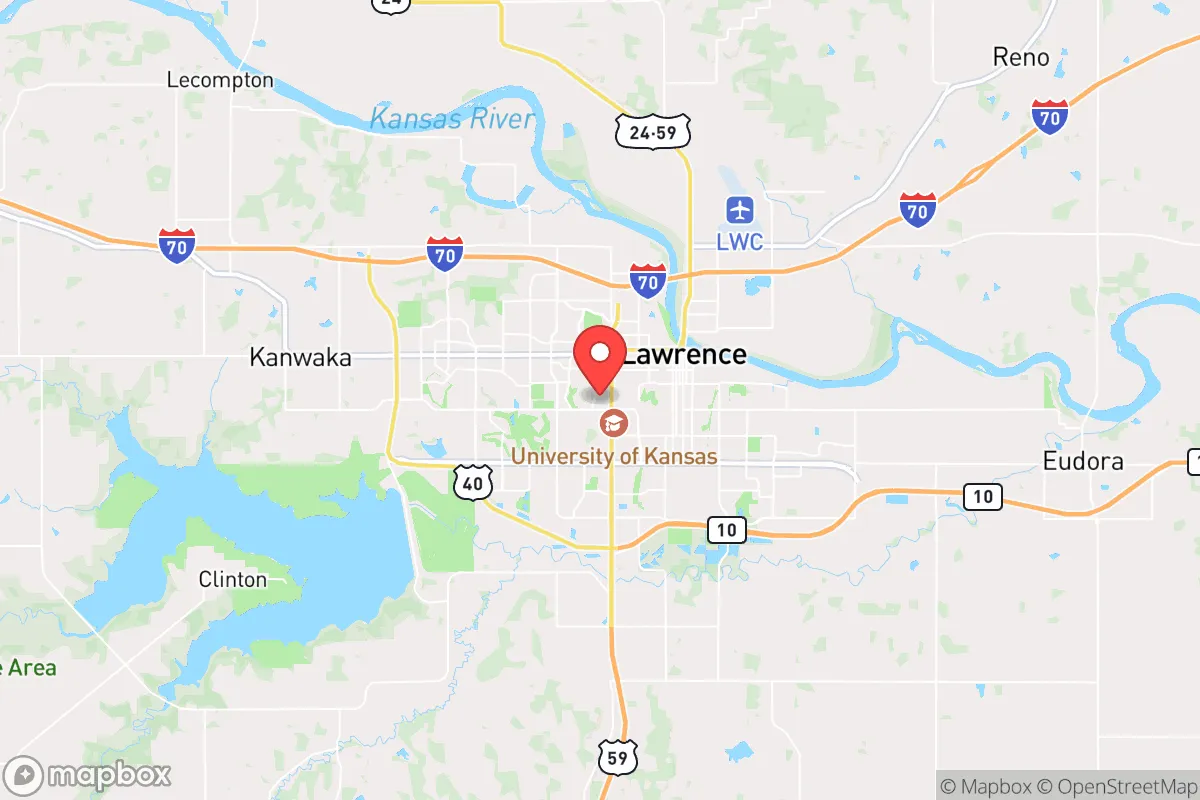
Drive 20 minutes east to Eudora or 15 minutes south to Baldwin City, and you’re in a different world. Those towns still vote like the rest of Douglas County—conservative, with a live-and-let-live attitude. But Lawrence is an island of blue in a sea of red. Compared to Topeka, which is about 30 minutes west and leans more moderate, Lawrence’s politics are far more aggressive. The city has embraced sanctuary city policies, defunded police initiatives (though they walked some back after crime spiked), and pushed zoning changes that make it harder to own property or start a small business. If you’re a conservative or even a libertarian-leaning moderate, you’ll feel like a minority in your own hometown.
What this means for residents
For families and gun owners, the writing is on the wall. The city council has floated red flag ordinances and magazine capacity limits, even though Kansas state law preempts most local gun control. They keep testing the boundaries, and if the state legislature doesn’t push back, you could see your Second Amendment rights eroded block by block. Property taxes have also climbed steadily to fund pet projects like bike lanes and affordable housing mandates that sound good on paper but hit your wallet hard. And if you run a business, be ready for new regulations—paid leave mandates, minimum wage hikes, and strict energy codes that make it expensive to open or expand. The progressive agenda here isn’t just talk; it’s policy that affects your daily life.
On the cultural side, Lawrence has always had a quirky, artsy vibe—that part hasn’t changed. But the tolerance only goes one way now. If you publicly support traditional values or question the latest social justice initiative, you’ll get labeled fast. The university (KU) drives a lot of this, with its administration pushing DEI training and speech codes that chill open debate. Longtime residents like me remember when Lawrence was a place where you could disagree over a beer at the Replay Lounge. Now, it feels like you’re walking on eggshells. The near-term future? I expect more of the same—more taxes, more regulations, and more government overreach. If you value personal freedom and want to keep your rights intact, you might want to look at Eudora or even rural Lecompton. Lawrence is becoming a place where the government knows what’s best for you, whether you like it or not.

State Political ClimatePolitical Climate in Kansas
State Political AnalysisPolitical Environment in the State
Kansas has long been a reliably Republican state, but the picture is more nuanced than a simple red-state label suggests. Over the past 20 years, the state has shifted from a solidly conservative stronghold to a more volatile battleground between traditional fiscal conservatives, a growing populist-right wing, and a concentrated progressive base in a few urban pockets. The overall partisan lean remains Republican at the state level—Donald Trump won Kansas by about 15 points in 2020—but the margin has narrowed in presidential races, and internal GOP factions have created a dynamic where policy outcomes can swing dramatically depending on which wing holds the legislature and governor’s mansion.
Urban vs. rural divide
The political map of Kansas is a textbook example of the urban-rural split. The eastern third of the state, anchored by Kansas City (Wyandotte County) and Lawrence (Douglas County), is the Democratic stronghold. Johnson County, the affluent suburban ring south of Kansas City, was once reliably Republican but has been trending purple—Biden won it by a slim margin in 2020, a seismic shift from 2012 when Romney carried it by 20 points. Topeka (Shawnee County) and Wichita (Sedgwick County) are more mixed; Wichita’s suburbs lean red, but the city itself has a sizable Democratic base. Meanwhile, the vast rural and small-town expanse—places like Garden City, Dodge City, Hays, and Colby—votes overwhelmingly Republican, often by 70-80% margins. The result is a state where Republicans dominate the legislature (super-majorities in both chambers) thanks to rural districts, even as the governor’s office has flipped between parties. The 2022 election saw Democrat Laura Kelly win a second term, but Republicans maintained their legislative supermajorities, creating a perpetual tug-of-war.
Policy environment
Kansas’s policy environment is a mixed bag for conservatives. The tax structure is relatively friendly: the state has a flat income tax rate of 5.7% (down from a progressive system after the 2012 “Brownback tax cuts”), and the sales tax is moderate at 6.5% state-level, though local add-ons can push it higher. Property taxes are a sore spot—they’re above the national average and have been a consistent complaint in rural areas. On regulation, Kansas is generally business-friendly, with a right-to-work law and limited occupational licensing compared to coastal states. Education policy is a flashpoint: the state has seen repeated court battles over school funding adequacy, and the legislature has passed school choice expansion, including tax-credit scholarships for private schools. Healthcare is a major point of contention—Kansas has not expanded Medicaid under the Affordable Care Act, a position that remains popular with the conservative base but frustrates moderates. Election laws are moderately restrictive: voter ID is required, and the state has purged inactive voters, but there’s no strict mail-in ballot limitation. The biggest policy lever in recent years has been the governor’s veto power—Kelly has blocked numerous conservative bills on abortion, transgender issues, and tax cuts, only to see them overridden or watered down.
Trajectory & freedom
On the freedom front, Kansas is a tale of two trends. On the positive side for conservatives, the state has expanded gun rights significantly: permitless carry (constitutional carry) became law in 2021, and there are no state-level magazine capacity limits or assault weapon bans. Parental rights were strengthened with the 2023 “Parents’ Bill of Rights,” which requires schools to notify parents about curriculum changes and medical services. Property rights are generally respected, though eminent domain battles over pipelines (like the Keystone XL route) have stirred local opposition. On the concerning side, the state has seen creeping government overreach in medical autonomy: during COVID, the governor imposed mask mandates and business closures that many conservatives felt were excessive, though the legislature later passed laws limiting emergency powers. The biggest red flag for liberty-minded residents is the tax burden—while income tax rates are flat, the overall tax burden as a percentage of personal income is above the national average, driven by high property taxes. The state also has a history of using tax incentives to lure businesses, which some view as corporate welfare. Recent legislation to phase out the state’s food sales tax (passed in 2022, fully effective in 2025) is a step in the right direction for fiscal freedom.
Civil unrest & political movements
Kansas has not seen the level of civil unrest seen in coastal states, but there have been notable flashpoints. The most visible is the ongoing battle over abortion—after the 2022 Dobbs decision, Kansas became the first state to vote on abortion rights, with a resounding 59% of voters rejecting a constitutional amendment that would have allowed the legislature to ban it. This vote, driven by strong turnout in Johnson County and college towns, shocked the conservative establishment and showed the limits of the state’s red tilt. Immigration politics are less heated than in border states, but Garden City and Dodge City have seen tensions over meatpacking plant labor and housing. There have been small but vocal protests from both sides: anti-vaccine mandate rallies in Topeka and pro-choice demonstrations in Lawrence. Election integrity has been a low-grade controversy—the 2020 election saw no major fraud cases, but the legislature passed stricter voter ID laws and banned ballot drop boxes in 2021. The most organized political movement is the rise of the “Moms for Liberty” chapter in Johnson County, which has pushed for school board control and parental notification policies. Overall, the state is not a hotbed of unrest, but the cultural divides are real and visible in local school board and county commission races.
Projection
Looking ahead 5-10 years, Kansas is likely to become more politically competitive, not less. The key driver is in-migration: Johnson County is growing fast with professionals from the Kansas City metro, many of whom are moderate or left-leaning. Meanwhile, rural counties are losing population, which will slowly erode the GOP’s legislative supermajority. The state’s flat tax structure and business-friendly reputation are attracting families from high-tax states like California and Illinois, but these newcomers often bring their politics with them—expect more purple districts in the suburbs of Wichita and Topeka. The biggest wildcard is the GOP’s internal civil war: if the populist wing continues to push hard on social issues (abortion bans, transgender restrictions), it could alienate suburban moderates and hand more elections to Democrats. Conversely, if the party focuses on tax cuts and school choice, it could hold its base. For a conservative moving in now, expect a state that will remain Republican-leaning but with more competitive statewide races. The legislature will likely stay red, but the governor’s race will be a toss-up every four years. The cultural battles will intensify in school boards and city councils, especially in the suburbs.
Bottom line for a new resident: Kansas offers a relatively low-cost, business-friendly environment with strong gun rights and parental control over education. But don’t expect a libertarian paradise—property taxes are high, the state has a history of government intervention in emergencies, and the political climate is increasingly divided between the rural conservative heartland and the urban/suburban progressive corridor. If you’re looking for a place where your vote counts and your values are respected in the legislature, Kansas is still a solid bet—just keep an eye on Johnson County, because that’s where the future of the state is being decided.
* Values derived from national, state, county, city and local statistics and may differ in a specific area. Last updated: 2026-04-30T04:46:20.000Z
Narrative content on this page is AI-generated and may contain mistakes. Verify any details that matter before acting on them.
ReloMaps may earn a commission from affiliate links at no extra cost to you.

