
Photo: Wikipedia
Demographics of Lees Summit, MO
Affluence Level in Lees Summit, MO
A middle-class area roughly in line with national averages across income, home values, education, and employment.
People of Lees Summit, MO
Lee’s Summit, Missouri, is a predominantly white, college-educated city of 102,583 residents where 77.6% of the population identifies as white, 10.1% as Black, and 5.3% as Hispanic. The city’s character is shaped by its history as a railroad and agricultural hub that transformed into a fast-growing Kansas City suburb, attracting families and professionals seeking good schools and lower crime rates. Its identity today is one of stable, middle-to-upper-middle-class suburban life, with a notably low foreign-born population of just 1.0% and a strong local-government focus on managed growth and community safety.
How the city was settled and grew
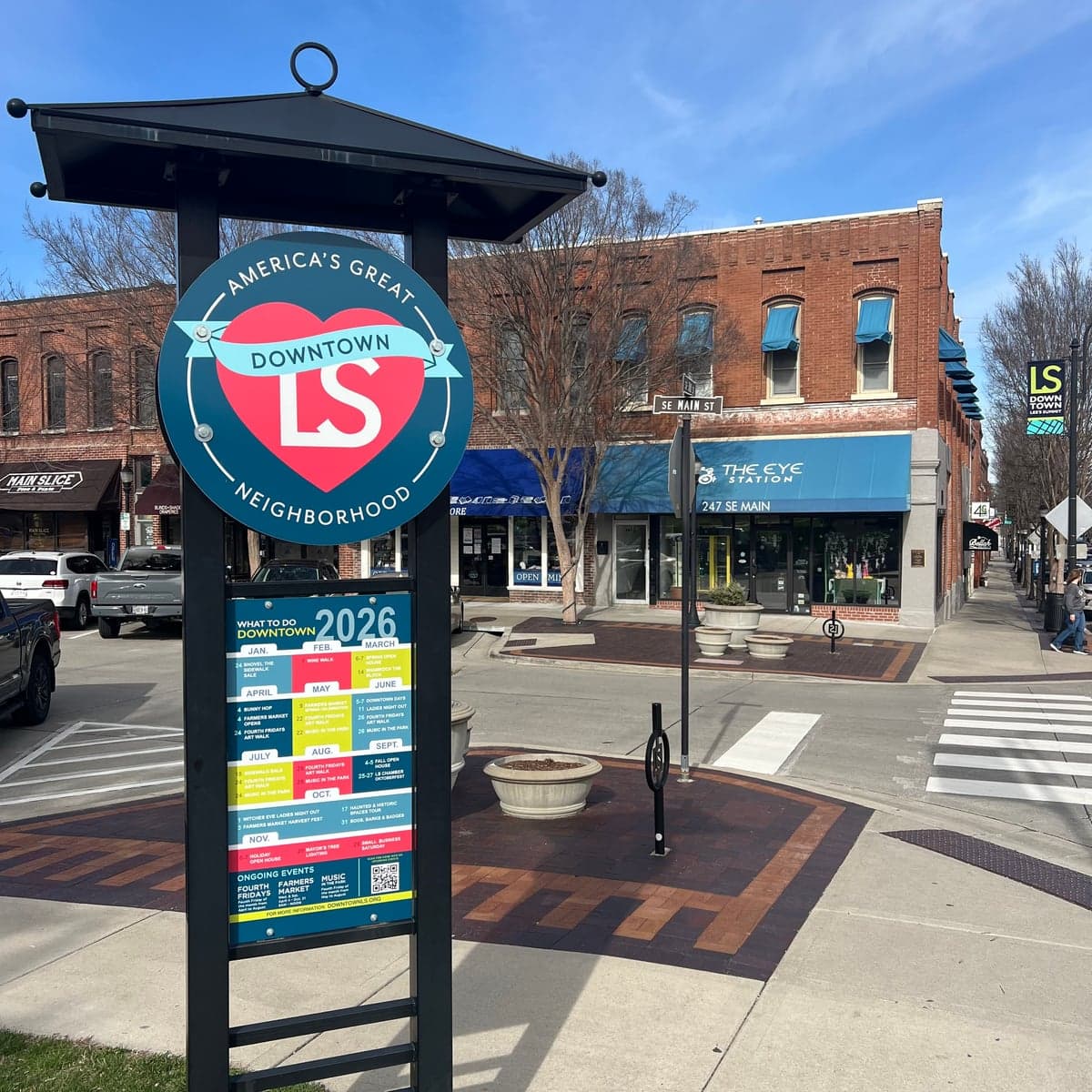
Lee’s Summit was founded in 1865 by Dr. Pleasant Lea, a physician and farmer, and was initially a small agricultural settlement. The arrival of the Missouri Pacific Railroad in the 1870s turned it into a shipping point for grain and livestock, drawing a wave of white settlers from the Upland South and Midwest—primarily farmers, merchants, and railroad workers. The historic Downtown Lee’s Summit district, centered around Third and Main Streets, was built by these early families and still retains many original brick storefronts. A second wave came in the early 1900s with the construction of the Chicago & Alton Railroad, which spurred the development of the Lakewood neighborhood—originally a summer resort area for Kansas City’s wealthy. By 1950, the population was nearly entirely white and native-born, with a small Black community concentrated near the railroad tracks in what is now the Meadowbrook Country Club area, working as domestic servants and laborers.
Modern era (post-1965)
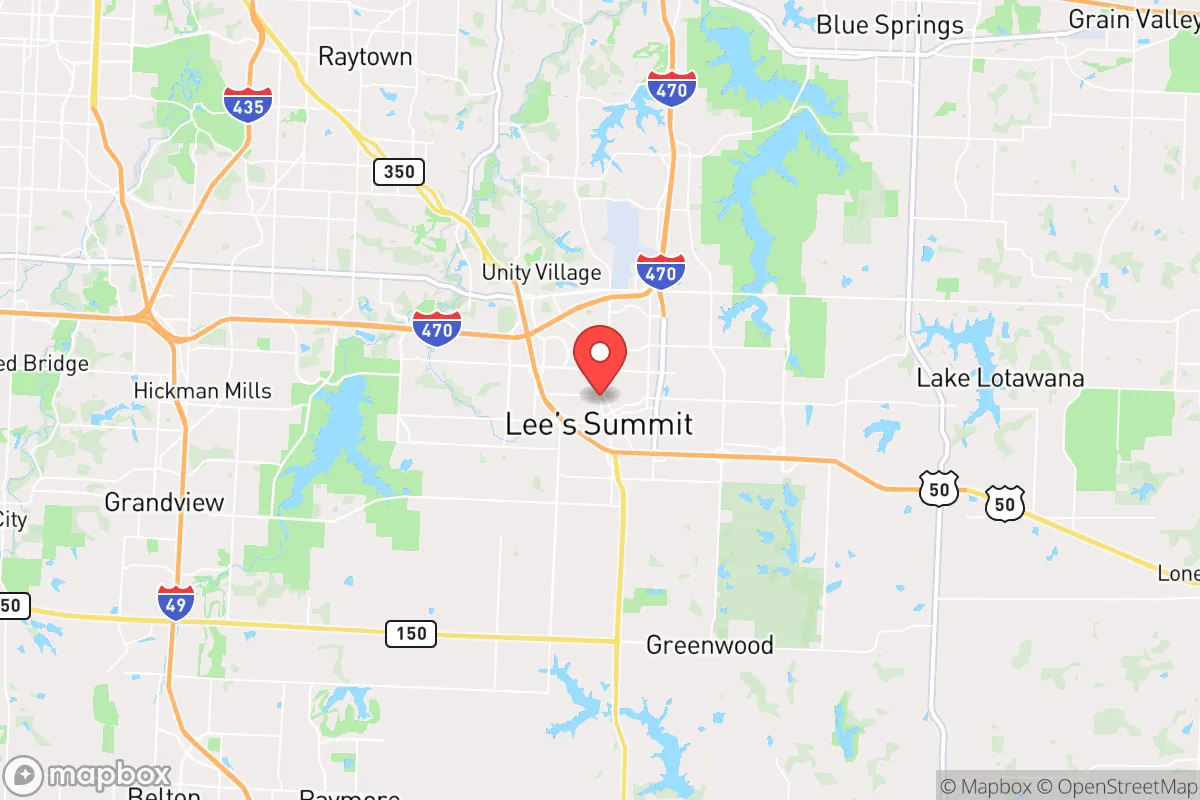
The post-1965 era saw Lee’s Summit transform from a sleepy farm town into a major Kansas City suburb. The completion of Interstate 470 in the 1970s made the city accessible to commuters, triggering a suburban boom. White middle-class families from Kansas City’s urban core and other parts of Jackson County moved in, settling in new subdivisions like Raintree Lake (a planned community built around a man-made lake) and Pryor Creek, which offered larger lots and newer schools. The city’s Black population grew modestly from under 2% in 1970 to 10.1% today, with many families moving into the Woods Chapel and Chapel Ridge areas, drawn by affordable housing and the Lee’s Summit R-7 School District’s reputation. Hispanic residents (5.3%) began arriving in the 1990s, primarily from Mexico and Central America, working in construction and service industries, and settling in the East Lee’s Summit corridor near U.S. Highway 50. East/Southeast Asian residents (1.3%) and Indian-subcontinent residents (0.6%) are a small but growing presence, often professionals in healthcare and technology, concentrated in newer subdivisions near the Summit Fair shopping district. The foreign-born share remains very low at 1.0%, reflecting the city’s limited draw for international immigrants compared to larger Kansas City suburbs like Overland Park.
The future
Lee’s Summit’s population is projected to grow to roughly 115,000 by 2040, driven by continued domestic in-migration from the Kansas City metro and other Midwestern states. The city is not homogenizing into a single enclave but is tribalizing into distinct neighborhoods by income and lifestyle: Raintree Lake and Lakewood remain upper-middle-class white strongholds, while Woods Chapel is becoming more racially diverse with a mix of Black, Hispanic, and white families. The Hispanic population is growing steadily (up from 3.8% in 2010 to 5.3% today) and is likely to reach 8-10% by 2040, primarily through births rather than immigration. The East/Southeast Asian and Indian communities are growing slowly but are unlikely to exceed 3% combined, as the city lacks the tech-job density of Johnson County, Kansas. The Black population appears to be plateauing near 10%, with younger Black families increasingly choosing more affordable suburbs farther east. The city’s very low foreign-born share (1.0%) is unlikely to rise significantly, as Lee’s Summit does not have the ethnic enclaves, refugee resettlement programs, or large employers that attract international migrants.
For someone moving in now, Lee’s Summit is becoming a more diverse but still predominantly white, family-oriented suburb where growth is managed through strict zoning and infrastructure planning. It offers a stable, low-crime environment with strong schools, but the demographic profile means limited ethnic diversity and few immigrant-run businesses or cultural institutions. The city’s future is one of gradual, incremental change—not rapid transformation—making it a predictable choice for those seeking a traditional suburban lifestyle with a conservative-leaning local government.

* Values derived from national, state, county, city and local statistics and may differ in a specific area. Last updated: 2026-04-30T07:17:00.000Z
Narrative content on this page is AI-generated and may contain mistakes. Verify any details that matter before acting on them.
ReloMaps may earn a commission from affiliate links at no extra cost to you.

