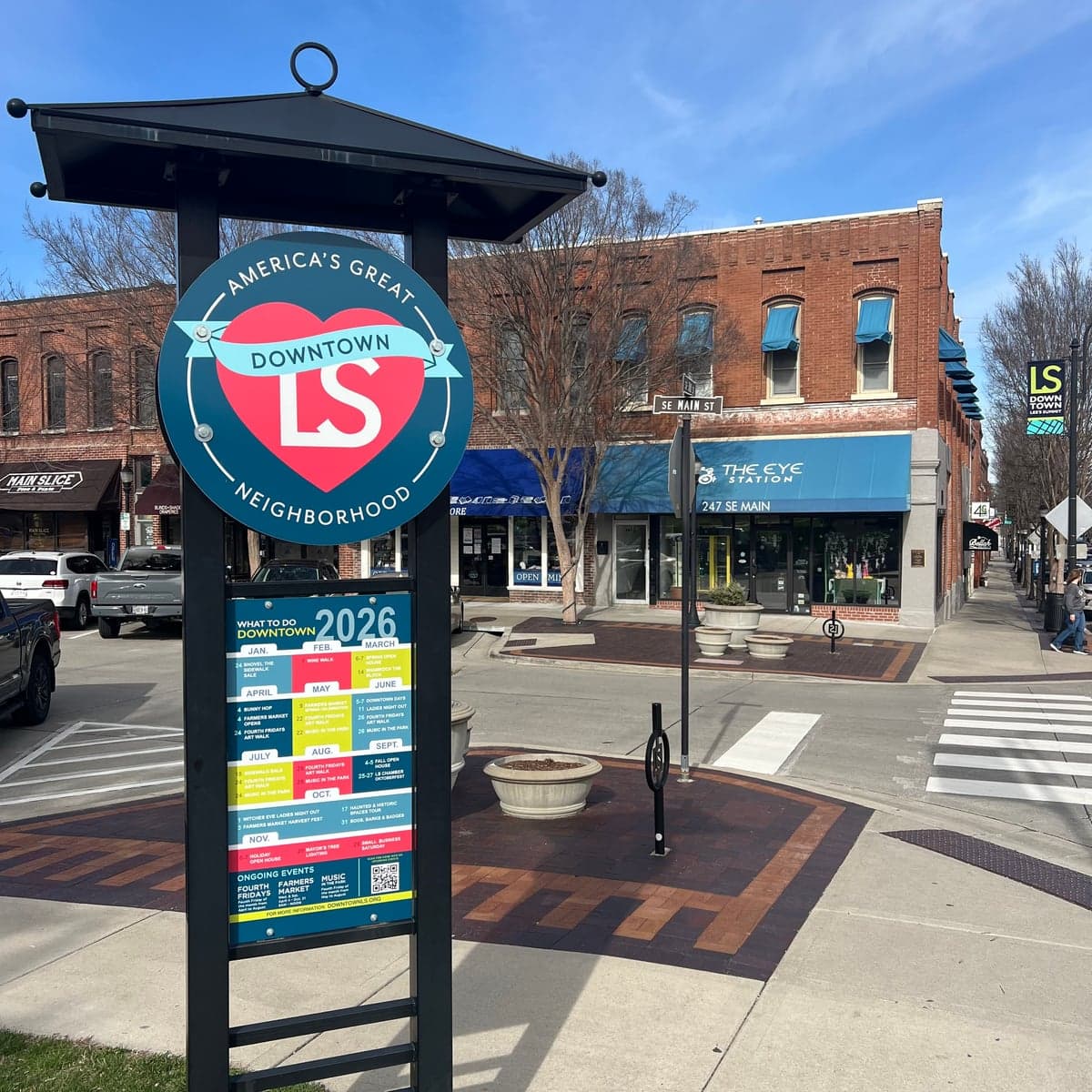
Photo: Wikipedia
Political ClimatePolitical Climate in Lees Summit, MO
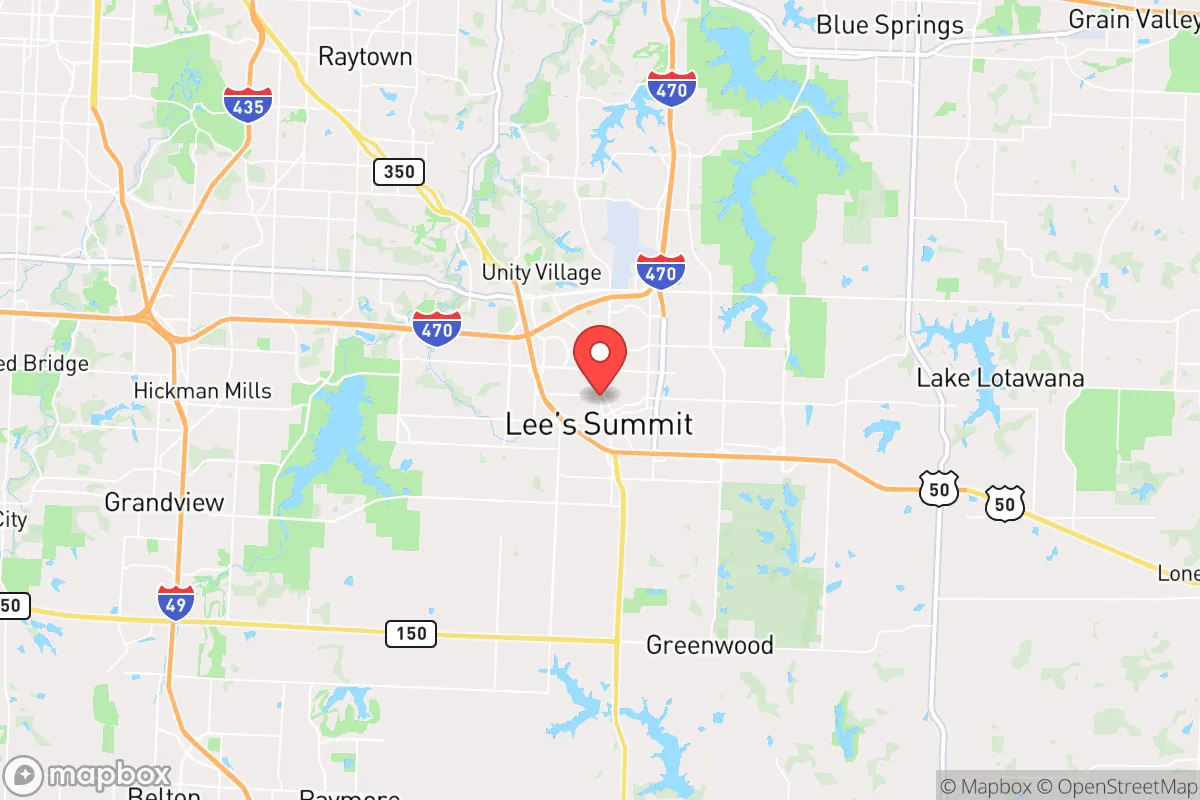
District shown is the primary district for this city’s centroid. Cities may span multiple districts.
Local Political AnalysisPolitical Analysis of Lees Summit, MO
Lee’s Summit, Missouri, has long been a solidly conservative community, but the political climate here is shifting in ways that raise real concerns for folks who value personal freedoms and limited government. The Cook PVI rating of D+12 might surprise you if you’ve lived here for a while—it reflects how the city’s voting patterns have drifted leftward over the past decade, driven largely by an influx of new residents from Kansas City and out-of-state transplants. While the city council and school board still lean center-right on many issues, the progressive influence is creeping in, especially on zoning, school curriculum, and public spending. If you’re someone who believes government should stay out of your wallet and your life, this trend is worth watching closely.
How it compares
Drive 15 minutes north into Kansas City proper, and you’ll hit a political environment that’s far more progressive—think higher taxes, more regulations, and a city government that’s increasingly comfortable dictating how businesses and homeowners operate. Lee’s Summit used to be a clear alternative to that, but the gap is narrowing. Compare us to nearby Blue Springs or Grain Valley, and you’ll see those communities have held the line better, with lower tax burdens and less appetite for social engineering. Even Raymore, just south of us, has resisted the kind of zoning overhauls and diversity-equity-inclusion mandates that are popping up in Lee’s Summit school board meetings. The contrast is stark: while our neighbors keep government lean, Lee’s Summit is starting to adopt the same top-down approaches that make Kansas City feel suffocating to anyone who just wants to be left alone.
What this means for residents
For the average family or small business owner, the practical effects are already showing up. Property taxes have crept up faster than inflation, and new development regulations are making it harder to build a workshop or run a home-based business without jumping through bureaucratic hoops. The school district, once a point of pride for its focus on academics and local control, is now spending more time on social-emotional learning mandates and diversity training than on reading and math. If you’re a parent who wants your kid to learn how to think, not what to think, you’ll need to stay engaged—or consider private or homeschool options. The city council has also flirted with “complete streets” policies that prioritize bike lanes and bus stops over car traffic, which sounds nice in theory but often means more congestion and less parking for residents who just want to get to work or the grocery store without hassle.
Long-term, the trajectory is concerning. The same progressive playbook that turned Johnson County, Kansas, from a conservative stronghold into a purple battleground is being applied here: incremental tax increases, more public input sessions that amplify activist voices, and a slow erosion of property rights under the guise of “sustainability” or “equity.” If you’re considering a move to Lee’s Summit, keep an eye on the next school board election and any ballot measures about tax hikes or zoning changes. The old Lee’s Summit—where you could build a fence without a permit, run a side business from your garage, and send your kids to a school that taught civics without political spin—is still here in patches, but it’s fading. For now, it’s still a decent place to raise a family if you’re willing to push back, but don’t expect the city to stay out of your life without a fight.

State Political ClimatePolitical Climate in Missouri
State Political AnalysisPolitical Environment in the State
Missouri has long been a bellwether state, but over the past 15 years it has shifted from a classic purple swing state to a solidly red one, with a Republican trifecta controlling the governorship and both legislative chambers. The state voted for Donald Trump by roughly 15 points in 2020 and again in 2024, a dramatic shift from 2008 when it was one of the closest states in the nation, backing John McCain by a razor-thin margin. The dominant coalition is now a mix of rural conservatives, suburban ex-urbanites fleeing St. Louis and Kansas City, and a growing population of conservative-leaning transplants from blue states, particularly in the southwestern part of the state.
Urban vs. rural divide
The political map of Missouri is a textbook case of the urban-rural chasm. The two major metropolitan areas — St. Louis and Kansas City — are deep blue islands in a sea of red. St. Louis City and County, along with Jackson County (Kansas City), consistently deliver 60-70% of their votes to Democrats. However, the real story is the suburban ring counties that have been trending right. St. Charles County, just west of St. Louis, is now a Republican stronghold, voting +20 points for Trump in 2024. Similarly, Cass County and Platte County around Kansas City have shifted red. The rural areas — the Bootheel, the Ozarks, and the northern plains — are overwhelmingly Republican, often voting 80% or more for the GOP. The Springfield metro area (Greene County) is a conservative anchor, while Columbia (Boone County) and Jefferson City (Cole County) are more moderate but still lean right. The divide is stark: drive 20 minutes outside any major city, and the political signs and attitudes change completely.
Policy environment
Missouri’s policy environment is broadly conservative, with a strong emphasis on low taxes and limited regulation. The state has a flat income tax rate of 4.95% (down from 6% in 2019), and the legislature is actively working to phase it out entirely. There is no state property tax on vehicles, and property taxes on real estate are among the lowest in the nation. The state is a right-to-work state (though the law was repealed by ballot initiative in 2018, the legislature has since passed other union-limiting measures). On education, Missouri has a robust school choice movement, with a growing number of charter schools in St. Louis and Kansas City, and a new tax-credit scholarship program (MOScholars) that allows parents to use state funds for private school tuition. The state is also a Second Amendment sanctuary state, having passed a law in 2021 (HB 85) that nullifies federal gun laws deemed unconstitutional. Healthcare policy is mixed: the state expanded Medicaid under the Affordable Care Act via ballot initiative in 2020, a move that was opposed by the Republican legislature but ultimately implemented. Election laws have tightened, with a voter ID requirement passed in 2022 and restrictions on ballot harvesting.
Trajectory & freedom
Missouri is clearly trending toward more personal freedom in several key areas, though not without controversy. The most significant recent expansion of liberty is the Second Amendment Preservation Act (HB 85), which declares federal gun laws that infringe on the right to keep and bear arms as invalid in Missouri. This law has sparked a legal battle with the federal government, but it has made Missouri a haven for gun owners. On parental rights, the state passed the "Parental Bill of Rights" (HB 1778) in 2022, which requires schools to get parental consent before teaching about sexual orientation or gender identity. Medical freedom saw a win with the passage of a law in 2023 (SB 51) that prohibits COVID-19 vaccine mandates by the state and local governments. However, there are concerns about government overreach in other areas. The state's medical marijuana program, while legal, is heavily regulated and expensive, and recreational marijuana was legalized by ballot initiative in 2022, but the rollout has been slow and bureaucratic. Property rights are generally strong, with no state-level zoning mandates, though some cities like St. Louis have imposed strict local regulations that can be a headache for homeowners.
Civil unrest & political movements
Missouri has a history of civil unrest, most notably the 2014 Ferguson protests after the shooting of Michael Brown, which sparked a national movement. While the intensity has faded, racial tensions remain a flashpoint in St. Louis, and the city has seen periodic protests over police shootings and racial justice issues. On the right, the "Patriot" movement is strong, particularly in rural areas and the Ozarks. There have been organized efforts to challenge election integrity, including a controversial "audit" of the 2020 election in St. Louis County that found no widespread fraud but fueled ongoing distrust. Immigration politics are less visible than in border states, but there is a growing concern about illegal immigration in agricultural areas like the Bootheel. There is no sanctuary city policy in Missouri; in fact, the state passed a law in 2023 (SB 49) that requires local law enforcement to cooperate with federal immigration authorities. The most visible political movement in recent years has been the fight over abortion: after the Dobbs decision, Missouri became the first state in the nation to ban abortion entirely, with no exceptions for rape or incest. This has energized both pro-life and pro-choice activists, and a ballot initiative to restore abortion rights is expected in 2024.
Projection
Over the next 5-10 years, Missouri is likely to become even more conservative, driven by two main factors: continued in-migration of conservatives from blue states (particularly Illinois and California) and the ongoing exodus of younger, more liberal residents from St. Louis and Kansas City to other states. The rural and exurban areas will continue to grow in political influence, while the urban cores will shrink. The state's tax burden will likely continue to decrease, possibly eliminating the income tax entirely. The fight over abortion will be a defining issue, and if a ballot initiative to restore abortion rights passes, it could create a new political dynamic. However, the legislature is likely to push back with further restrictions. The biggest wildcard is the Second Amendment Preservation Act: if the courts strike it down, it could trigger a major backlash and potentially a nullification crisis. For a new resident, expect a state that is increasingly friendly to conservative values, with low taxes, strong gun rights, and a growing emphasis on school choice, but also one that is deeply divided along urban-rural lines and prone to periodic political flashpoints.
For someone moving to Missouri, the bottom line is this: if you value low taxes, strong gun rights, and a government that generally stays out of your personal life, you'll find a lot to like here. The cost of living is low, the people are friendly, and the state is beautiful, especially in the Ozarks. But be aware of the political divide: if you live in St. Louis or Kansas City, you'll be in a blue bubble with higher crime and more progressive policies. If you choose the suburbs or rural areas, you'll find a community that shares your values. Just know that the state is in the middle of a cultural and political transformation, and the next decade will be a wild ride. Pick your county wisely, and you'll be just fine.
* Values derived from national, state, county, city and local statistics and may differ in a specific area. Last updated: 2026-04-30T07:17:00.000Z
Narrative content on this page is AI-generated and may contain mistakes. Verify any details that matter before acting on them.
ReloMaps may earn a commission from affiliate links at no extra cost to you.

