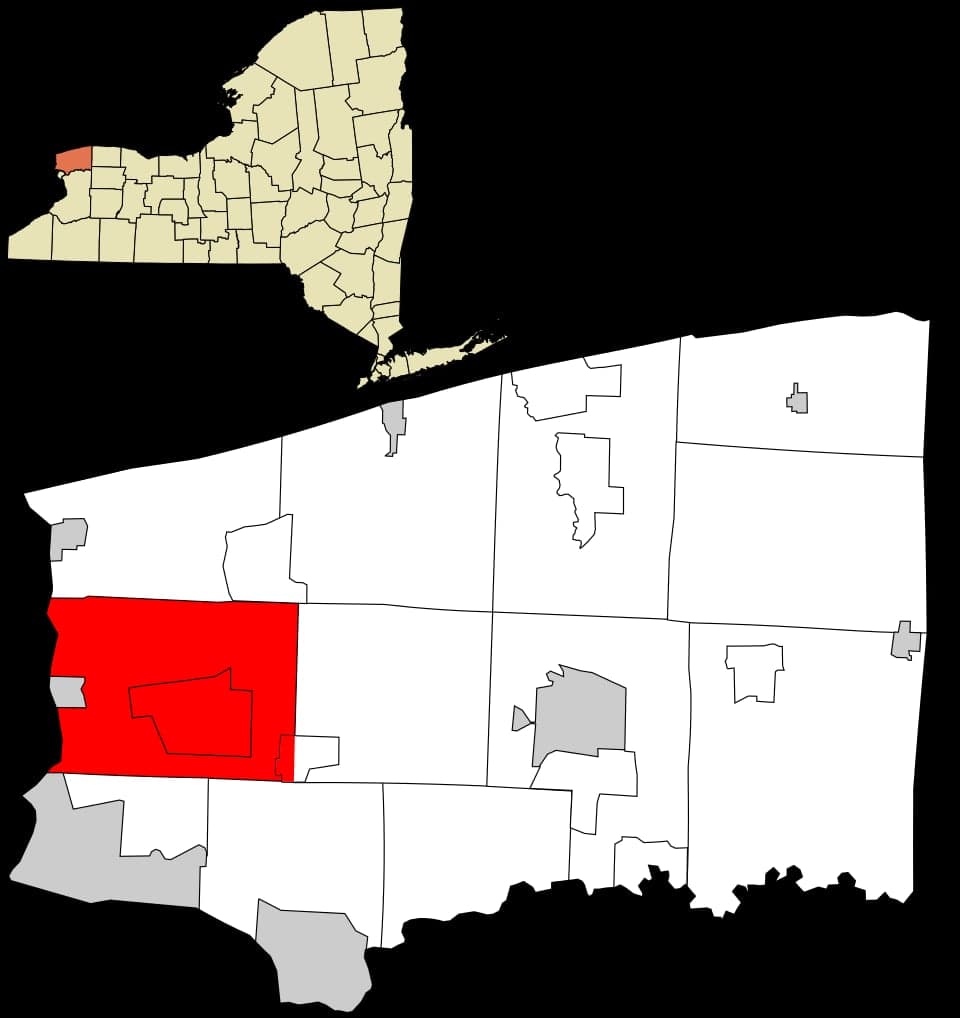
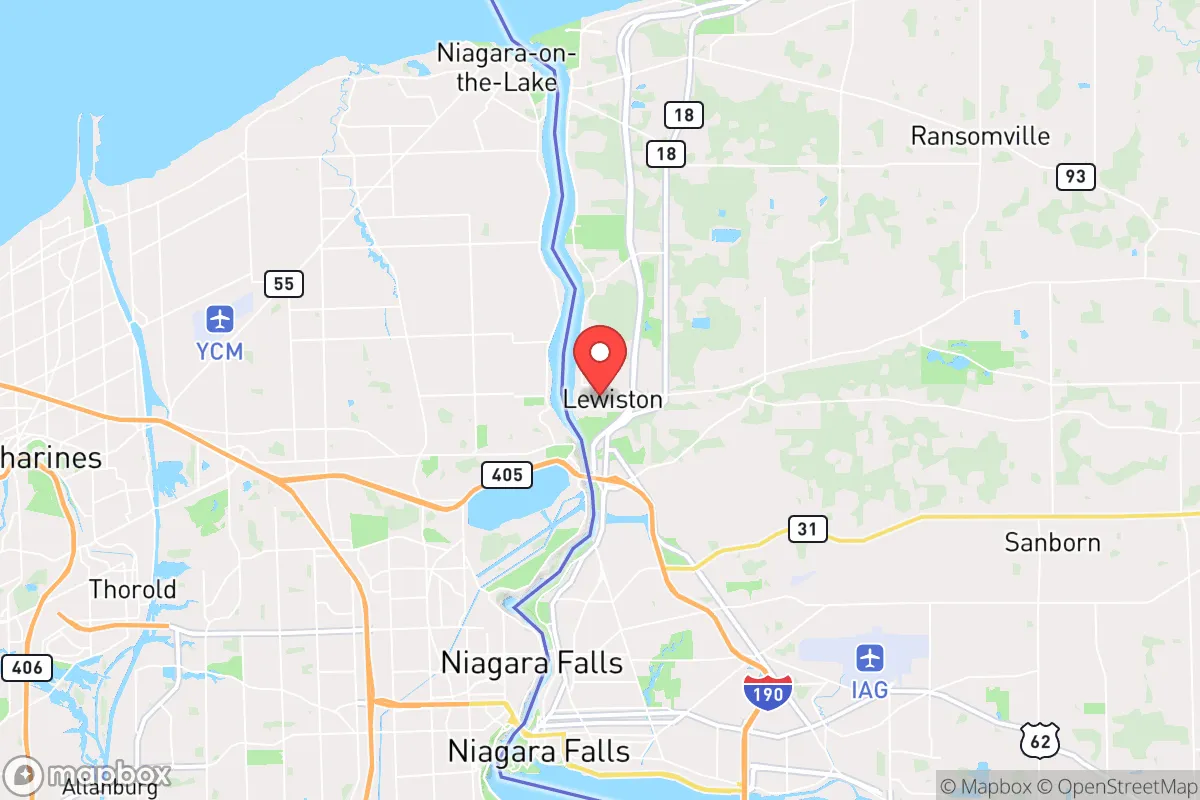
Photo: Wikipedia
Personal Sovereignty in Lewiston, NY
Moderate friction. Expect trade-offs in some aspect of personal liberty and independence.
What does Personal Sovereignty tell us?
Personal Sovereignty measures your capacity for self-reliance and independence with minimal government friction. Higher scores mean fewer barriers between you and the way you want to live... but it assumes you have the space you need and good neighbors.
What does this tell us?
Personal Sovereignty measures your capacity for self-reliance and independence with minimal government friction. Higher scores mean fewer barriers between you and the way you want to live... but it assumes you have the space you need and good neighbors.
State Policy
Energy independence: Importer (12% of energy produced in-state)
Personal Liberty
Homesteading

Personal Liberty Analysis
Lewiston, New York, offers a nuanced personal sovereignty environment shaped by its location in a state with robust regulatory frameworks, yet tempered by the town’s own local governance and rural character. For individuals and families prioritizing autonomy, the area presents a mixed picture: New York State imposes significant tax burdens and regulatory oversight, but Lewiston’s small-town ethos and proximity to the less-regulated Canadian border provide some practical freedoms. The key for a relocation-minded reader is understanding where state-level constraints end and local flexibility begins, particularly in areas like self-defense, property use, and daily life.
Tax burden and regulatory posture in Lewiston
New York State carries one of the highest combined state and local tax burdens in the nation, and Lewiston residents feel this directly. Property taxes in Niagara County average around 2.5% of assessed home value, which is above the national median, though Lewiston’s relatively modest home prices—median around $180,000—keep annual bills manageable compared to downstate areas. State income tax rates range from 4% to 10.9%, with most middle-income households paying roughly 5.5-6.5%. Sales tax in Niagara County is 8%, which is standard for the region. On the regulatory side, New York’s building codes, environmental regulations, and business licensing requirements are among the most detailed in the country. For example, any new construction or major renovation requires permits that can take weeks to process, and the state’s Scenic Byways designation along the Niagara River corridor adds extra review for properties near the water. However, Lewiston’s local government is generally pragmatic—zoning variances for home-based businesses or accessory structures are often approved without excessive red tape, provided they don’t disrupt neighbors. The regulatory posture is best described as heavy at the state level, light-touch at the local level, meaning a resident who plans carefully can navigate the system without constant friction, but spontaneous projects or unpermitted work carry real risk of fines.
Self-defense and gun law specifics in Lewiston
New York’s gun laws are among the strictest in the United States, and Lewiston residents must comply fully. The state requires a pistol permit for any handgun ownership, which involves a background check, fingerprinting, a safety course, and a local judge’s approval—a process that can take 6-12 months in Niagara County. As of 2026, New York’s Concealed Carry Improvement Act (CCIA) remains in effect, requiring applicants to demonstrate “proper cause” beyond general self-defense, though courts have loosened this requirement post-Bruen. Open carry of handguns is prohibited; long guns (rifles and shotguns) do not require a permit for purchase but are subject to a background check and a 10-day waiting period. The state bans “assault weapons” by feature-based criteria, including adjustable stocks and threaded barrels, which limits the types of rifles available for home defense or sport. Magazine capacity is capped at 10 rounds. For self-defense in the home, a shotgun or a legally owned handgun (with permit) is the standard option. Lewiston itself has a low violent crime rate—less than 1.5 incidents per 1,000 residents annually—so the practical need for a firearm is lower than in urban areas, but the legal hurdles are real. Residents who prioritize self-defense should budget time and money for the permitting process and be prepared for ongoing compliance with storage laws (guns must be locked when not in use). The environment is highly regulated but navigable for those committed to following the law.
Self-reliance and homesteading viability in Lewiston
Lewiston’s zoning and lot sizes offer moderate opportunities for self-reliance, though not the wide-open spaces of rural upstate. Residential lots in the village average 0.25 to 0.5 acres, while properties in the town’s more rural outskirts can reach 1-3 acres. Keeping chickens is permitted in most residential zones with a permit, and beekeeping is allowed with registration. Larger livestock like goats or pigs require a minimum of 2 acres and a special use permit, which is generally granted if the property is outside the village core. Gardening is unrestricted, and many homes have space for substantial vegetable plots. Off-grid feasibility is limited: New York State requires connection to the electrical grid for any habitable dwelling, and solar panels must be grid-tied unless the property is in a remote area without existing infrastructure. Rainwater collection is legal but must comply with state health codes if used for drinking. Composting toilets are allowed with a permit, but septic systems must meet strict county health standards. The growing season is short (roughly May to October), so year-round food production requires a greenhouse. For a family seeking to reduce reliance on grocery stores and utilities, Lewiston offers a moderate baseline: you can grow much of your own produce, keep small livestock, and install solar panels, but full off-grid living is impractical without moving farther from the village. The regulatory posture is supportive of hobby-scale homesteading but not of complete independence from municipal systems.
Personal liberties in Lewiston: parental rights, medical autonomy, speech, and property
New York State’s legal framework shapes personal liberties in Lewiston in several key areas. Parental rights are protected under state law, with parents having authority over their children’s education, medical decisions, and religious upbringing. Homeschooling is legal and requires annual submission of an Individualized Home Instruction Plan (IHIP) to the local school district, along with quarterly reports and standardized testing every other year—a moderate paperwork burden compared to states with no oversight. Medical autonomy is more constrained: New York has a universal vaccine mandate for school attendance (with medical exemptions only), and the state’s public health emergency powers allow for mandates during declared crises. For adults, medical freedom is generally respected for non-emergency care, but the state tightly regulates alternative treatments and supplements. Free speech is protected under the First Amendment, and Lewiston’s public forums—parks, village board meetings, and the historic Center Street—are used actively for expression. There are no local ordinances restricting political signage beyond standard size limits. Property rights are strong in principle, but New York’s environmental regulations can limit what owners do with their land, especially near waterways or wetlands. The state’s eminent domain authority is broad, though rarely used in Lewiston. Overall, personal liberties are robust in daily life but subject to state-level mandates that may feel intrusive to those accustomed to less-regulated states. The local culture is respectful of individual choice, and enforcement of state rules is typically complaint-driven rather than proactive.
Compared to other areas in the Northeast, Lewiston strikes a moderate-to-conservative balance on personal sovereignty. It is far less restrictive than New York City or Westchester County, but more regulated than rural Pennsylvania or Ohio. For a family or individual who values self-reliance and is willing to navigate state-level bureaucracy, Lewiston offers a livable environment with genuine local freedoms—lower crime, manageable taxes for the region, and a community that respects personal space. The trade-off is accepting New York’s gun laws, vaccine mandates, and tax structure as the price of living in a state with strong public services and infrastructure. For those who find that trade acceptable, Lewiston provides a solid foundation for personal autonomy within a stable, low-crime community.

* Values derived from national, state, county, city and local statistics and may differ in a specific area. Last updated: 2026-08-22T14:52:43.000Z
Narrative content on this page is AI-generated and may contain mistakes. Verify any details that matter before acting on them.
ReloMaps may earn a commission from affiliate links at no extra cost to you.

