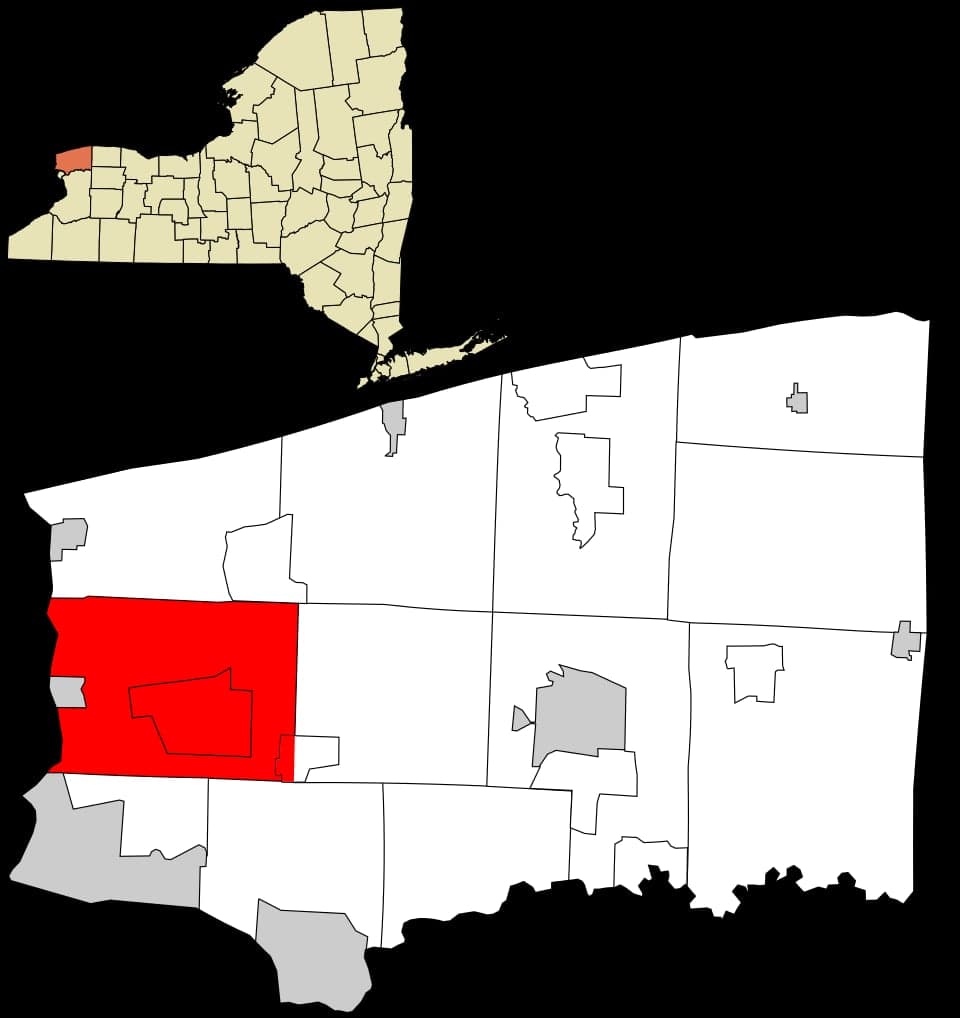
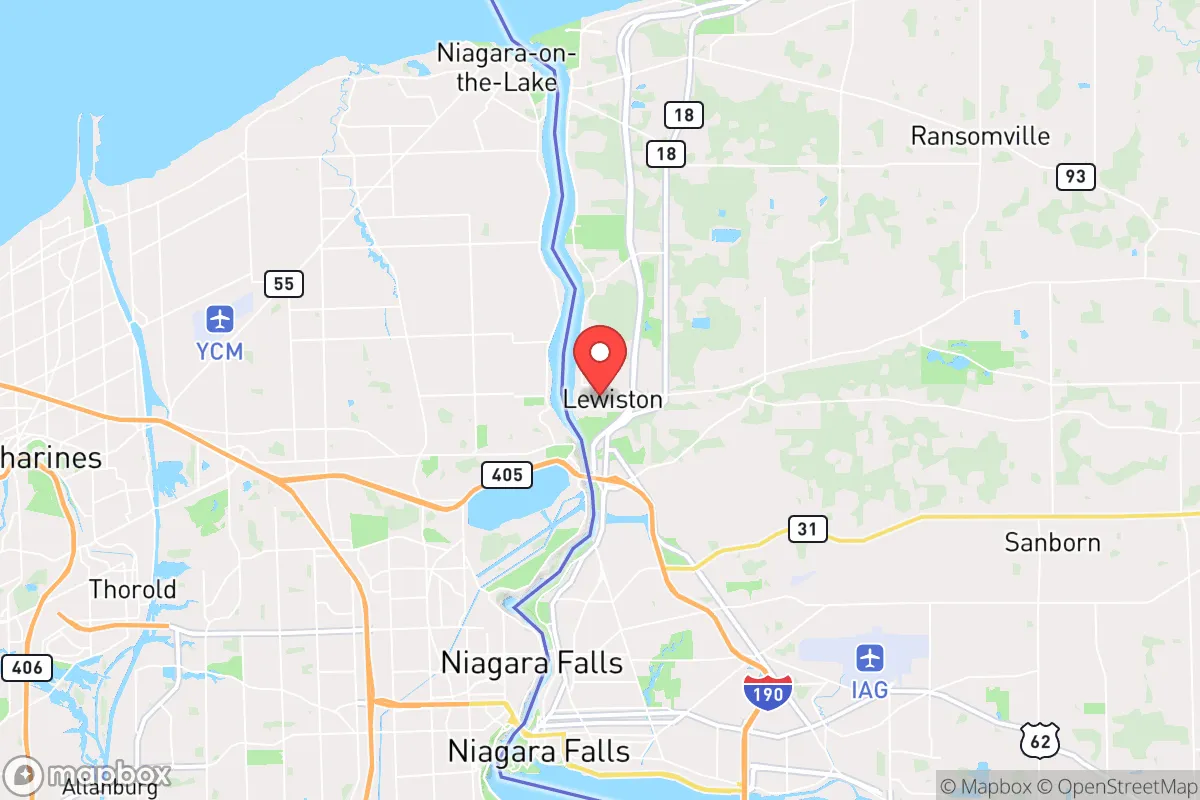
Photo: Wikipedia
Political ClimatePolitical Climate in Lewiston, NY
District shown is the primary district for this city’s centroid. Cities may span multiple districts.
Local Political AnalysisPolitical Analysis of Lewiston, NY
Lewiston, New York, is a solidly conservative pocket in a blue state, with a Cook Partisan Voting Index of R+11 that reflects decades of steady Republican voting in local and national elections. This isn't a recent shift—the town has leaned right for as long as most folks can remember, with the GOP often winning by double digits in presidential races. But don't let the R+11 label fool you into thinking it's a monolith; the political reality here is more nuanced, shaped by a mix of long-time farming families, Buffalo commuters, and a growing number of retirees from the city. The trajectory is stable—no dramatic swing left or right, just a quiet, consistent conservatism that's more about fiscal caution and local control than culture-war fireworks.
How it compares
Compared to New York City, Lewiston is a different political universe. While Manhattan and Brooklyn vote overwhelmingly Democratic (often 80%+ for the party), Lewiston's R+11 means Republicans routinely win here by margins of 10 to 15 points. The contrast is stark when you drive just 20 miles south to Buffalo, which is reliably blue, or east to Rochester. Even within Niagara County, Lewiston stands out: neighboring towns like Niagara Falls and Lockport are more competitive, with the Falls leaning Democratic and Lockport swinging between parties. The real divide isn't just party—it's culture. In Lewiston, you'll hear more talk about property taxes and school funding than about subway expansions or rent control. The state-level politics of Albany often feel distant, with many residents viewing New York City's influence as a source of policies that don't fit their rural-suburban lifestyle.
What this means for residents
For conservative residents, Lewiston is a comfortable place to live. Local government tends to be Republican-led, so zoning, school board decisions, and tax policies generally align with their priorities. You won't feel like an outlier at the town board meetings or the local diner. For liberal residents, the reality is more mixed. You can absolutely live here without hassle—people are polite and neighborly—but you'll likely be in the minority on most political issues. Socially, it's not hostile, but you might find yourself biting your tongue at a backyard barbecue or during a school board debate. The practical effect is that progressive policies on things like renewable energy mandates or housing density often face an uphill battle locally, even when they're state law. Both sides can agree on one thing: the cost of living is a shared concern, with property taxes among the highest in the nation, which cuts across party lines.
Culturally, Lewiston feels more like a small Midwestern town than a New York suburb. The annual Peach Festival, the historic village center, and the strong volunteer fire department culture reflect a community that values tradition and self-reliance. Politically, this means a preference for local control over state mandates—something that unites many residents regardless of party. The biggest policy distinction from New York City is the approach to growth: Lewiston is cautious about development, favoring low-density zoning and preserving its rural character, while the city embraces density and transit-oriented projects. If you're moving here, expect a place where politics is less about national headlines and more about who's going to plow the roads and keep the school budget in check. It's a steady, predictable environment—for better or worse, depending on your perspective.

State Political ClimatePolitical Climate in New York
State Political AnalysisPolitical Environment in the State
New York State is a solidly Democratic stronghold, but that label masks a deep internal schism. The state has voted for the Democratic presidential candidate by double digits in every election since 1988, with margins widening from about 18 points in 2000 to over 23 points in 2020 and 2024. The dominant coalition is built on New York City’s five boroughs, which alone deliver roughly 40% of the state’s vote, combined with the heavily Democratic inner-ring suburbs of Long Island and Westchester County. Over the past 15 years, the state has shifted leftward on social and fiscal policy, driven by a supermajority in the State Assembly and a reliably progressive Senate, though the 2022 midterms saw a slight tightening in some suburban districts. For a conservative-leaning relocator, the practical reality is that state-level politics will feel overwhelmingly blue, but local control varies dramatically depending on where you land.
Urban vs. rural divide
The political map of New York is a tale of two states. New York City, Buffalo, Rochester, Syracuse, and Albany are the Democratic engines, with NYC alone accounting for over 60% of the state’s Democratic vote. The city’s politics are shaped by a heavily unionized public sector, a large immigrant population, and a progressive activist base that pushes for rent control, sanctuary policies, and expansive social services. In contrast, upstate New York — places like Oneonta, Plattsburgh, and Watertown — leans more conservative, especially in rural counties like Wyoming, Orleans, and Allegany, which regularly vote Republican by 20-30 points. The divide is starkest in the Hudson Valley: Dutchess County is a classic swing area, with its northern towns trending red and southern towns near the city trending blue. Staten Island remains the only NYC borough that consistently votes Republican in local races, a holdout of working-class conservatism. For a conservative family, the best bet is a small town in the Finger Lakes or the Southern Tier, where local politics often feel more like Ohio than Manhattan.
Policy environment
New York’s policy environment is defined by high taxes and heavy regulation. The state has the highest combined state and local tax burden in the nation, with income tax rates topping out at 10.9% for high earners and property taxes averaging over $5,000 per household — double the national median. The regulatory posture is aggressive: New York was the first state to enact a statewide plastic bag ban, has some of the strictest gun laws in the country (the SAFE Act of 2013), and mandates paid family leave and a $15 minimum wage. Education policy is centralized, with the state controlling curriculum standards and teacher certification, though local school boards still manage budgets and hiring. Healthcare is dominated by the state’s Medicaid program, which covers nearly one in four residents, and the state-run NY State of Health exchange. Election laws are among the most liberal: no-excuse absentee voting, early voting, and automatic voter registration are all in place. For a conservative relocator, the tax and regulatory climate is a major headwind, but local exceptions exist — Chautauqua County has lower property taxes and a more business-friendly attitude than the state average.
Recent policy direction
Over the past five years, New York has moved decisively left on several fronts. The 2019 Criminal Justice Reform Act eliminated cash bail for most misdemeanors and non-violent felonies, a law that has been a flashpoint in suburban and upstate communities. In 2022, the state passed the New York Health Act (single-payer study) and expanded abortion protections via the Reproductive Health Act, which codified Roe v. Wade protections into state law. On gun rights, the 2022 Concealed Carry Improvement Act (CCIA) banned firearms in "sensitive locations" like Times Square and subways, and required "good moral character" for permits — a law currently being challenged in federal court. Parental rights took a hit with the 2021 repeal of the parental opt-out for sex education, though local districts still control implementation. Property rights are constrained by rent stabilization laws in NYC and some upstate cities, and by the state’s strict environmental review process (SEQRA), which can delay development for years. Voting access expanded with early voting and same-day registration, but the state also passed a law allowing non-citizens to vote in local elections in NYC, which is being litigated. For a conservative, the trend is clear: the state is tightening its grip on gun ownership, expanding social services, and limiting local control on education and housing.
Civil unrest & political movements
New York has a long history of political activism, and recent years have been no exception. The 2020 Black Lives Matter protests in NYC and Buffalo were among the largest in the nation, leading to the defund-the-police movement that saw the NYPD budget cut by $1 billion (later partially restored). On the right, the New York State Rifle & Pistol Association has been the lead plaintiff in multiple Supreme Court cases, including the landmark NYSRPA v. Bruen (2022), which struck down the state’s restrictive concealed carry law. Immigration politics are a constant flashpoint: New York is a sanctuary state, and NYC’s "right to shelter" law has been strained by the arrival of over 100,000 asylum seekers since 2022, leading to tensions in working-class neighborhoods like Canarsie and Bensonhurst. Election integrity controversies flared in 2020 and 2022, with upstate Republicans alleging irregularities in absentee ballot processing, though no widespread fraud was found. Secession rhetoric is mostly a fringe movement — the "New York State of Mind" secession proposal from 2021 went nowhere — but there is a persistent "Upstate vs. Downstate" grievance that fuels local political organizing. A new resident will notice the visible presence of political signage, especially in swing districts like Saratoga Springs, where lawn signs for both parties are common.
Projection
Over the next 5-10 years, New York’s political trajectory is likely to remain leftward, but with growing friction. Demographic trends are working against the Democratic coalition: the state is losing population to Florida and Texas, particularly among working-class families and young professionals, while NYC continues to attract high-income, college-educated migrants who lean progressive. This could deepen the urban-rural divide, making upstate counties even more Republican and NYC even more Democratic. The state’s fiscal situation is precarious — the pension system is underfunded by over $100 billion, and the 2024-25 budget relied on temporary tax surcharges — which may force future tax increases or service cuts. On policy, expect further expansion of rent control, a push for universal healthcare, and continued litigation over gun laws. For a conservative moving in now, the realistic expectation is that state-level politics will not shift rightward in the next decade, but local control in places like Clinton County or Steuben County will remain a viable alternative. The key variable is the 2026 gubernatorial election: if a moderate Democrat wins, the pace of change might slow; if a progressive wins, expect more aggressive action on climate, housing, and criminal justice.
For a conservative relocator, the bottom line is that New York offers a stark choice. If you value low taxes, gun rights, and local control, you’ll find those in the state’s rural and small-town areas, but you’ll be fighting against a state government that is actively moving in the opposite direction. If you’re willing to accept the trade-offs — higher taxes for better public services, strict gun laws for low crime rates in many suburbs — the state’s economic opportunities and cultural amenities are unmatched. The practical takeaway: don’t move to New York expecting to change it; move to a specific town that already fits your values, and accept that state-level politics will be a constant source of frustration. For families, the best bets are the conservative-leaning suburbs of Orange County or the rural communities of the Adirondacks, where the local school board and town council still feel like your own.
* Values derived from national, state, county, city and local statistics and may differ in a specific area. Last updated: 2026-08-22T14:52:43.000Z
Narrative content on this page is AI-generated and may contain mistakes. Verify any details that matter before acting on them.
ReloMaps may earn a commission from affiliate links at no extra cost to you.

