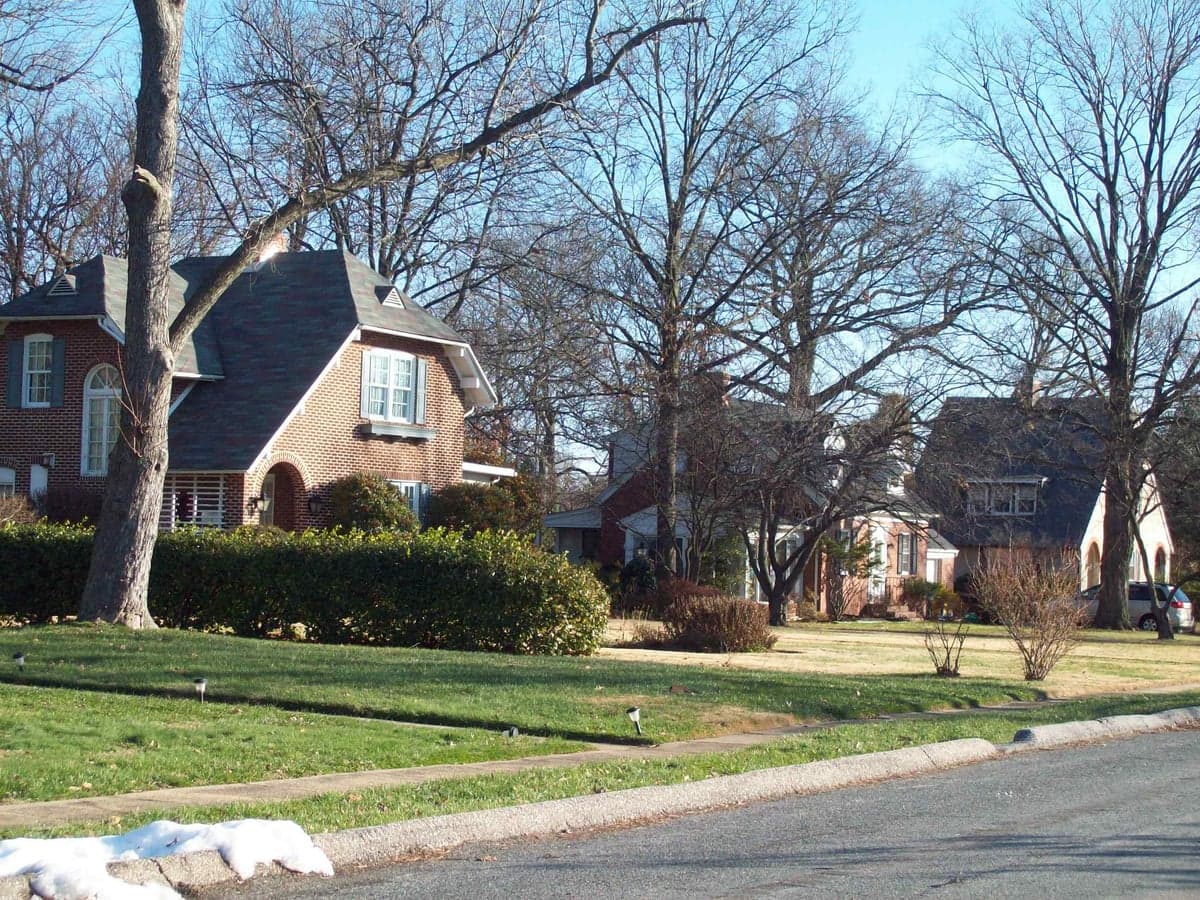
Photo: Wikipedia
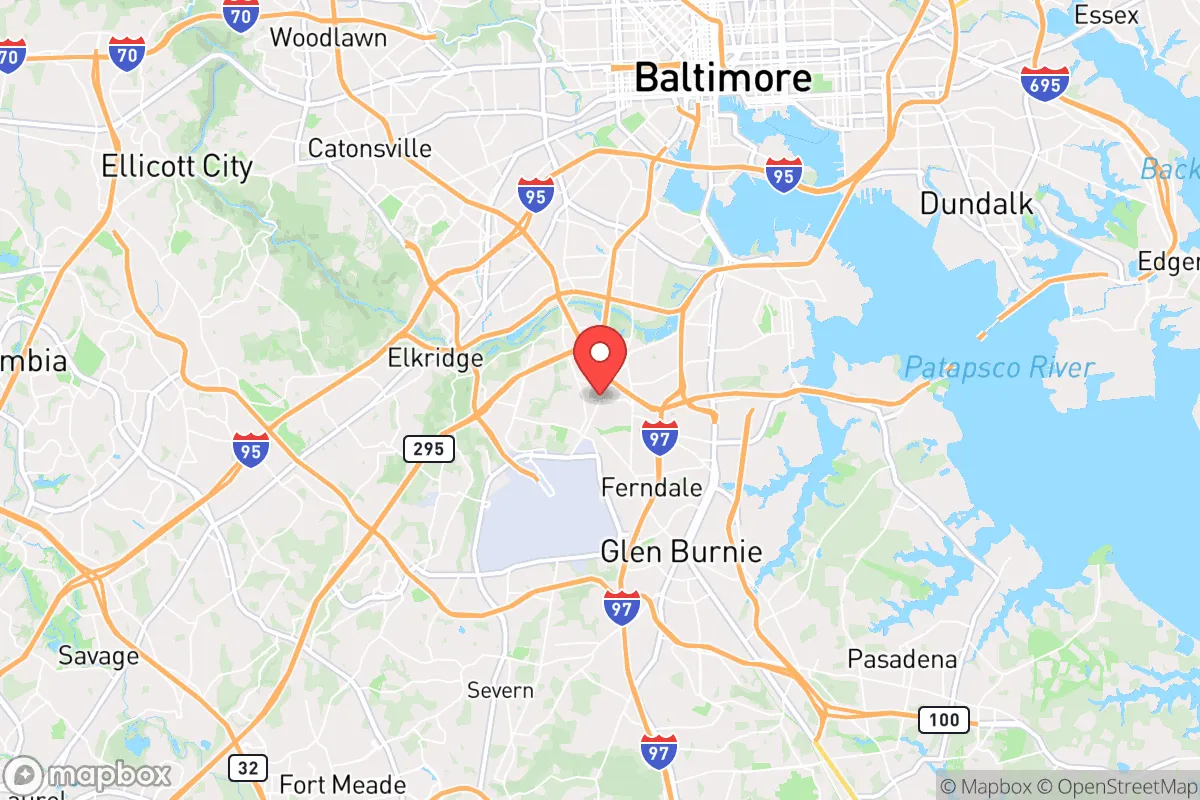
Personal Sovereignty in Linthicum Heights, MD
Moderate friction. Expect trade-offs in some aspect of personal liberty and independence.
What does Personal Sovereignty tell us?
Personal Sovereignty measures your capacity for self-reliance and independence with minimal government friction. Higher scores mean fewer barriers between you and the way you want to live... but it assumes you have the space you need and good neighbors.
What does this tell us?
Personal Sovereignty measures your capacity for self-reliance and independence with minimal government friction. Higher scores mean fewer barriers between you and the way you want to live... but it assumes you have the space you need and good neighbors.
State Policy
Energy independence: Importer (8% of energy produced in-state)
Personal Liberty
Homesteading

Personal Liberty Analysis
Linthicum Heights, Maryland, offers a personal sovereignty environment that is heavily shaped by Anne Arundel County and state-level policies, creating a mixed picture for those prioritizing autonomy. While the area provides reasonable access to self-defense tools and some property rights, residents face a significant tax burden and a regulatory posture that leans interventionist, particularly in health and education. For a relocation reader valuing independence, the trade-off is clear: you gain proximity to employment centers and certain legal freedoms, but you must navigate higher costs and more government oversight than in less densely regulated states.
Tax burden and regulatory posture in Anne Arundel County
Maryland’s tax burden is among the highest in the nation, and Linthicum Heights residents feel this directly. The state’s income tax ranges from 2% to 5.75%, with Anne Arundel County adding a local income tax of 2.81% (for a combined top marginal rate of 8.56%). Property taxes in Linthicum Heights are around 1.1% of assessed value, slightly above the national average. The regulatory environment is heavy-touch: Maryland has a strict vehicle emissions inspection program, extensive environmental regulations (especially near the Chesapeake Bay watershed), and a state-level minimum wage that reached $15.00 per hour in 2024. Business licensing and zoning approvals in Anne Arundel County involve multiple layers of review, making it a less favorable environment for entrepreneurs seeking minimal red tape. For a conservative-leaning reader, the tax and regulatory posture here is a clear negative compared to states like Virginia or Delaware, though it is typical for the Mid-Atlantic region.
Self-defense and gun law specifics in Linthicum Heights
Maryland is a "may-issue" state for concealed carry permits, but the 2022 Supreme Court decision in New York State Rifle & Pistol Association v. Bruen forced a shift toward "shall-issue" standards. As of 2026, Anne Arundel County processes carry permits through the Maryland State Police, with applicants required to complete a 16-hour training course, pass a live-fire qualification, and submit fingerprints. The state maintains a ban on "assault weapons" (defined by a list of specific models and features), a 10-round magazine limit, and a 7-day waiting period for handgun purchases. Linthicum Heights itself has no additional local gun ordinances beyond state law, so residents can legally possess firearms in their homes without a license. However, transporting firearms requires them to be unloaded and in a locked container separate from ammunition. For a self-defense-minded individual, the legal framework is restrictive but navigable; the key hurdle is the time and cost of the permit process. Stand-your-ground laws do not exist in Maryland; a duty to retreat applies outside the home, which is a significant limitation for those prioritizing personal protection.
Self-reliance and homesteading viability in a suburban setting
Linthicum Heights is a densely developed suburb of Baltimore, with typical lot sizes ranging from 0.1 to 0.3 acres. Zoning in the area is primarily R1 (residential, single-family), which allows for vegetable gardens, small sheds, and limited livestock such as chickens (subject to Anne Arundel County’s animal control ordinances). Keeping chickens is permitted on lots of at least 7,500 square feet, but roosters are prohibited, and coops must be set back from property lines. Larger livestock like goats or pigs is not allowed on standard residential lots. Off-grid living is not feasible here: the county requires connection to public water and sewer systems, and solar panel installation must comply with building codes and homeowner association rules (if applicable). Rainwater harvesting is permitted but limited to 250 gallons per property without a permit. For a reader seeking true self-reliance—growing most of their own food, generating independent power, or living without municipal utilities—Linthicum Heights is a poor fit. The area is designed for suburban convenience, not homesteading autonomy.
Personal liberties: parental rights, medical autonomy, speech, and property
Maryland’s approach to personal liberties is mixed. Parental rights in education are limited: the state mandates comprehensive sex education in public schools, and parents cannot opt their children out of LGBTQ-inclusive curriculum content (though they can opt out of specific lessons on contraception and STDs). Vaccine mandates for school attendance are strict, with only medical exemptions accepted (no religious or philosophical exemptions). Medical autonomy is constrained by the state’s public health authority; during declared emergencies, the governor can mandate treatments or restrictions, though this power has been debated in recent years. Free speech is protected under the First Amendment, but Maryland has a "false light" privacy tort that can be used against public criticism, and the state has enacted laws against "hate speech" in certain contexts (e.g., workplace harassment). Property rights are relatively strong: Anne Arundel County has not enacted rent control, and zoning is generally stable, though the county’s Adequate Public Facilities Ordinance can delay new development. For a conservative-leaning reader, the most concerning limitations are in medical and educational autonomy, where state mandates override parental and individual choice more than in many other states.
Overall, Linthicum Heights offers a moderate level of personal sovereignty that is constrained by Maryland’s high taxes, regulatory density, and interventionist policies in health and education. For a relocation reader who prioritizes self-defense, the gun laws are workable but not ideal. For those seeking homesteading or off-grid living, the area is unsuitable. The strongest autonomy features are property rights and the ability to own firearms at home without a license. Compared to neighboring states like Pennsylvania or Delaware, Linthicum Heights is less friendly to personal freedom; compared to deep-blue states like California or New York, it is more permissive. For a single individual or family who values independence and is willing to pay higher taxes for proximity to Baltimore and Washington, D.C., this area can work—but it is not a haven for those seeking minimal government interference.

* Values derived from national, state, county, city and local statistics and may differ in a specific area. Last updated: 2026-10-10T16:28:05.000Z
Narrative content on this page is AI-generated and may contain mistakes. Verify any details that matter before acting on them.
ReloMaps may earn a commission from affiliate links at no extra cost to you.

