 Popular
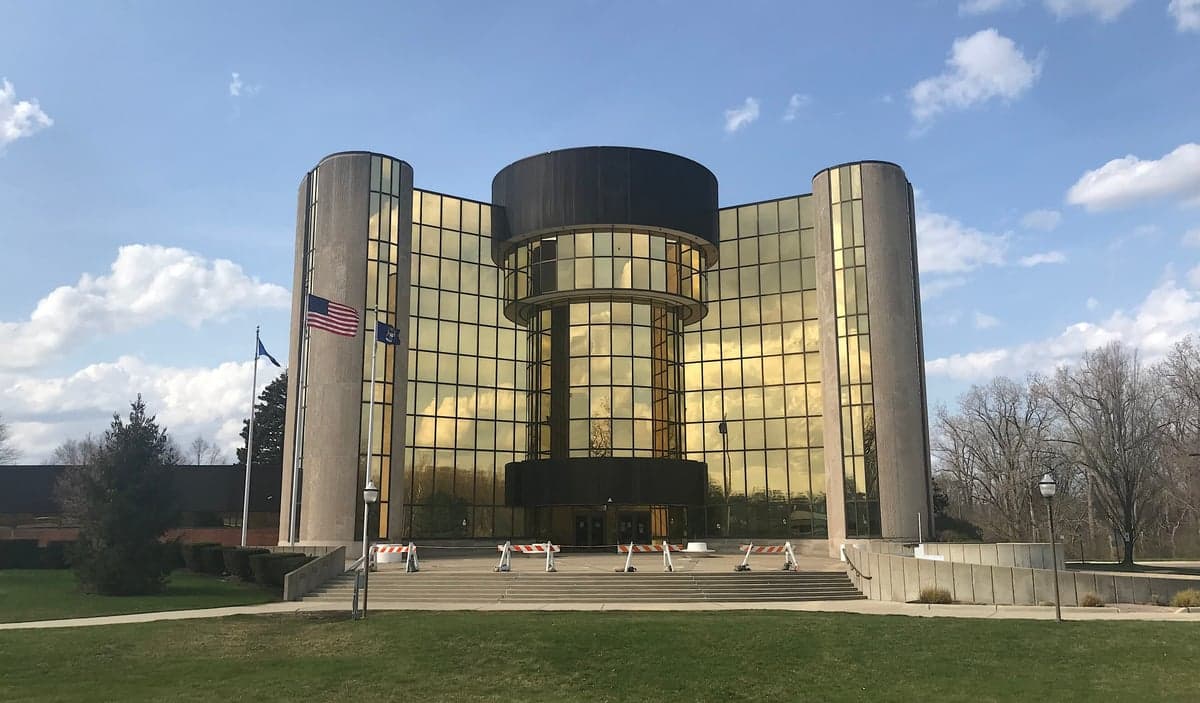
Photo: Wikipedia
Demographics of Livonia, MI
Affluence Level in Livonia, MI
An upper-middle-class area. Household wealth, education levels, and homeownership run ahead of national benchmarks.
People of Livonia, MI
Livonia, Michigan, is a predominantly white, middle-to-upper-middle-class suburban city of 94,058 residents, known for its strong sense of local governance, well-funded public services, and a notably low foreign-born population of just 1.9%. The city’s identity is rooted in its post-World War II boom as a planned, auto-industry bedroom community, creating a dense, family-oriented environment that values stability and property rights. With 40.5% of adults holding a college degree and a population that is 82.6% white, Livonia remains one of the most demographically homogeneous large suburbs in Metro Detroit, a character that is slowly shifting but not rapidly changing.
How the city was settled and grew
Livonia’s modern population history begins in earnest after World War II. Originally a collection of farms and small crossroads settlements in the 19th and early 20th centuries, the area was incorporated as a city in 1950 specifically to manage explosive suburban growth. The first major wave of residents were white, second- and third-generation European-American families—primarily of Polish, German, and Italian descent—leaving Detroit’s inner neighborhoods for new housing stock. The Rosedale Gardens neighborhood, developed in the 1940s and 1950s, became a landing point for these early suburbanites, featuring modest single-family homes built for auto workers and tradesmen. Simultaneously, the Farmington Road corridor and areas around Five Mile Road saw the construction of larger ranch-style homes, attracting middle managers and engineers from Ford, General Motors, and Chrysler. This wave was almost entirely white, drawn by the promise of good schools, low crime, and a government that actively zoned out apartment complexes and industrial blight. The city’s population soared from roughly 17,000 in 1950 to over 110,000 by 1970, cementing its reputation as a stable, blue-collar-to-middle-class white enclave.
Modern era (post-1965)
Following the 1965 Hart-Cellar Act and the subsequent white flight from Detroit in the 1970s and 1980s, Livonia’s population plateaued and then slowly declined from its peak. The city absorbed a small but notable wave of white families relocating from Detroit’s changing neighborhoods, but it did not experience the same level of racial integration seen in nearby Southfield or Oak Park. The Winston Woods neighborhood, built in the late 1960s and 1970s, attracted some of these Detroit-origin families, but the area remained overwhelmingly white. The city’s foreign-born population remained exceptionally low—just 1.9% today—reflecting a deliberate lack of ethnic enclave formation. The small East/Southeast Asian community (2.4%) and Indian-subcontinent community (1.3%) are dispersed rather than clustered, with no distinct "Chinatown" or "Little India" emerging. The Hispanic population (4.5%) and Black population (4.3%) are similarly scattered, with slight concentrations in older apartment complexes near Middlebelt Road and Schoolcraft Road, but these are not large enough to form distinct ethnic neighborhoods. The city’s zoning policies, which heavily favor single-family homes and limit multi-family housing, have historically discouraged the dense, walkable environments that often attract immigrant communities.
The future
Livonia’s population is slowly aging and shrinking, with a median age of 44.5 years and a slight decline from its 1970 peak. The city is not homogenizing further—it is already near the ceiling of its demographic composition—but it is also not tribalizing into distinct enclaves. The small Black, Hispanic, and Asian populations are growing incrementally, primarily through natural increase and a trickle of in-migration from other parts of Wayne County, but they remain too small to create the kind of ethnic neighborhoods seen in Dearborn (Arab) or Hamtramck (Bangladeshi). The Indian-subcontinent population (1.3%) is growing slightly, driven by professionals in the auto and healthcare sectors, but they are assimilating into existing white-majority neighborhoods rather than forming a separate enclave. The East/Southeast Asian population (2.4%) is similarly dispersed. The next 10-20 years will likely see Livonia remain a predominantly white, middle-class suburb with a slowly diversifying but still small minority presence. The city’s lack of new housing construction and its aging housing stock (much of it built between 1950 and 1970) will limit significant population growth, and the foreign-born share is unlikely to rise above 3-4% without major zoning changes.
For a conservative-leaning individual or family moving in now, Livonia offers a stable, low-crime environment with strong schools and a population that is demographically predictable—overwhelmingly white, native-born, and family-oriented. The city is not becoming a melting pot or a collection of ethnic enclaves; it is a place where gradual, modest diversification is occurring within a framework of long-established cultural norms. The bottom line: Livonia is a mature, stable suburb that will look very similar in 2040 to how it looks today, with a slightly older and slightly less white population, but no dramatic shifts in character or community identity.

* Values derived from national, state, county, city and local statistics and may differ in a specific area. Last updated: 2026-04-29T19:59:40.000Z
Narrative content on this page is AI-generated and may contain mistakes. Verify any details that matter before acting on them.
ReloMaps may earn a commission from affiliate links at no extra cost to you.

