 Popular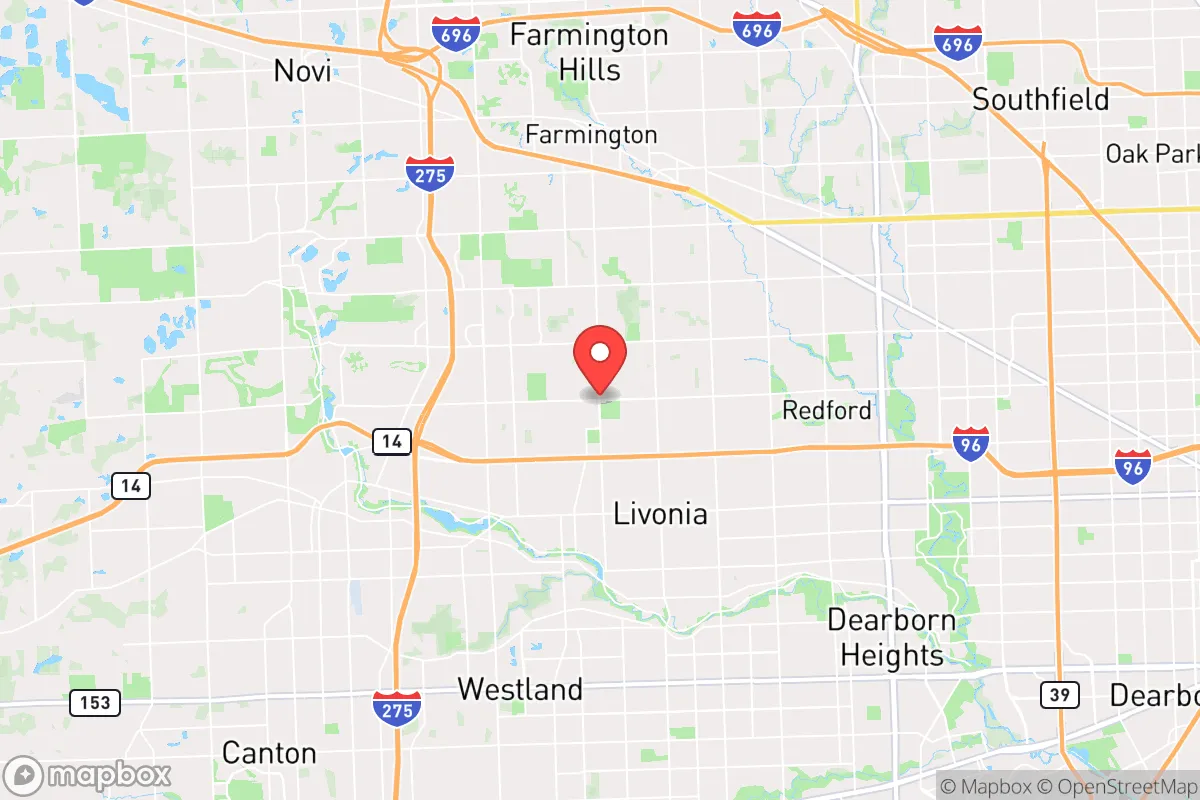
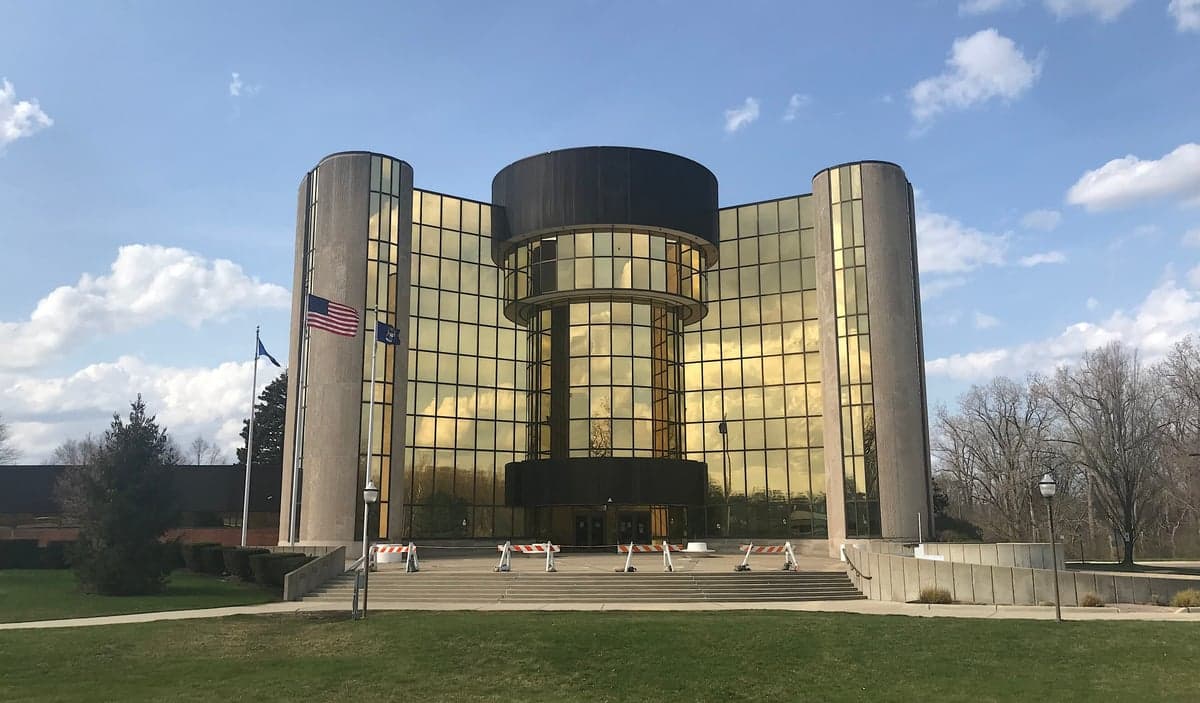
Photo: Wikipedia
Political ClimatePolitical Climate in Livonia, MI
District shown is the primary district for this city’s centroid. Cities may span multiple districts.
Local Political AnalysisPolitical Analysis of Livonia, MI
Livonia, Michigan, has long been a bastion of conservative values in a sea of blue, but the political climate here is shifting in ways that should give any freedom-loving resident pause. The Cook PVI rating of D+21 might suggest a deep-blue stronghold, but that number is misleading—it reflects the broader Wayne County machine, not the heart of Livonia itself. For decades, this city was reliably Republican in local elections, with a strong emphasis on property rights, low taxes, and common-sense governance. But over the last ten years, we've seen a slow creep of progressive policies, from zoning overreach to school curriculum battles, that feel like they're chipping away at the independent spirit that made Livonia a great place to raise a family.
How it compares
Drive ten minutes east and you're in Detroit, a city that's been ground zero for one-party rule and the consequences of unchecked government expansion—think high taxes, crumbling infrastructure, and a loss of personal agency. Head west to Novi or Northville, and you'll find communities that still lean conservative, with lower crime rates and a stronger emphasis on local control. Livonia sits right in the middle, but it's increasingly feeling the pull of the county's progressive agenda. While surrounding towns like Plymouth and Canton have held the line on issues like school choice and Second Amendment rights, Livonia's city council has flirted with zoning restrictions that feel like government overreach, and the school board has faced pressure to adopt DEI initiatives that prioritize ideology over merit. It's a stark contrast to the Livonia I grew up in, where the motto was "live and let live" as long as you paid your taxes and kept your lawn mowed.
What this means for residents
For the average Livonia resident, this shift means you can't take your freedoms for granted anymore. Property taxes have crept up, and there's been talk of adding new fees for things like stormwater management—basically, another way for the government to dip into your wallet. The real concern, though, is the erosion of personal choice. We've seen mask mandates and business closures during the pandemic that felt heavy-handed, and now there's chatter about "climate action plans" that could dictate what kind of car you drive or how you heat your home. If you value the right to make your own decisions without a bureaucrat's approval, you need to pay attention to local elections. The school board races are especially critical—they're where the battle over parental rights and curriculum transparency is being fought. Livonia's still a good place to live, but it's not the same city it was 20 years ago, and if we're not careful, it could slide further into the kind of top-down control that's ruined other parts of Michigan.
Culturally, Livonia has always prided itself on being a family-oriented, middle-class community where hard work is rewarded and government stays out of the way. That's still true in many neighborhoods, but you can feel the tension. The push for "equity" in city hiring and contracting is a red flag—it sounds nice, but it often means quotas and preferences over merit, which is the opposite of the fairness we were taught. Long-term, if the progressive tide keeps rising, I worry we'll see more regulations on everything from short-term rentals to lawn watering, all in the name of "sustainability" or "inclusion." My advice? Get involved in the local Republican club, show up to city council meetings, and vote like your freedoms depend on it—because they do. Livonia can still be a refuge for common sense, but only if we fight for it.

State Political ClimatePolitical Climate in Michigan
State Political AnalysisPolitical Environment in the State
Michigan has long been a political bellwether, but over the past 20 years it has shifted from a classic purple battleground to a state where Democrats now hold all three levers of state government—the governorship, the state House, and the state Senate—for the first time in four decades. The 2022 midterms cemented this realignment, with Governor Gretchen Whitmer winning re-election by nearly 11 points and Democrats flipping both chambers of the legislature. However, this statewide blue lean masks a deeply fractured electorate: the state’s rural and exurban regions vote overwhelmingly Republican, while the urban cores of Detroit, Ann Arbor, and Grand Rapids drive the Democratic coalition. For a conservative considering relocation, the key question is whether the state’s recent progressive wave is a permanent shift or a temporary overcorrection.
Urban vs. rural divide
The political map of Michigan is a study in stark contrasts. The Democratic stronghold is the southeastern corner, anchored by Detroit and its inner-ring suburbs like Southfield and Dearborn, which together deliver massive vote margins. Ann Arbor, home to the University of Michigan, is the state’s most liberal city, routinely voting 80%+ Democratic. Grand Rapids, once a Republican bastion, has flipped decisively in the last decade—its Kent County went from +7 R in 2012 to +8 D in 2022, driven by an influx of young professionals and a growing Hispanic population. Meanwhile, the rural thumb and northern Lower Peninsula—places like Midland, Traverse City, and the Upper Peninsula—vote reliably red. The 2020 election saw Macomb County, a classic Reagan Democrat stronghold north of Detroit, flip back to Trump after voting for Obama twice, signaling that the suburban shift leftward is not uniform. The real battleground is now the exurban ring around Detroit—counties like Livingston and Oakland—where educated suburbanites are trending left while blue-collar voters hold the line.
Policy environment
Michigan’s policy landscape has shifted sharply left since 2023. The state now has a flat income tax rate of 4.25%, but Democrats have proposed raising it to fund new spending. Property taxes are high, with an average effective rate of 1.5%, though Proposal A (1994) caps annual increases for homeowners. The regulatory posture has become more aggressive: the Michigan Occupational Safety and Health Administration (MIOSHA) has expanded workplace mandates, and the state’s renewable energy standard now requires 100% carbon-free electricity by 2040. On education, the state repealed its right-to-work law in 2023, allowing unions to once again require dues as a condition of employment—a major blow to economic freedom. School choice is limited compared to states like Florida or Arizona; charter schools exist but face increasing regulation. Election laws were overhauled via Proposal 2 in 2022, enshrining nine days of early voting, automatic voter registration, and no-excuse absentee voting—changes that conservatives argue reduce ballot integrity. The state also expanded Medicaid under the Affordable Care Act and has a robust state-run health insurance exchange.
Trajectory & freedom
Michigan is becoming less free by any objective measure, especially for conservatives. The 2023 repeal of right-to-work was the most significant contraction of economic liberty in decades. On gun rights, the state passed a universal background check law and a red flag law in 2023, allowing courts to temporarily confiscate firearms from individuals deemed a risk—a policy many conservatives view as a due-process violation. Parental rights took a hit with the expansion of the state’s anti-discrimination law (Elliott-Larsen Civil Rights Act) to include sexual orientation and gender identity, which some parents argue undermines their authority in school settings. Medical autonomy saw a mixed bag: recreational marijuana is legal and taxed, but the state has imposed strict regulations on hemp-derived cannabinoids. Property rights remain relatively strong, with no statewide rent control, but local zoning battles are common in growing areas. The Michigan Freedom of Information Act remains robust, though the legislature has exempted itself from its own transparency rules—a bipartisan failure.
Civil unrest & political movements
Michigan has been a flashpoint for political activism on both sides. The 2020 Whitmer kidnapping plot and the armed protests at the state capitol over COVID-19 lockdowns put Michigan in the national spotlight. The left has organized heavily through groups like Michigan United and the Progressive Caucus, while the right has seen a resurgence of grassroots groups like the Michigan Conservative Coalition and local Moms for Liberty chapters. Immigration politics are relatively quiet compared to border states, but Dearborn and Hamtramck have become sanctuary cities, limiting cooperation with federal immigration enforcement. Election integrity remains a hot-button issue: the 2020 election in Michigan was subject to numerous lawsuits and audits, with Republican-led investigations finding no widespread fraud but raising concerns about administrative irregularities. The 2024 election cycle saw intense partisan battles over ballot drop boxes and absentee ballot processing. A new resident would notice the political polarization in everyday life—yard signs, bumper stickers, and local news coverage are relentlessly partisan.
Projection
Over the next 5-10 years, Michigan is likely to continue its leftward drift, driven by demographic trends. The state’s population is aging and slowly declining, but the areas that are growing—Grand Rapids, Ann Arbor, and the Detroit suburbs—are trending Democratic. The rural counties that vote Republican are losing population. The 2024 election saw Trump improve his margins in rural areas, but not enough to offset the urban and suburban losses. If the current trajectory holds, Michigan will become a solidly blue state by 2030, similar to Illinois or New York. However, there are wild cards: a major economic downturn could revive the populist right, and the state’s high cost of living and regulatory burden could accelerate out-migration of conservatives to lower-tax states like Florida or Tennessee. For someone moving in now, expect higher taxes, more union power, and a political environment where conservative voices are increasingly marginalized in state government, though local control in rural counties remains strong.
Bottom line for a new resident: If you’re a conservative, Michigan is a state where you can still find like-minded communities in the exurbs and rural areas, but you’ll be swimming against the tide at the state level. The cost of living is moderate, but the tax burden is rising, and the regulatory environment is becoming more restrictive. Your best bet is to target counties like Livingston, Macomb, or the Upper Peninsula, where local governance is still conservative, and brace for a state government that will continue to push progressive policies. If personal freedom and limited government are your top priorities, Michigan is no longer the safe bet it was 20 years ago.
* Values derived from national, state, county, city and local statistics and may differ in a specific area. Last updated: 2026-04-29T19:59:40.000Z
Narrative content on this page is AI-generated and may contain mistakes. Verify any details that matter before acting on them.
ReloMaps may earn a commission from affiliate links at no extra cost to you.

