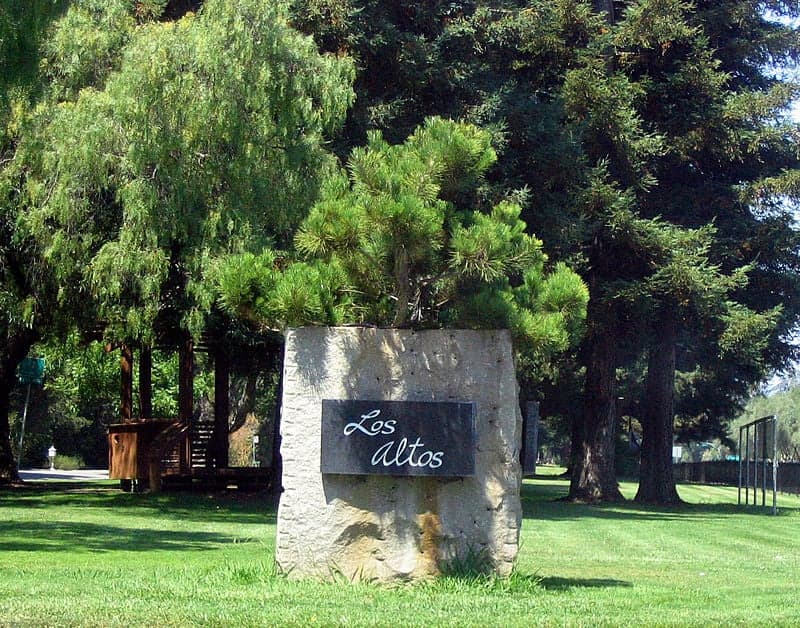
Photo: Wikipedia
Personal Sovereignty in Los Altos, CA
Viable for self-reliance. Generally workable, though some barriers may limit total independence.
What does Personal Sovereignty tell us?
Personal Sovereignty measures your capacity for self-reliance and independence with minimal government friction. Higher scores mean fewer barriers between you and the way you want to live... but it assumes you have the space you need and good neighbors.
What does this tell us?
Personal Sovereignty measures your capacity for self-reliance and independence with minimal government friction. Higher scores mean fewer barriers between you and the way you want to live... but it assumes you have the space you need and good neighbors.
State Policy
Energy independence: Importer (33% of energy produced in-state)
Personal Liberty
Homesteading

Personal Liberty Analysis
Los Altos, California, presents a complex and often contradictory environment for personal sovereignty, one that demands a clear-eyed assessment from anyone prioritizing autonomy. Nestled in the heart of Silicon Valley, this affluent community offers significant economic opportunity and a high degree of local control over property, but it operates entirely within the framework of California’s expansive state-level regulations, which heavily restrict individual freedoms in areas like taxation, self-defense, and medical choice. For the strategic relocator with a survivalist or prepper mindset, Los Altos is a place where financial resilience must be weighed against a deeply entrenched system of government oversight that can feel like a velvet glove over an iron fist. The trade-offs are stark: you gain access to world-class resources and a like-minded, often libertarian-leaning local populace, but you must navigate a state apparatus that consistently prioritizes collective mandates over individual prerogative.
Tax burden and regulatory posture in Santa Clara County
The financial autonomy of a Los Altos resident is immediately shaped by California’s aggressive tax and regulatory environment. Property taxes are effectively capped at 1% of the purchase price plus modest annual increases under Proposition 13, which provides a measure of stability for long-term homeowners, but new buyers face a significant upfront cost. The state’s income tax is among the highest in the nation, with a top marginal rate exceeding 13%, and sales taxes in Santa Clara County add nearly 9% to most purchases. More insidious for the prepper is the regulatory posture: California’s building codes, environmental review processes (CEQA), and energy mandates (like Title 24) make any significant property modification—from adding a backup generator to constructing a secure storage facility—a costly and time-consuming bureaucratic ordeal. The city of Los Altos itself has a reputation for strict zoning enforcement and a slow permitting process, meaning that even minor improvements to harden a home or increase self-sufficiency can require months of approvals. This regulatory thicket is a direct constraint on personal sovereignty, as it limits the ability to adapt one’s property to meet emergency or long-term survival needs without government permission.
Self-defense rights and California gun law realities
For those who view the Second Amendment as a cornerstone of personal sovereignty, Los Altos is a legally hostile environment. California’s gun laws are among the most restrictive in the nation, and local enforcement in Santa Clara County is typically stringent. The state bans the sale of new semiautomatic rifles with “assault weapon” features, limits magazine capacity to ten rounds, and requires a ten-day waiting period and a background check for all firearm purchases. A Firearm Safety Certificate is mandatory, and the state maintains a roster of approved handguns that excludes many modern designs. Concealed carry permits (CCWs) are issued at the county level, and while the Supreme Court’s Bruen decision has forced some loosening, Santa Clara County’s sheriff historically maintained a “may-issue” policy that made permits extremely difficult to obtain for ordinary citizens. As of 2026, the process remains costly, time-consuming, and subject to local discretion, meaning that the practical ability to carry a firearm for self-defense is far from guaranteed. For the prepper, this means that any defensive strategy must account for the legal risk of possessing and using firearms, and that reliance on less-lethal options or secure storage is a necessary compromise. The state’s red-flag laws (Gun Violence Restraining Orders) also allow for temporary firearm seizure without a criminal conviction, a tool that can be weaponized by neighbors or family members in disputes.
Self-reliance and homesteading viability in a suburban enclave
The physical environment of Los Altos offers limited but not zero potential for self-reliance. Typical lot sizes in the city range from a quarter-acre to half-acre, with some larger estates in the hills, but the zoning is overwhelmingly suburban residential. Keeping chickens is generally permitted with a permit, but goats, pigs, or larger livestock are prohibited in most neighborhoods. Vegetable gardens are common and encouraged, but the climate—Mediterranean with dry summers—requires significant irrigation, which is subject to municipal water restrictions during drought years. Off-grid living is effectively impossible: the city requires connection to municipal water, sewer, and electricity, and solar panels must be grid-tied under current net metering rules. Rainwater harvesting is allowed but limited to 5,000 gallons of storage without a permit, and composting toilets are not permitted for primary residences. For the serious homesteader, Los Altos is a place to supplement your food supply and practice skills, not to achieve meaningful independence from the grid. The high property values also mean that the land itself is an asset that must be managed for appreciation, not for subsistence. The strategic approach here is to view the property as a base for financial and social capital, not as a self-sufficient compound.
Personal liberties: parental rights, medical autonomy, and free speech
On cultural and medical autonomy, Los Altos reflects the broader tensions of California’s progressive governance. Parental rights in education are a flashpoint: while the Los Altos School District and Mountain View-Los Altos Union High School District are high-performing, they operate under state mandates that include comprehensive sexual health education (the California Healthy Youth Act) and policies that allow students to participate in activities and use facilities consistent with their gender identity without parental notification. For parents who prioritize control over their children’s curriculum and social environment, this is a significant erosion of sovereignty. Medical autonomy is similarly constrained: California has some of the strictest vaccine mandates in the country, including for school attendance, and the state’s public health infrastructure retains broad emergency powers. The state also heavily regulates alternative medicine and supplements, limiting access to treatments that are legal in other states. Free speech is generally robust in public spaces, but local ordinances in Los Altos can restrict signage, leafleting, and public gatherings in residential areas. Property rights are strong in theory, but the state’s Coastal Commission and environmental regulations can override local decisions, particularly for hillside properties. The net effect is that personal liberties are conditional, subject to state preemption and local enforcement that can shift with political winds.
In the final analysis, Los Altos offers a high degree of personal sovereignty in the economic and social spheres—you can build wealth, network with influential people, and enjoy a safe, well-maintained community—but it demands significant compromise on the core survivalist values of self-defense, medical independence, and regulatory freedom. Compared to a state like Texas or Arizona, where property rights, gun laws, and medical choice are far more permissive, Los Altos feels like a gilded cage: comfortable and resource-rich, but with clear limits on how far you can go to protect your family and your way of life. For the strategic relocator, the calculus is whether the financial and social advantages outweigh the constant friction of living under a government that views personal autonomy as a privilege to be granted, not a right to be exercised. If you are willing to work within the system and accept its constraints, Los Altos can be a powerful base. If you seek maximum sovereignty with minimal interference, you will find it suffocating.

* Values derived from national, state, county, city and local statistics and may differ in a specific area. Last updated: 2026-05-02T04:56:41.000Z
Narrative content on this page is AI-generated and may contain mistakes. Verify any details that matter before acting on them.
ReloMaps may earn a commission from affiliate links at no extra cost to you.

