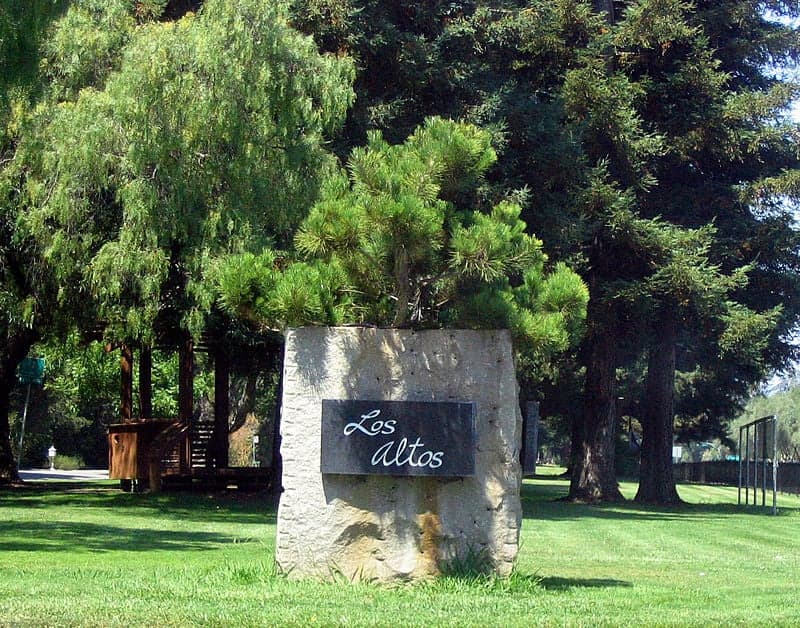
Photo: Wikipedia
Political ClimatePolitical Climate in Los Altos, CA
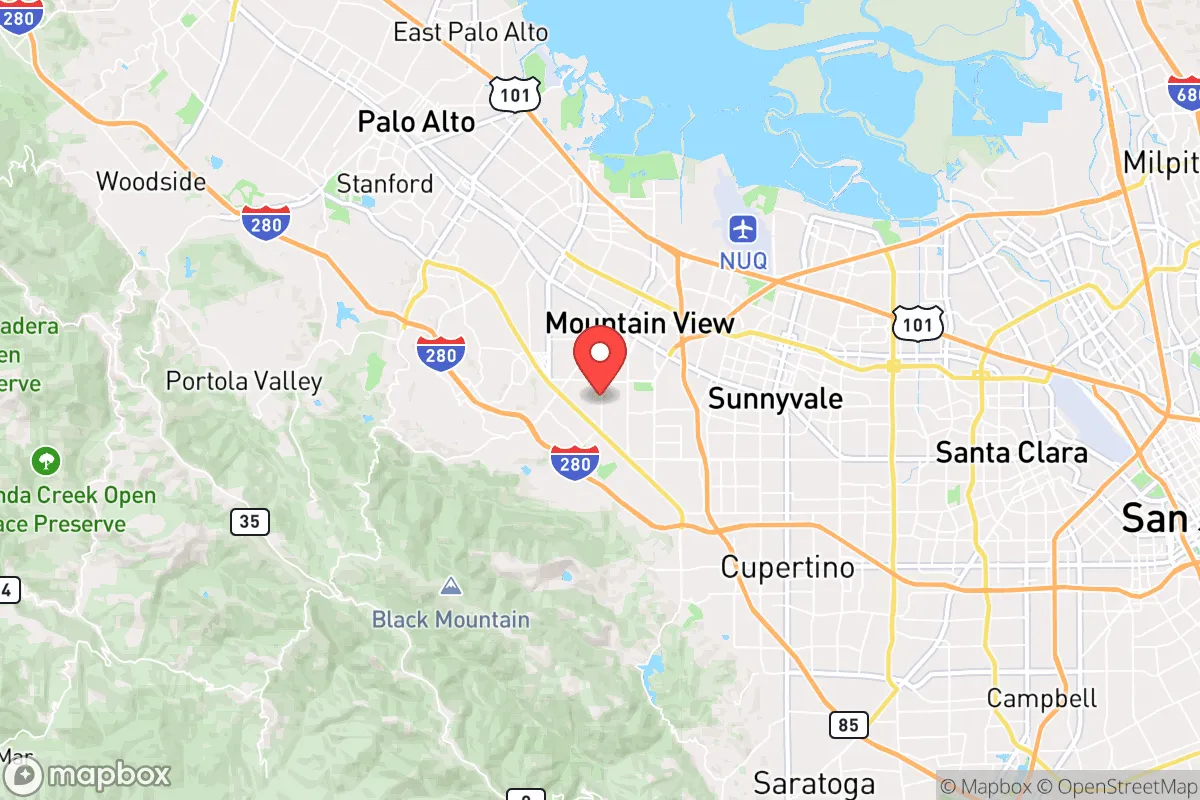
District shown is the primary district for this city’s centroid. Cities may span multiple districts.
Local Political AnalysisPolitical Analysis of Los Altos, CA
Los Altos has a Cook PVI of D+26, making it one of the most reliably Democratic suburbs in the Bay Area, but that wasn't always the case. If you talk to folks who've been here since the 80s or 90s, they'll tell you this was a pretty moderate, fiscally conservative town—lots of engineers and small business owners who voted for Reagan and then maybe split tickets later. Over the last decade, the shift has been dramatic and steady, driven by an influx of tech wealth and younger families from San Francisco and Palo Alto who bring a much more progressive, activist mindset. The local city council and school board elections now feel like extensions of national Democratic politics, with a focus on equity, climate action, and social justice that would have seemed foreign here twenty years ago.
How it compares
To understand Los Altos today, you have to look at its neighbors. Head just a few miles east to Sunnyvale or south to Cupertino, and you'll find similar D+20 to D+30 leanings—tech hubs with the same cultural drift. But drive west over the hills to Los Gatos or Saratoga, and the vibe shifts noticeably. Those towns still have a stronger independent streak, with more residents willing to question tax hikes or zoning overrides. Even closer, the unincorporated areas of Santa Clara County around Los Altos Hills retain a libertarian-leaning skepticism of government expansion. The contrast is sharpest when you look at school bond measures or housing mandates: Los Altos voters overwhelmingly approve them, while neighboring communities often push back. That D+26 isn't just a number—it means local elections are effectively decided in the primary, and moderate or conservative voices rarely get a platform.
What this means for residents
For a longtime resident who values personal freedoms and limited government, the changes here are concerning. The city council has embraced state-level mandates on housing density, effectively overriding local zoning control and forcing multi-unit developments into single-family neighborhoods. There's a growing push for rent control measures and tenant protections that many see as government overreach into private property rights. The school board has implemented equity-based curriculum changes and DEI initiatives that some parents feel prioritize ideology over academic rigor. Even routine decisions—like whether to allow a new business or adjust parking requirements—now get framed through a political lens. The practical effect is that if you value local autonomy, fiscal restraint, or traditional neighborhood character, you'll find yourself increasingly out of step with the direction of the city.
Culturally, Los Altos has become a place where progressive orthodoxy is the default, and dissenting views are often met with social pressure rather than debate. The downtown farmers market and local coffee shops are filled with conversations about carbon footprints and inclusive zoning, not property taxes or school choice. In the long term, I see this trend accelerating as older, more moderate residents sell their homes to younger tech buyers who see government activism as a feature, not a bug. If you're considering a move here and you lean conservative or even libertarian, be prepared: you'll be a minority voice in a town that increasingly treats political conformity as a civic virtue.

State Political ClimatePolitical Climate in California
State Political AnalysisPolitical Environment in the State
California is a one-party Democratic state where Republicans have been reduced to a permanent minority, holding no statewide office and less than one-third of legislative seats. The state’s political trajectory over the past 20 years has been a steady march leftward, driven by massive population growth in the coastal metros and a simultaneous exodus of conservative-leaning voters from the interior. In 2024, Kamala Harris won California by nearly 30 points, a margin that has only widened since 2000, when Al Gore carried it by 12. The dominant coalition is a blend of coastal progressives, public-sector unions, and Silicon Valley tech donors, with the state’s rural and inland regions increasingly powerless to check their influence.
Urban vs. rural divide
The political map of California is a tale of two states. The coastal corridor from San Francisco through Los Angeles and down to San Diego is the engine of Democratic power, producing roughly 70% of the state’s vote. San Francisco and Los Angeles County alone account for nearly one in four ballots cast, and both are among the most reliably progressive jurisdictions in the nation. In contrast, the Central Valley and the interior mountain regions are deeply red. Bakersfield, Fresno, and Redding are Republican strongholds, with Kern County voting +17 R in 2024. The Inland Empire—Riverside and San Bernardino counties—has been a political battleground, but even there, Democrats have made steady gains as suburban sprawl from Los Angeles pushes left-leaning voters east. The most dramatic shift has been in Orange County, once a conservative bastion, which flipped to Democratic in 2018 and has not looked back. Suburbs like Irvine and Santa Ana are now solidly blue, while only the inland exurbs like Yorba Linda and Huntington Beach remain competitive for Republicans.
Policy environment
California’s policy environment is defined by high taxes, heavy regulation, and a progressive social agenda. The state has the highest top marginal income tax rate in the nation at 13.3%, and a sales tax that can exceed 10% in some cities. Property taxes are capped by Proposition 13, but the state’s high home prices mean effective tax burdens are still steep. The regulatory posture is aggressive: California has its own environmental review process (CEQA) that can delay or kill any development, and its energy policies have driven electricity costs to nearly double the national average. In education, the state has a universal school choice program in name only—funding follows the student, but charter school growth has been stymied by teacher union opposition. Healthcare is dominated by the state’s Medicaid expansion, which covers one in three Californians, and a push toward a single-payer system that has stalled due to cost. Election laws are among the most liberal in the country: same-day voter registration, universal mail-in ballots, and no voter ID requirement. For a conservative-leaning resident, the policy environment feels like a constant headwind—higher costs, less local control, and a government that actively encourages a leftward tilt.
Trajectory & freedom
California is becoming less free by nearly every measure, especially for those who value personal liberty outside the progressive framework. The state has enacted some of the strictest gun control laws in the nation, including a 2023 ban on carrying firearms in most public places (SB 2) and a 2024 law requiring microstamping on all new handguns. Parental rights have been eroded: a 2024 law (AB 1955) prohibits school districts from notifying parents if a child changes their gender identity, overriding local school board policies. Medical autonomy took a hit with the 2022 passage of Proposition 12, which banned the sale of pork from gestation crates—a law that critics say is a slippery slope for agricultural property rights. On the other hand, the state has expanded some freedoms: recreational marijuana is legal, and a 2024 law (SB 43) expanded paid family leave. But for a conservative, the trend is clear: the state is using its power to enforce a specific worldview, and dissenters are increasingly marginalized. Property rights are especially tenuous—the 2024 passage of Proposition 33 allows cities to impose rent control on single-family homes, a direct assault on the idea that what you own is truly yours.
Civil unrest & political movements
California has been a flashpoint for political activism on both sides, but the left’s dominance means its movements are more visible and more disruptive. The 2020 George Floyd protests in Los Angeles and San Francisco resulted in billions in property damage and a lasting shift in public safety policy—both cities have since cut police budgets and reduced enforcement of low-level crimes. The state’s sanctuary law (SB 54) prohibits local law enforcement from cooperating with federal immigration authorities, creating a de facto safe haven for illegal immigration. This has fueled a backlash in inland counties, where some sheriffs have declared themselves “constitutional sheriffs” and refuse to enforce state gun laws. The secession movement, CalExit, has fizzled, but the rhetoric of “state’s rights” is alive in the rural north, where the State of Jefferson movement still advocates for a separate 51st state. Election integrity is a live issue: after the 2020 election, California’s universal mail-in system was challenged in court, but the state doubled down with a 2021 law making mail-in ballots permanent. For a new resident, the most visible flashpoint is homelessness—tent encampments in San Francisco and Los Angeles are a daily reminder of the state’s failure to balance compassion with public order.
Projection
Over the next 5-10 years, California will likely become even more progressive, but the pace of change may slow as the state’s population decline accelerates. Since 2020, California has lost nearly 500,000 residents to other states, with the biggest outflows going to Texas, Arizona, and Nevada. Those leaving are disproportionately middle-class families and conservatives, which only reinforces the leftward tilt of those who remain. The demographic shift is also driven by immigration: California’s foreign-born population is now 27%, and new arrivals tend to vote Democratic. The state’s budget is increasingly precarious—a $68 billion deficit in 2024 forced cuts to education and healthcare—and the high cost of living is pushing even progressive tech workers to consider leaving. For a conservative moving in now, the realistic expectation is that you will be a permanent minority, with little ability to change state policy. Your best bet is to live in a red county like Kern or Riverside, where local government may offer some buffer, but you will still pay state taxes and abide by state laws that you likely disagree with.
For a new resident, the bottom line is this: California offers unmatched natural beauty and economic opportunity, but it comes at the cost of living under a government that is actively hostile to conservative values. If you value low taxes, gun rights, parental control over education, and a government that stays out of your life, this is not the state for you. If you are willing to trade those freedoms for career opportunities in tech or entertainment, and you can afford the cost of living, you can carve out a life here—but you will be swimming against a strong political current. The state is not going to change course, and the people who are happiest here are those who either agree with the direction or have learned to tune it out.
* Values derived from national, state, county, city and local statistics and may differ in a specific area. Last updated: 2026-05-02T04:56:41.000Z
Narrative content on this page is AI-generated and may contain mistakes. Verify any details that matter before acting on them.
ReloMaps may earn a commission from affiliate links at no extra cost to you.

