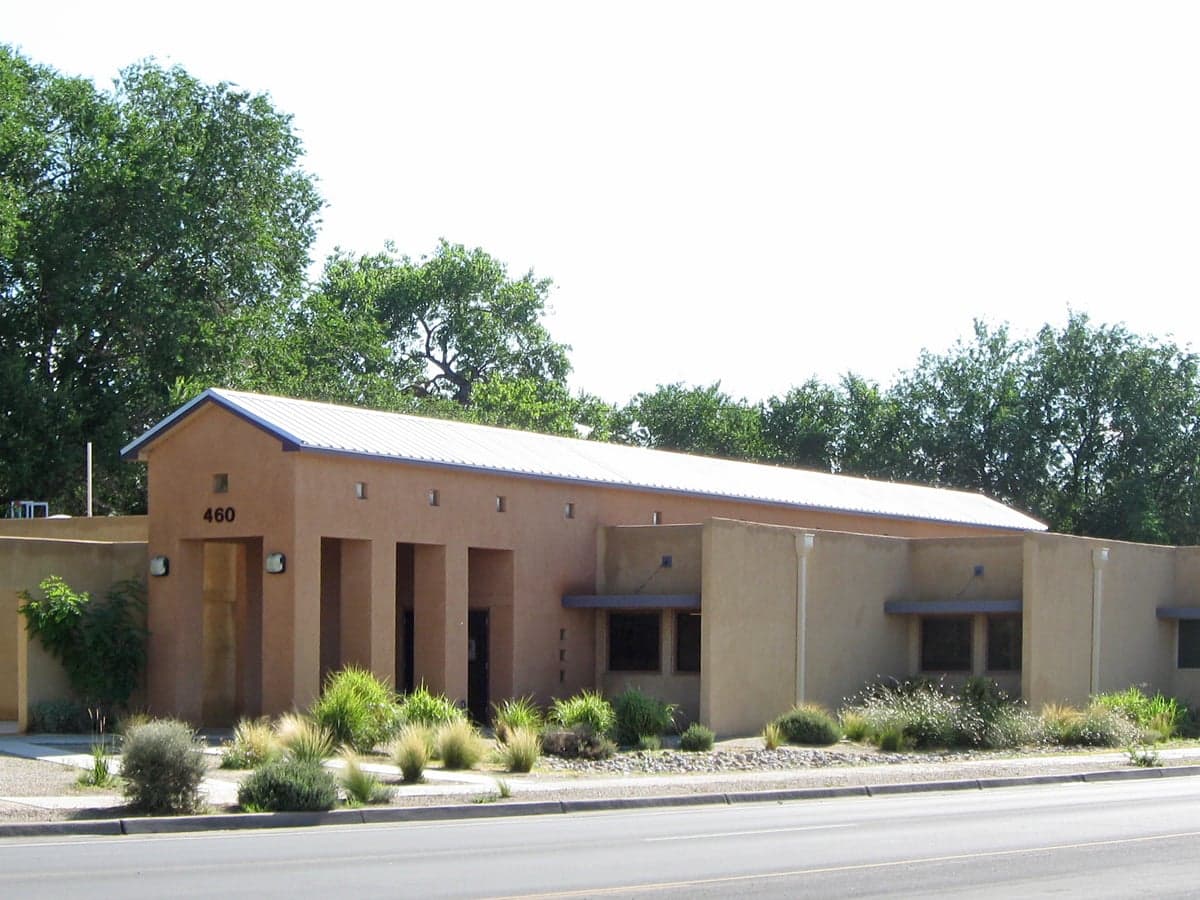
Photo: Wikipedia
Demographics of Los Lunas, NM
Affluence Level in Los Lunas, NM
A below-average socioeconomic profile. Incomes, home values, and educational attainment trail the U.S., with higher poverty and unemployment.
People of Los Lunas, NM
Los Lunas, New Mexico, is a community of 17,932 residents where Hispanic identity forms the demographic core at 57.7% of the population, while non-Hispanic whites make up 31.9%. The city is characterized by a low foreign-born share of just 2.0% and a college education rate of 27.6%, reflecting a predominantly native-born, working- and middle-class population with deep generational roots in the Middle Rio Grande Valley. Unlike many Sun Belt boomtowns, Los Lunas retains a distinctly New Mexican character—its people are overwhelmingly U.S.-born, with a small but present Indian subcontinent community (1.3%) and minimal East/Southeast Asian (0.3%) or Black (1.6%) representation.
How the city was settled and grew
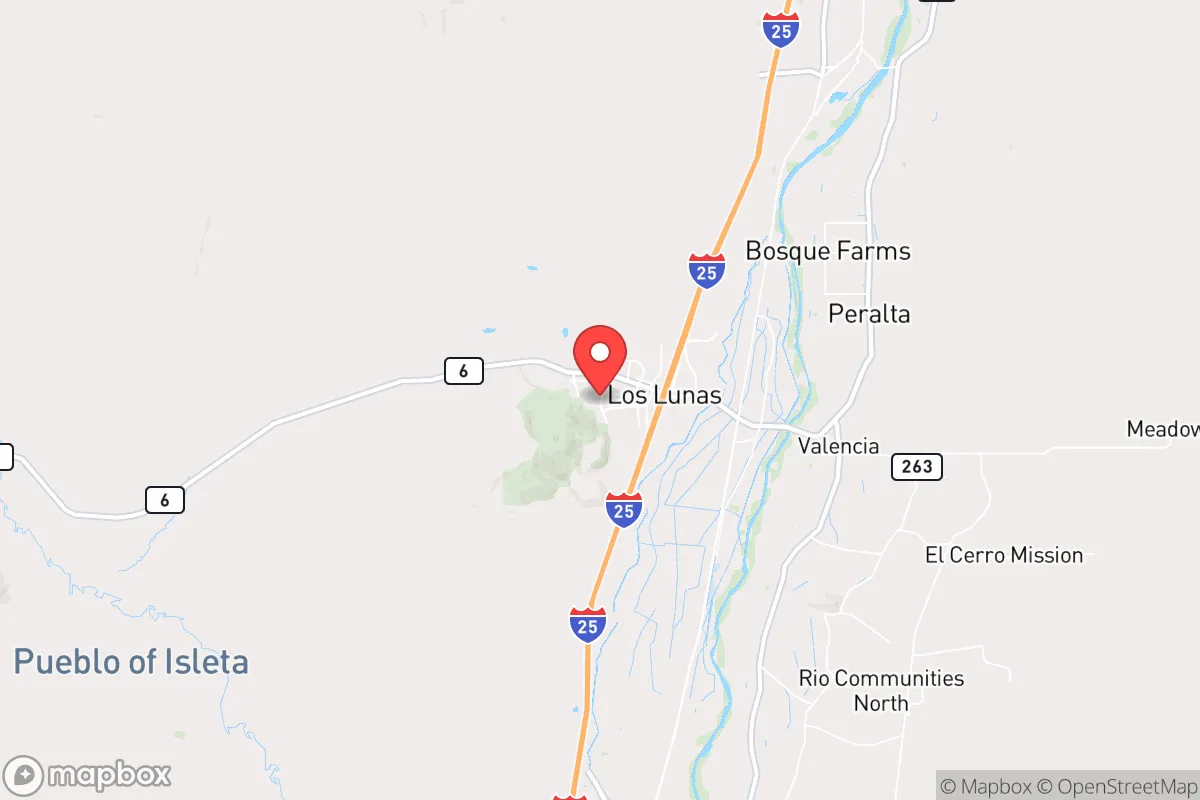
Los Lunas traces its human history to Spanish colonial land grants in the 17th and 18th centuries, when the Luna family and other Hispanic settlers established farming and ranching communities along the Rio Grande. The original population was almost entirely Spanish/Mexican in origin, living on large land grants that later fragmented into the historic neighborhoods of El Cerro and Los Lentes, where descendants of those early settlers still reside today. The arrival of the Atchison, Topeka and Santa Fe Railway in the 1880s brought a small Anglo population—merchants, railroad workers, and government officials—who settled near the depot in what became Old Town Los Lunas, the commercial and administrative core. Through the mid-20th century, the population remained overwhelmingly Hispanic, with Anglo newcomers concentrated in the newer residential blocks east of the railroad tracks, while the original acequia-irrigated farming communities like El Cerro retained their Hispanic character.
Modern era (post-1965)
The post-1965 period saw Los Lunas begin a gradual suburban transformation, driven by its proximity to Albuquerque (roughly 20 miles north) and the expansion of State Highway 47 and Interstate 25. Domestic in-migration—primarily Anglo families seeking lower housing costs and larger lots—accelerated in the 1990s and 2000s, filling new subdivisions such as Sunset Hills and Meadow Vista with commuters and retirees. These newer neighborhoods are predominantly white and non-Hispanic, creating a visible east-west demographic divide: older Hispanic communities like Los Lentes and El Cerro remain heavily Hispanic, while the newer subdivisions east of the railroad tracks are majority Anglo. The foreign-born share has remained very low (2.0%), meaning the city has not experienced the immigrant-driven growth seen in other Southwestern cities. The Indian subcontinent community (1.3%) is a small but notable addition, likely drawn by professional opportunities at the nearby Los Lunas Transportation Center or the University of New Mexico-Valencia Campus, and tends to reside in the newer subdivisions rather than historic neighborhoods.
The future
Los Lunas is likely to continue its gradual suburbanization, with population growth driven by domestic in-migration from Albuquerque and other parts of New Mexico rather than international immigration. The Hispanic share (57.7%) may hold steady or decline slightly as newer subdivisions fill with Anglo families, while the historic Hispanic neighborhoods of El Cerro and Los Lentes will likely remain culturally distinct enclaves. The Indian subcontinent community, though small, may grow modestly if professional employment expands, but the city’s low college education rate (27.6%) and limited high-skill job base suggest it will not attract large numbers of highly educated immigrants. The East/Southeast Asian and Black populations are likely to remain negligible, as Los Lunas lacks the economic diversity or institutional anchors that draw those groups. Over the next 10–20 years, the city will likely become more bifurcated—newer, whiter subdivisions on the east side and older, Hispanic neighborhoods on the west—rather than homogenizing into a single demographic blend.
For a conservative-leaning individual or family considering relocation, Los Lunas offers a stable, predominantly native-born population with strong Hispanic cultural roots and a growing Anglo suburban presence. The city is not a melting pot but a place where distinct neighborhoods retain their character, and where the low foreign-born share and modest growth rate suggest continuity rather than rapid demographic change. New arrivals will find a community that values its history while accommodating gradual, domestic-driven expansion—a balance that suits those seeking affordability and tradition over cosmopolitan diversity.

* Values derived from national, state, county, city and local statistics and may differ in a specific area. Last updated: 2026-10-10T16:28:07.000Z
Narrative content on this page is AI-generated and may contain mistakes. Verify any details that matter before acting on them.
ReloMaps may earn a commission from affiliate links at no extra cost to you.

