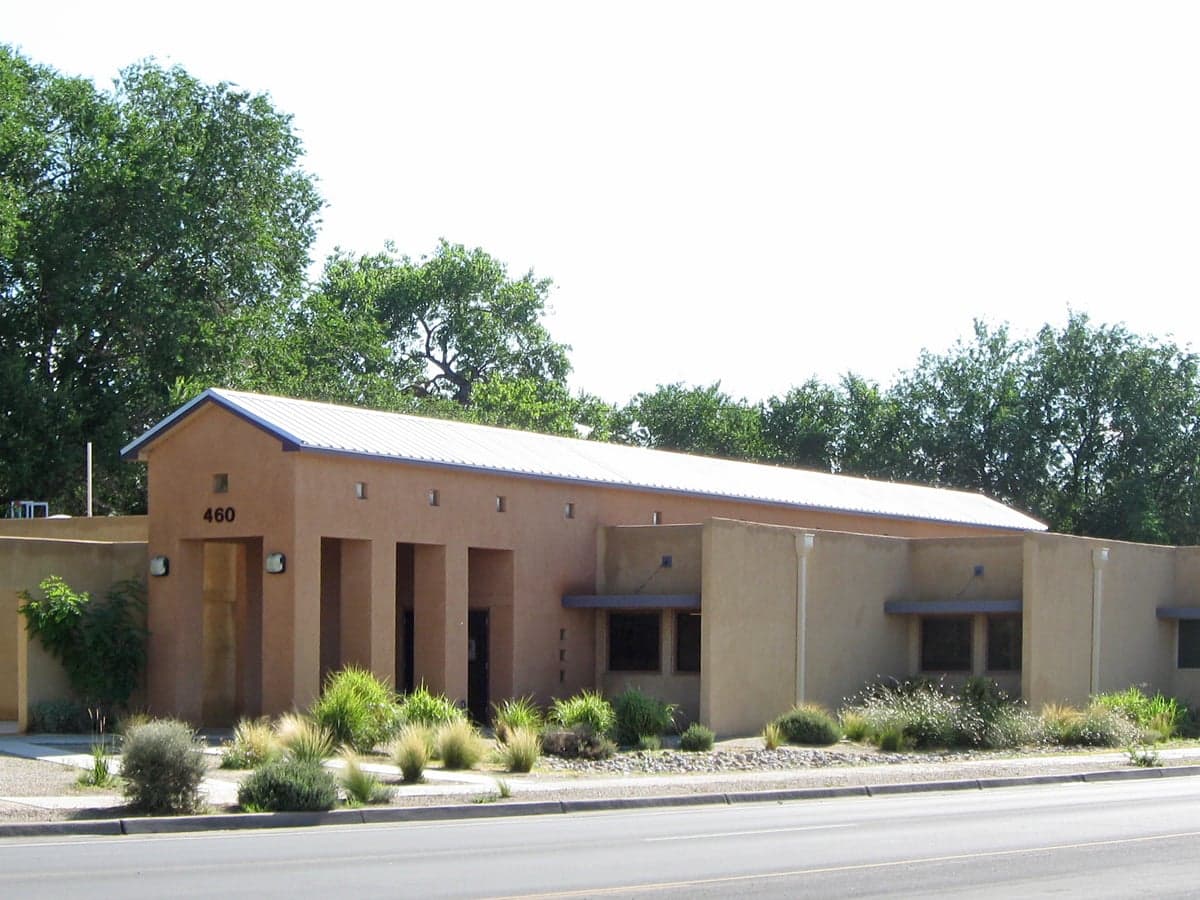
Photo: Wikipedia
Political ClimatePolitical Climate in Los Lunas, NM
District shown is the primary district for this city’s centroid. Cities may span multiple districts.
Local Political AnalysisPolitical Analysis of Los Lunas, NM
Los Lunas sits right in the middle of the road politically, with a Cook PVI of EVEN, meaning it’s a true swing area that could tip either way depending on the election cycle. That’s a big deal because it’s not like the deep-blue stronghold of Albuquerque just 20 minutes north, where progressive policies have really taken hold. For a long time, this town was reliably conservative—folks here valued their Second Amendment rights, low taxes, and the freedom to run their lives without a bunch of government red tape. But lately, you can feel the shift as more people move in from the city, bringing that “we know what’s best for you” attitude with them. It’s not a full-on takeover yet, but the trajectory is concerning if you’re someone who believes in personal liberty over government overreach.
How it compares
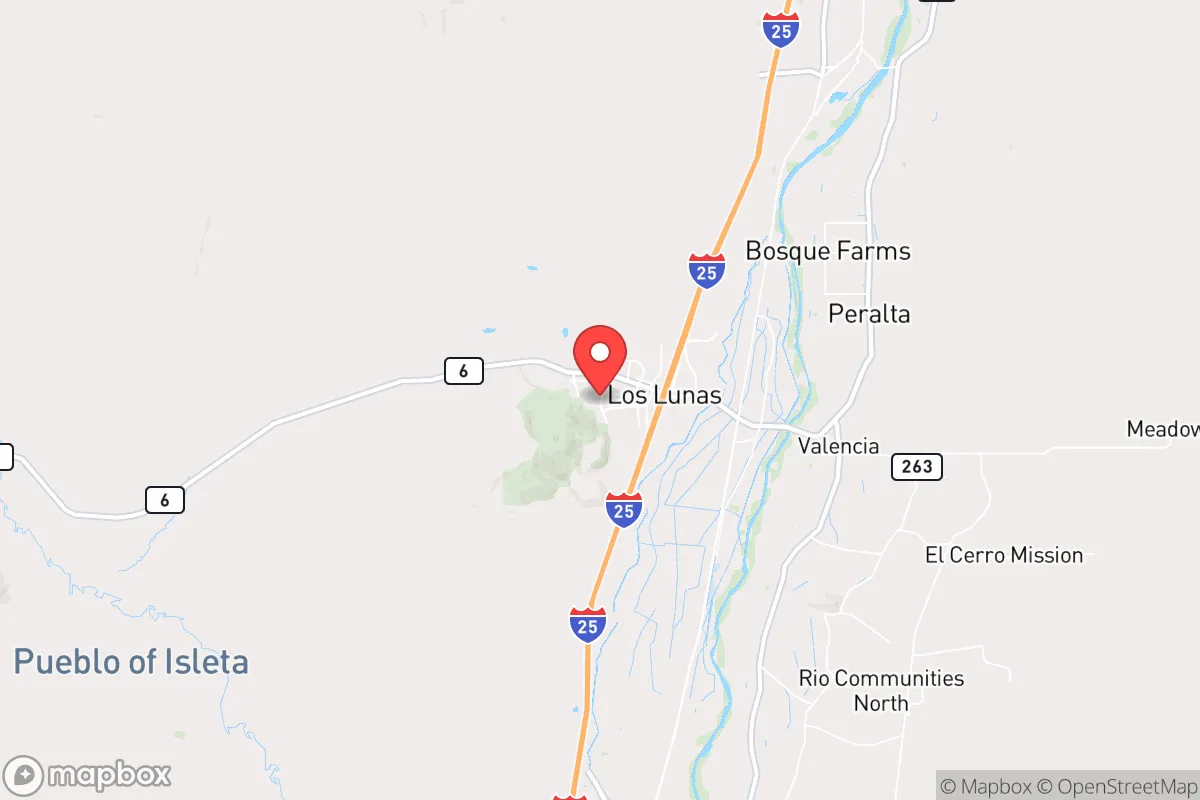
Drive 10 miles north to Albuquerque, and you’re in a place where the city council has pushed for stricter gun control ordinances and higher minimum wages, often ignoring the rural voice. Head south to Belen, and you’ll find a more traditional, conservative vibe—folks there are skeptical of any new tax or regulation. Los Lunas used to be more like Belen, but now it’s caught in the middle. The county commission has flirted with progressive zoning changes and environmental mandates that feel like they’re copied straight from Santa Fe’s playbook. Meanwhile, nearby towns like Peralta and Bosque Farms still hold onto that independent spirit, resisting the urge to let government dictate how they use their land or run their small businesses. The contrast is stark: in Los Lunas, you’ll see more “Vote for Change” signs mixed in with the old “Keep It Local” ones, and that split tells you everything about the political tug-of-war happening here.
What this means for residents
For the average person living here, the biggest worry is how much the government is creeping into daily life. Property taxes have inched up as the town expands, and there’s talk of new “affordable housing” mandates that could force developers to follow strict rules, driving up costs for everyone. The school board has also seen a push for more progressive curriculum changes, which has parents on edge about what their kids are being taught. If you’re a gun owner, you’re watching closely—Albuquerque’s restrictions haven’t crossed the county line yet, but the pressure is there. On the flip side, if you value personal freedom and low interference, you can still find it here, especially if you stick to the older neighborhoods where folks know each other and look out for one another. But the trend is clear: more regulations, more oversight, and less room for the kind of self-reliance that built this town.
Culturally, Los Lunas still holds onto its rural roots—the annual Harvest Festival and the local rodeo draw crowds that aren’t interested in the coastal politics you see on TV. But there’s a growing divide between the old-timers and the newcomers, especially around issues like land use and water rights. The town council has been pushing for more “sustainable” development rules that sound good on paper but often mean more permits, fees, and delays for anyone trying to build a shop or add a room to their house. It’s a classic story: the folks who’ve been here for generations want to keep things simple, while the transplants want to remake the place in the image of the city they left behind. If you’re thinking of moving here, just know that the political climate is shifting, and the fight over personal freedoms versus government control is only going to get louder in the next few years.

State Political ClimatePolitical Climate in New Mexico
State Political AnalysisPolitical Environment in the State
New Mexico has long been a reliably blue state in presidential elections, voting Democratic by margins of 10-11 points in the last three cycles, but the picture is far more complicated than a simple partisan label. The state’s political soul is split between the heavily Democratic, government-dependent Albuquerque-Santa Fe corridor and a vast, deeply conservative rural expanse that feels increasingly alienated from Santa Fe’s progressive agenda. Over the past 20 years, the state has shifted from a moderate, pro-business Democratic stronghold under Governor Bill Richardson to a far-left laboratory under Governor Michelle Lujan Grisham, with the rural-urban divide widening dramatically since 2020.
Urban vs. rural divide
The political map of New Mexico is essentially a tale of two states. The Democratic stronghold runs along the Rio Grande from Santa Fe through Albuquerque down to Las Cruces, where government employment, university towns, and a growing Hispanic working class create a reliable 55-60% Democratic base. Santa Fe County is the bluest of the blue, routinely delivering 70%+ Democratic margins, driven by a mix of wealthy retirees, artists, and state workers. Albuquerque’s Bernalillo County is the electoral prize, home to 40% of the state’s population, and it votes about 56-58% Democratic. Las Cruces in Doña Ana County is a swingier version, trending blue but with a strong conservative Hispanic Catholic base that can flip local races. Meanwhile, the eastern plains (Lea, Roosevelt, Curry counties) vote like West Texas—think 75-80% Republican—driven by oil and gas workers in Hobbs and Carlsbad, and the agricultural communities around Clovis and Portales. The northwest corner, including Farmington and the Four Corners area, is reliably red thanks to energy extraction and ranching. The most interesting political battleground is Rio Rancho, a fast-growing Albuquerque suburb that leans Republican but is being diluted by blue-state transplants; it’s the kind of place where a conservative can win a city council seat but the county commission is still purple.
Policy environment
Santa Fe has aggressively pushed a progressive policy agenda that should give any conservative pause. The state’s tax structure is moderately burdensome—a 4.8% top income tax rate and gross receipts taxes that can hit 8-9% in some cities—but the real concern is the regulatory creep. In 2021, the legislature passed the Energy Transition Act, effectively mandating a 100% carbon-free electricity grid by 2045, which is already driving up utility costs in rural areas. Education policy is a flashpoint: the state has a universal school voucher-like program (the Opportunity Scholarship Act) for community college, but K-12 performance remains dead last in the nation by most metrics, and the powerful teachers union blocks meaningful reform. Healthcare is dominated by the state’s Medicaid expansion, which covers nearly 40% of the population, creating a two-tier system where private insurance is expensive and hard to find. Election laws are a mixed bag: same-day voter registration and automatic voter registration are in place, but voter ID is not required to vote in person (only to register), which has fueled ongoing integrity concerns. The state also has a “red flag” gun law (the Extreme Risk Firearm Protection Order Act) passed in 2020, which allows for temporary seizure of firearms without a criminal conviction—a major red flag for Second Amendment advocates.
Trajectory & freedom
New Mexico is becoming less free by almost any measure, and the trend has accelerated since 2020. The most concerning development for conservatives is the 2021 repeal of the state’s preemption law on firearms, which had previously prevented cities from passing their own gun ordinances. Now, Albuquerque and Santa Fe have passed local bans on firearms in public parks and buildings, and Santa Fe is considering a citywide assault weapons ban. On parental rights, the 2023 passage of the Reproductive and Gender-Affirming Health Care Act codified a “shield law” that protects providers of gender transition procedures for minors from out-of-state legal action, overriding parental consent requirements in other states. Property rights have taken a hit with the 2023 “Good Cause” eviction law in Albuquerque, which makes it nearly impossible to evict a tenant for any reason other than non-payment, effectively creating rent control by judicial fiat. On the positive side, the state has no personal income tax on Social Security benefits, and property taxes remain low (about 0.7% of assessed value), which is a lifeline for retirees. But the overall trajectory is clear: Santa Fe is using its one-party control to push California-style policies, and the rural counties are losing the fight.
Civil unrest & political movements
New Mexico has a simmering, not boiling, level of political tension. The most visible flashpoint is the immigration debate: the state is a “sanctuary” state in practice, with a 2019 law prohibiting state and local law enforcement from asking about immigration status, and the border city of Sunland Park has become a staging ground for migrant processing. In 2023, the governor declared a public health emergency over gun violence in Albuquerque, which led to a temporary suspension of the right to carry firearms in public parks—a move that was immediately challenged in court and is still being litigated. The rural counties have responded with “Second Amendment sanctuary” resolutions, with at least 20 of the state’s 33 counties passing symbolic declarations. The most organized conservative movement is the New Mexico Cattle Growers’ Association and the oil and gas lobby, which have successfully blocked some of the more extreme environmental regulations. On the left, the Working Families Party and the Democratic Socialists of America have a real presence in Albuquerque and Santa Fe, organizing around rent control and police defunding. The 2020 election integrity debate was muted compared to other states, but the 2022 primary saw a notable controversy when the state’s Democratic Party chair was accused of ballot harvesting in a close legislative race. A new resident would notice the political divide most acutely in the stark difference between the “Keep New Mexico Green” bumper stickers in Santa Fe and the “Don’t California My New Mexico” signs in the eastern plains.
Projection
Over the next 5-10 years, New Mexico is likely to become more progressive and more divided. The demographic trends are not favorable for conservatives: the state’s population is aging, with a net outflow of working-age adults to Texas and Arizona, while the remaining population becomes more reliant on government services. The oil and gas boom in the Permian Basin (southeastern New Mexico) is a temporary counterweight, but the industry is already facing headwinds from federal regulations and the state’s own carbon-free mandates. The in-migration from California and Colorado is accelerating, particularly to Santa Fe and the Albuquerque foothills, bringing voters who are comfortable with high taxes and progressive social policies. The rural counties will continue to lose political power as their populations shrink, and the state legislature will likely pass a single-payer healthcare bill and a statewide rent control law within the next five years. The wild card is the Hispanic vote: while Hispanic voters in New Mexico have historically been Democratic, the younger generation is trending more progressive, while older Hispanic voters in the rural south are becoming more conservative on cultural issues. If the GOP can make inroads with the latter group, they could flip a few legislative seats, but a statewide Republican victory is unlikely before 2030. The most realistic scenario is a slow, grinding shift toward a California-style governance model, with the rural counties becoming increasingly irrelevant in state politics.
For a conservative considering a move to New Mexico, the practical takeaway is this: choose your county carefully. If you want low taxes, gun-friendly laws, and a community that shares your values, stick to the eastern plains (Lea, Roosevelt, Curry counties) or the northwest (San Juan County). Avoid Santa Fe and Albuquerque unless you’re prepared to fight for your rights at every city council meeting. The state’s natural beauty and low property taxes are real draws, but the political trajectory is clear—Santa Fe is determined to turn New Mexico into a progressive laboratory, and the rural counties are losing the battle. If you’re a parent, the education system is a disaster, and the cultural environment in the blue cities is increasingly hostile to traditional values. Come for the sunsets and the green chile, but don’t expect the state to get more conservative anytime soon.
* Values derived from national, state, county, city and local statistics and may differ in a specific area. Last updated: 2026-10-10T16:28:07.000Z
Narrative content on this page is AI-generated and may contain mistakes. Verify any details that matter before acting on them.
ReloMaps may earn a commission from affiliate links at no extra cost to you.

