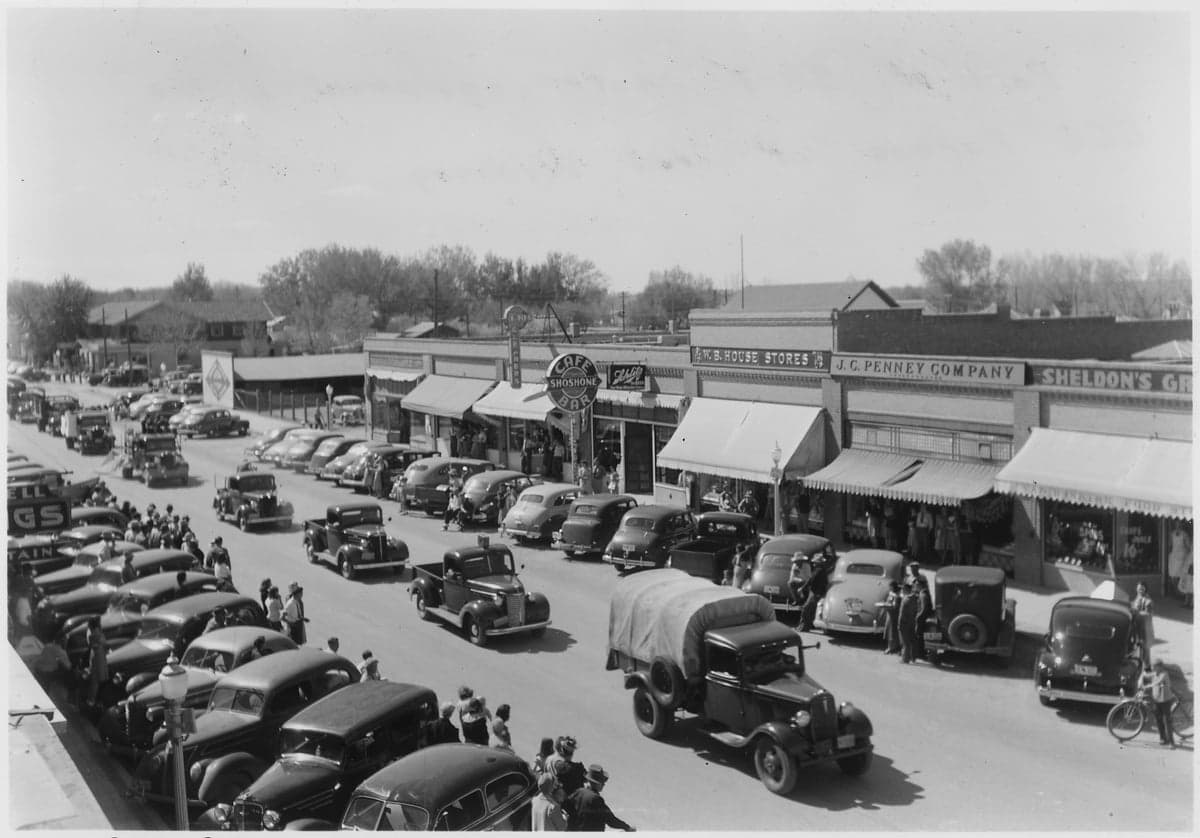
Photo: Wikipedia
Political ClimatePolitical Climate in Lovell, WY
District shown is the primary district for this city’s centroid. Cities may span multiple districts.
Inherited from parent state — no local data available.
Local Political AnalysisPolitical Analysis of Lovell, WY
Lovell, Wyoming, sits firmly in deep-red territory, with a Cook PVI of R+23 that reflects generations of conservative values rooted in self-reliance and limited government. This isn't a place that's suddenly flipped—it's been reliably Republican for decades, and the political trajectory here has actually hardened in recent years as folks push back against what they see as federal overreach and progressive encroachment from places like Cody and Powell, which lean conservative but have seen more moderate influences creep in. The local culture prizes personal freedom, and that's not changing anytime soon.
How it compares
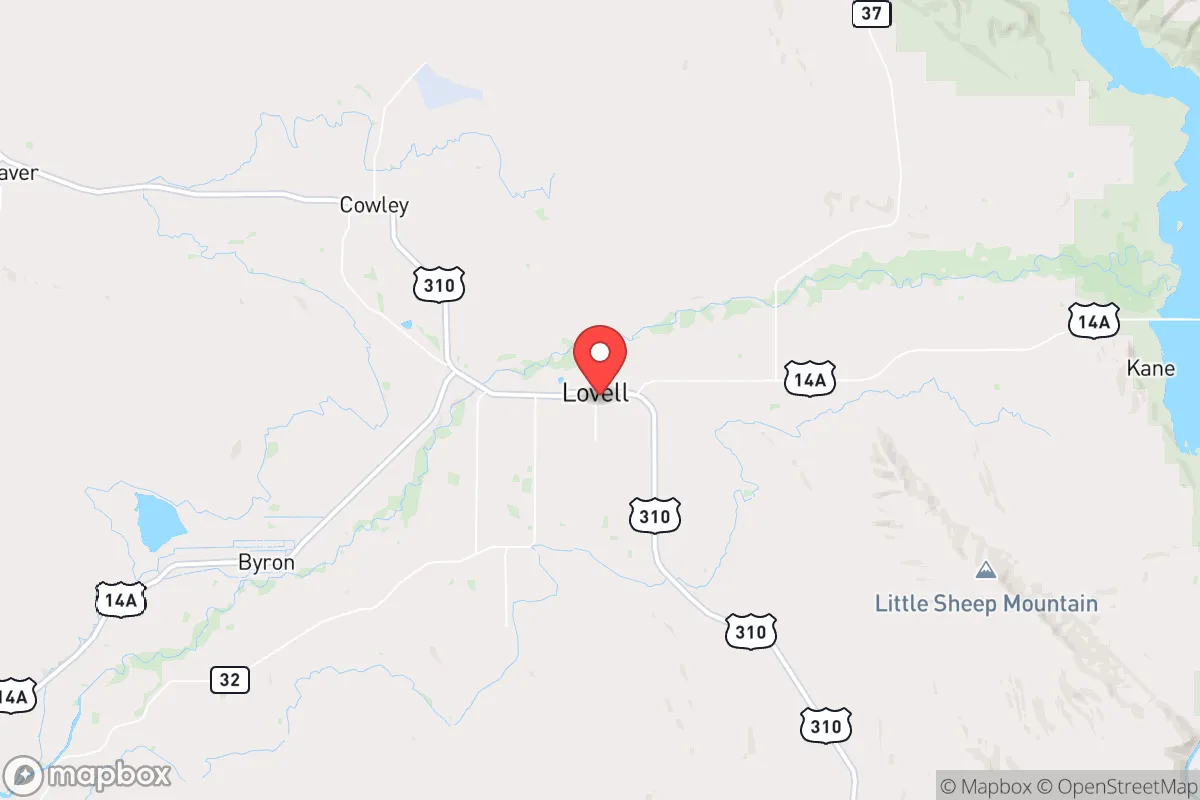
Compared to nearby towns, Lovell stands out as a bit more insulated from the political drift you see elsewhere in the Bighorn Basin. Powell, about 30 miles east, has a similar conservative bent but has seen some younger families and remote workers bring in more moderate views on land use and local spending. Cody, to the south, is reliably red but has a stronger tourism economy that sometimes softens its edge on issues like property rights and resource extraction. Lovell, by contrast, remains a farming and ranching hub where the old-school Wyoming ethos—keep government out of your business, your land, and your family—is still the default. The contrast is sharper if you look west to towns like Greybull or Basin, which have similar politics but are more vulnerable to state-level mandates on education and health that Lovell residents tend to view with suspicion.
What this means for residents
For the people living here, the political climate means a daily life largely free from the kind of bureaucratic meddling that chokes smaller communities in blue states. Local government stays lean, property taxes are low, and there's a strong expectation that the county sheriff and school board will prioritize local control over state or federal directives. That said, there's growing unease about how state-level policies—like recent pushes for diversity initiatives in public schools or tighter environmental regulations on irrigation—could trickle down. Residents here watch those trends closely, and any hint of progressive ideology being forced from Cheyenne or Washington is met with organized pushback at town halls and county commission meetings. The recent fights over COVID-era mandates left a lasting mark; many folks here still talk about how local businesses and churches refused to enforce mask rules, and that defiance has only strengthened the community's resolve to keep outside interference at bay.
Culturally, Lovell is a place where the Second Amendment isn't debated, it's assumed, and where the local economy—anchored by sugar beet farming, oil and gas, and small manufacturing—depends on minimal regulation to stay viable. The biggest policy distinction you'll notice is the near-total absence of zoning laws in the county, which lets landowners use their property as they see fit, whether that's running a small repair shop or building a new home without a pile of permits. That kind of freedom is exactly what draws people here and keeps them from leaving, even as younger generations occasionally drift toward cities like Billings or Denver for jobs. Looking ahead, the concern is that as Wyoming's population grows and outsiders move in for the scenery, they might bring voting habits that could shift the balance. But for now, Lovell remains a stronghold where personal liberty isn't just a talking point—it's the way life is lived every day.

State Political ClimatePolitical Climate in Wyoming
State Political AnalysisPolitical Environment in the State
Wyoming is, and has long been, one of the most reliably conservative states in the Union, with a Republican Party registration advantage that routinely exceeds 2-to-1 and a voting record that has not gone for a Democratic presidential candidate since 1964. The dominant political coalition is a blend of libertarian-leaning ranchers, energy-sector workers, and evangelical Christians, all united by a deep skepticism of federal overreach and a fierce attachment to individual liberty. Over the last 10-20 years, the state has actually hardened its conservative posture, moving from a “live and let live” Western independence to a more explicitly culture-war-oriented Republicanism, driven largely by an influx of out-of-state conservatives fleeing blue states and a simultaneous exodus of younger, more moderate residents seeking economic opportunity elsewhere.
Urban vs. rural divide
The political map of Wyoming is starkly simple: the state’s small population centers are islands of relative moderation in a sea of deep red. Laramie (Albany County), home to the University of Wyoming, is the state’s most reliably Democratic-leaning area, often voting blue by 10-15 points in presidential elections. Jackson (Teton County), the wealthy resort town, is the other notable blue dot, driven by a high concentration of out-of-state transplants and tourism-industry workers; Teton County voted +35 for Biden in 2020. Cheyenne (Laramie County) and Casper (Natrona County) are more competitive but still lean Republican, with Cheyenne’s state government workforce and Casper’s energy sector creating a pragmatic, business-friendly conservatism. The rest of the state — places like Gillette (Campbell County), Rock Springs (Sweetwater County), and Worland (Washakie County) — vote Republican by margins of 60-80%, with coal, oil, and gas interests driving a hardline pro-energy, anti-regulation stance. The rural-urban divide is less about ideology and more about intensity: rural voters are far more likely to view any federal land management or environmental regulation as a direct assault on their way of life.
Policy environment
Wyoming’s policy environment is a textbook example of small-government conservatism. There is no state income tax, and the sales tax is a low 4% (with local options pushing it to around 6% in some towns). Property taxes are among the lowest in the nation, though recent reassessments in Teton County have sparked backlash. The regulatory posture is aggressively pro-business, particularly for energy extraction: the state has no meaningful limits on hydraulic fracturing and actively fights federal methane rules. Education policy is a mixed bag: the state spends generously per pupil (thanks to mineral revenues), but school choice is limited — there is no voucher program, and charter schools are rare, though a 2023 law expanded virtual education options. Healthcare is a perennial headache: Wyoming is one of only 10 states that has not expanded Medicaid, leaving a coverage gap for low-income adults, and the state has the highest uninsured rate in the nation at around 13%. Election laws are solidly conservative: voter ID is required, same-day registration is not allowed, and absentee voting requires an excuse. The state legislature has repeatedly rejected any expansion of mail-in voting.
Trajectory & freedom
Wyoming is arguably becoming more free in several key areas, particularly around gun rights and medical autonomy. In 2021, the state passed a “Second Amendment Preservation Act” that purports to nullify any federal gun control measures, and in 2023, it enacted permitless carry for both handguns and long guns. On medical freedom, Wyoming was one of the first states to ban COVID-19 vaccine mandates for both public and private employers, and a 2022 law prohibits any entity receiving state funds from requiring a vaccine passport. Parental rights have been strengthened: a 2023 law requires schools to notify parents of any “sexually explicit” instructional materials and allows them to opt their children out. However, there are concerning trends. The state’s property tax system is under strain, with a 2023 law that capped annual increases at 5% being challenged by local governments that rely on those revenues. The state also has a growing problem with federal land control — 48% of Wyoming is owned by the federal government, and the “Transfer of Public Lands” movement, which demands the feds hand over those lands to the state, has gained serious legislative traction but remains stalled by legal and financial realities.
Civil unrest & political movements
Wyoming is not a hotbed of street protests, but it has its flashpoints. The “Freedom Caucus” faction in the state legislature, which grew out of the Tea Party, has become the dominant force in the Republican Party, regularly clashing with more establishment figures over budget priorities and federal overreach. In 2022, a proposed “sanctuary state for the unborn” bill — which would have banned nearly all abortions — sparked intense debate but ultimately failed due to concerns about enforceability and the state’s limited healthcare infrastructure. Immigration politics are less visible here than in border states, but the legislature has passed laws requiring local law enforcement to cooperate with ICE and banning “sanctuary city” policies. The most visible political movement is the “Wyoming Liberty Group”, a libertarian-leaning think tank that has successfully pushed for school choice expansion and tax cuts. Election integrity controversies are muted compared to other states, but the 2020 election saw a small but vocal group of activists demanding hand-count audits, which the legislature declined to mandate. A new resident would notice that political discourse is generally civil in person but intensely partisan online and in local media.
Projection
Over the next 5-10 years, Wyoming is likely to become even more conservative, but with a growing tension between the old-school “leave me alone” libertarianism and a newer, more activist cultural conservatism. The in-migration pattern is telling: the state is attracting a significant number of remote workers and retirees from California, Colorado, and the Pacific Northwest, many of whom are fleeing high taxes and progressive policies. These newcomers tend to be conservative but often clash with locals over land use, development, and the pace of change. The energy transition is the wild card: as coal declines, the state’s budget — which relies heavily on mineral severance taxes — will face serious pressure, potentially forcing a reckoning with either spending cuts or new taxes. The demographic outlook is grim: Wyoming has the oldest median age in the nation (around 40) and one of the lowest birth rates, meaning the state will need to attract young families to sustain itself. A new resident moving in now should expect a state that is fiercely independent, increasingly culturally conservative, and grappling with the economic consequences of its own success in driving away the very people it needs to grow.
Bottom line for a new resident: If you are looking for a place where government stays out of your life, your business, and your family, Wyoming delivers — but be prepared for a state that is small, isolated, and economically fragile. The political climate is stable and predictable, but the culture is not for everyone: it is a place where self-reliance is not just a value but a necessity. You will find no state income tax, strong gun rights, and a legislature that actively fights federal overreach, but you will also find limited healthcare access, a struggling education system, and a community that can be wary of outsiders. For the right person, it is a refuge. For others, it may feel like a beautiful prison.
* Values derived from national, state, county, city and local statistics and may differ in a specific area. Last updated: 2026-04-21T11:21:31.000Z
Narrative content on this page is AI-generated and may contain mistakes. Verify any details that matter before acting on them.
ReloMaps may earn a commission from affiliate links at no extra cost to you.

