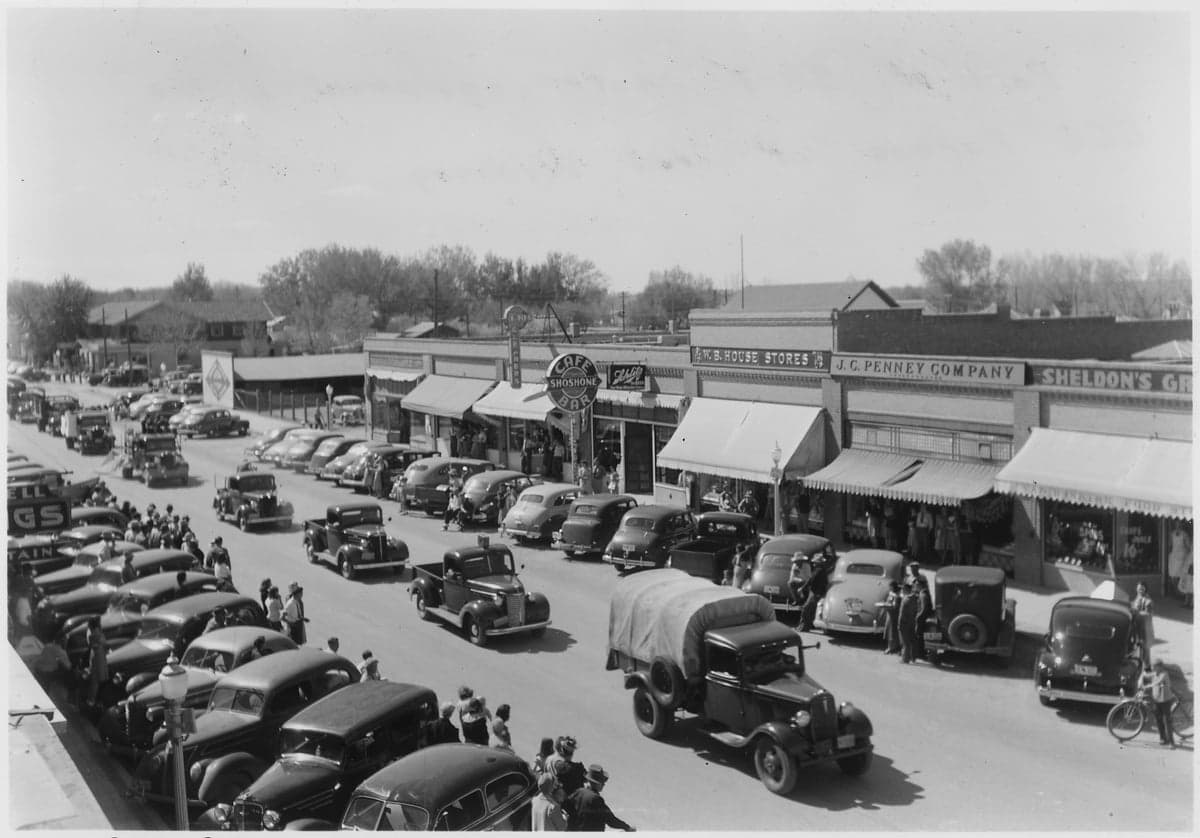
Photo: Wikipedia
Strategic Assessment of Lovell, WY
Strong survivability profile. Good buffer from population centers, with manageable environmental and tactical risks.
What does the Strategic Assessment tell us?
Our Strategic Assessment grades tactical survivability of an area. Major population centers, military targets, fallout zones, natural disasters, and border exposure all drive risk — lower exposure means a more defensible position in a crisis.
This is heavily inspired by Joel Skousen's Strategic Relocation book. Highly recommended you checkout the book ($)What does this tell us?
Our Strategic Assessment grades tactical survivability of an area. Major population centers, military targets, fallout zones, natural disasters, and border exposure all drive risk — lower exposure means a more defensible position in a crisis.
This is heavily inspired by Joel Skousen's Strategic Relocation book. Highly recommended you checkout the book ($)Strategic Pillars

Key Distances
Regional Safe Places
Below is our recommended "safe zones" in Wyoming and the surrounding area based on our strategic heuristics. For most people, it's unrealistic to live in a “safe zone” full-time due to work, family or other personal reasons. They tend to be more rural. However, many of these areas are perfect for second homes and retreat properties that double as a vacation home or even a short-term rental.
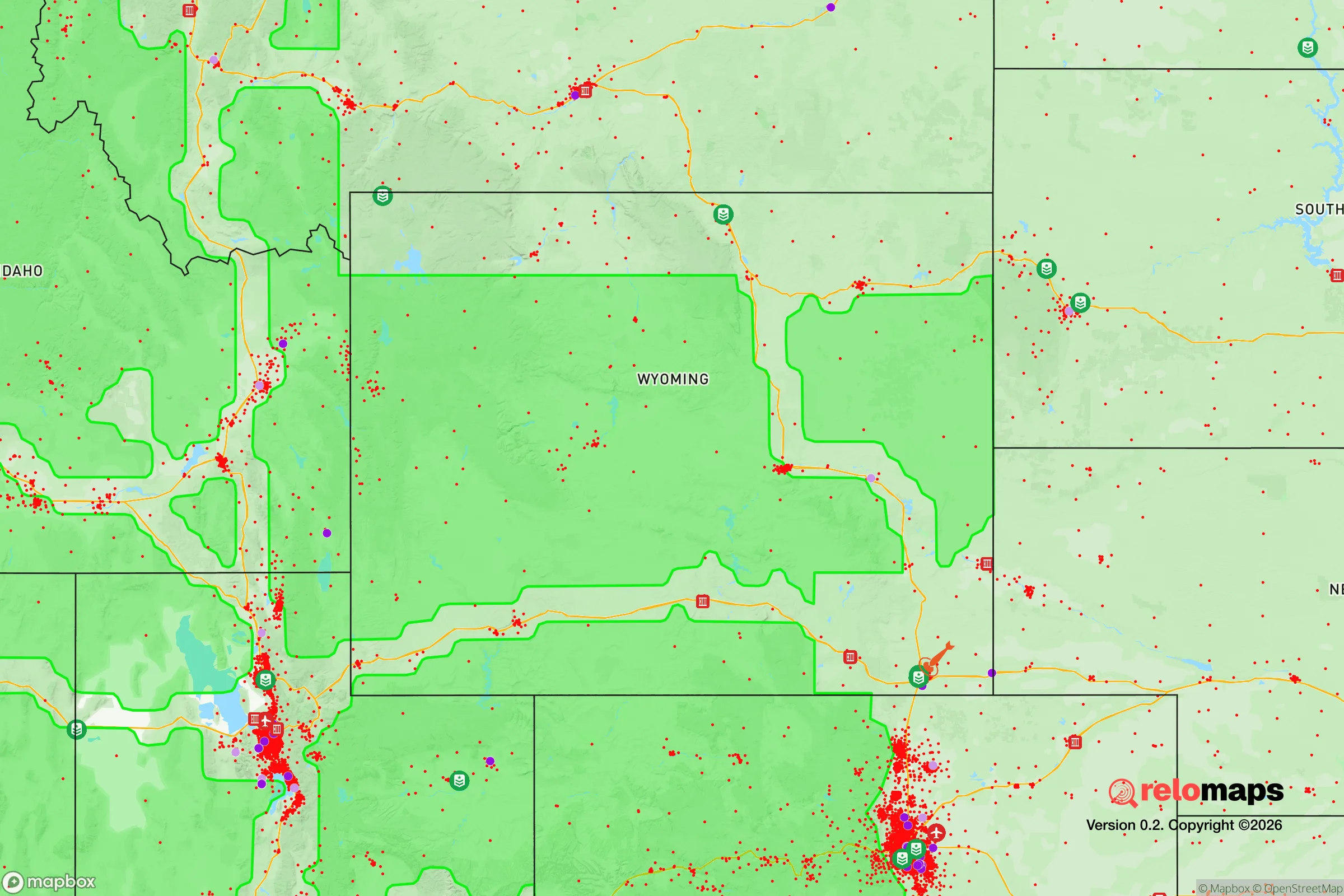
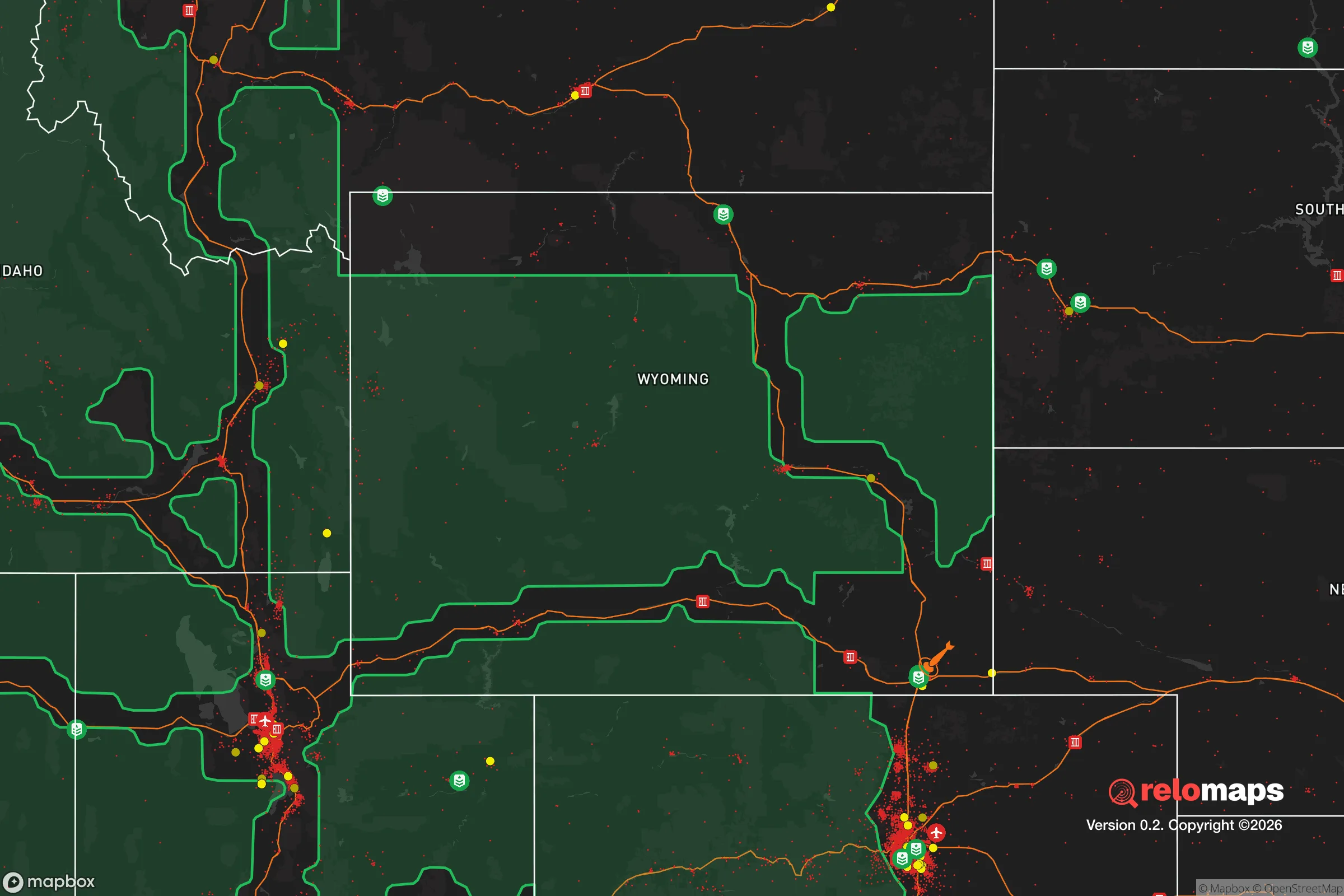


Important Note: For informational purposes only. This does not mean nothing bad ever happens in the green zones. Please use common sense. This is based on public data and modeled with AI. We tried to take a conservative approach but mistakes happen. We update this regularly as new information becomes available.
Solar Generator Recommendations
Backup power matters more here than in safer locations. We've picked three solar generators across budgets and capacity tiers — start with the budget unit if you only need a few essentials, or step up if you want to run a fridge and HVAC for days at a time.

Jackery Portable Power Station Explorer 300
Budget OptionPower on the Go: Weighing only 11 lbs, it's convenient to set up and store with book-sized foldable solar panels

BLUETTI Portable Power Station AC180
Designed for both indoor and outdoor scenarios, AC180 is highly capable as it has a robost capacity and continuous output power.

EF ECOFLOW DELTA Pro Ultra Power Station
Upgraded PickEcoFlow DELTA Pro Ultra is a whole-home energy system designed to grow with your family. Integrated with the Smart Home Panel 2, it scales to meet your evolving energy needs — keeping your home powered, intelligent, and secure through every stage of life.
We earn a commission, at no additional cost to you.
Strategic Assessment Analysis
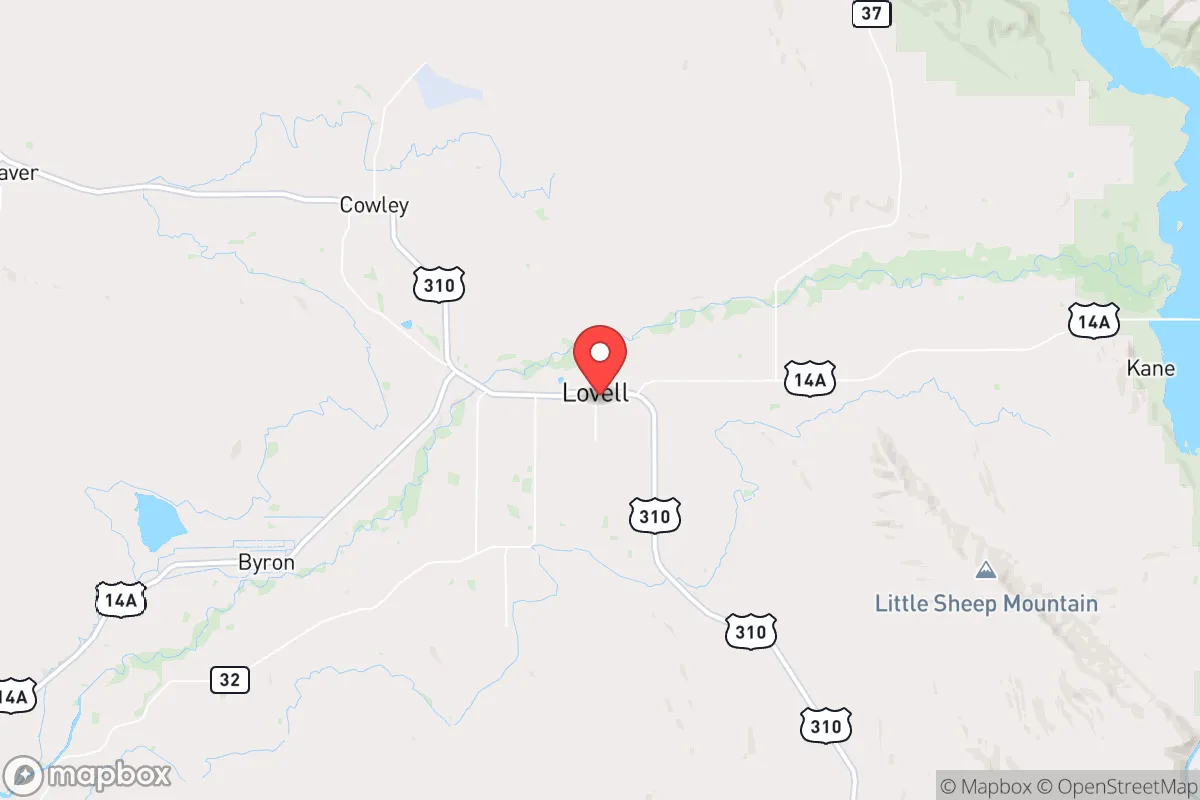
Lovell, Wyoming, sits in the Big Horn Basin about 40 miles from the Montana line, and from a strategic relocation standpoint, its primary advantage is isolation without being inaccessible. The town of roughly 2,200 people is the service hub for a ranching and sugar beet region, anchored by the Big Horn Mountains to the west and the Pryor Mountains to the north. For someone thinking about long-term resilience—civic unrest, supply chain disruptions, or a major disaster—this area offers a combination of natural barriers, a working agricultural economy, and a population that still knows how to fix things themselves. The trade-off is real: you are a long way from major medical centers, big-box retail, and any kind of federal response timeline, which is exactly the point for a prepper mindset.
Geographic position and natural defensive advantages
Lovell’s location in the Big Horn Basin creates a natural bowl, with the Big Horn Mountains rising to the west and the Pryor Mountains to the north. This isn’t just scenic—it means any approach into the valley is funneled through a handful of highway corridors: US-310 from the north, US-14A from the east over the Big Horns, and WY-37 from the west. In a scenario where movement becomes restricted or you want to control access to your area, these chokepoints are a real asset. The basin itself is high desert at about 3,800 feet, with cold winters and hot summers, but the Big Horn River runs right through town, providing a reliable surface water source. The surrounding mountains hold snowpack well into summer, feeding the river and irrigation canals that keep the valley green. For a relocator, this means you are not dependent on a single reservoir or a fragile municipal pipeline—the water is local, visible, and renewable. The terrain also offers numerous places for a remote homestead or bug-out location within a 30-minute drive, with public land access via the Big Horn National Forest and Bureau of Land Management parcels to the west and north.
Risks, exposures, and proximity to fallout-relevant landmarks
The biggest strategic weakness of Lovell is its proximity to the Yellowstone Caldera, roughly 120 miles to the west. A supervolcano eruption is a low-probability event, but if it happens, the ash fallout zone would likely cover the Big Horn Basin, potentially collapsing roofs, contaminating water, and killing agriculture for a season or more. That’s a real risk for anyone planning a long-term food strategy. Closer to home, the town sits near the Big Horn Canyon National Recreation Area and the Pryor Mountain Wild Horse Range—both federal land designations that could see sudden closures or restrictions during a national emergency. On the plus side, there are no major military installations, nuclear power plants, or large population centers within 100 miles. The nearest city of any size is Billings, Montana, about 90 miles north, which is a regional medical and logistics hub but also a potential target for civil unrest or infrastructure failure. Lovell itself has no rail lines, no interstate highway, and no major industrial facilities, which means it is unlikely to be a target for anything other than a localized natural disaster. The primary risk is economic isolation: if the national grid goes down or fuel becomes scarce, Lovell’s remote location becomes a liability rather than an asset, because resupply will be slow and expensive.
Practical resilience for a relocator: food, water, energy, and defensibility
For someone serious about self-sufficiency, Lovell checks several boxes. The Big Horn River provides year-round water, and the local irrigation district maintains a network of canals that serve the surrounding farmland. A relocator with a few acres and water rights could grow a significant portion of their own food, and the growing season—though short, roughly 110 frost-free days—is enough for cold-hardy crops like potatoes, carrots, beets, and hay. The local economy is built around agriculture: sugar beets, dry beans, alfalfa, and cattle. That means there are working farms, equipment dealers, and a population that knows how to raise and preserve food. The town has a small grocery store and a hardware store, but for serious prepping, you will need to bring in supplies or establish relationships with local ranchers. Energy is a mixed picture: the area has good solar potential (over 300 sunny days per year), and wind is consistent in the basin, but grid power is the only reliable option for most homes. Natural gas is available in town, but propane is common for rural properties. Defensibility is strong for a small group: the town is compact, with a few main roads and a river cutting through the middle. The surrounding terrain offers good observation points, and the local population is overwhelmingly rural, conservative, and armed. Law enforcement is limited—the Big Horn County Sheriff’s Office covers a huge area with a small staff—so in a crisis, you are largely on your own. That is a feature, not a bug, for a prepper mindset, but it means you need to be self-reliant for security, medical care, and communications.
The overall strategic picture for Lovell is that of a solid B-tier relocation option for someone who values isolation, water security, and a working agricultural base, but who can accept the trade-offs of extreme remoteness and a real but manageable risk from Yellowstone. It is not a place for someone who needs quick access to urban amenities or federal support. It is a place for someone who wants to be part of a small, tight-knit community where people still know their neighbors and can handle a winter without outside help. If the country experiences a major disruption—whether from economic collapse, civil unrest, or a natural disaster—Lovell will likely be one of the last places to feel the shockwaves, and one of the first to stabilize, simply because it is already operating on a slower, more self-reliant rhythm. The key is to arrive with skills, supplies, and a willingness to integrate into a community that does not suffer fools gladly. If you can do that, Lovell offers a defensible, water-rich, and low-target location that will serve you well in uncertain times.

* Values derived from national, state, county, city and local statistics and may differ in a specific area. Last updated: 2026-04-21T11:21:31.000Z
Narrative content on this page is AI-generated and may contain mistakes. Verify any details that matter before acting on them.
ReloMaps may earn a commission from affiliate links at no extra cost to you.

