Demographics of Lyman, WY
Affluence Level in Lyman, WY
A middle-class area roughly in line with national averages across income, home values, education, and employment.
People of Lyman, WY
The people of Lyman, Wyoming, today form a small, predominantly white community of 1,777 residents, characterized by a strong sense of local identity rooted in the town's railroad and agricultural heritage. With a population density of roughly 1,200 people per square mile, Lyman is a tight-knit, family-oriented town where 86.6% of residents identify as white and 9.7% as Hispanic or Latino. The foreign-born population is negligible at 0.5%, and the town has virtually no Black, Asian, or Indian subcontinent populations, reflecting a demographic profile that has remained remarkably stable over decades. This is a place where generational ties run deep, and newcomers are often drawn by the promise of quiet, affordable living in the shadow of the Uinta Mountains.
How the city was settled and grew
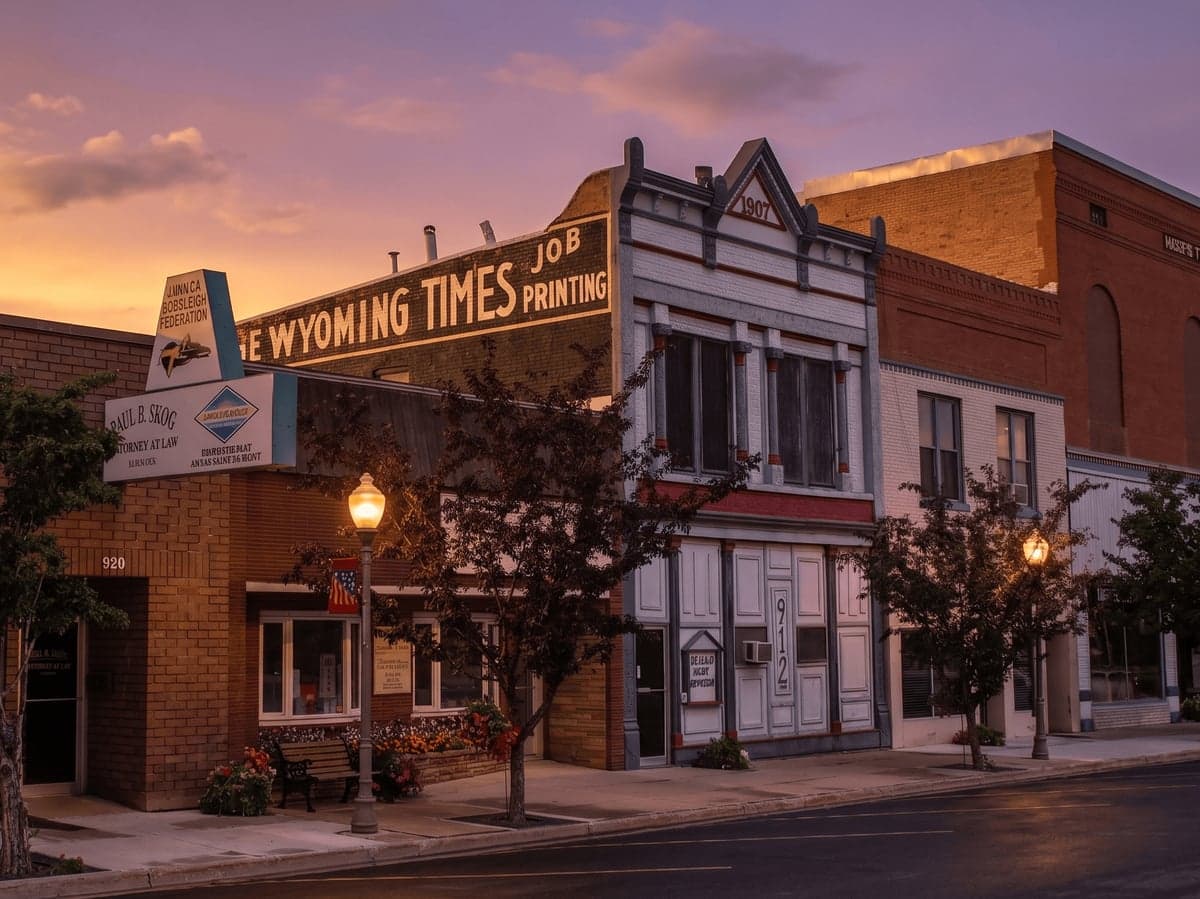
Lyman was founded in the early 1900s as a railroad town along the Union Pacific line, which connected the region to the broader transcontinental network. The original settlers were predominantly white homesteaders of Northern European descent—Scandinavian, German, and English—who arrived to farm the dryland wheat and hay fields of the Bridger Valley. The town was officially platted in 1913, and the first wave of growth centered around the Railroad District, a cluster of homes and businesses along the tracks where workers and their families lived in modest frame houses. By the 1920s, a second wave of settlers, many of them Mormon converts from Utah and Idaho, established the South Lyman neighborhood, building a community around the Lyman Ward Chapel. These early residents were drawn by the promise of irrigated agriculture after the construction of the Lyman Project in the 1930s, which brought water from the Blacks Fork River to transform sagebrush flats into productive farmland. The town's population grew slowly but steadily, reaching about 800 by 1950, with the West End neighborhood emerging as a hub for ranchers and small business owners.
Modern era (post-1965)
After the 1965 Hart-Cellar Act, Lyman saw virtually no change in its racial or ethnic composition, as the town's remote location and limited economic base did not attract the immigration waves that reshaped larger Western cities. Instead, the modern era has been defined by domestic in-migration, primarily from other parts of Wyoming and neighboring Utah. The Mountain View Addition, a subdivision developed in the 1970s, absorbed many of these new arrivals—young families seeking affordable housing and a rural lifestyle. The Hispanic population, now 9.7%, began to grow in the 1990s, driven by labor demand in the nearby trona mines and in agricultural work. These families settled primarily in the East Lyman area, near the highway corridor, where older, more affordable homes are concentrated. The white population, while still dominant, has aged slightly, with many younger adults leaving for college or jobs in Rock Springs (30 miles east) or Salt Lake City. The college-educated share stands at 30.4%, reflecting a modest but growing professional class, many of whom commute to jobs in the energy sector or work remotely.
The future
Lyman's population is projected to remain stable or decline slightly over the next decade, as the town lacks the economic dynamism to attract significant new residents. The Hispanic community is likely to grow slowly, potentially reaching 12-15% of the population by 2035, as families already in the area have children and a trickle of new arrivals from the Southwest continues. However, the town is not tribalizing into distinct enclaves; instead, the small size and shared community institutions—the schools, the LDS church, and the annual Uinta County Fair—encourage integration. The Bridger Valley Estates, a newer subdivision on the town's northern edge, is attracting a mix of white and Hispanic families, suggesting a gradual blending rather than segregation. The biggest demographic risk is out-migration of young adults, which could accelerate if the trona mining industry contracts or if remote work opportunities pull people toward larger cities. For a newcomer, Lyman offers a stable, safe, and culturally homogeneous environment, but one where economic opportunity is limited and the social fabric is built on long-standing local networks.
In short, Lyman is becoming a quieter, slightly more diverse version of its historical self—still overwhelmingly white and native-born, but with a growing Hispanic presence that is slowly integrating into the community. For someone moving in now, the town offers a low-cost, low-crime lifestyle with strong community ties, but little racial or cultural diversity beyond the white-Hispanic dynamic. It is a place where the past is still very much present, and where the future will likely look much like the present, only with fewer young people and a slightly more varied complexion.

* Values derived from national, state, county, city and local statistics and may differ in a specific area. Last updated: 2026-04-21T11:32:46.000Z
Narrative content on this page is AI-generated and may contain mistakes. Verify any details that matter before acting on them.
ReloMaps may earn a commission from affiliate links at no extra cost to you.

