Political ClimatePolitical Climate in Lyman, WY
District shown is the primary district for this city’s centroid. Cities may span multiple districts.
Inherited from parent state — no local data available.
Local Political AnalysisPolitical Analysis of Lyman, WY
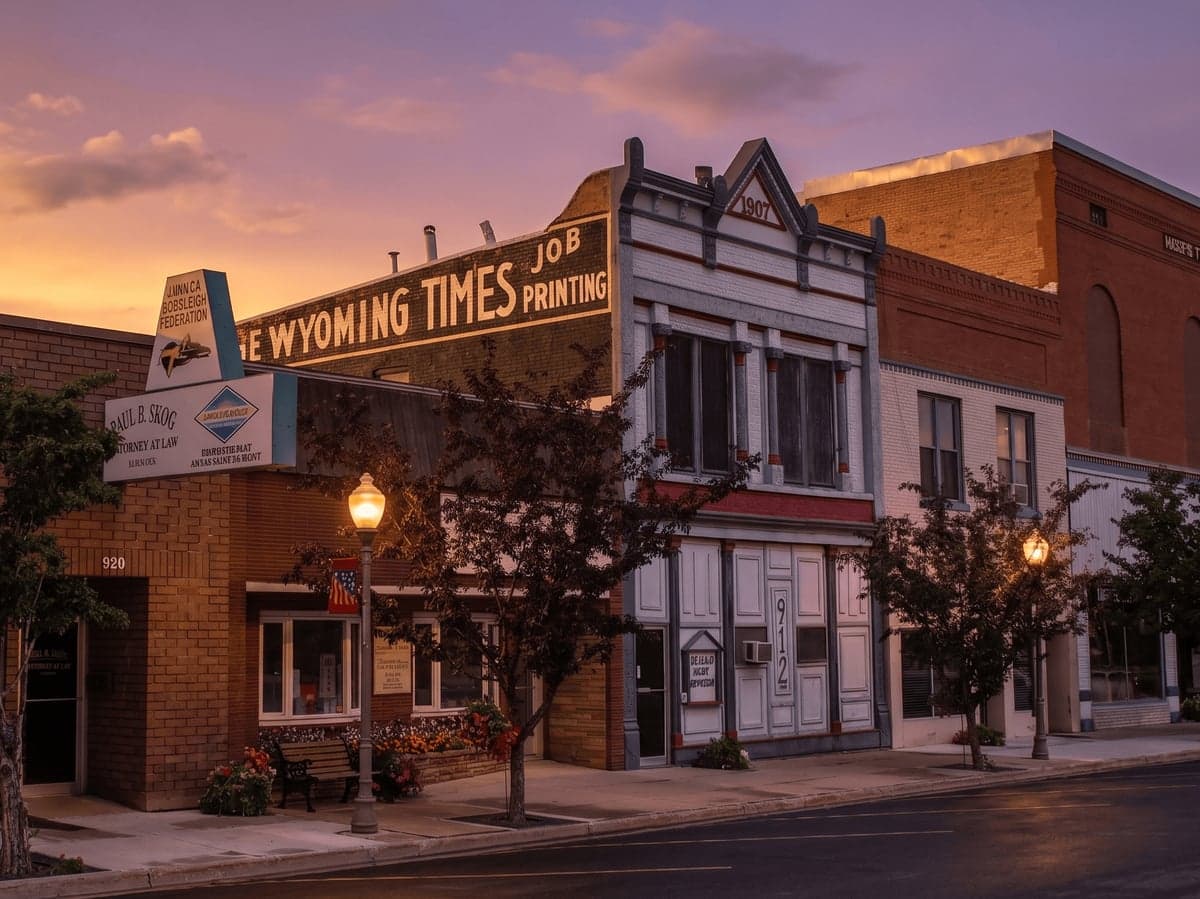
Lyman, Wyoming, is about as solidly conservative as it gets, with a Cook PVI of R+23 that puts it deep in the red column. This isn't a recent shift either—the area has been reliably Republican for decades, and the political lean here is deeply rooted in a live-and-let-live, small-government ethos. If you're looking at the trajectory, it's holding steady, maybe even hardening a bit, as folks here watch the coasts and bigger cities drift left and dig in their heels on local control and personal freedoms.
How it compares
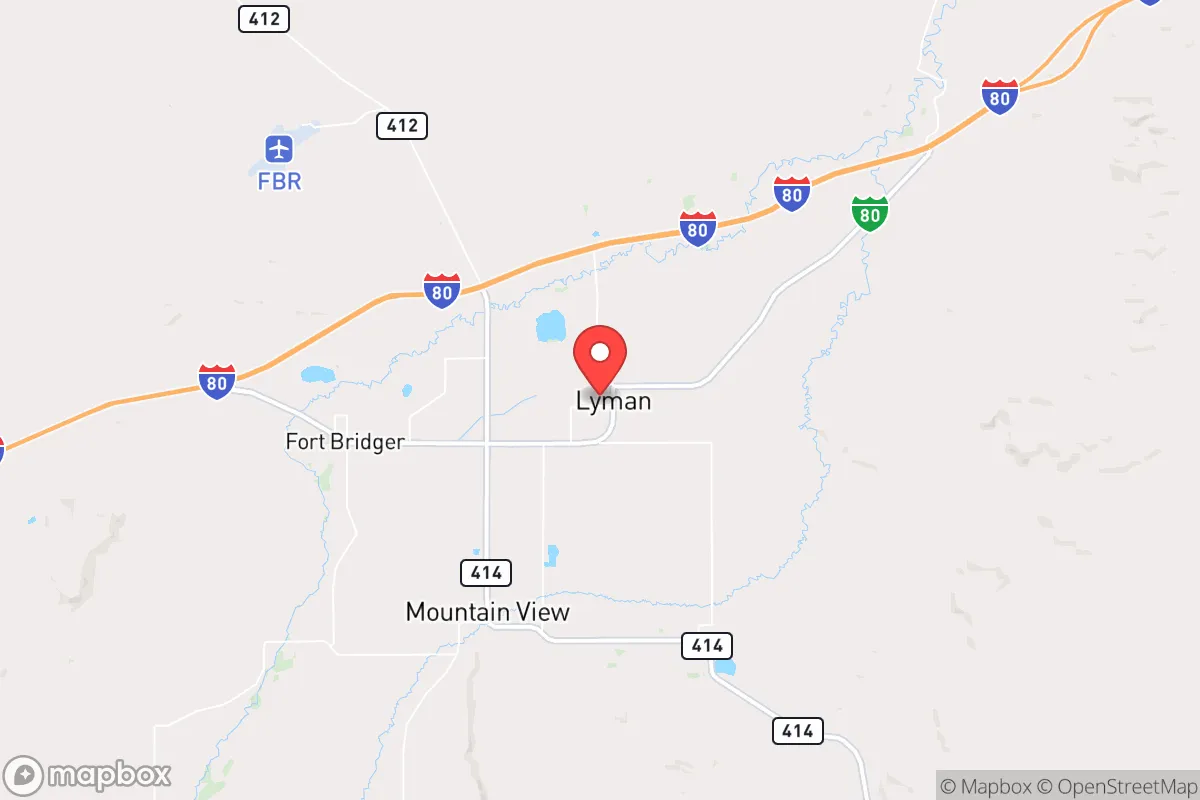
To really get a feel for Lyman's politics, you have to look at the surrounding towns. Head west a few miles to Evanston, and you'll find a slightly more moderate vibe—still conservative overall, but with a bit more union influence and a smattering of Democratic voters tied to the railroad and state jobs. Drive east to Green River or Rock Springs, and the picture gets more mixed; Rock Springs has a historical Democratic streak from its mining and union roots, though it's been trending redder in recent cycles. Lyman, by contrast, is more homogeneous politically. It's a farming and ranching community, with a strong Mormon presence (the LDS Church is a major cultural force here), and that tends to reinforce traditional values on family, self-reliance, and limited government. You won't find much of the progressive activism you'd see in Jackson Hole or even Laramie—this is a place where people still believe the county sheriff should be the highest authority, not some bureaucrat in Cheyenne or Washington.
What this means for residents
For the people living here, the political climate translates into a pretty hands-off approach from local government. Zoning is minimal, taxes are low, and there's a general expectation that you can do what you want on your own property without a bunch of permits or red tape. That's a big deal for folks who value personal freedom—whether it's building a shop in your backyard, keeping livestock, or exercising your Second Amendment rights without a lot of hoops. The downside? If you're hoping for big government programs or progressive social policies, you'll be disappointed. The school board, county commission, and town council are all conservative, and they're not shy about pushing back on state or federal mandates they see as overreach. For example, during the COVID years, Lyman and surrounding Uinta County were among the loudest voices against mask mandates and business closures—most places just ignored the orders and kept going. That kind of local defiance is part of the culture here.
One cultural distinction worth noting is the strong influence of the LDS Church on local politics. It's not that the church runs things directly, but the values it promotes—self-sufficiency, community service, and moral conservatism—align closely with the area's political identity. You'll see that reflected in things like the town's stance on alcohol sales (limited) and the general lack of "big city" amenities like late-night bars or adult entertainment. For newcomers, it can feel a bit insular, but for those who share those values, it's a welcome refuge from the chaos of more progressive areas. Looking ahead, the biggest concern among locals is that outside money and remote workers might start to shift the balance, especially as people flee high-tax states like California and Colorado. So far, though, Lyman has held firm—and most folks here aim to keep it that way.

State Political ClimatePolitical Climate in Wyoming
State Political AnalysisPolitical Environment in the State
Wyoming is one of the most reliably Republican states in the nation, with a partisan lean that has only deepened over the past two decades. The state voted for Donald Trump by a margin of nearly 43 points in 2020, and in 2024, that margin widened to roughly 46 points, making it the most Republican state in the country by presidential vote share. The dominant coalition is a mix of rural ranchers, energy-sector workers, and a growing number of freedom-minded transplants fleeing blue states, all united by a deep skepticism of federal overreach and a commitment to limited government. Over the last 10-20 years, the trajectory has been one of consolidation: the old moderate Republican establishment has been steadily replaced by a more populist, liberty-oriented wing, and the Democratic Party has virtually collapsed outside of a few small pockets in Teton County and Laramie.
Urban vs. rural divide
The political map of Wyoming is starkly divided between a handful of small urban islands and a vast, deeply conservative rural expanse. The only reliably blue county is Teton, home to Jackson Hole, where wealthy out-of-state transplants and a tourism-driven economy have created a liberal enclave that votes Democratic by 20-30 points. Laramie, home to the University of Wyoming, is a purple-to-light-blue county, with the student population and faculty pulling it left of the rest of the state. Cheyenne, the state capital, leans Republican but is more moderate than the rest of the state, with a significant number of state employees and military families from F.E. Warren Air Force Base. The real engine of the state’s conservatism is everywhere else: Casper, Gillette, Rock Springs, and the countless small towns like Cody, Powell, and Worland. These areas vote Republican by 60-80 points, driven by the energy industry, agriculture, and a culture of self-reliance. The divide is not just political but cultural — residents of rural Wyoming often view Jackson Hole as a separate country, one that doesn’t represent the state’s values.
Policy environment
Wyoming’s policy environment is a model for those seeking minimal government intrusion. The state has no personal or corporate income tax, relying instead on a 4% state sales tax (with local options up to 2%) and a severance tax on mineral extraction. Property taxes are among the lowest in the nation, with no state-level property tax and local rates averaging around 0.6% of assessed value. The regulatory posture is aggressively pro-business, with no state-level occupational licensing for many trades and a right-to-work law that has kept union influence weak. Education policy is a mixed bag: the state funds schools well through mineral revenue, but there is a growing movement for school choice, with a 2023 bill creating education savings accounts for special-needs students, though universal school choice has yet to pass. Healthcare policy is libertarian-leaning — Wyoming has not expanded Medicaid under the Affordable Care Act, and the state has some of the loosest telemedicine and direct-primary-care laws in the country. Election laws are solid: voter ID is required, same-day registration is not allowed, and the state has a closed primary system that keeps non-Republicans from influencing GOP primaries. There is no early voting by mail without an excuse, though absentee voting is available for those who request it.
Trajectory & freedom
Wyoming is becoming more free, not less, and recent legislation reflects a deliberate push to expand personal liberty. In 2021, the state passed a constitutional carry law, allowing any adult who can legally possess a firearm to carry it concealed without a permit. In 2022, the legislature passed a near-total abortion ban, with exceptions only for rape, incest, and the life of the mother, and in 2023, it added a law prohibiting the use of public funds for abortion travel. Parental rights have been strengthened: the 2023 “Parents’ Bill of Rights” requires schools to notify parents of any changes to a child’s mental or physical health and prohibits schools from hiding information about a child’s gender identity. Medical autonomy has been expanded with a 2023 law allowing terminally ill patients to use experimental treatments without FDA approval. Property rights were bolstered by a 2022 law that restricts the use of eminent domain for carbon pipelines. On the taxation front, the state has resisted any move toward an income tax, and a 2024 law capped property tax increases at 5% annually. The only area where freedom has contracted is in the realm of election integrity — the state has tightened absentee ballot rules and banned ballot drop boxes, moves that critics call restrictive but supporters say protect the integrity of the vote.
Civil unrest & political movements
Wyoming is remarkably free of the civil unrest seen in larger states. There have been no major protests or riots in recent years, and the state’s small population and rural character make organized political movements less visible. However, there are active groups on both sides. On the right, the Wyoming Liberty Group and the Wyoming chapter of Moms for Liberty have been influential in pushing school choice and parental rights legislation. The state has also seen a growing “Free Wyoming” movement, which advocates for nullification of federal laws on firearms, land use, and energy. On the left, the Wyoming Democratic Party is a shell of its former self, but groups like the Wyoming Equality and the Sierra Club’s local chapter remain active in Jackson and Laramie. Immigration politics are not a major flashpoint — the state has a very small foreign-born population (around 3%), and there are no sanctuary cities. Election integrity controversies have been minimal, though the 2020 election saw a brief push for a full hand recount of the presidential results, which was ultimately not pursued. The most visible political flashpoint is the ongoing conflict over federal land management — the federal government owns about 48% of Wyoming, and there is constant tension over grazing rights, energy development, and the reintroduction of wolves and grizzly bears. This is a deeply felt issue for ranchers and outdoor recreationists alike.
Projection
Over the next 5-10 years, Wyoming is likely to become even more conservative, driven by two demographic trends. First, the state is seeing a steady influx of migrants from blue states like California, Colorado, and Washington, who are drawn by low taxes, gun rights, and a slower pace of life. These newcomers tend to be more libertarian than the native population, and they are pushing the state further toward a “leave us alone” ethos. Second, the state’s young people are leaving for college and not returning, which is aging the population and making it even more resistant to change. The energy transition will be a wild card — if coal and oil decline faster than expected, the state’s economy could take a hit, which might force a diversification that could bring in more moderate voters. But for now, the trajectory is clear: Wyoming will remain a redoubt of conservative values, with a political culture that prizes individual freedom, local control, and a deep distrust of Washington. Someone moving in now should expect to find a state that is stable, predictable, and increasingly aligned with the principles of limited government.
For a new resident, the bottom line is this: Wyoming offers one of the most freedom-friendly environments in the United States, with low taxes, strong gun rights, and a government that largely stays out of your personal life. The trade-off is a sparse population, harsh winters, and limited economic opportunities outside of energy, agriculture, and tourism. If you value personal autonomy and are willing to accept a slower, more isolated lifestyle, Wyoming is a safe bet. If you need urban amenities or a diverse economy, you may find it frustrating. But for those who prioritize liberty above all else, this is as good as it gets.
* Values derived from national, state, county, city and local statistics and may differ in a specific area. Last updated: 2026-04-21T11:32:46.000Z
Narrative content on this page is AI-generated and may contain mistakes. Verify any details that matter before acting on them.
ReloMaps may earn a commission from affiliate links at no extra cost to you.

