
Photo: Wikipedia
Quality of Life in Macon, GA
A high quality of life with strong walkability, manageable living costs, healthy neighborhood signals, and solid amenity access.
What does Quality of Life tell us?
Quality of Life blends cost of living, nearby amenities, socioeconomic signals, and neighborhood character. City-level scores represent the whole municipality; individual neighborhoods can differ.
What does this tell us?
Quality of Life blends cost of living, nearby amenities, socioeconomic signals, and neighborhood character. City-level scores represent the whole municipality; individual neighborhoods can differ.
Cost of Living
24% below national average
The Real Cost of Living in Macon, GA for 2026
| Tier | Individual | Family (4) |
|---|---|---|
| Survival | $16k | $31k |
| Comfortable | $32k | $47k |
| Luxury | $92k+ | $142k+ |
| Elite (Top 5%) | $136k+ | $210k+ |
107%
The Area Signal
A metric tracking the socioeconomic signals of the area.
Hobbies
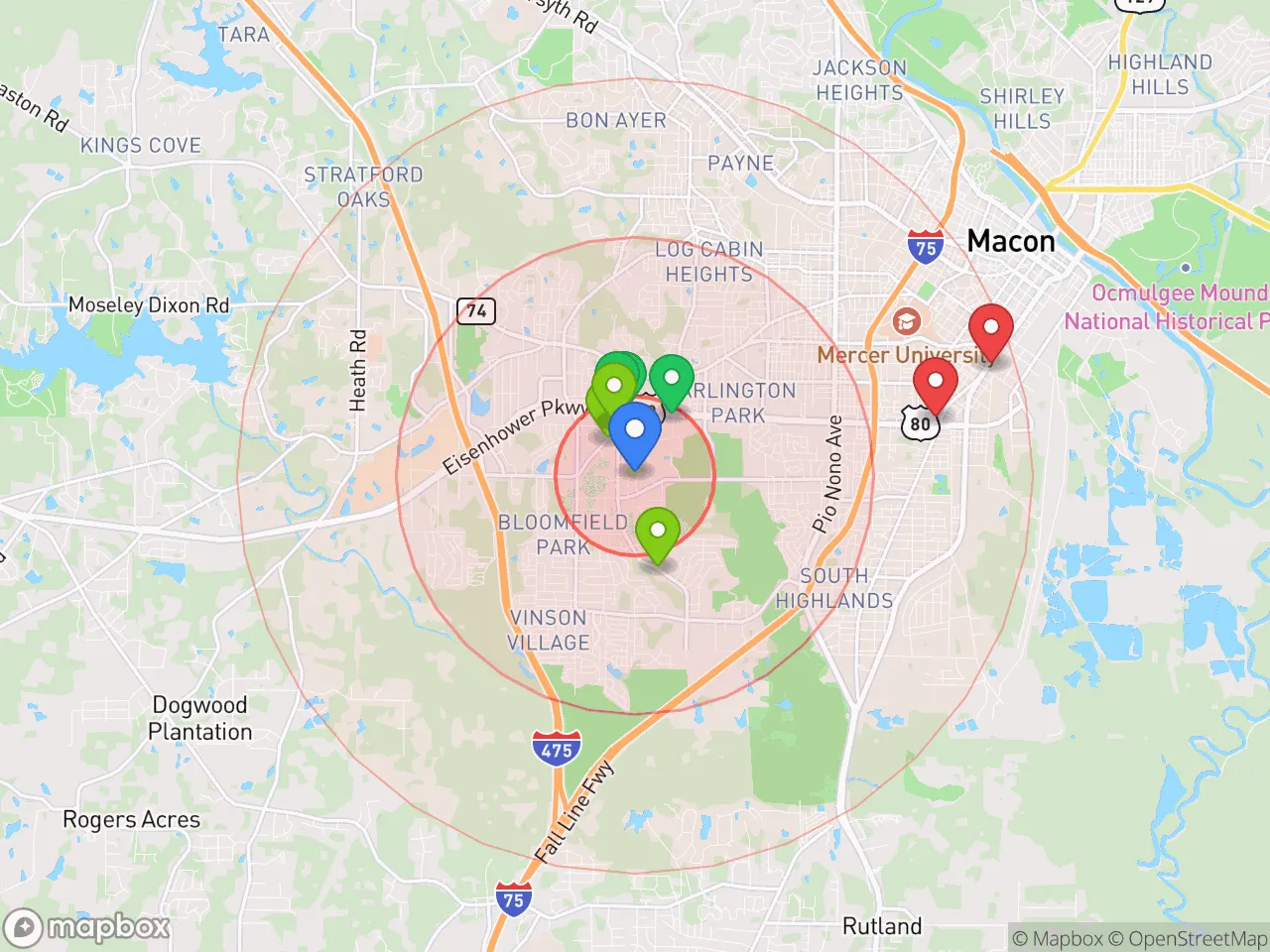
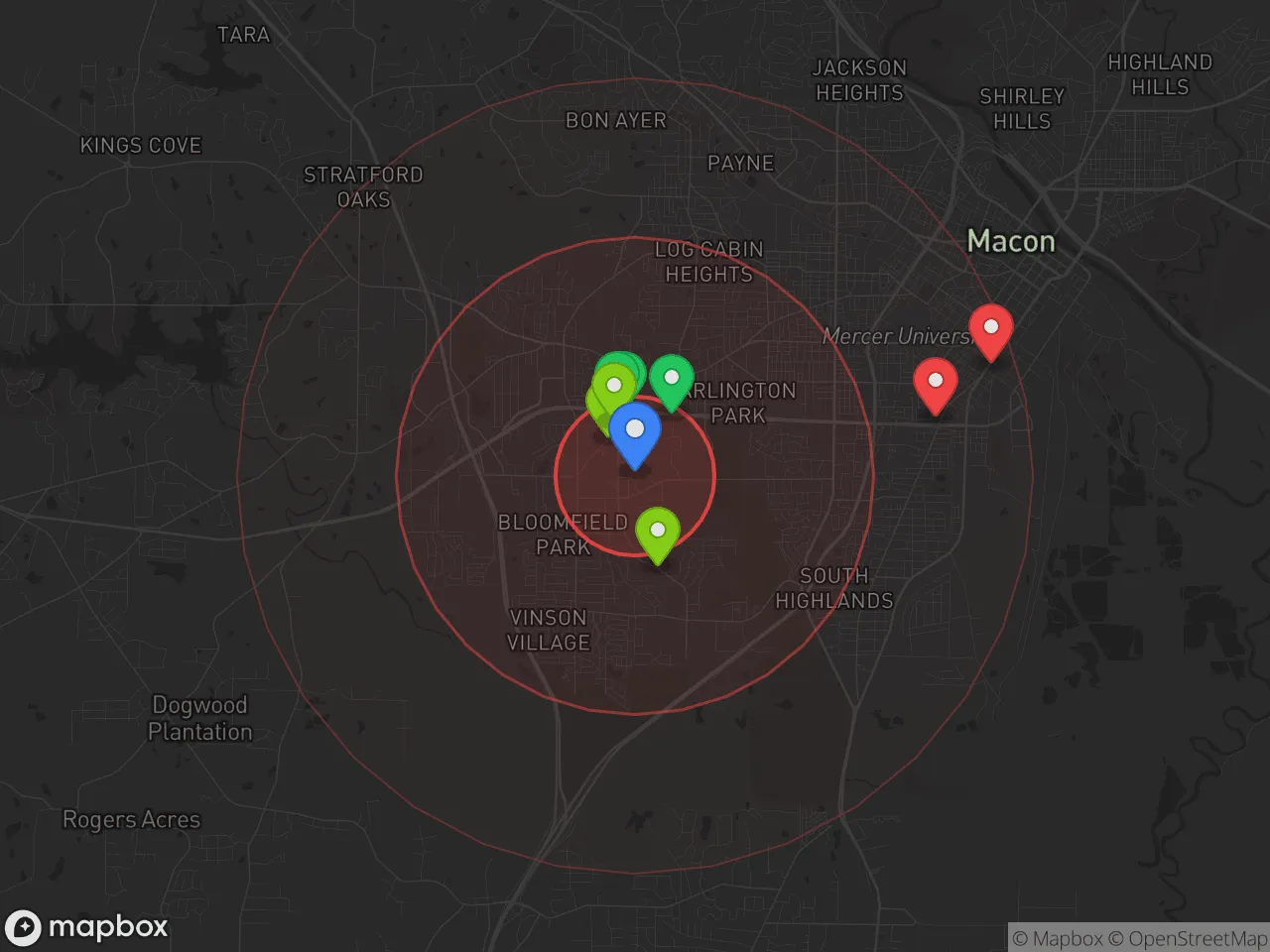
Explore the areaGroceries
6 within 10 miles
Gas
20 within 10 miles
Hospital
7 within 20 miles
Airport
ATL — Hartsfield–Jackson Atlanta International
Post Office
USPS — Macon, GA
Critical Amenities
Quality-of-Life Analysis
Macon, Georgia, presents a quality of life defined by deep affordability and a slower, more community-oriented pace than the state's booming metro hubs. With a cost of living index of 76—well below the national average of 100—the city attracts a mix of young families seeking homeownership, retirees stretching fixed incomes, and remote workers trading urban rent for historic square footage. The population is notably diverse, and the local economy is anchored by healthcare (Mercer University's medical school, Atrium Health Navicent), education (Mercer University), and a growing logistics sector tied to Macon's position along I-75.
How housing costs and everyday expenses compare to Atlanta and Warner Robins
The most striking advantage of living in Macon is its housing market. The median home value sits at $165,800, a figure that is roughly one-third of the median in Atlanta and significantly lower than in nearby Warner Robins (where the median hovers around $210,000). For renters, the median monthly rent of $1,026 makes Macon one of the most affordable mid-sized cities in Georgia, particularly when compared to the state average rent of roughly $1,400. This affordability extends beyond housing: groceries, utilities, and transportation all track below national norms. The average one-way commute time of 22.2 minutes is notably shorter than the national average of 26 minutes, meaning residents spend less time in traffic and more time at home. For a household earning the median area income of roughly $45,000, the cost of living allows for a comfortable lifestyle that would be difficult to achieve in pricier Georgia markets.
What daily life is like for families: schools, parks, and local amenities
Daily life in Macon revolves around its historic districts, riverfront parks, and a growing food scene anchored by local institutions like the H&H Soul Food restaurant and the Ocmulgee Brewpub. The Bibb County School District offers several magnet and choice programs, with Alexander II Magnet School and Macon Middle School Academy consistently receiving high marks for academic performance. For outdoor recreation, the Ocmulgee Mounds National Historical Park provides 3,000+ acres of hiking trails and ancient Indigenous earthworks right within city limits. The city's cultural calendar is anchored by the Cherry Blossom Festival each spring, which draws over 100,000 visitors and reflects Macon's identity as the "Cherry Blossom Capital of the World." Residents also benefit from Mercer University's presence, which brings Division I athletics, concerts, and continuing education opportunities to the community. The trade-off for this affordability is a slower pace: nightlife options are limited compared to Atlanta, and the retail landscape skews toward local boutiques rather than national chains.
Macon is best suited for those who prioritize financial breathing room and a strong sense of community over urban convenience and career density. Remote workers, early-career professionals at Mercer or the medical centers, and families who want a historic home with a yard for under $200,000 will find the city a compelling fit. However, those seeking a vibrant 24-hour downtown, a dense job market in tech or finance, or top-tier public school districts may find Macon's offerings too limited. For the right resident, the combination of a 22-minute commute, a mortgage under $1,200, and access to a nationally significant riverfront park creates a quality of life that is both grounded and genuinely affordable.

Crime in Macon, GA
Generally safer than 57% of comparable U.S. locations.
Violent CrimeViolent Crime Analysis
Property CrimeProperty Crime Analysis
Crime Analysis
Macon, Georgia, presents a mixed safety profile that demands careful attention from potential residents. The city's violent crime rate of 253 incidents per 100,000 residents is notably lower than the national average, but its property crime rate of 1,189.7 per 100,000 is significantly elevated, creating a situation where residents must be vigilant about theft and burglary. Compounding these concerns, Macon operates within a broader legal environment in Bibb County that has seen progressive prosecutorial policies, which can lead to reduced consequences for offenders and a higher likelihood of repeat crimes.
Crime in context
Macon's violent crime rate of 253 per 100,000 sits well below the national average of approximately 380 per 100,000, and is also lower than the Georgia state average of roughly 400 per 100,000. This means that serious offenses like homicide, rape, robbery, and aggravated assault are less common here than in many other parts of the state. However, the property crime picture is starkly different. At 1,189.7 per 100,000, Macon's property crime rate is nearly double the national average of around 600 per 100,000 and significantly higher than the Georgia state average. This disparity suggests that while the risk of violent confrontation is lower, the likelihood of experiencing a break-in, vehicle theft, or larceny is substantially higher than in most U.S. communities.
What residents experience
For those living in Macon, the day-to-day reality is shaped more by property crime than by violent threats. Residents commonly report concerns about package theft, vehicle break-ins, and vandalism, particularly in areas near downtown and along major corridors like Eisenhower Parkway and Pio Nono Avenue. The elevated property crime rate is a direct consequence of a criminal justice system that, in recent years, has prioritized diversion and reduced incarceration for non-violent offenses. Progressive district attorneys and judges in Bibb County have implemented policies that often result in shorter sentences or probation for repeat property offenders, creating a revolving-door effect that frustrates victims and emboldens criminals. This ideological approach, while intended to reduce mass incarceration, has tangible consequences: more offenders on the street, higher recidivism, and a diminished sense of security for law-abiding residents.
Neighborhood-level variation is significant. Historic districts like Ingleside and Vineville typically report lower crime rates due to active neighborhood watches and higher property values, while areas such as Bloomfield and parts of East Macon experience higher concentrations of both property and violent crime. Prospective residents should prioritize neighborhoods with established community patrols and avoid areas with high vacancy rates, as these are often targeted by criminals. Overall, Macon requires a proactive approach to safety—locking vehicles, securing packages, and staying informed about local crime trends—to mitigate the risks posed by a lenient justice system.
* Values derived from national, state, county, city and local statistics and may differ in a specific area. Last updated: 2026-04-30T05:46:22.000Z
Narrative content on this page is AI-generated and may contain mistakes. Verify any details that matter before acting on them.
ReloMaps may earn a commission from affiliate links at no extra cost to you.

