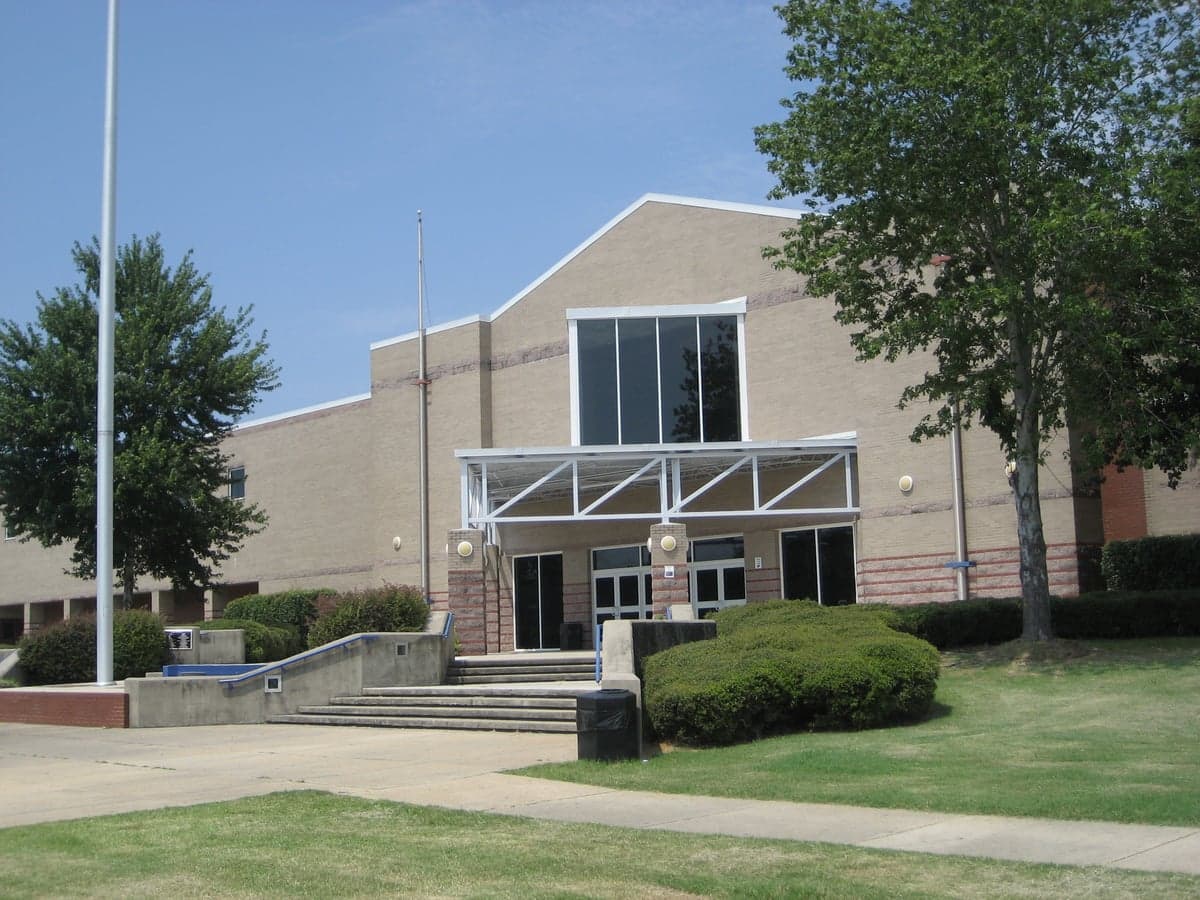
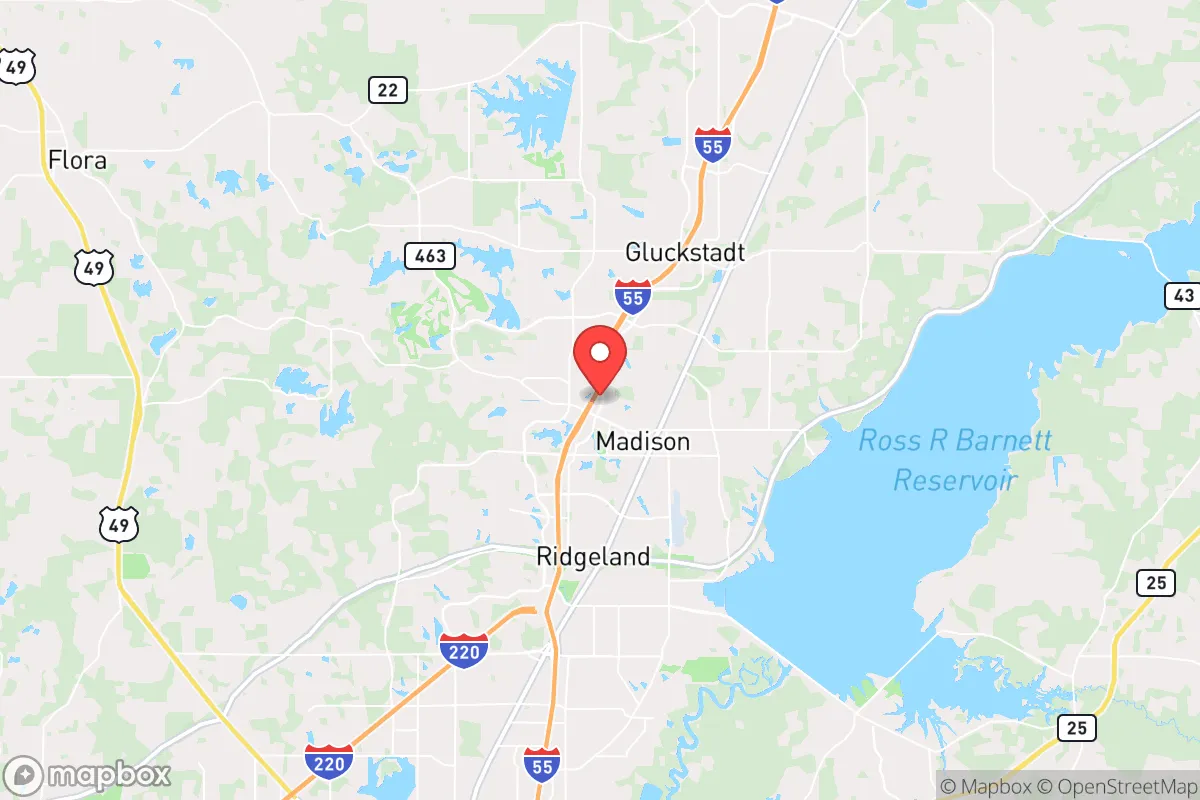
Photo: Wikipedia
Demographics of Madison, MS
Affluence Level in Madison, MS
An upper-middle-class area. Household wealth, education levels, and homeownership run ahead of national benchmarks.
People of Madison, MS
The people of Madison, Mississippi today form a predominantly white, highly educated, and affluent suburban population of 27,775, with a distinctive character shaped by rapid growth from domestic migration rather than international immigration. The city’s identity is anchored by a 78.8% white majority, a 12.3% Black population, and small but notable East/Southeast Asian (3.1%) and Indian-subcontinent (2.8%) communities, all set within a city where 65.7% of adults hold a college degree — nearly triple the national average. Madison is not a historic small town but a planned-growth suburb that has consciously marketed itself as a top school district and safe haven, attracting families from across the South and Midwest who prioritize education and low crime.
How the city was settled and grew
Madison was originally a railroad stop on the Illinois Central line, incorporated in 1856 as a farming and trading hamlet. Its early population was a mix of white yeoman farmers and enslaved Black laborers who worked cotton plantations along the Pearl River floodplain. After the Civil War, the area remained sparsely populated through the early 1900s, with fewer than 500 residents as late as 1950. The original settlement clustered around what is now Old Town Madison, a historic district of antebellum homes and shotgun houses that still contains a small Black community descended from post-Reconstruction sharecroppers. The city’s population did not meaningfully grow until the 1960s, when white flight from Jackson — just 15 miles south — began pushing middle-class families north along the I-55 corridor. The Reunion neighborhood, developed in the 1970s, was one of the first master-planned subdivisions to absorb this wave, offering large lots and new schools that drew Jackson professionals and state government workers.
Modern era (post-1965)
The post-1965 era transformed Madison from a rural crossroads into a booming bedroom community. The Immigration and Nationality Act of 1965 had little direct effect here — the city’s foreign-born population remains just 3.5% — but the domestic migration wave that began in the 1970s accelerated sharply after 1990. White families from Jackson, Vicksburg, and even out-of-state metros like Memphis and New Orleans moved to Madison for the Madison County School District, which became a statewide magnet for college-educated parents. The Highland Colony area, anchored by the Highland Colony Parkway commercial corridor, became the epicenter of this growth, filling with subdivisions like Glenlake and Bridgewater that catered to upper-middle-class professionals. Black residents, who had made up roughly 30% of Madison’s population in 1970, declined to 12.3% by 2024 as the city’s overall growth was overwhelmingly white. The small East/Southeast Asian community — largely Chinese and Vietnamese professionals in medicine and engineering — concentrated in newer subdivisions near the St. Anthony’s medical district, while the Indian-subcontinent population, mostly IT and healthcare workers, settled in Mannsdale and Lake Caroline areas. Hispanic residents remain a negligible 1.1%, reflecting Madison’s lack of agricultural or construction labor demand.
The future
Madison’s population trajectory points toward continued homogenization rather than diversification. The city is nearing build-out within its current municipal boundaries, with most undeveloped land already zoned for large-lot single-family homes that reinforce the affluent, family-oriented profile. The foreign-born share is unlikely to rise significantly — the city lacks the rental housing stock, public transit, and entry-level jobs that attract new immigrants. Instead, future growth will come from domestic in-migration of white college graduates from other Southern metros, drawn by the same school district and safety reputation that drove the last 30 years. The Black population share may stabilize or decline slightly as older Black families in Old Town sell to white renovators. The East/Southeast Asian and Indian communities are likely to grow modestly through professional recruitment at local hospitals and the Nissan Canton plant, but they will remain small enclaves rather than forming distinct ethnic neighborhoods. Madison is not tribalizing into separate enclaves — it is becoming more uniformly white, wealthy, and educated, with minority groups assimilating into the same subdivisions and school system.
For someone moving in now, Madison is a place where the population is still sorting itself by income and education rather than by ethnicity — a classic Sun Belt suburb where the defining demographic trend is the concentration of high-human-capital families. The city offers little racial or economic diversity, but delivers exactly what its residents pay for: top-ranked schools, low crime, and a social environment built around youth sports, church, and neighborhood associations. The next decade will see more of the same, with gradual infill development and a population that edges toward 30,000 while remaining overwhelmingly white and college-educated.

* Values derived from national, state, county, city and local statistics and may differ in a specific area. Last updated: 2026-05-03T12:47:59.000Z
Narrative content on this page is AI-generated and may contain mistakes. Verify any details that matter before acting on them.
ReloMaps may earn a commission from affiliate links at no extra cost to you.

