Photo: Wikipedia
Political ClimatePolitical Climate in Cecil County
Showing district-level results — no local-only data available.
Local Political AnalysisPolitical Analysis of Cecil County
How it compares
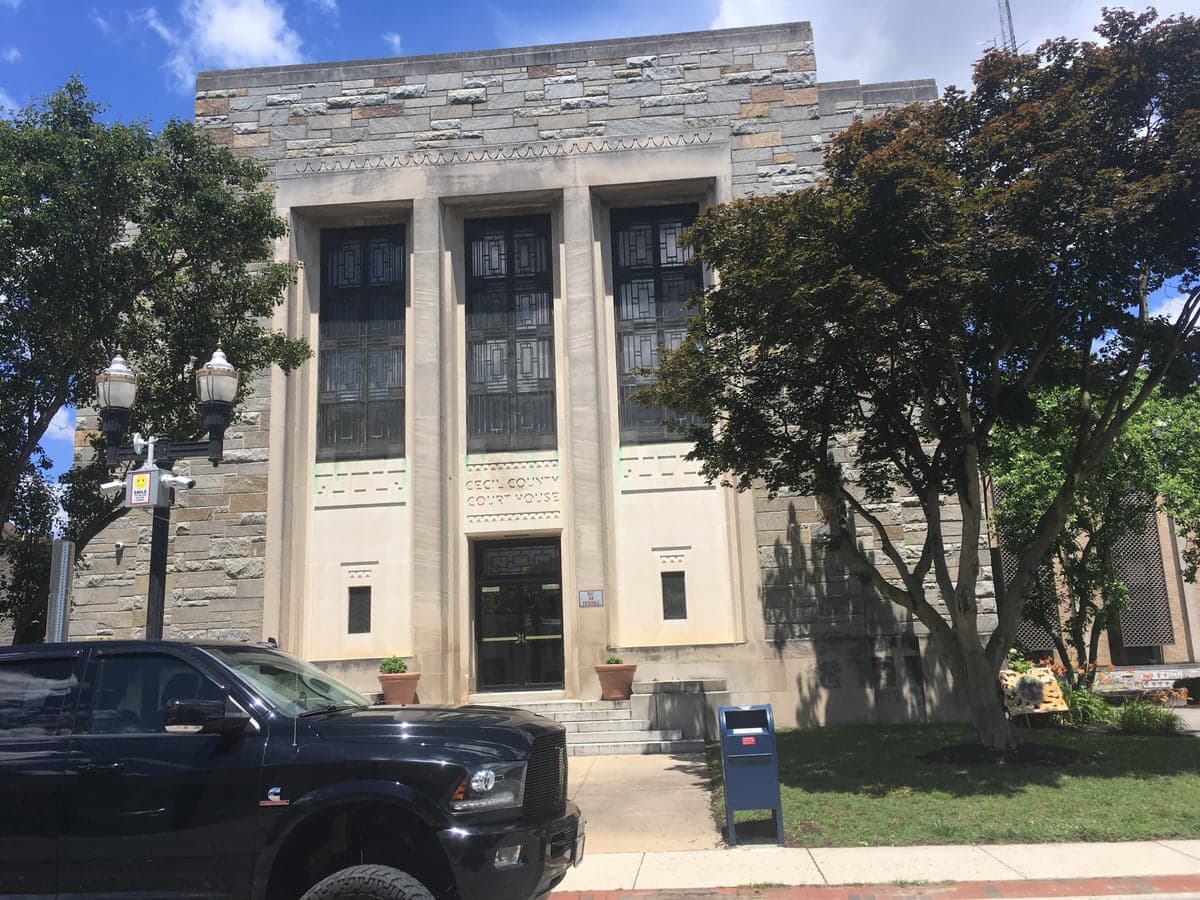
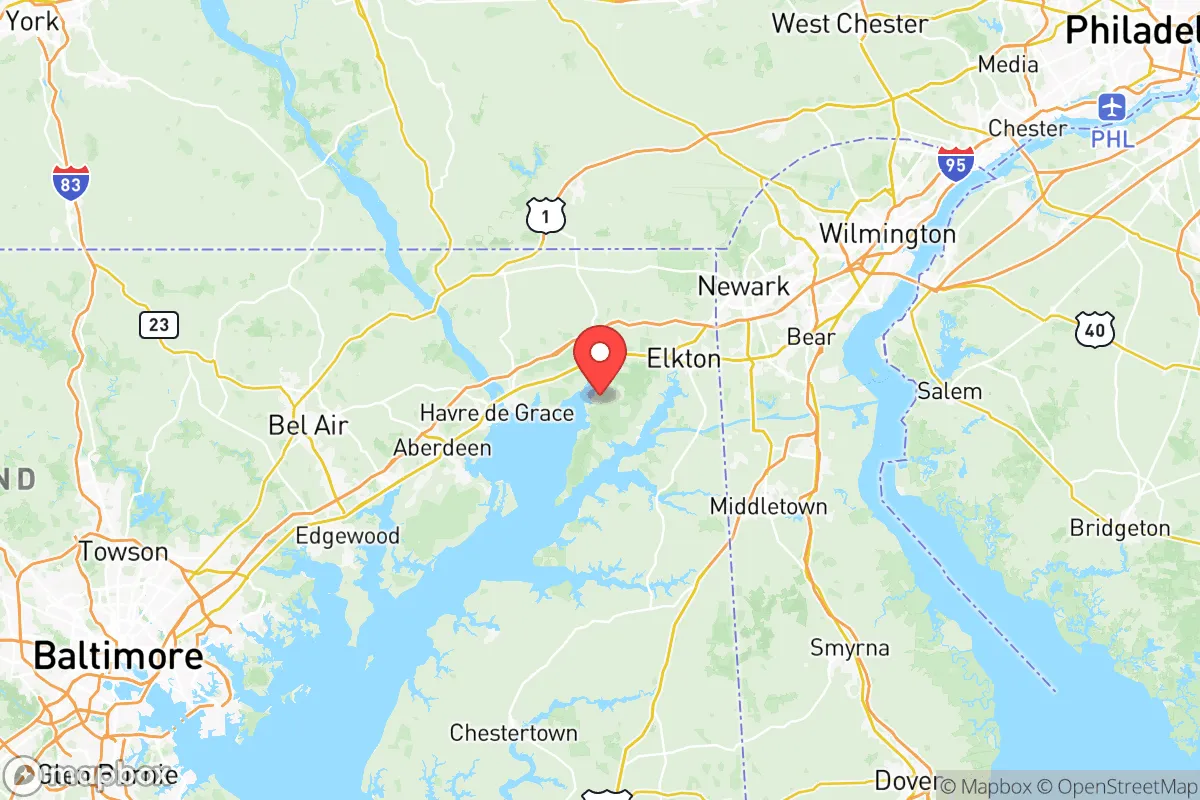
The political split in Cecil County isn’t just about the state line; it’s written across the county’s own map. The county seat, Elkton, is the closest thing to a blue anchor, with precincts around the downtown and the courthouse square regularly voting Democratic—though even there, the margins are closer than they were a decade ago. North East, the waterfront town on the bay, is a genuine swing area; its precincts flip between parties depending on the cycle, and it’s where local races are actually decided. The rural western and southern stretches—around Rising Sun, Port Deposit, and the farmland between Conowingo and Colora—are deep red, often going 70-30 or worse for Republicans. The fastest-growing area, the Route 40 corridor near the Delaware line, leans red but is less predictable, pulling in a mix of retired federal workers and commuters who work in Wilmington or Baltimore.What this means for residents
For conservative residents, Cecil County is a rare refuge in a blue state. You can win local office as a Republican without breaking a sweat, and the county commissioners have been GOP-controlled for years. But the state legislature in Annapolis still draws the lines and sets the tax policy, so local Republicans spend most of their energy fighting state mandates on education funding, environmental regulations on the Chesapeake Bay tributaries, and gun control laws that pass with overwhelming Democratic support downstate. For liberal residents, it’s the opposite: you’re likely in the minority at the ballot box, but you’re not isolated. The blue precincts in Elkton and North East are organized enough to keep Democratic candidates competitive in countywide races, and the county’s proximity to Delaware and Pennsylvania means progressive residents often cross the border for political events or simply accept that their vote carries more weight in primaries than general elections.Cultural and policy distinctions
The real cultural divide in Cecil County isn’t Republican versus Democrat—it’s old Cecil versus new Cecil. The old guard, rooted in the farming communities and the working-class towns along the Susquehanna River, votes on tradition, gun rights, and a suspicion of Annapolis. The newer arrivals, many of them priced out of Harford County or Baltimore County, bring suburban sensibilities and are more willing to split tickets on issues like school funding and local infrastructure. That’s why you’ll see a county that votes for Trump by 20 points but also approves local school bond referendums by wide margins. The near-term future looks stable—the county’s Republican majority isn’t going anywhere, but the margins are likely to shrink slightly as the Route 40 corridor fills in with commuters who don’t share the old rural instincts. Long-term, if the state ever shifts its school funding formula or the bay cleanup costs hit the county’s agricultural sector hard, that’s when you’ll see the political map start to move.
State Political ClimatePolitical Climate in Maryland
State Political AnalysisPolitical Environment in the State
Maryland is one of the most reliably Democratic states in the country, carrying a Cook PVI of D+17, meaning it votes about 17 points more Democratic than the nation as a whole. The state hasn't backed a Republican for president since George H.W. Bush in 1988, and Democrats hold every statewide office, a supermajority in the General Assembly, and a 2-1 edge in the congressional delegation. But that top-line number hides a deeply fractured geography — the wealth and population of the Washington, D.C. and Baltimore metros drive the blue wave, while the rural western and eastern shores are as red as any county in the Deep South.
Urban vs. rural divide
The political map of Maryland is essentially a tale of two states. The Democratic engine is concentrated in the Washington, D.C. suburbs — Montgomery County and Prince George's County alone account for nearly a third of the state's population and routinely deliver 70-80% of their votes to Democrats. Baltimore City is even bluer, often pushing past 85% Democratic, while the surrounding Baltimore County suburbs have trended blue over the last decade as well. Anne Arundel County, home to Annapolis, has flipped from a swing county to a reliably Democratic one, driven by federal workers and tech professionals commuting to D.C.
Outside that I-95 corridor, the picture flips hard. Western Maryland — Garrett County, Allegany County, and Washington County — votes Republican by margins of 30-40 points, with Garrett County being the most conservative jurisdiction in the state. The Eastern Shore, including counties like Worcester, Wicomico, and Queen Anne's, is similarly red, with strong GOP majorities in places like Ocean City and Easton. Even the exurbs of the D.C. metro, such as Frederick County and Carroll County, have become battlegrounds — Frederick has trended blue in recent cycles, while Carroll remains a Republican stronghold. The result is a state where a Democrat can win the governorship by 20 points statewide while losing 18 of 23 counties.
Policy environment
Maryland's policy environment is shaped by its status as one of the most heavily taxed states in the nation. The state has a progressive income tax that tops out at 5.75%, but counties add their own piggyback taxes that push the effective rate above 9% in places like Montgomery County and Baltimore City. Property taxes are also on the higher end, and the state's estate tax kicks in at $5 million, well below the federal exemption. Sales tax sits at 6%, with no relief for groceries, though clothing is exempt.
The regulatory posture is decidedly interventionist. Maryland has some of the strictest environmental regulations in the country, particularly around the Chesapeake Bay, which drives up costs for developers and farmers alike. The state also has a strong labor presence, with prevailing wage laws and a minimum wage that is set to reach $15 an hour. On education, Maryland consistently ranks near the top of national school rankings, but that masks a stark divide — the wealthy D.C. suburbs have world-class public schools, while Baltimore City schools remain chronically underfunded and underperforming. The state has also moved aggressively on healthcare, establishing its own insurance exchange under the Affordable Care Act and expanding Medicaid early.
Recent policy direction
The last several legislative sessions have pushed Maryland firmly in a progressive direction, and the trend shows no sign of reversing. On gun policy, the state passed the Firearm Safety Act in 2013, which banned assault weapons and limited magazine capacity to 10 rounds, and in 2023 it added a permit requirement for purchasing any firearm, effectively ending the "good and substantial reason" standard for concealed carry after the Bruen decision. The state also bans open carry and has a red flag law that allows courts to temporarily seize firearms from individuals deemed a threat.
On education and parental rights, Maryland has gone the opposite direction of many red states. The state passed the Blueprint for Maryland's Future, a massive multi-billion-dollar education funding package, but has also resisted school choice measures and has not enacted any parental notification requirements for curriculum or library materials. In fact, the state has moved to protect LGBTQ students, passing laws that require schools to adopt policies supporting transgender students and prohibiting discrimination based on gender identity.
On voting and ballot access, Maryland is one of the most permissive states in the country. It has automatic voter registration, same-day registration during early voting, no-excuse mail-in voting, and a permanent mail-in ballot list. The state also allows felons to vote while incarcerated, a policy that goes further than most other states. On the fiscal front, the state has avoided major tax cuts, instead using budget surpluses to fund pension liabilities and one-time spending, though the 2024 session did pass a modest middle-class tax cut that phases in over several years.
Civil unrest & political movements
Maryland has a visible and active protest culture, particularly in Baltimore and the D.C. suburbs. The 2015 death of Freddie Gray in police custody triggered days of rioting and looting in Baltimore, and the city has seen recurring protests over policing and criminal justice issues since. The George Floyd protests in 2020 were large and sustained, with demonstrations in Baltimore, Silver Spring, and Annapolis. On the right, there is a smaller but organized conservative movement, concentrated in Western Maryland and the Eastern Shore, that has held rallies on issues like gun rights and election integrity, though these events draw far smaller crowds than their progressive counterparts.
Immigration politics are a flashpoint. Maryland is a sanctuary state, with laws that prohibit state and local law enforcement from cooperating with federal immigration authorities in most circumstances. Montgomery County and Prince George's County have been particularly vocal in defending these policies, while some Eastern Shore counties have passed resolutions declaring themselves "Second Amendment sanctuaries" in response to state gun laws. The state has also seen election integrity controversies, with Republicans in rural counties raising concerns about the state's mail-in voting system, though no widespread fraud has ever been documented.
Projection
Over the next 5-10 years, Maryland's political trajectory is likely to continue in the same direction, but with some interesting wrinkles. The D.C. suburbs are growing faster than the rest of the state, driven by federal jobs and the tech boom in places like Bethesda and Rockville, which will only deepen the Democratic lean. However, there are signs of a rural-urban realignment — the state's rural counties are becoming more Republican as urban and suburban voters move in, and the GOP has made inroads in places like Frederick County, which is now a true swing jurisdiction. The state's high cost of living and tax burden are also pushing some residents to relocate to Virginia, Pennsylvania, or Delaware, which could slow population growth in the blue strongholds.
The most likely scenario is that Maryland remains a solidly Democratic state, but with a narrower margin than the current D+17. The Democratic primary will become the real battleground, as progressive and moderate wings of the party fight over issues like housing policy, crime, and education reform. A Republican could become competitive in a gubernatorial race if the Democratic nominee is seen as too far left, as happened in 2014 when Larry Hogan won in a landslide. But the state's structural advantages for Democrats — the concentration of population in the D.C. suburbs, the strong union presence, and the growing minority population — make a full GOP comeback unlikely.
For a new resident, the practical takeaway is that Maryland offers a deeply blue policy environment with high taxes, strong regulations, and progressive social policies, but with significant geographic variation. If you live in Montgomery County or Baltimore City, you will be surrounded by like-minded progressives and have access to excellent schools and services. If you live in Garrett County or the Eastern Shore, you will find a more conservative community, lower taxes, and a slower pace of life, but you will still be subject to state laws passed in Annapolis. The state is not for everyone — the cost of living is high, the traffic is brutal, and the political climate can feel one-sided — but for those who value its strengths, it remains a place of real opportunity and community.
* Values derived from national, state, county, city and local statistics and may differ in a specific area. Last updated: 2026-10-19T07:47:58.000Z
Narrative content on this page is AI-generated and may contain mistakes. Verify any details that matter before acting on them.
ReloMaps may earn a commission from affiliate links at no extra cost to you.

